On the Move

Downtown Boston
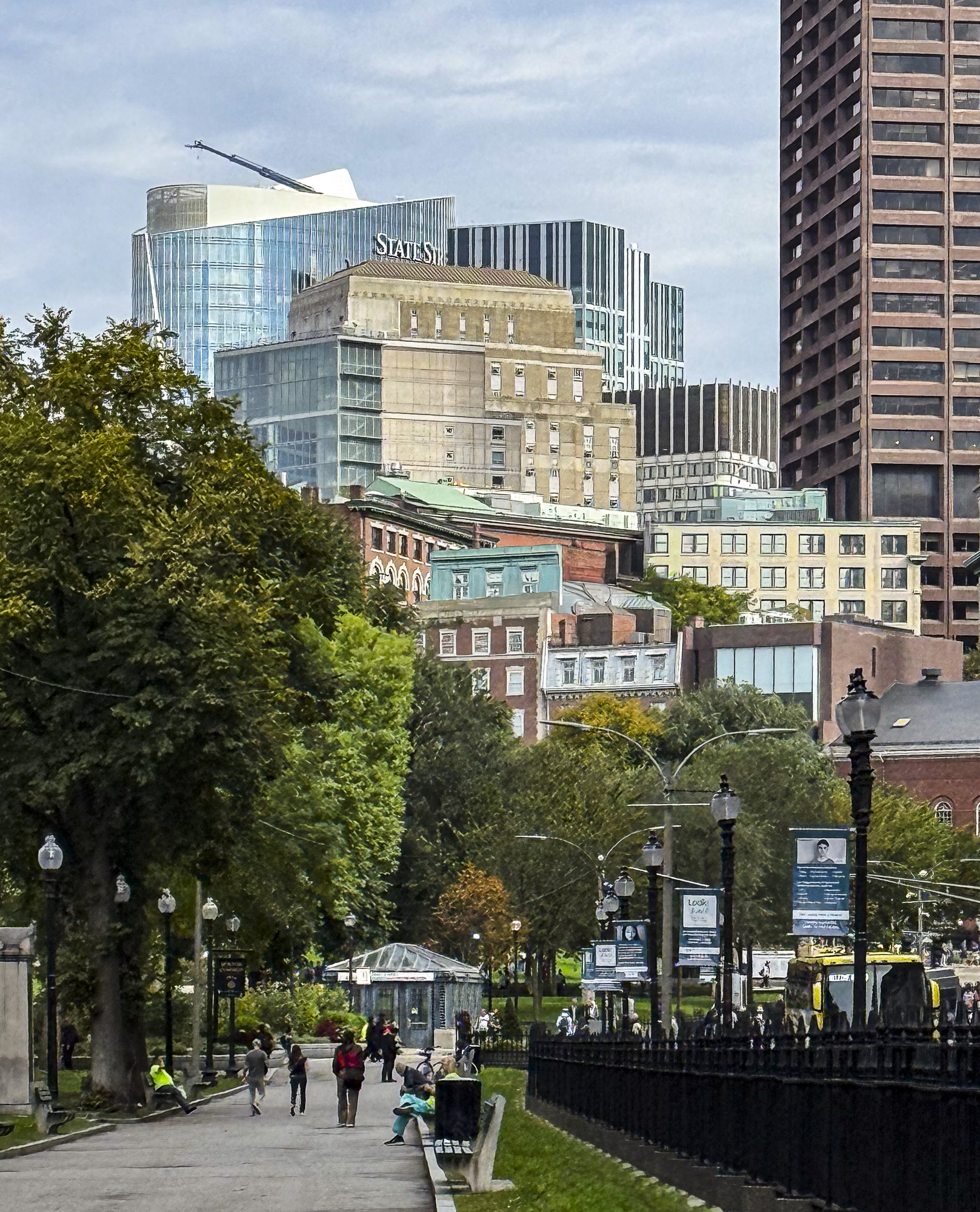
View of downtown Boston

The US National Park Service offers a series of free audio walking tours. I used “The Freedom Trail” this morning to guide me around the downtown area.

This audio tour started at the Boston Common, a beautiful park in the middle of the city and the oldest park in the country, having been founded in 1634. The actual Freedom Trail also starts here, but the NPS tour did not stick strictly to the Trail. The view of downtown Boston to the left belies the fact that most of Boston is blessedly (from a walking perspective) flat!

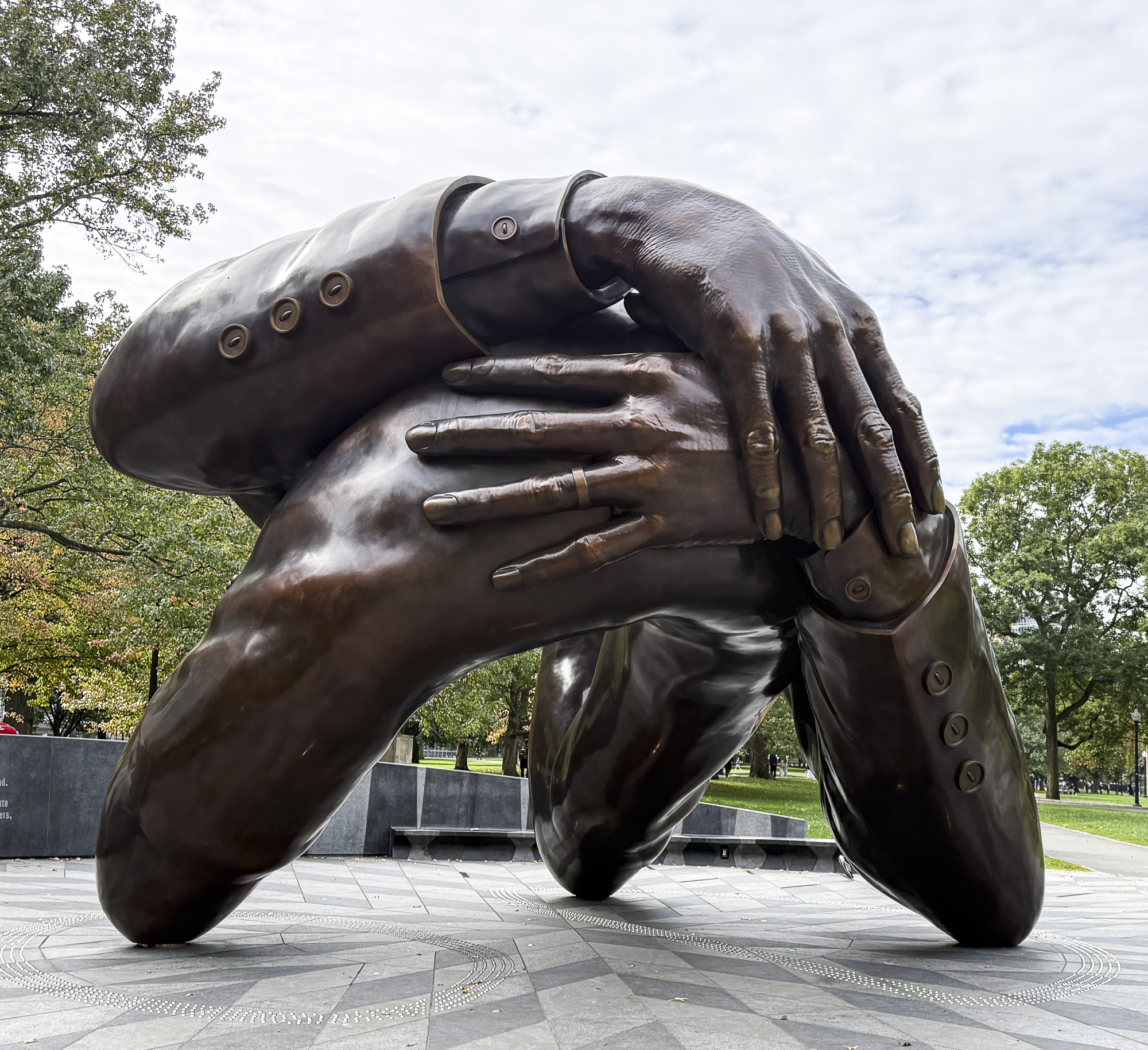
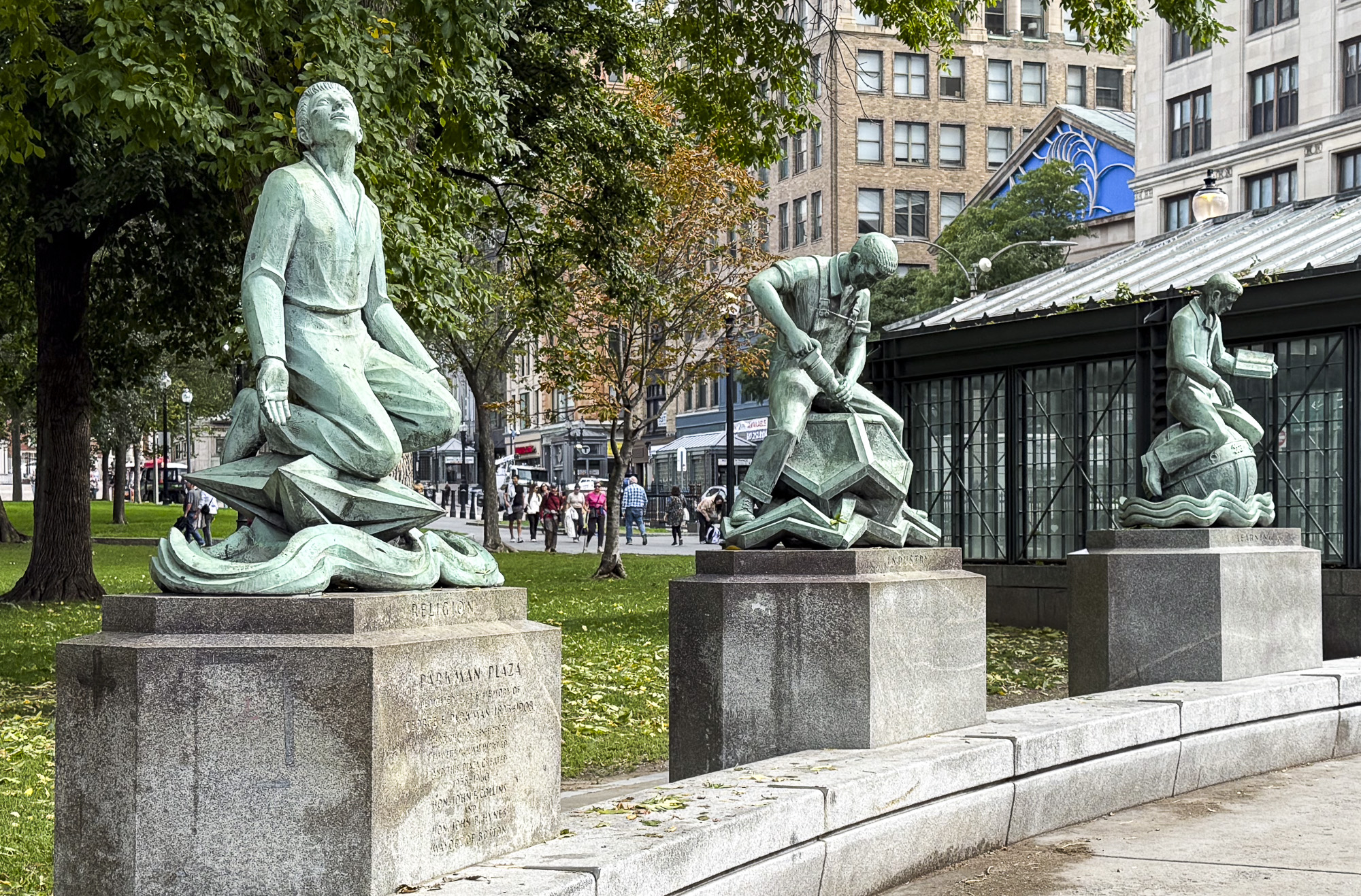
“The Embrace” by Hank Willis Thomas, captures the famous hug between Martin Luther King and his wife Coretta after MLK won the Nobel Peace Prize in 1964. The Parkman Sculptures depicting religion, industry and learning are a few of many art pieces in the Commons.
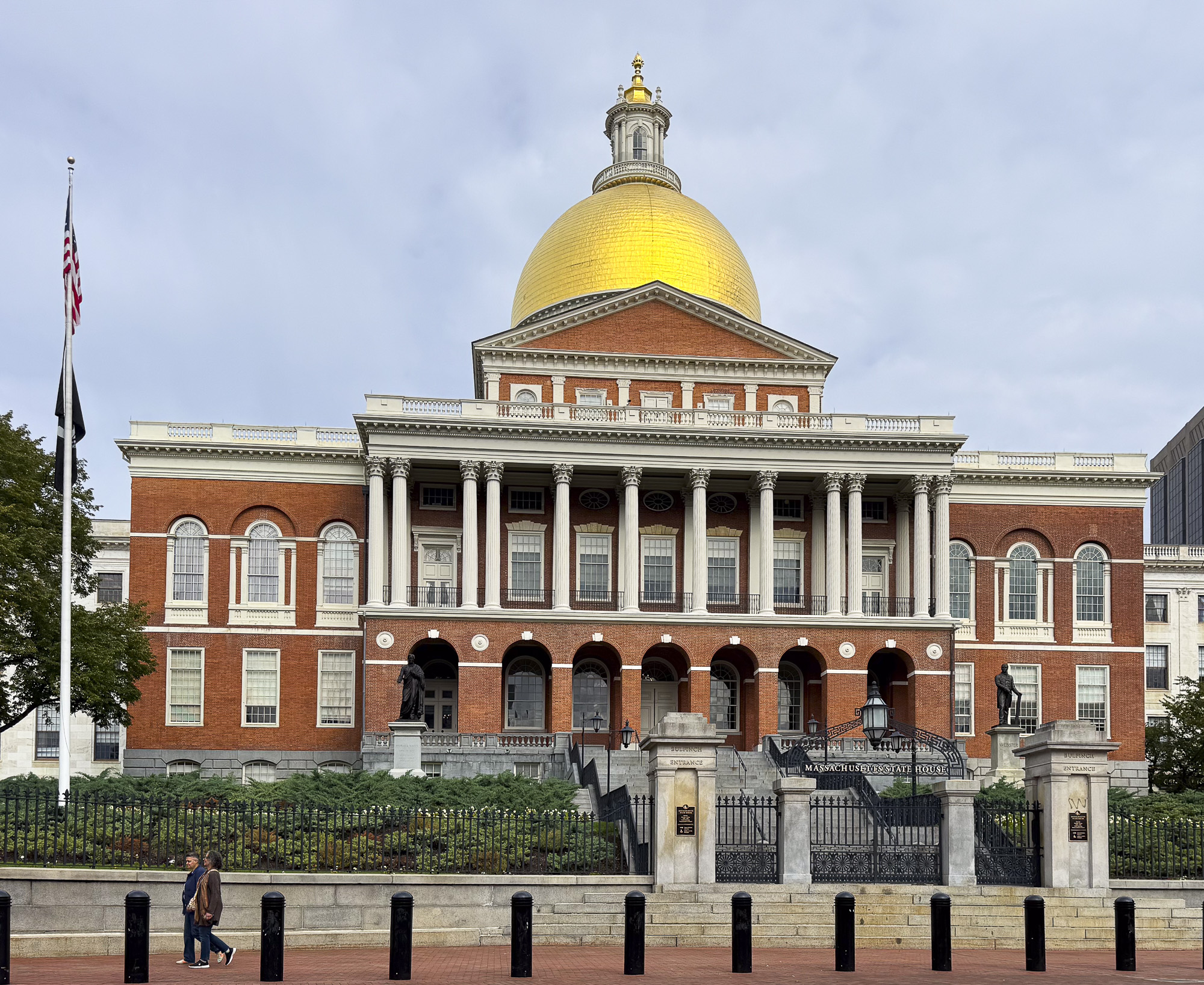
The State House with its shiny gold dome is just across the street from the Common. All three branches of the Massachusetts government are located in this impressive building.
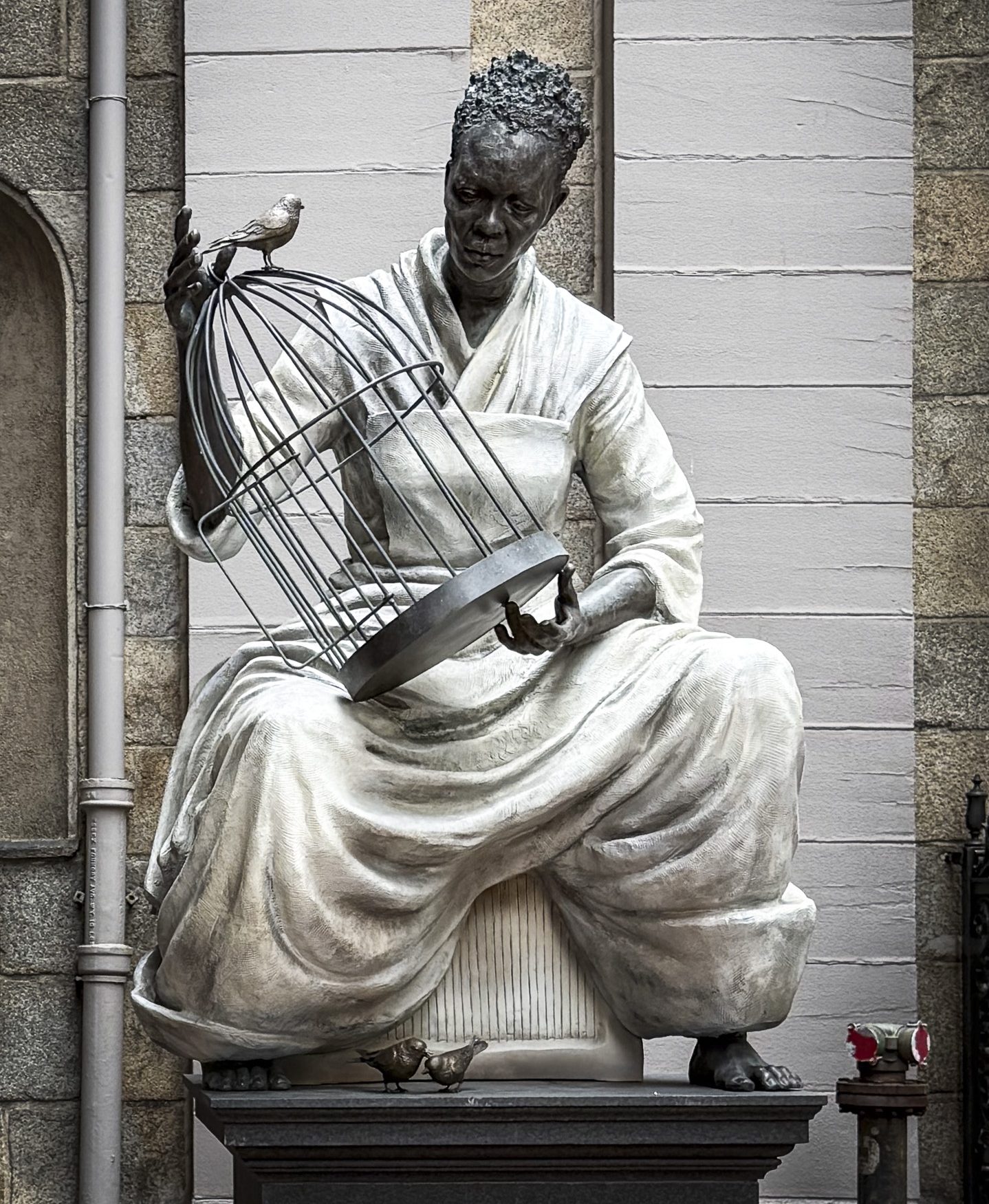
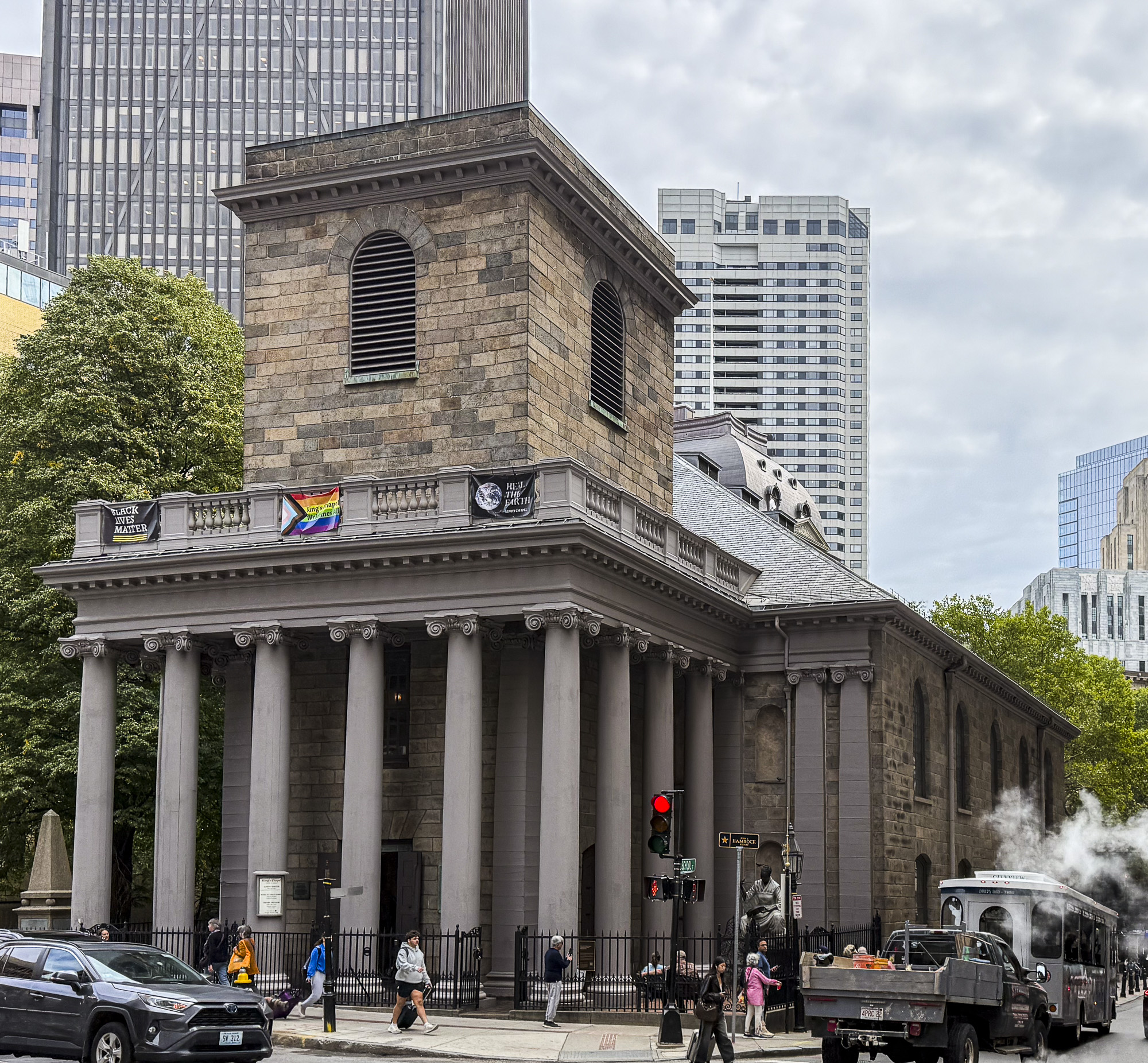
Nearby is King’s Chapel, built in 1754. It was one of the first buildings in the US designed by an architect. Originally Anglican, by the 1790s it became the first Unitarian Church in America. Just over a year ago, the Church unveiled the statue “Unbound” by Harmonia Rosales. It honours the 219 women, men and children enslaved by past ministers and parishioners of the Church.
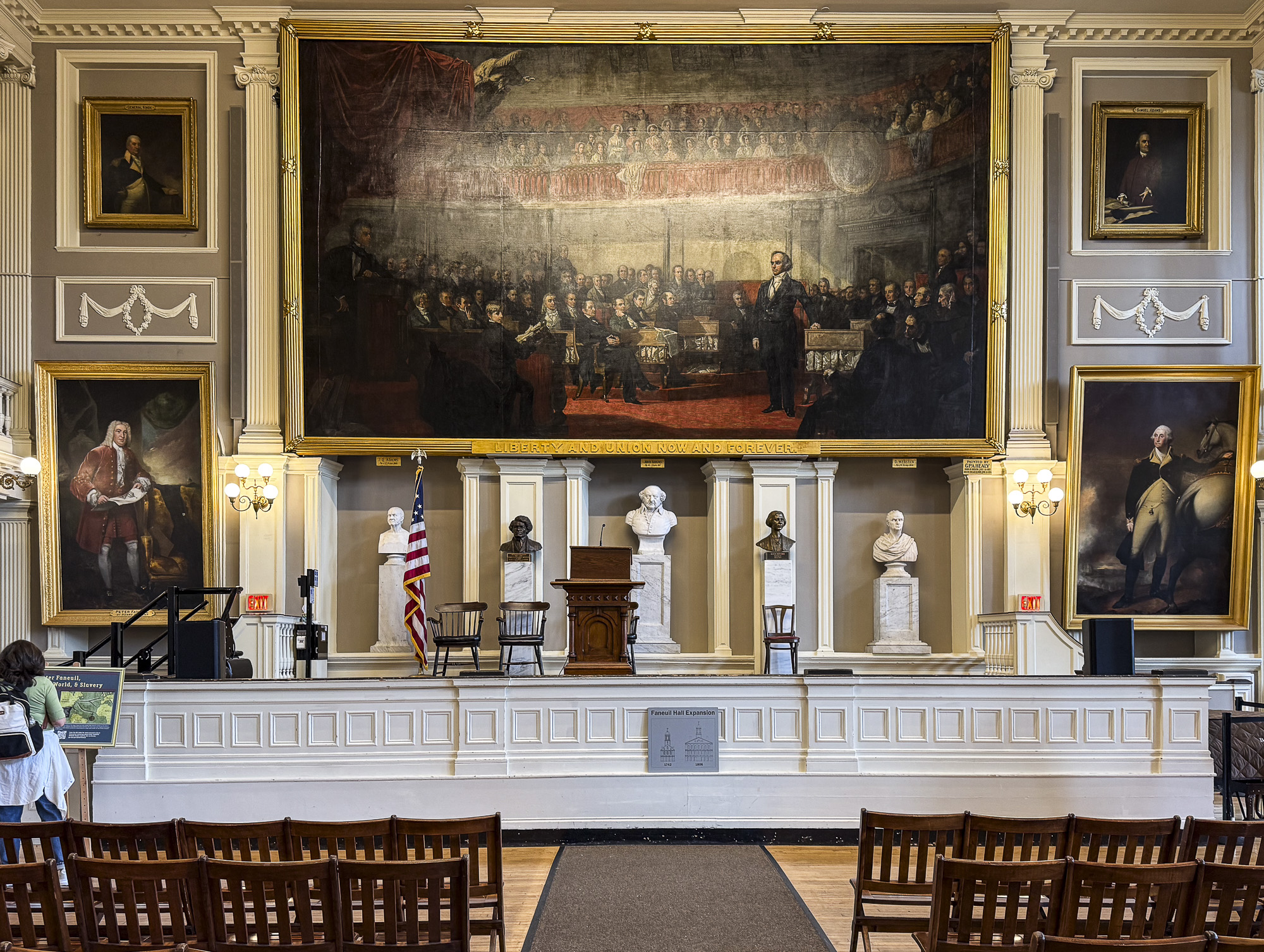
My NPS tour next took me to Faneuil Hall where many pre-Revolutionary meetings took place. Peter Faneuil (1700-1743) was a Boston merchant and slave trader who built Faneuil Hall and donated it to the City before his death. The website explains its historical importance:

It provided a platform for the country’s most famous orators. It is where colonists first protested the Sugar Act in 1764 and established the doctrine of “no taxation without representation”. It is where Samuel Adams rallied the citizens of Boston to the cause of independence from Great Britain and George Washington toasted the nation on its first birthday. Through the years, Faneuil Hall has played host to many impassioned speakers, from Oliver Wendell Homes and Susan B. Anthony to Bill Clinton and Barack Obama.
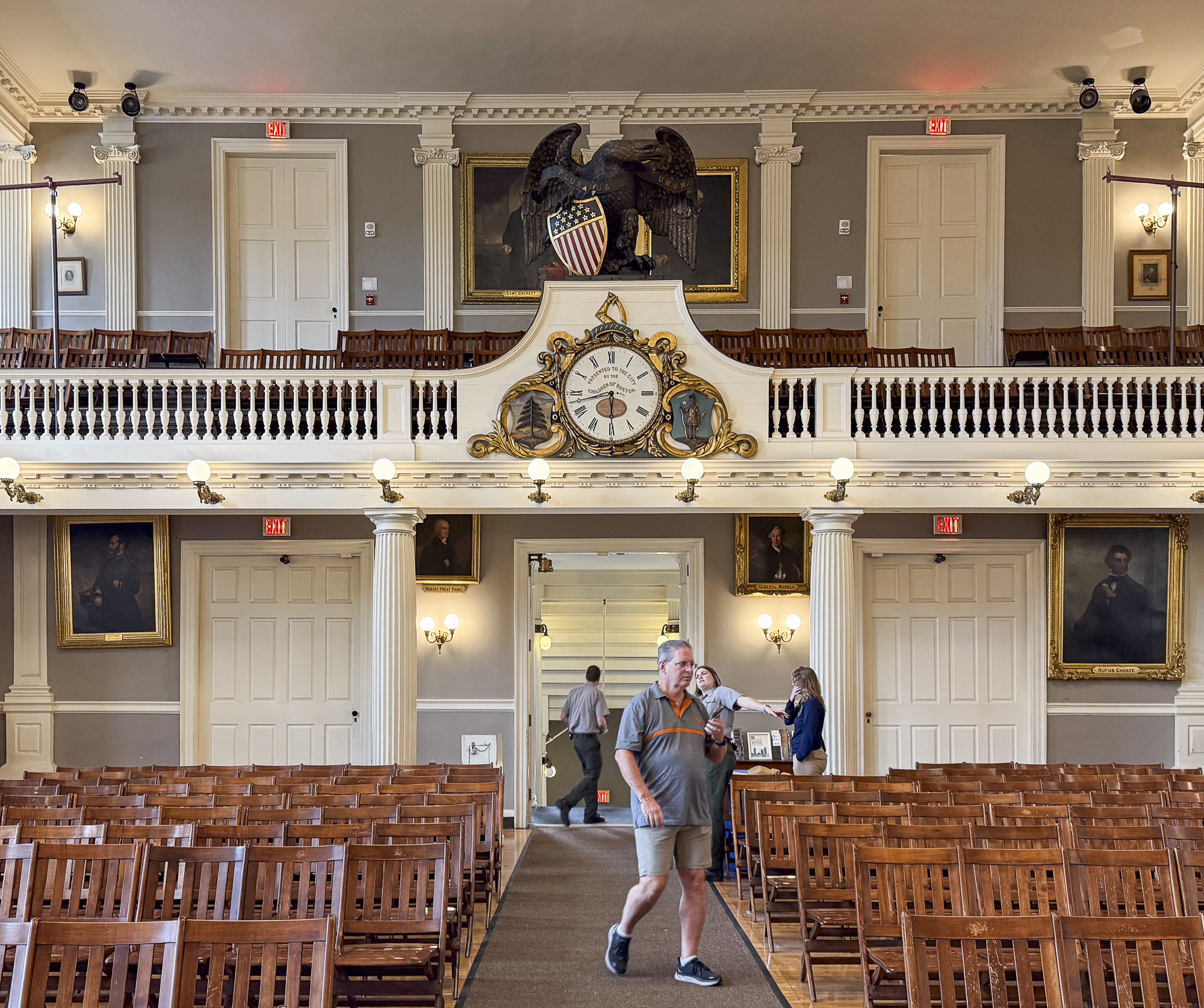
The Faneuil Hall Marketplace consists of several buildings and outdoor kiosks. Its website says “Boston Starts Here” which I find somewhat hyperbolic, but I can tell you there were many many tourists who must believe the advertising. Tourist season in Boston does not end in October!

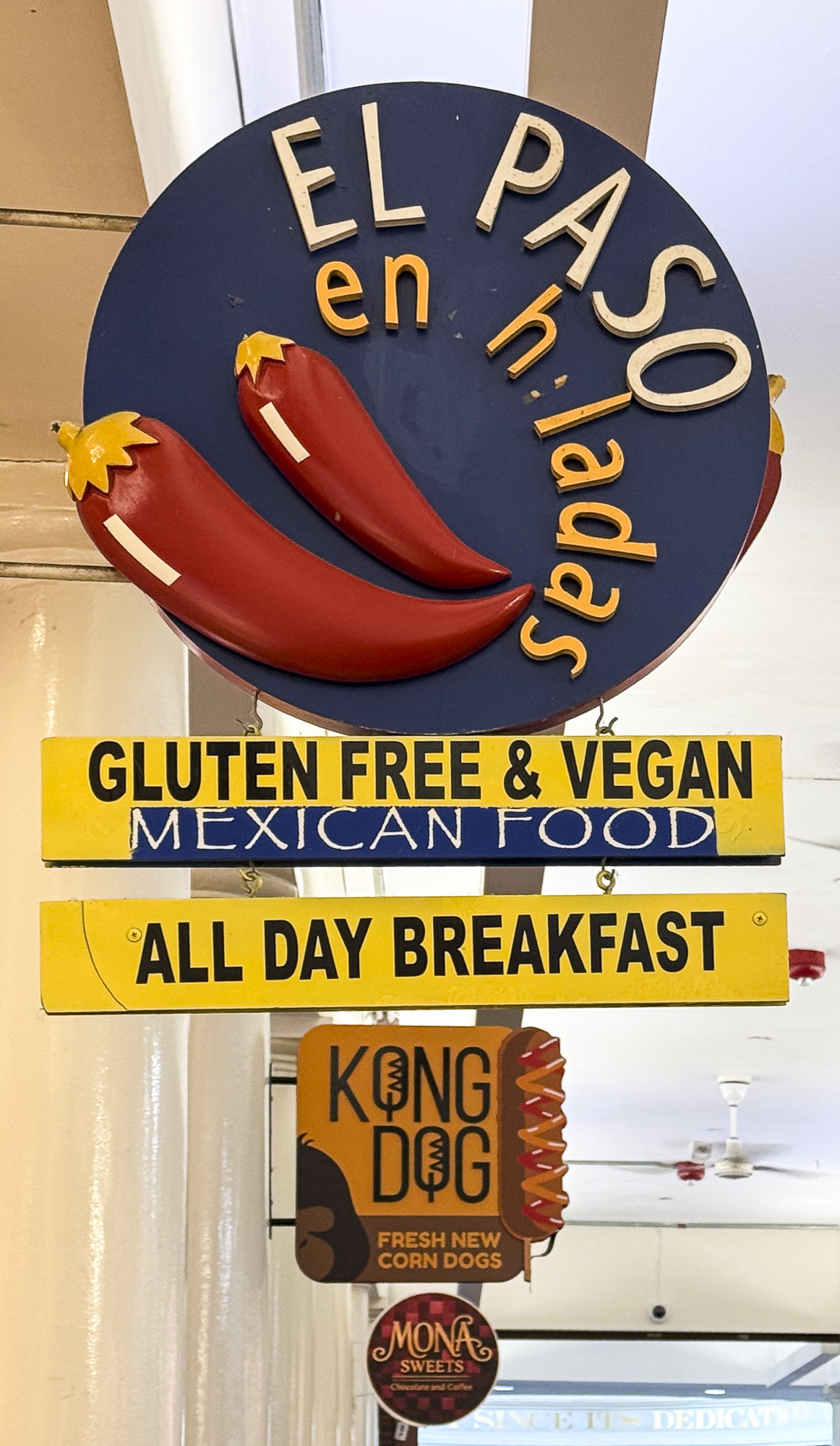
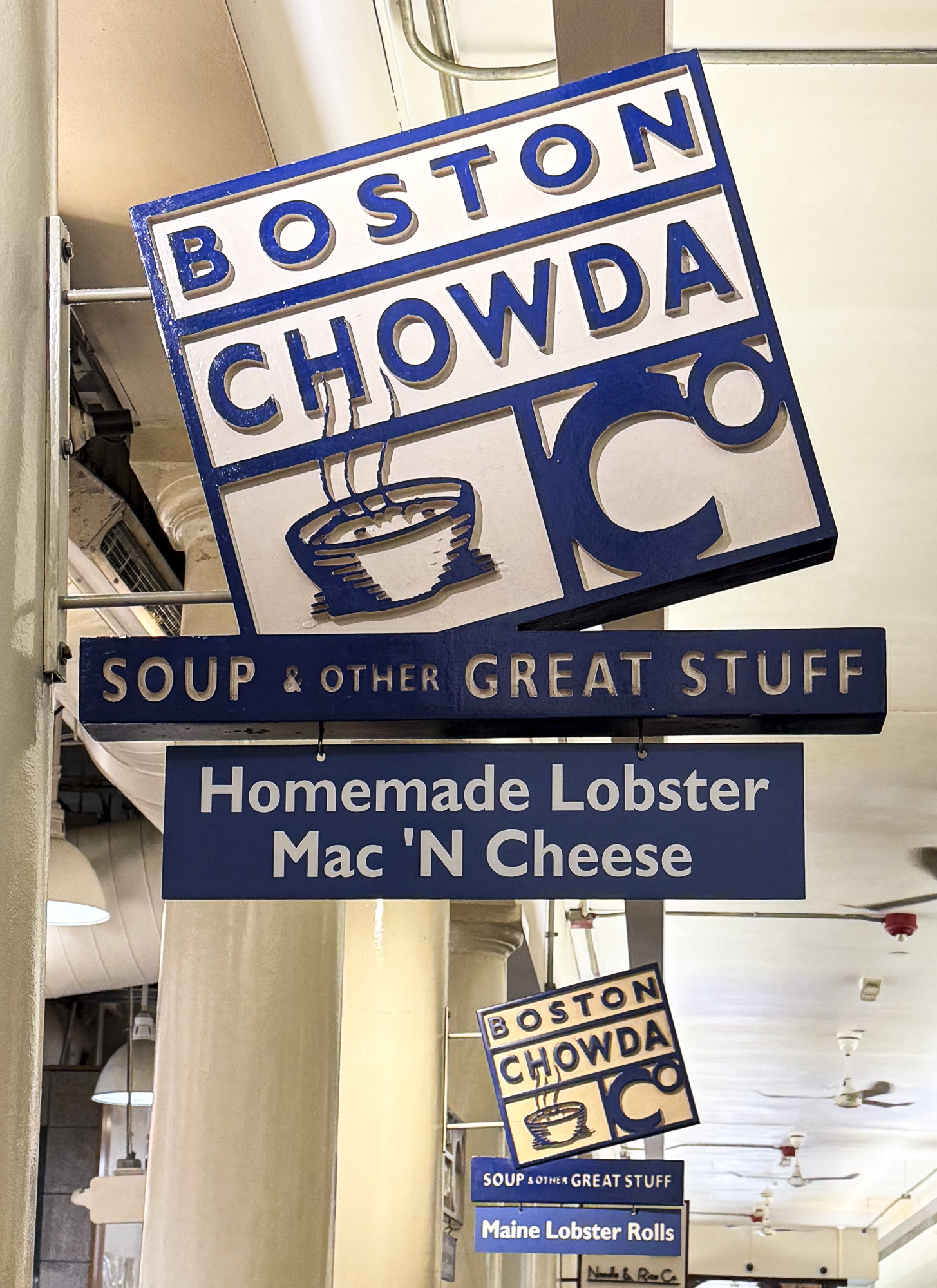
One building in the Marketplace appears to be dedicated to food stalls.
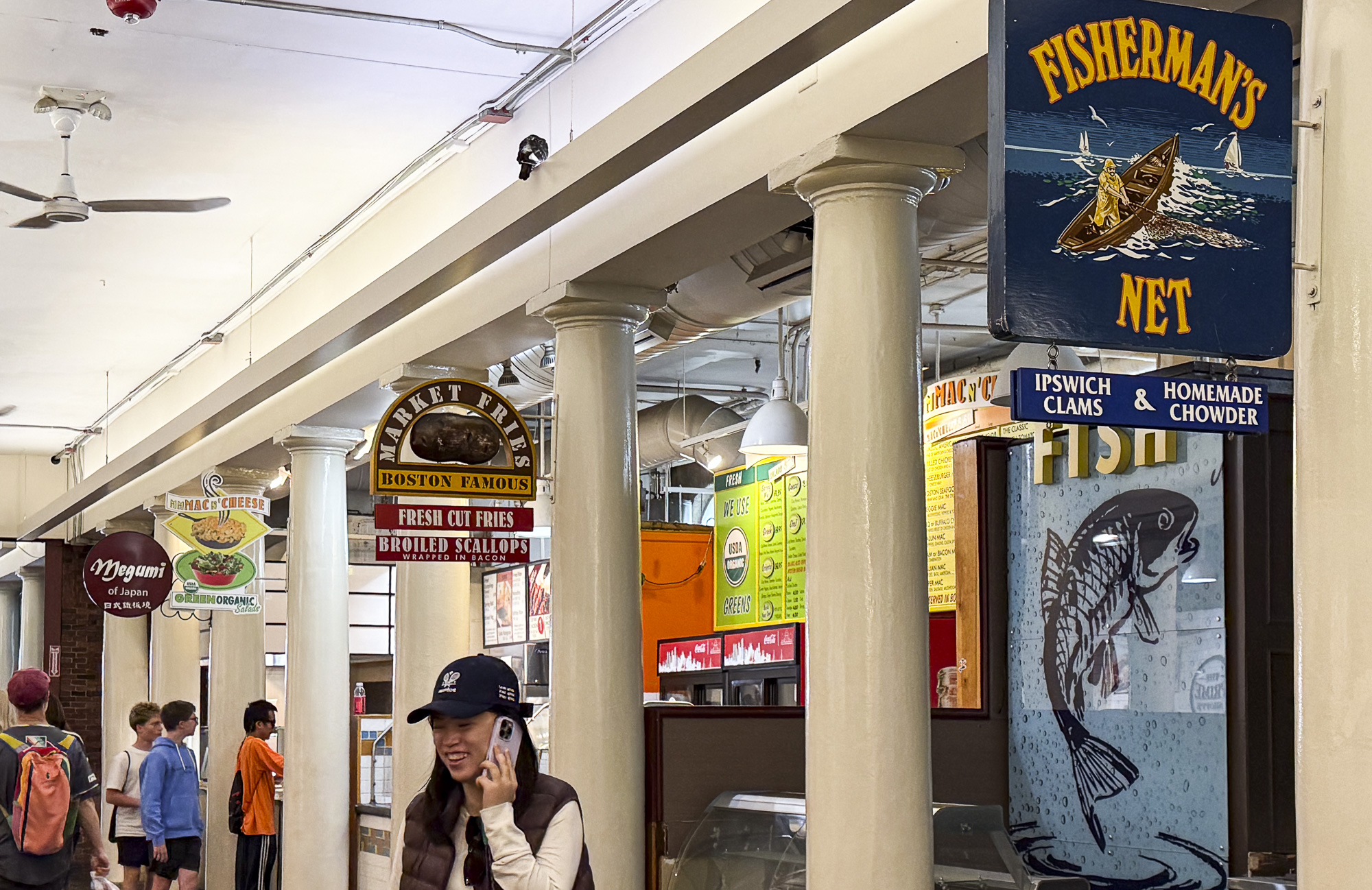
I opted to lunch at Ned Devine’s Irish pub, recommended by my 4-day AI itinerary. l ordered the “award-winning” clam chowder. I can say it was pretty good but have nothing to compare it to. If Ned’s had been selling Kilkenny Cream Ale I would have indulged, but sadly not. I mean, what is an Irish pub without Kilkenny Cream Ale?

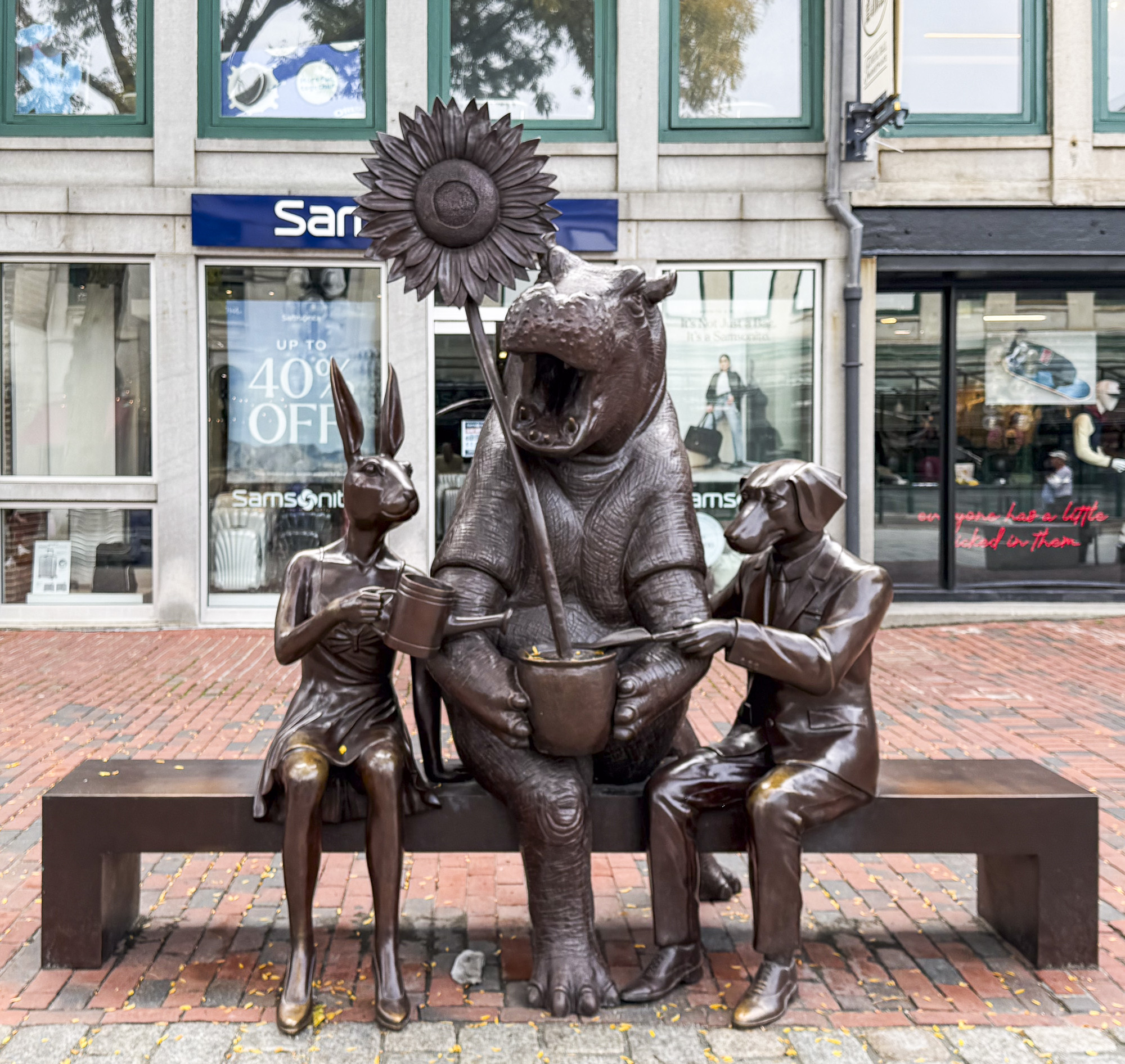
An interesting sculpture sits outside the Marketplace. The Green Bench website explains:

In the heart of an imaginative bronze sculpture bench, Dogman and Rabbitwoman take center stage, engaged in a whimsical act of nurturing nature. Positioned between them, a bronze hippo cradles a sunflower in its sculpted form, embodying the symbiotic relationship between animals and the environment.

Rabbitwoman, with a gentle touch, pours water onto the sunflower held by the affable hippo, symbolizing the collaborative effort between different beings in fostering growth and sustenance. The scene captures a moment frozen in time, where the anthropomorphic duo and the hippo collaborate in a harmonious dance of care and nurturing.

The intentional placement of the sunflower in the hands of the hippo, coupled with Rabbitwoman’s nurturing gesture, serves as a metaphor for the interconnectedness of all living things. The bench itself becomes a canvas for this delightful narrative, inviting onlookers to pause, reflect, and appreciate the delicate balance within the natural world.

That explanation is a little esoteric for me! 🤪

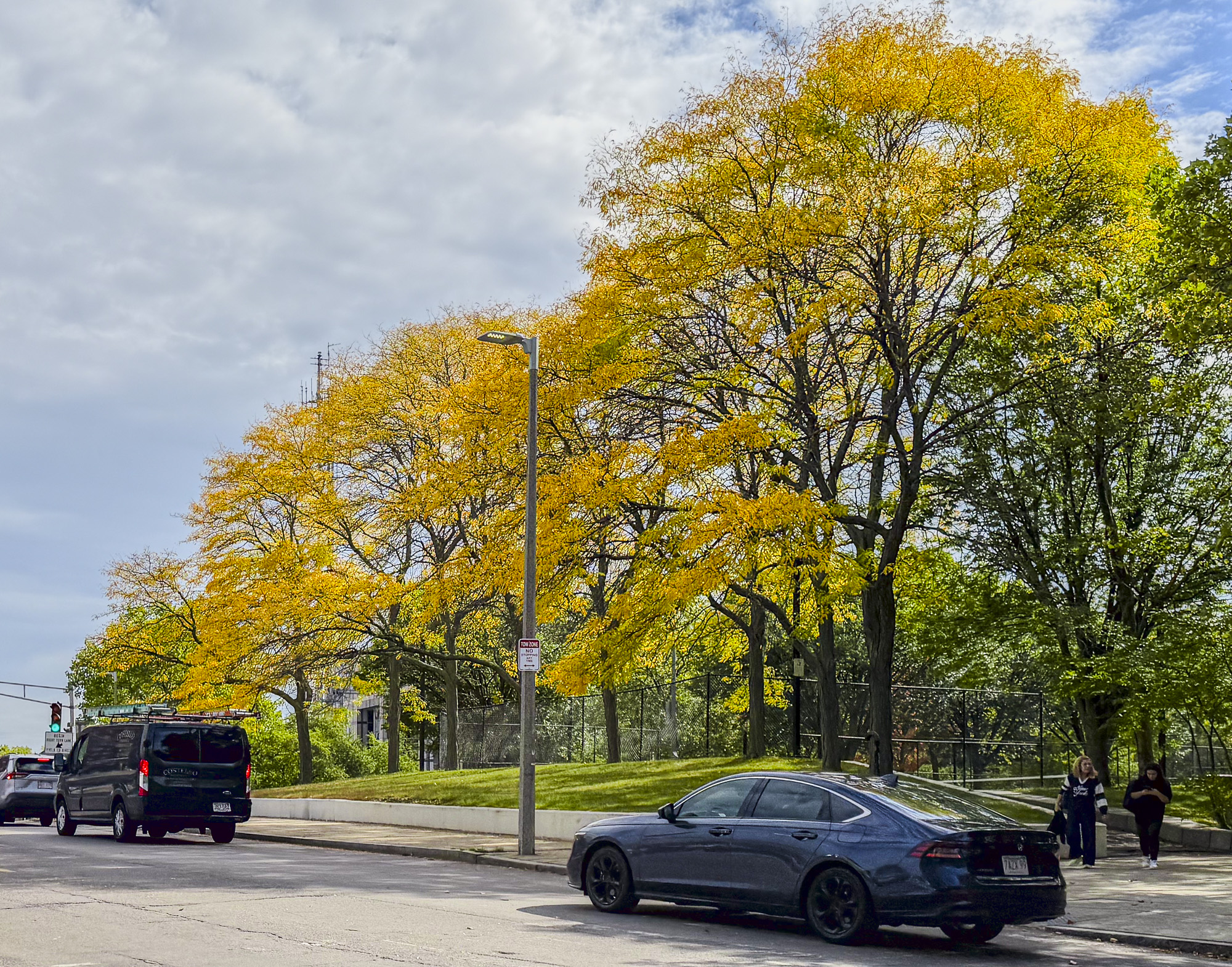
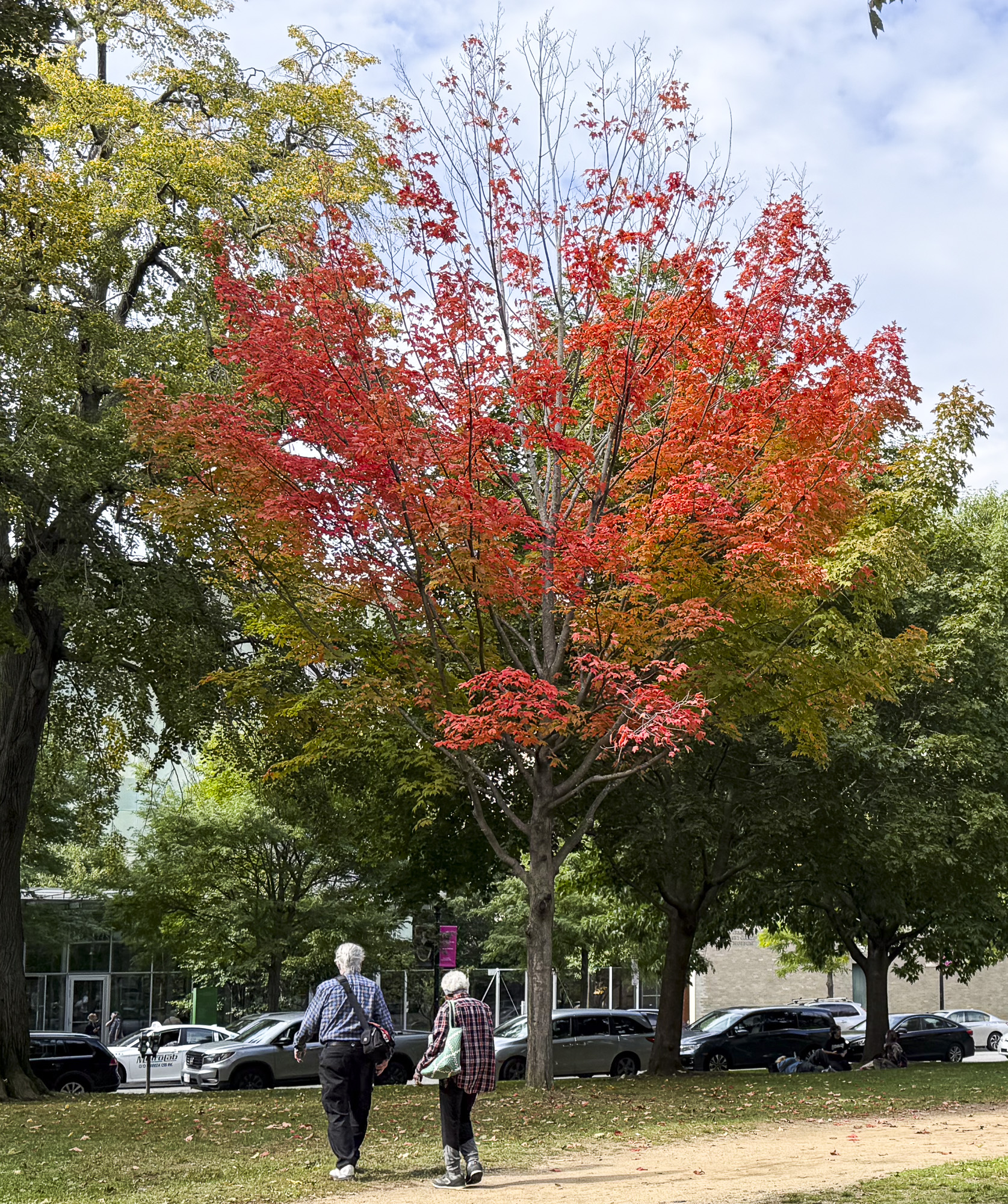
I am heartened to see leaves changing in the Brookline neighbourhood of Boston. This augurs well for my time in Vermont. 😊

Harvard University tomorrow, and a delightful surprise! See you then!

6 responses to “Downtown Boston”

  1.  Avatar
    Anonymous

    a lovely tour around! Too bad about the beer!

    joan

    Like

  2.  Avatar
    Anonymous

    I love those audio tours, what a great way to see Boston and learn about the history!

    Love Tracey

    Like

  3.  Avatar
    Anonymous

    And the “big dig”? 🙂

    richard

    Like

    1. nancywcaldwell Avatar

      I know about the Big Dig but I’m not sure where to look for the finished product. Still seems to be plenty of surface traffic!

      Like

Leave a Reply

View of downtown Boston

The US National Park Service offers a series of free audio walking tours. I used “The Freedom Trail” this morning to guide me around the downtown area.

This audio tour started at the Boston Common, a beautiful park in the middle of the city and the oldest park in the country, having been founded in 1634. The actual Freedom Trail also starts here, but the NPS tour did not stick strictly to the Trail. The view of downtown Boston to the left belies the fact that most of Boston is blessedly (from a walking perspective) flat!

“The Embrace” by Hank Willis Thomas, captures the famous hug between Martin Luther King and his wife Coretta after MLK won the Nobel Peace Prize in 1964. The Parkman Sculptures depicting religion, industry and learning are a few of many art pieces in the Commons.

The State House with its shiny gold dome is just across the street from the Common. All three branches of the Massachusetts government are located in this impressive building.

Nearby is King’s Chapel, built in 1754. It was one of the first buildings in the US designed by an architect. Originally Anglican, by the 1790s it became the first Unitarian Church in America. Just over a year ago, the Church unveiled the statue “Unbound” by Harmonia Rosales. It honours the 219 women, men and children enslaved by past ministers and parishioners of the Church.

My NPS tour next took me to Faneuil Hall where many pre-Revolutionary meetings took place. Peter Faneuil (1700-1743) was a Boston merchant and slave trader who built Faneuil Hall and donated it to the City before his death. The website explains its historical importance:

It provided a platform for the country’s most famous orators. It is where colonists first protested the Sugar Act in 1764 and established the doctrine of “no taxation without representation”. It is where Samuel Adams rallied the citizens of Boston to the cause of independence from Great Britain and George Washington toasted the nation on its first birthday. Through the years, Faneuil Hall has played host to many impassioned speakers, from Oliver Wendell Homes and Susan B. Anthony to Bill Clinton and Barack Obama.

The Faneuil Hall Marketplace consists of several buildings and outdoor kiosks. Its website says “Boston Starts Here” which I find somewhat hyperbolic, but I can tell you there were many many tourists who must believe the advertising. Tourist season in Boston does not end in October!

One building in the Marketplace appears to be dedicated to food stalls.
I opted to lunch at Ned Devine’s Irish pub, recommended by my 4-day AI itinerary. l ordered the “award-winning” clam chowder. I can say it was pretty good but have nothing to compare it to. If Ned’s had been selling Kilkenny Cream Ale I would have indulged, but sadly not. I mean, what is an Irish pub without Kilkenny Cream Ale?

An interesting sculpture sits outside the Marketplace. The Green Bench website explains:
In the heart of an imaginative bronze sculpture bench, Dogman and Rabbitwoman take center stage, engaged in a whimsical act of nurturing nature. Positioned between them, a bronze hippo cradles a sunflower in its sculpted form, embodying the symbiotic relationship between animals and the environment.

Rabbitwoman, with a gentle touch, pours water onto the sunflower held by the affable hippo, symbolizing the collaborative effort between different beings in fostering growth and sustenance. The scene captures a moment frozen in time, where the anthropomorphic duo and the hippo collaborate in a harmonious dance of care and nurturing.

The intentional placement of the sunflower in the hands of the hippo, coupled with Rabbitwoman’s nurturing gesture, serves as a metaphor for the interconnectedness of all living things. The bench itself becomes a canvas for this delightful narrative, inviting onlookers to pause, reflect, and appreciate the delicate balance within the natural world.

That explanation is a little esoteric for me! 🤪

I am heartened to see leaves changing in the Brookline neighbourhood of Boston. This augurs well for my time in Vermont. 😊
Harvard University tomorrow, and a delightful surprise! See you then!