
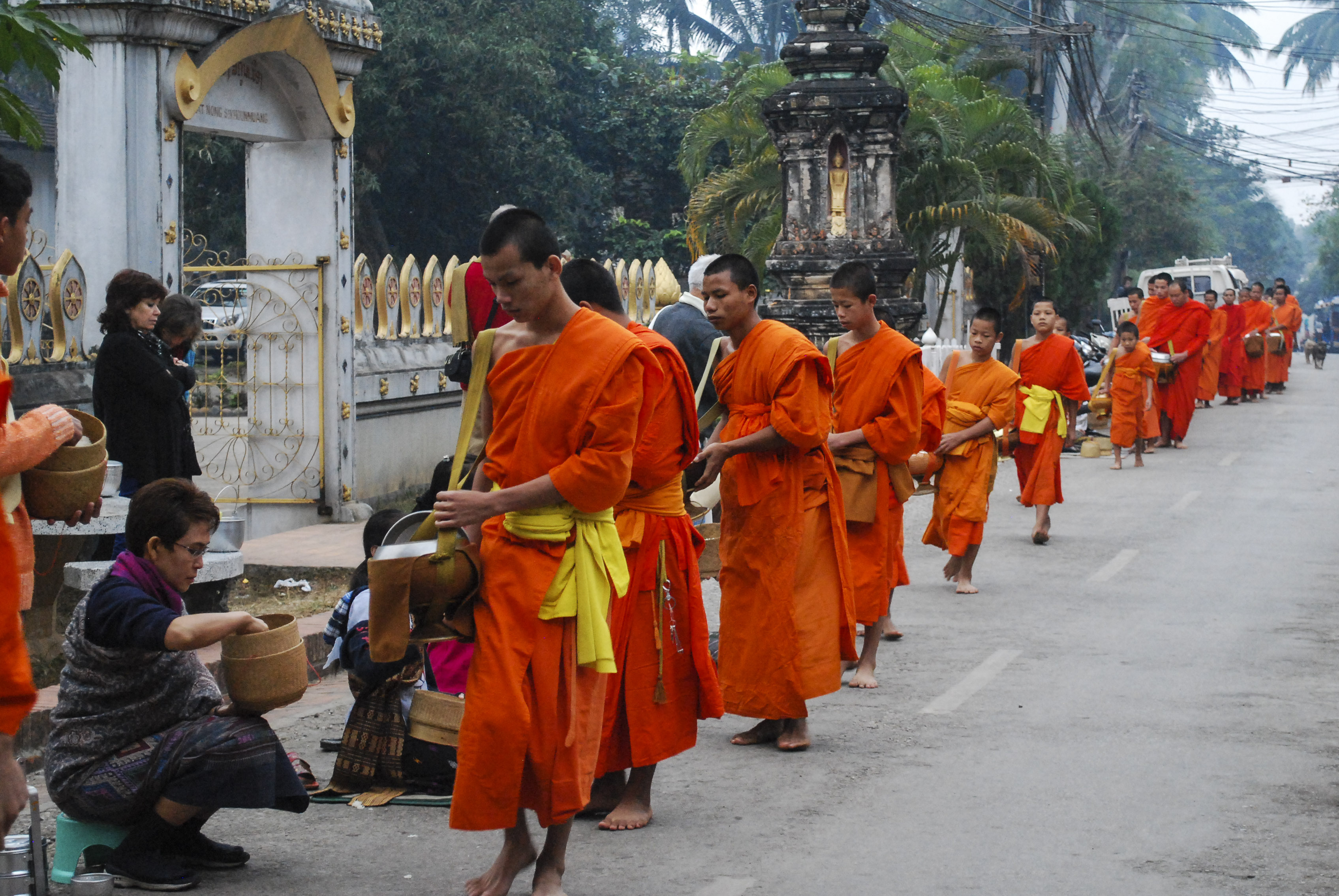
The silence was almost complete as residents of Luang Prabang gave alms to their local monks. At 6:30 every morning, almost 400 monks, colourful in their orange robes, walk a three-kilometre route to collect sticky rice and other food to sustain them. Older monks walk at the front of the queue with younger monks called novices – as young as ten years old – bringing up the rear.
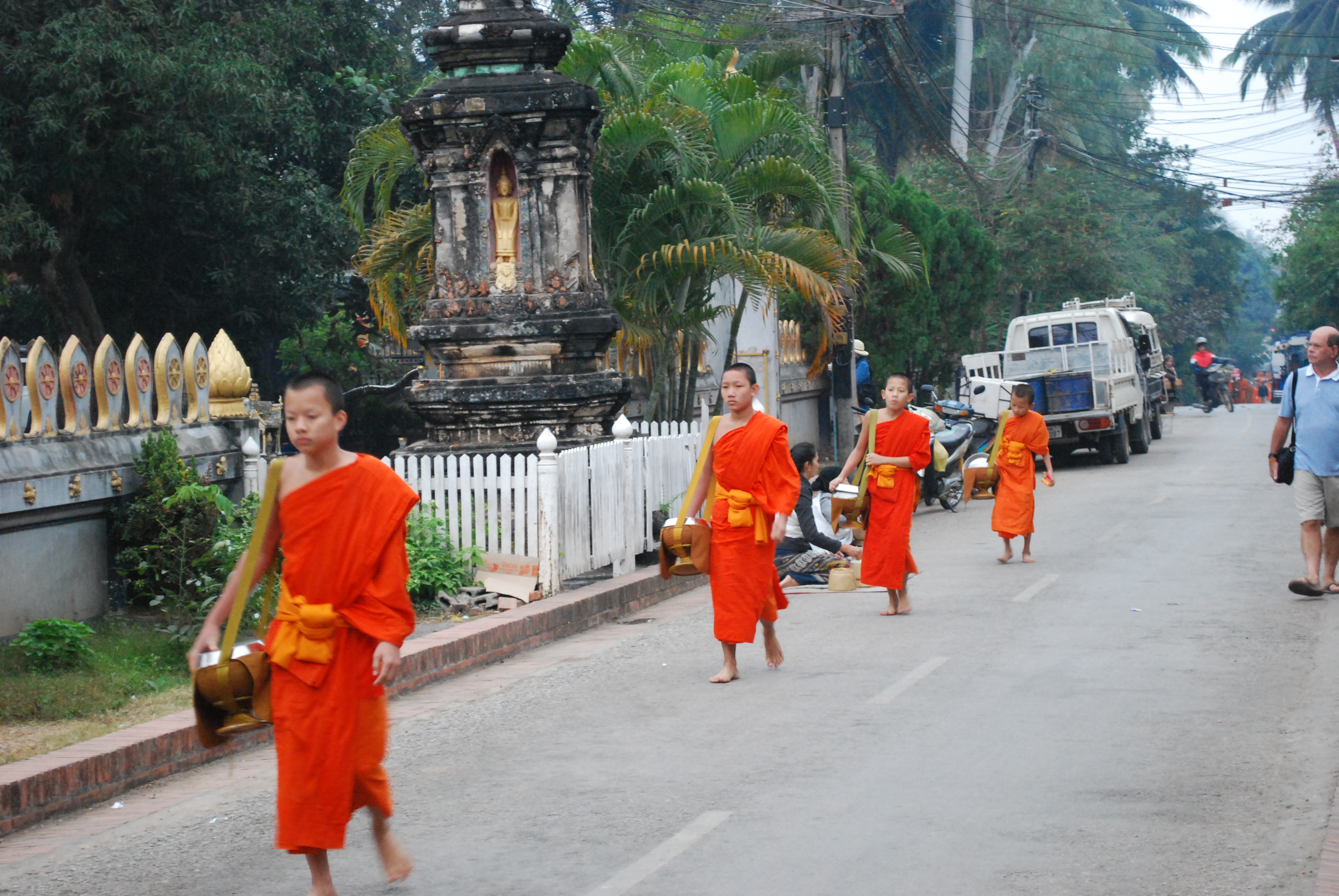
Each temple’s monks walk as a group with a space between groups. Every household sends one person to give alms. The food must be freshly cooked; the household is up early each day to prepare enough sticky rice to distribute a small handful to all 400 monks. Female alms givers cannot be taller than the monks; they should sit on the ground, but may use a stool if necessary. Male donors may stand. Since the monks cannot cook in the temple, residents also take other food to the temple for morning and mid-day meals, the only two that monks eat each day.
https://www.flickr.com/photos/64513024@N07/20885102340/in/datetaken/
The poor may also sit on the alms-giving route and beg for alms from the monks. If the monks think they have received enough food, they may give some away. This morning there was a small boy begging. Only one monk put some sticky rice in his basket. He will turn up at the temple later in the day and receive the food he needs.
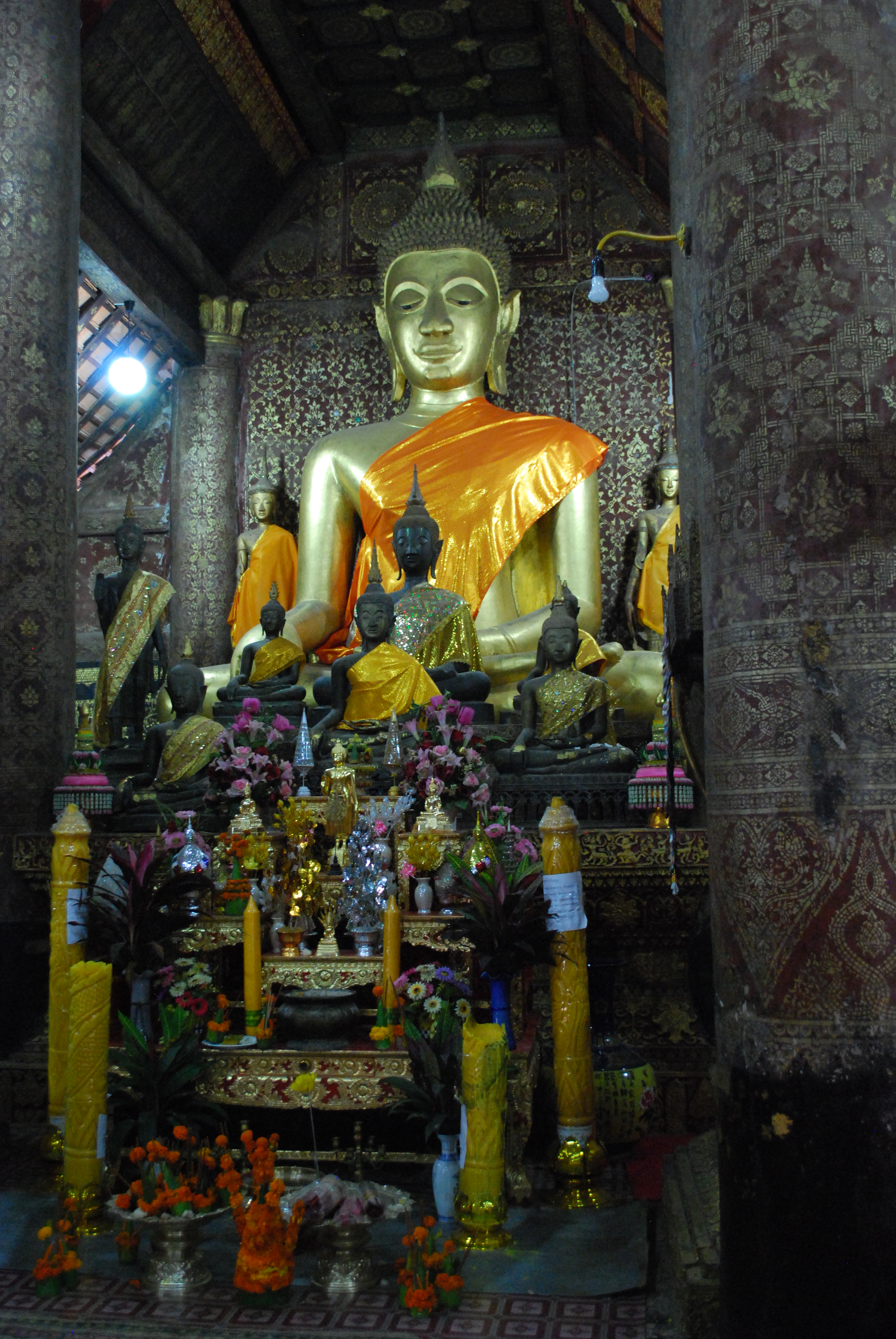
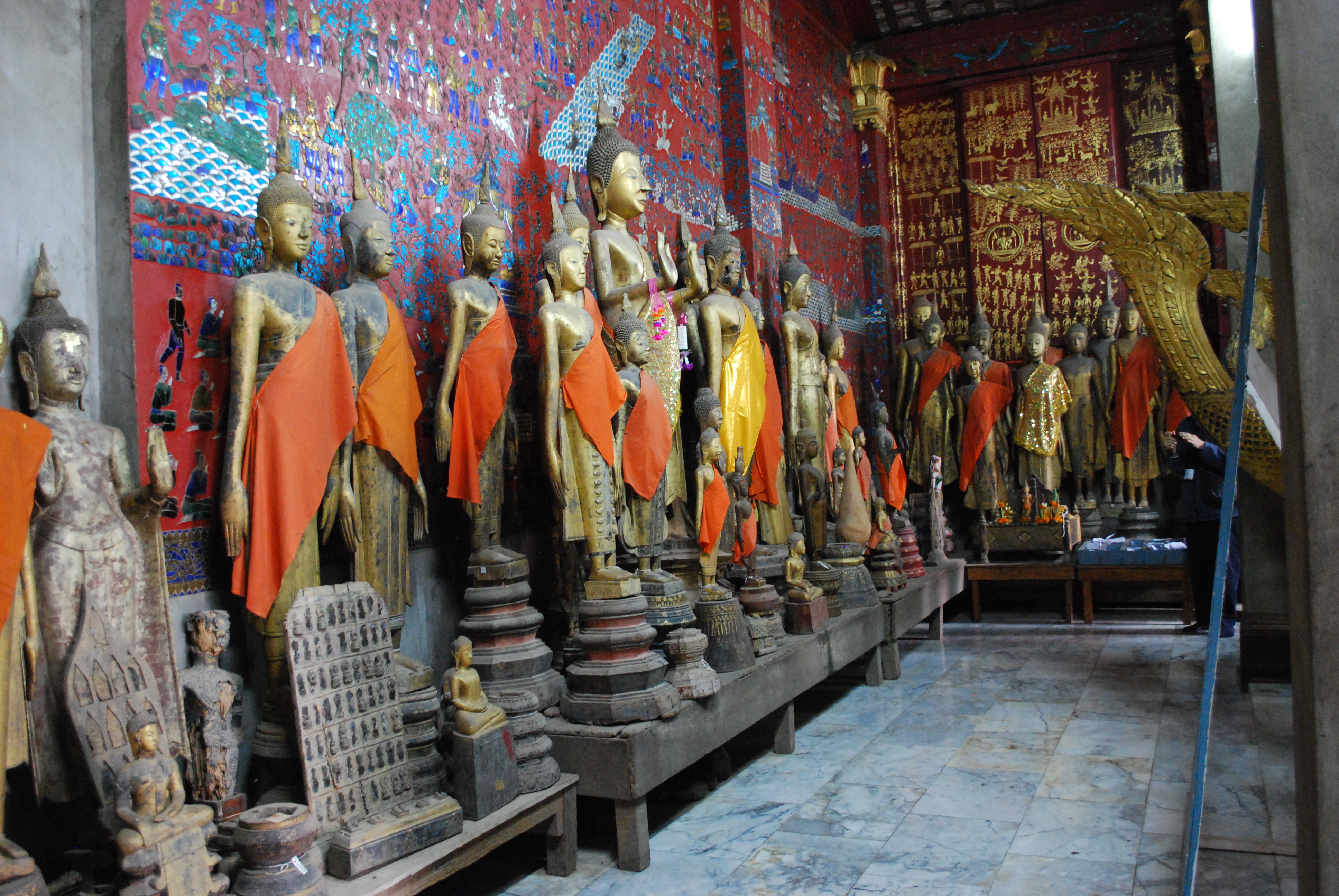
Following the alms giving, we delivered our Baci ceremony offering to Wat Xiang Thong, a (previously) royal temple in town. It is currently being refurbished with new gold leaf being added to the exterior. The interior is highly decorative, but in a discordant note there is a red and white plastic clock hanging on the wall above the door. A building behind the temple houses what might have been a float or a boat and what appear to be long disused Buddha images. It was odd to see Buddhas in a non-glorified setting.
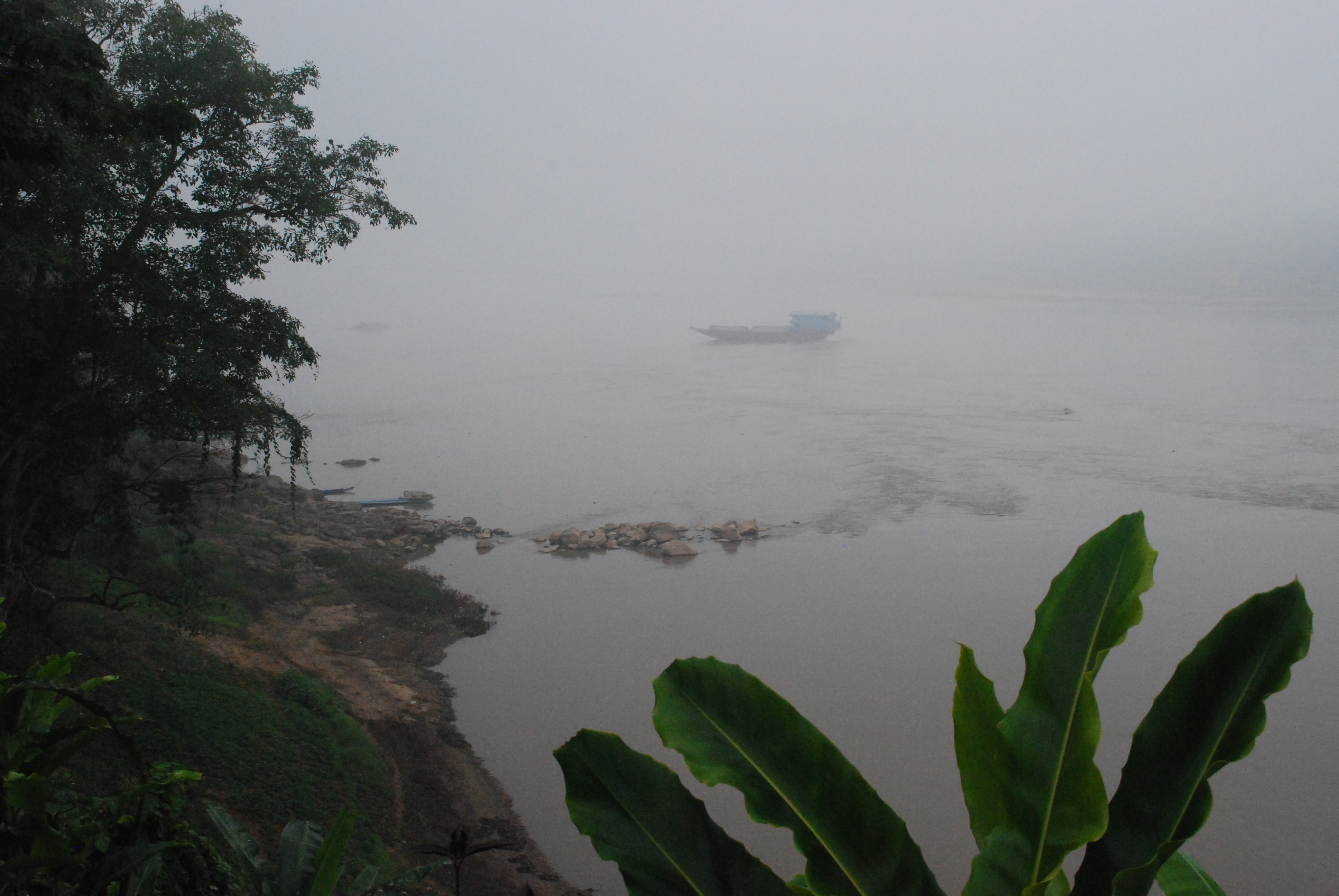
Back to the hotel for breakfast on the terrace overlooking the Mekong River. Luang Prabang is quite high and the evenings are chilly while the days are very hot.
Tony Zola who spoke to us in Bangkok addressed us again today, this time on the political economy of Laos. He talked of the Laos government’s plan to raise the country out of poverty in part by helping villagers start their own businesses. I asked if this would not be defeating the goals of a single-party communist state, that by empowering the poor they would become more aware and perhaps want to vote. Tony’s reply was that my question was a Bangkok question; it is a question he cannot answer while in Laos. Our Bangkok guide had explained that it is illegal to criticize the monarchy while in Thailand. It is illegal, or perhaps highly unwise, to criticize the government while in Laos.
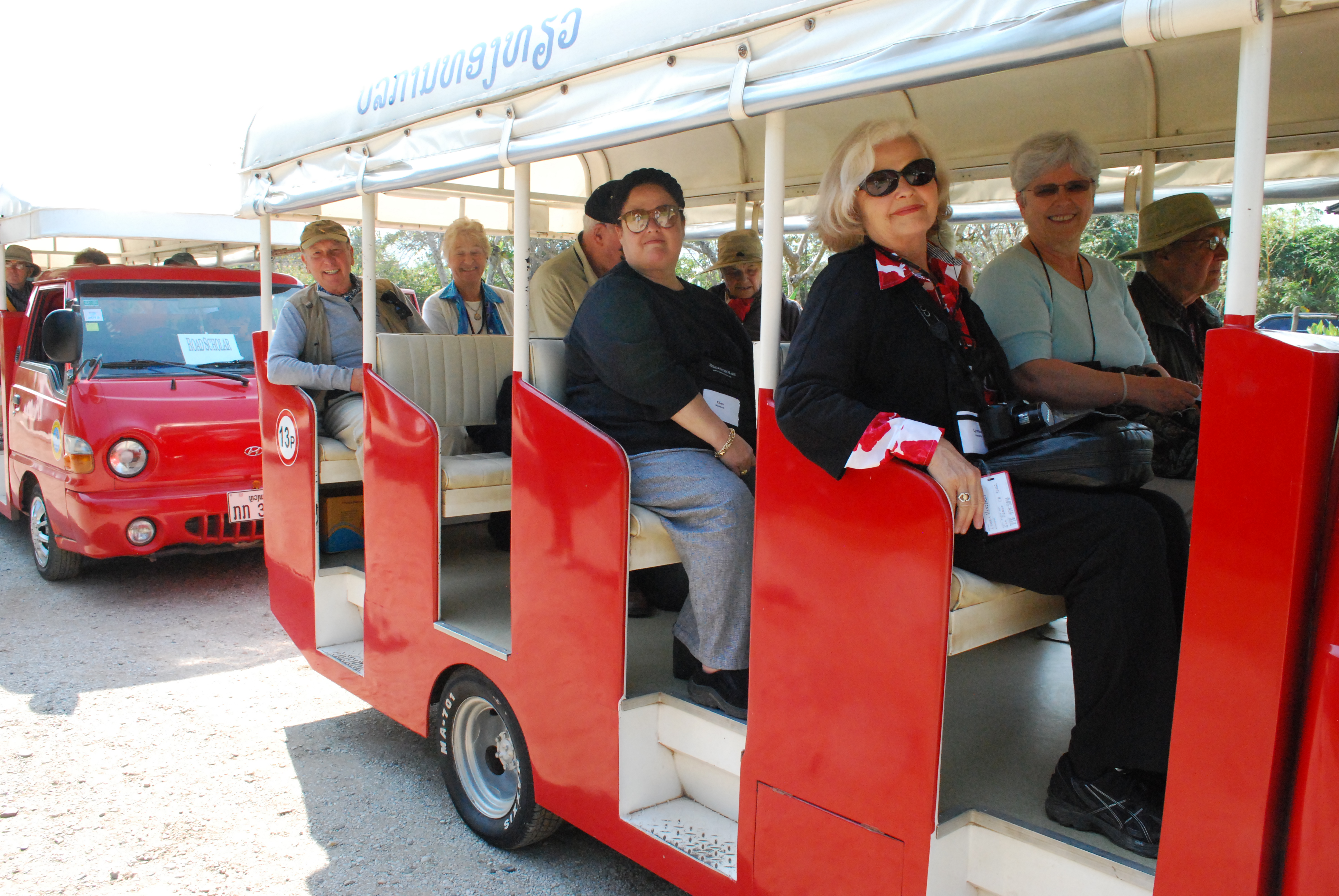
We visited Ock Pop Tok (East Meets West, ockpoptok.com), a silk textile design and weaving business started twelve years ago by two young women, one Lao and one English. They purchase silk from villages around Laos, spin it, dye it and weave it into scarves, skirts, wall hangings (I couldn’t resist one!) and various other products. Their business has grown from a $2,000 start to include four on-site hotel rooms for visitors, a restaurant where we had lunch, and a weaving school of sorts.
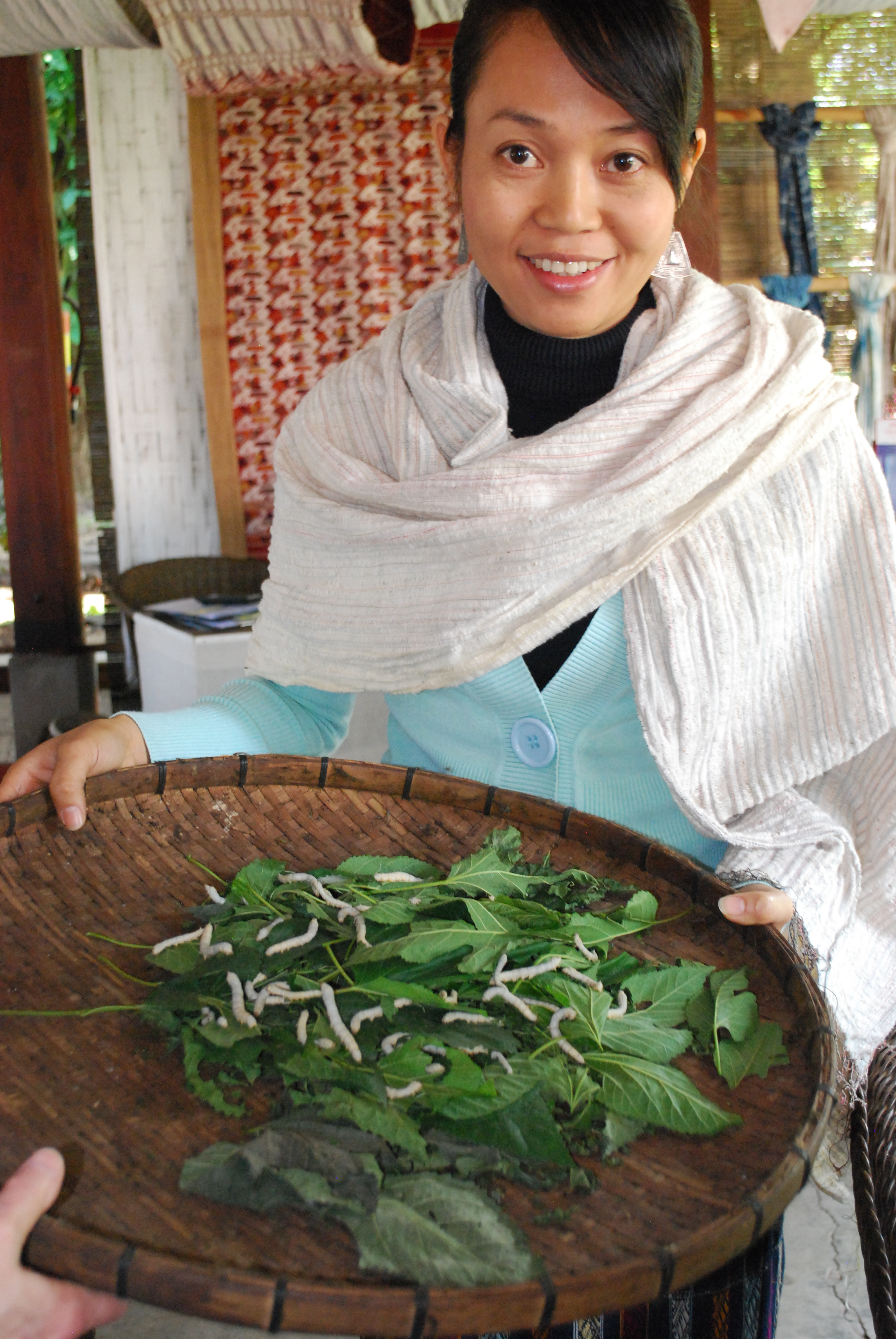
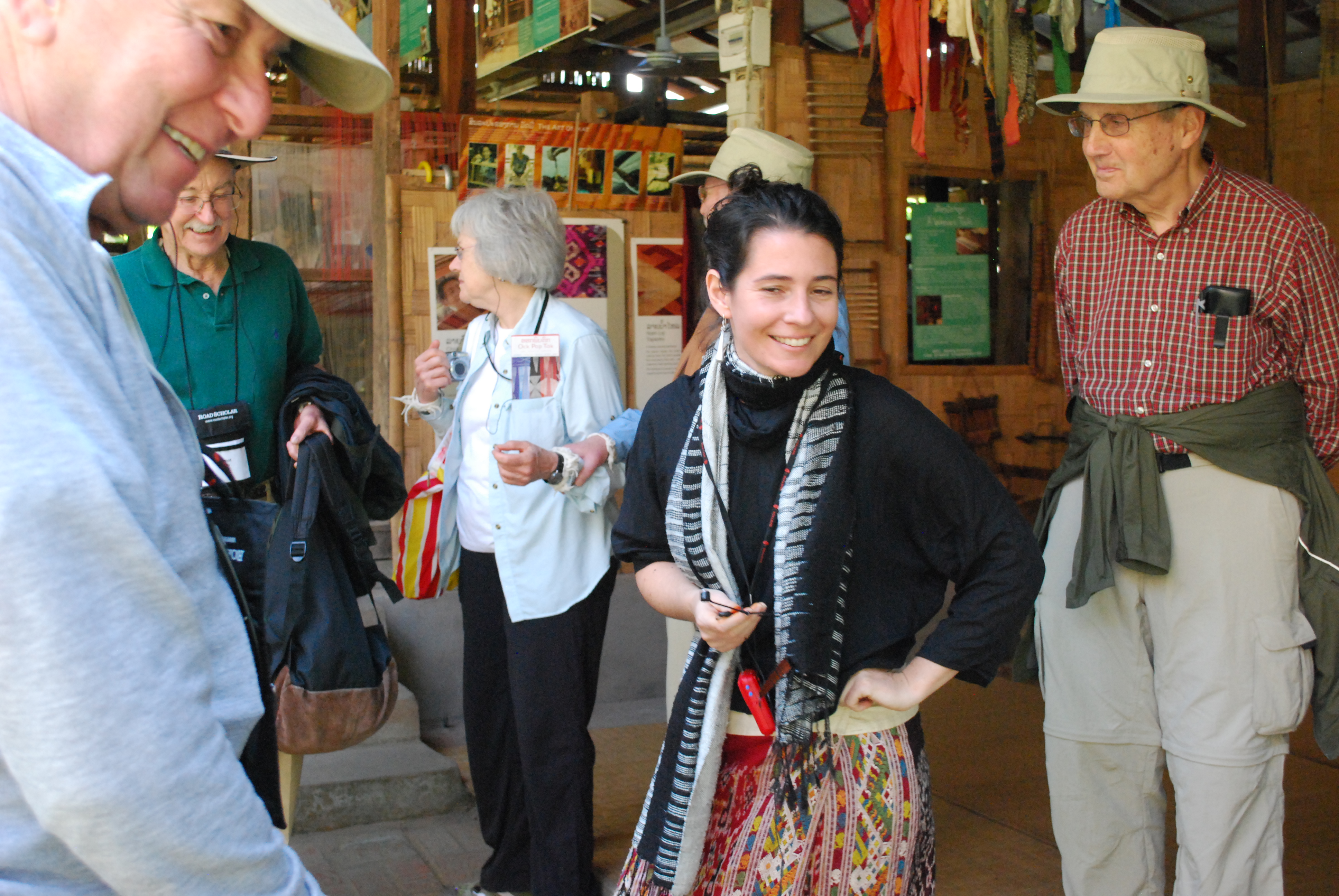
The government gives Ockpoptok contracts to train villagers where there is a lot of unemployment in weaving. Their products are mostly natural with the dyes coming from plants in the Lao forests and with nothing going to waste. In fact Jo, the English owner, told us that even the waste from the silk worms is used in their restaurant to make “silkworm poutine.” While I was trying to picture this very odd dish and wondering who on earth would order it, Jo asked Val, the Lao owner, if she would show us a jar of “silkworm poop tea.” I’m not sure which would be worse, and there were no takers among our group for a cuppa!


Leave a Reply