On the Move

Finishing the tour
Zapote fruit
Zapote fruit

The Manglares Churute Ecological Reserve is about an hour south of Guayaquil (ecuador.com/protected-areas/manglares-churute-reserve/). It simply teems with wildlife and today it teemed with human life too.

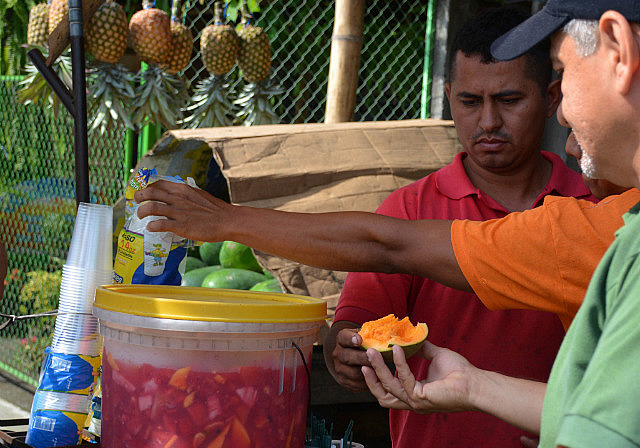
On the road to the Reserve, our Guayaquil guide, Eddy, introduced us to the fruit zapote. It has a hard green exterior but delicious kind-of-melon-like fruit around a hard pit.
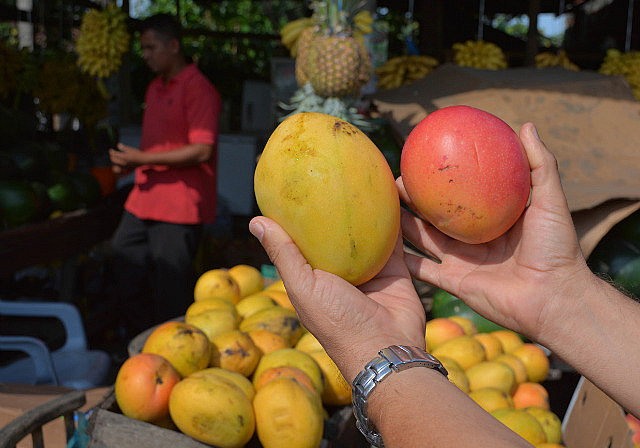
Two of Ecuador's 70+ varieties of mango
Two of Ecuador’s 70+ varieties of mango

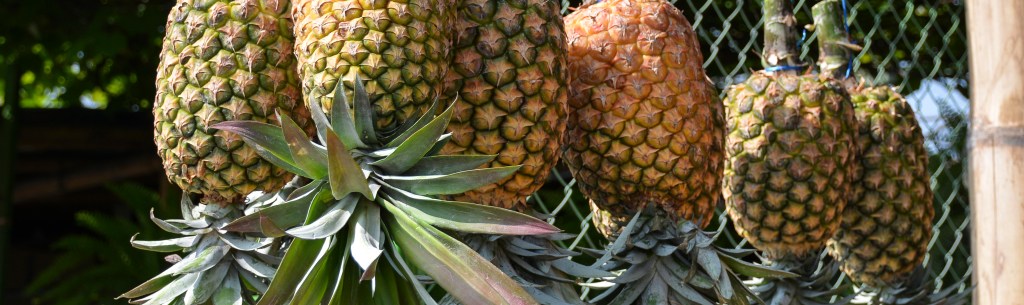
The fruit stands along the highway were packed with melons and pineapples and mangos.  Over 70 species of mangos grow in Ecuador; Gonzalo claims the only fruit not grown here are dates.
A long drive down a very bumpy road delivered us to the mangrove forest where we met a very tame gray-cheeked parakeet and walked along a somewhat sketchy boardwalk to an estuary of the Churute River.  Can you see the missing boards in the walkway?
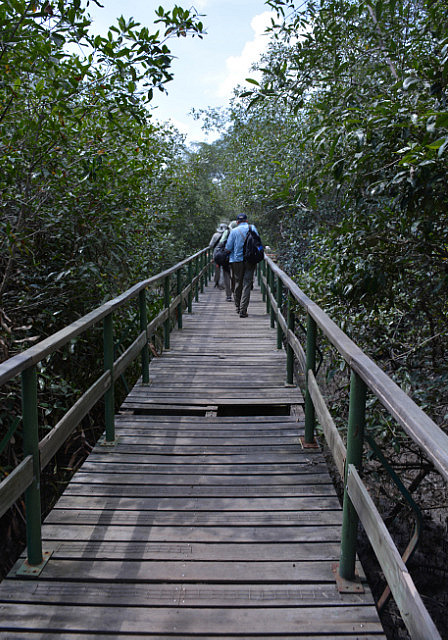
On the way to the Churute estuary

Eddy instructed us to stop and stand very still and then dropped a few leaves on the mud below.  Shortly thereafter mangrove crabs left their homes to retrieve the leaves that they compost into food in their nests.  Crab catchers – men – reach into these holes in search of mature males.  They are allowed to catch 96 crabs per day, and there are 120 catchers working in the mangrove forest; that’s a lot of crabs!
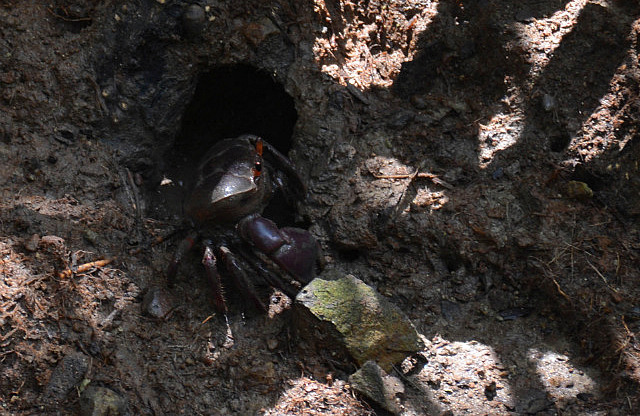
Mangrove crab
Mangrove crab

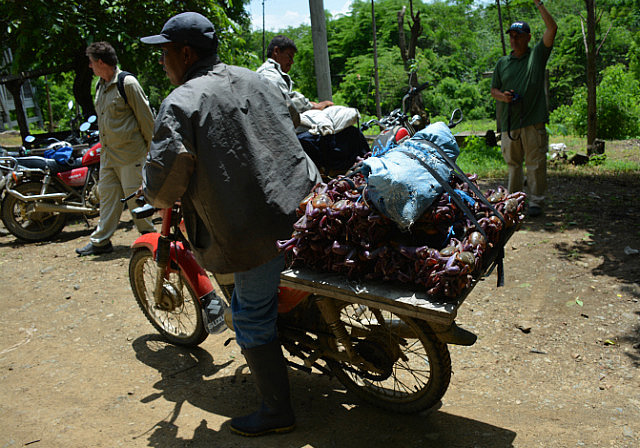
The men sort them into bundles of 24 and tie them to the back of motorcycles for the trip to market.  They are not allowed to trade in females.
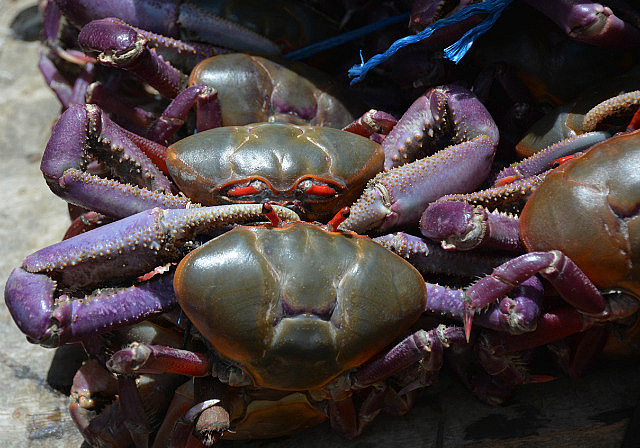
Mangrove crabs
Mangrove crabs
Taking live crabs to market
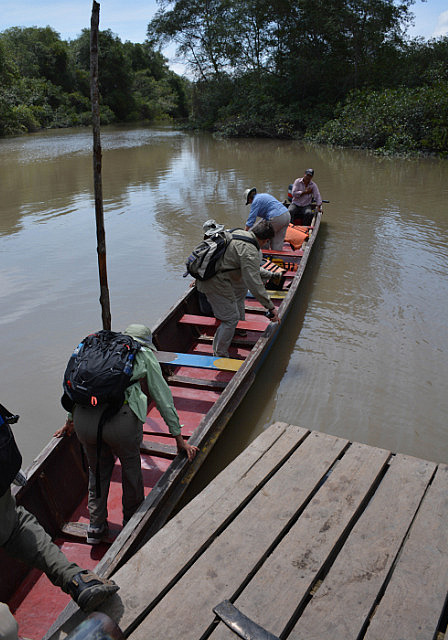
Loading into the motorized canoe


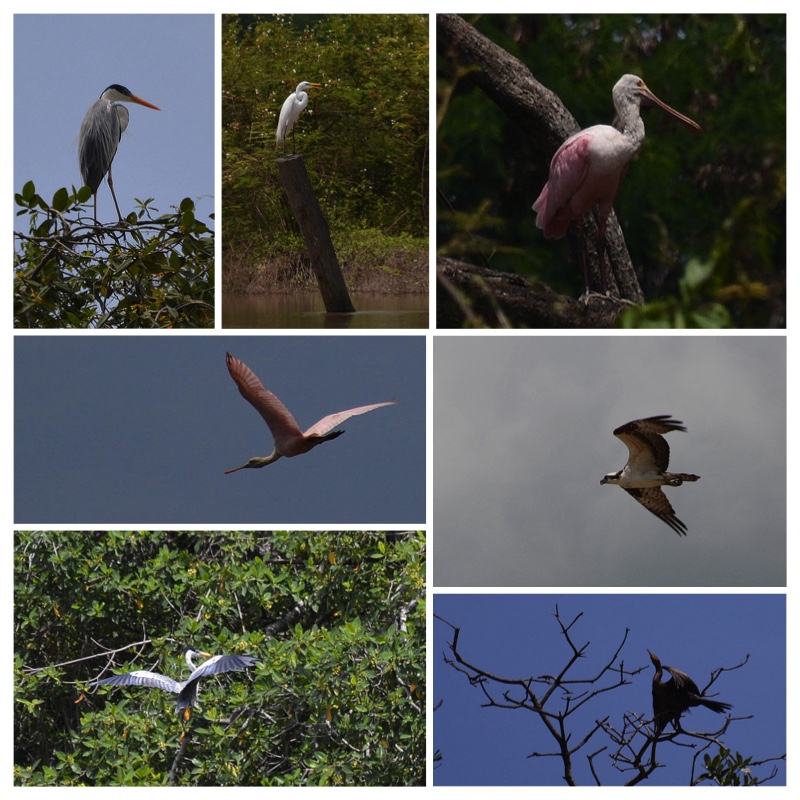
We loaded into motorized canoes for a bird-watching expedition, and did we see birds!  Ospreys, egrets, cormorants, beautiful pink roseatte spoonbills and regal Cocoi herons put on a fascinating show for us.

Half our group on the estuary

Bird CollageBack on dry land, we hiked into the mangrove forest in search of howler monkeys.  We heard them before we saw them, and I was able to catch only one on camera.  The video below captures the sounds of the forest.

Howler monkey
Howler monkey

https://www.flickr.com/photos/64513024@N07/21041515620/in/datetaken/

Gustavia flower
Gustavia flower

On our walk through the forest, we spotted a beautiful gustavia flower, a tarantula – old hat for us Amazon basin pros! – and a “fake” chameleon.  I’m not sure why the odd name; perhaps it doesn’t change appearance but lives in trees that camouflage it well.  This one certainly took a good bit of spotting by Gonzalo.

Fake chameleon
Fake chameleon

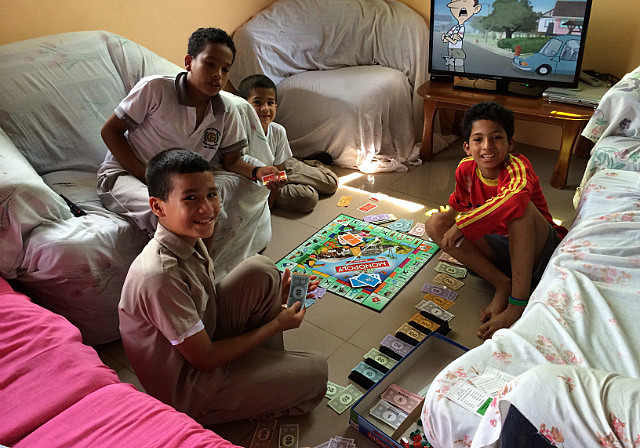
Following our walk we lunched at the home of a Reserve park ranger.  While we gorged on crab – of course! – the kids watched cartoons on TV while playing Monopoly.

Lunch at the Churute Ecological Reserve


Ecuadorian kids being normal
Ecuadorian kids being kids

On the bumpy drive back to the highway we stopped and watched a beautiful green kingfisher in a field next to the road.

Green kingfisher
Green kingfisher
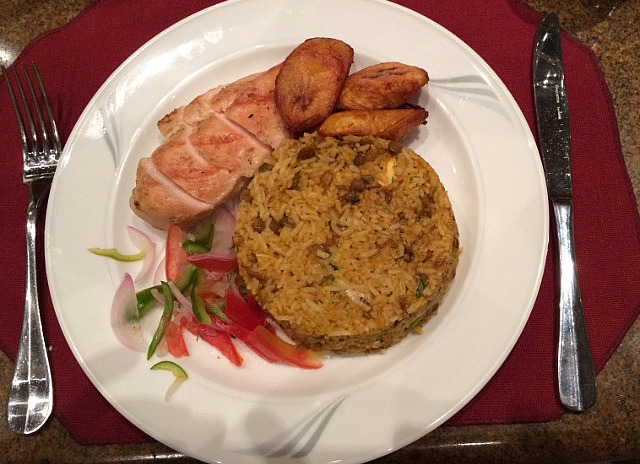
Typical Guayaquilian meal

Our “last supper” as Gonzalo referred to it was in the hotel dining room.  I chose a typical Guayaquilian meal of grilled chicken breast, rice and lentils, and plaintain.  Yum!  One of our tour mates, Barbara, left during dinner to catch her flight home, and the rest (other than me) would be leaving early the following morning.  I asked everyone what their favourite part of the tour was, and the majority chose our time in the Amazon.  I agree with the others, though it was tough picking only one experience.

This tour is sometimes called “the many faces of Ecuador.”  It should be called the many WONDROUS faces of Ecuador.

Me siento triste de decir adiós y espero volver algún día.

Leave a Reply

Zapote fruit
Zapote fruit

The Manglares Churute Ecological Reserve is about an hour south of Guayaquil (ecuador.com/protected-areas/manglares-churute-reserve/). It simply teems with wildlife and today it teemed with human life too.

On the road to the Reserve, our Guayaquil guide, Eddy, introduced us to the fruit zapote. It has a hard green exterior but delicious kind-of-melon-like fruit around a hard pit.

Two of Ecuador's 70+ varieties of mango
Two of Ecuador’s 70+ varieties of mango

The fruit stands along the highway were packed with melons and pineapples and mangos.  Over 70 species of mangos grow in Ecuador; Gonzalo claims the only fruit not grown here are dates.
A long drive down a very bumpy road delivered us to the mangrove forest where we met a very tame gray-cheeked parakeet and walked along a somewhat sketchy boardwalk to an estuary of the Churute River.  Can you see the missing boards in the walkway?

On the way to the Churute estuary

Eddy instructed us to stop and stand very still and then dropped a few leaves on the mud below.  Shortly thereafter mangrove crabs left their homes to retrieve the leaves that they compost into food in their nests.  Crab catchers – men – reach into these holes in search of mature males.  They are allowed to catch 96 crabs per day, and there are 120 catchers working in the mangrove forest; that’s a lot of crabs!

Mangrove crab
Mangrove crab

The men sort them into bundles of 24 and tie them to the back of motorcycles for the trip to market.  They are not allowed to trade in females.
Mangrove crabs
Mangrove crabs
Taking live crabs to market
Loading into the motorized canoe


We loaded into motorized canoes for a bird-watching expedition, and did we see birds!  Ospreys, egrets, cormorants, beautiful pink roseatte spoonbills and regal Cocoi herons put on a fascinating show for us.
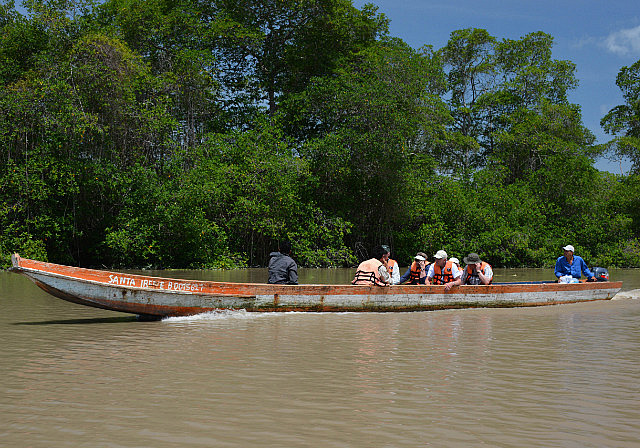
Half our group on the estuary

Bird CollageBack on dry land, we hiked into the mangrove forest in search of howler monkeys.  We heard them before we saw them, and I was able to catch only one on camera.  The video below captures the sounds of the forest.
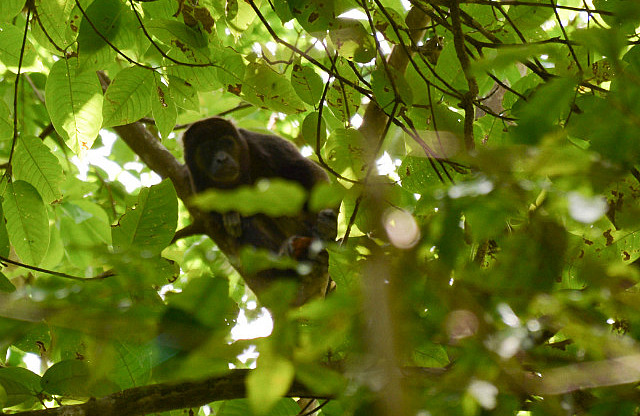
Howler monkey
Howler monkey

https://www.flickr.com/photos/64513024@N07/21041515620/in/datetaken/
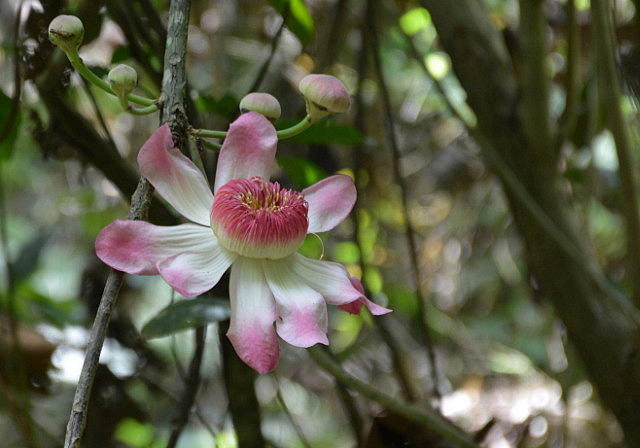
Gustavia flower
Gustavia flower

On our walk through the forest, we spotted a beautiful gustavia flower, a tarantula – old hat for us Amazon basin pros! – and a “fake” chameleon.  I’m not sure why the odd name; perhaps it doesn’t change appearance but lives in trees that camouflage it well.  This one certainly took a good bit of spotting by Gonzalo.
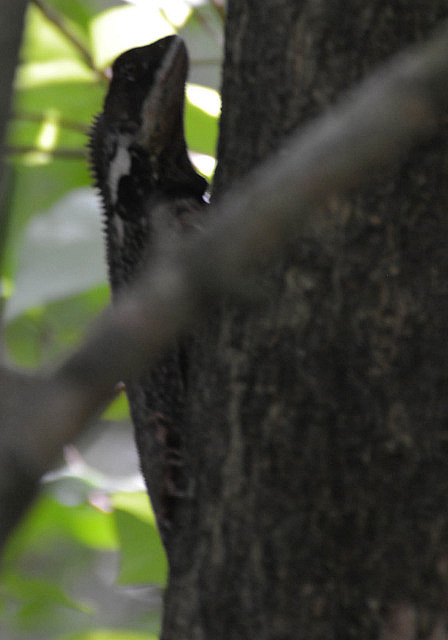
Fake chameleon
Fake chameleon

Following our walk we lunched at the home of a Reserve park ranger.  While we gorged on crab – of course! – the kids watched cartoons on TV while playing Monopoly.
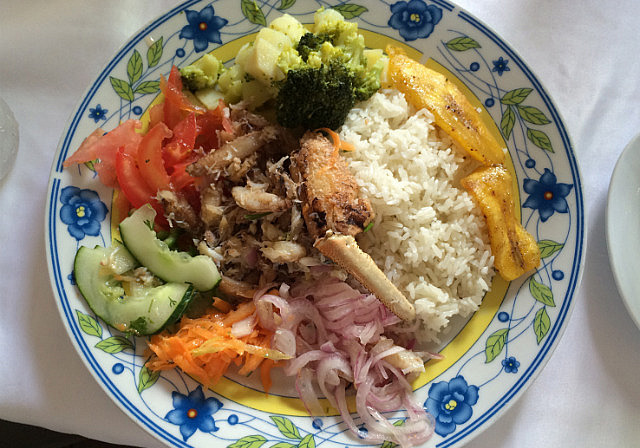
Lunch at the Churute Ecological Reserve


Ecuadorian kids being normal
Ecuadorian kids being kids

On the bumpy drive back to the highway we stopped and watched a beautiful green kingfisher in a field next to the road.
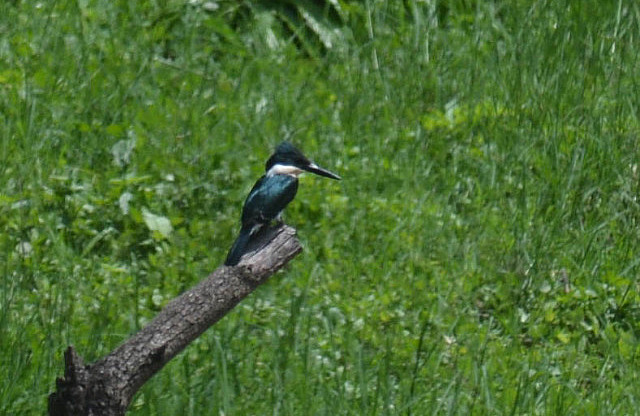
Green kingfisher
Green kingfisher
Typical Guayaquilian meal

Our “last supper” as Gonzalo referred to it was in the hotel dining room.  I chose a typical Guayaquilian meal of grilled chicken breast, rice and lentils, and plaintain.  Yum!  One of our tour mates, Barbara, left during dinner to catch her flight home, and the rest (other than me) would be leaving early the following morning.  I asked everyone what their favourite part of the tour was, and the majority chose our time in the Amazon.  I agree with the others, though it was tough picking only one experience.

This tour is sometimes called “the many faces of Ecuador.”  It should be called the many WONDROUS faces of Ecuador.

Me siento triste de decir adiós y espero volver algún día.