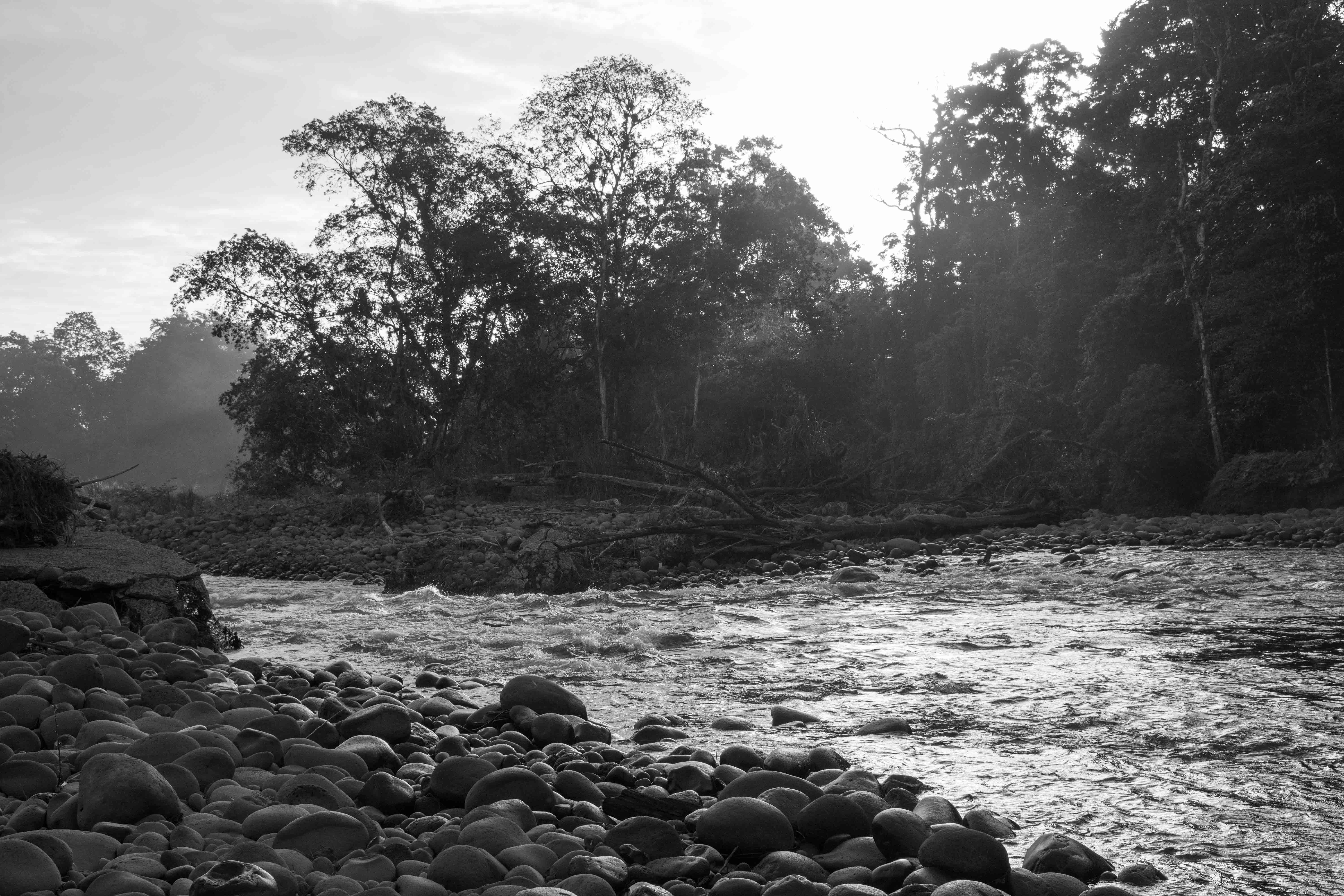
 Photographers love early morning and dusk. At least Alejandro our erstwhile photography instructor does.
We were up today for another 6 am walk. There was a slight mist over the river that softened the landscape.
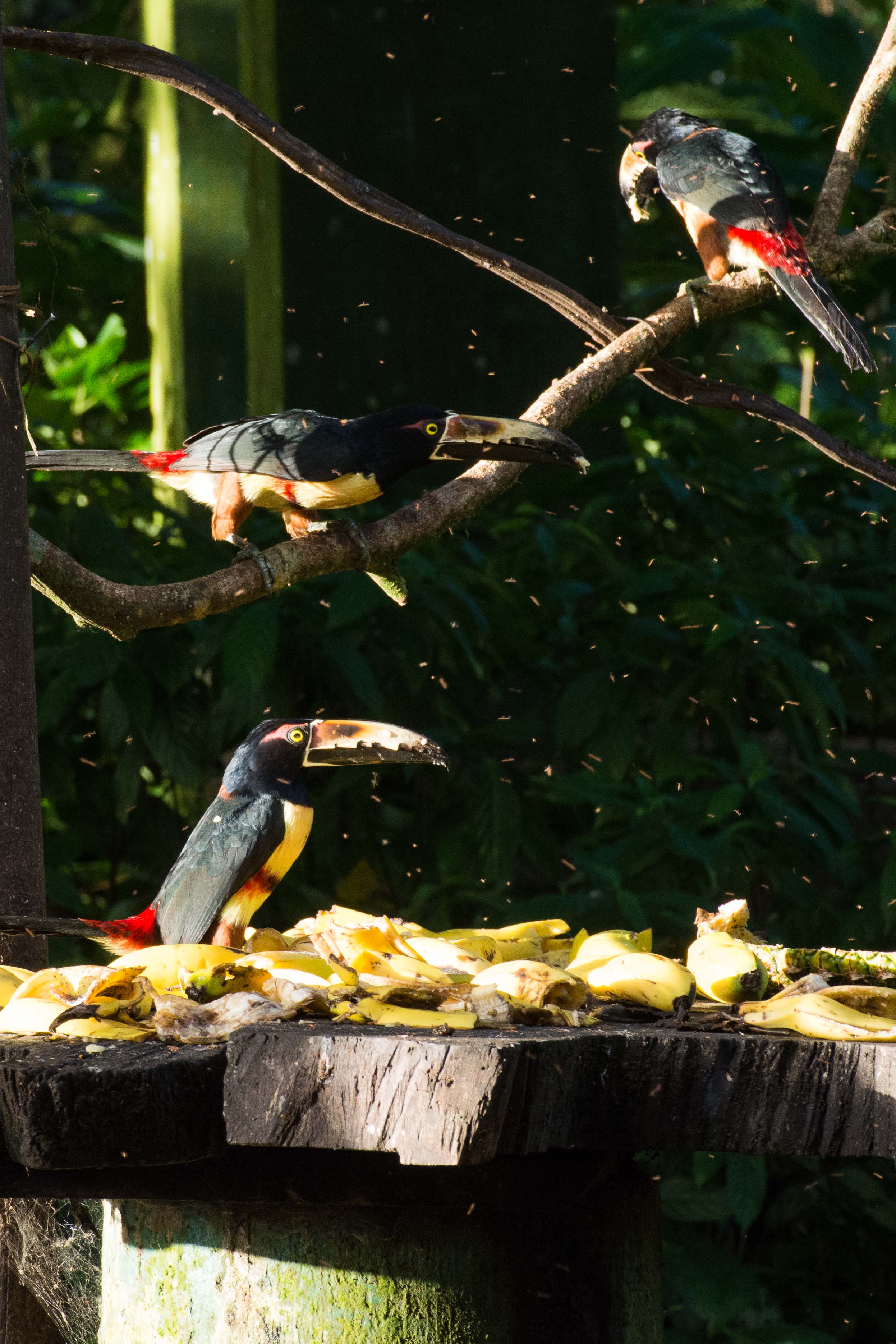
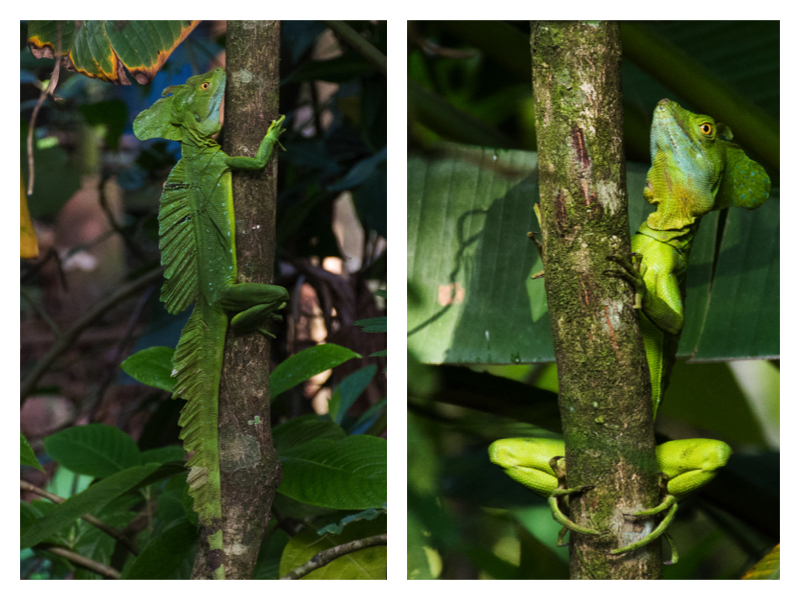
Away from the river we came upon a few collared arcaris munching on pineapple and bananas at the bird feeder and a green basilisk lazing in the sun and then striking a silly pose for his gathered admirers.
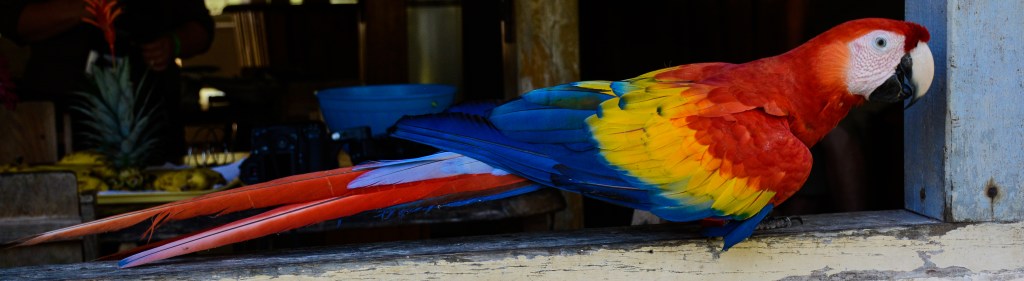
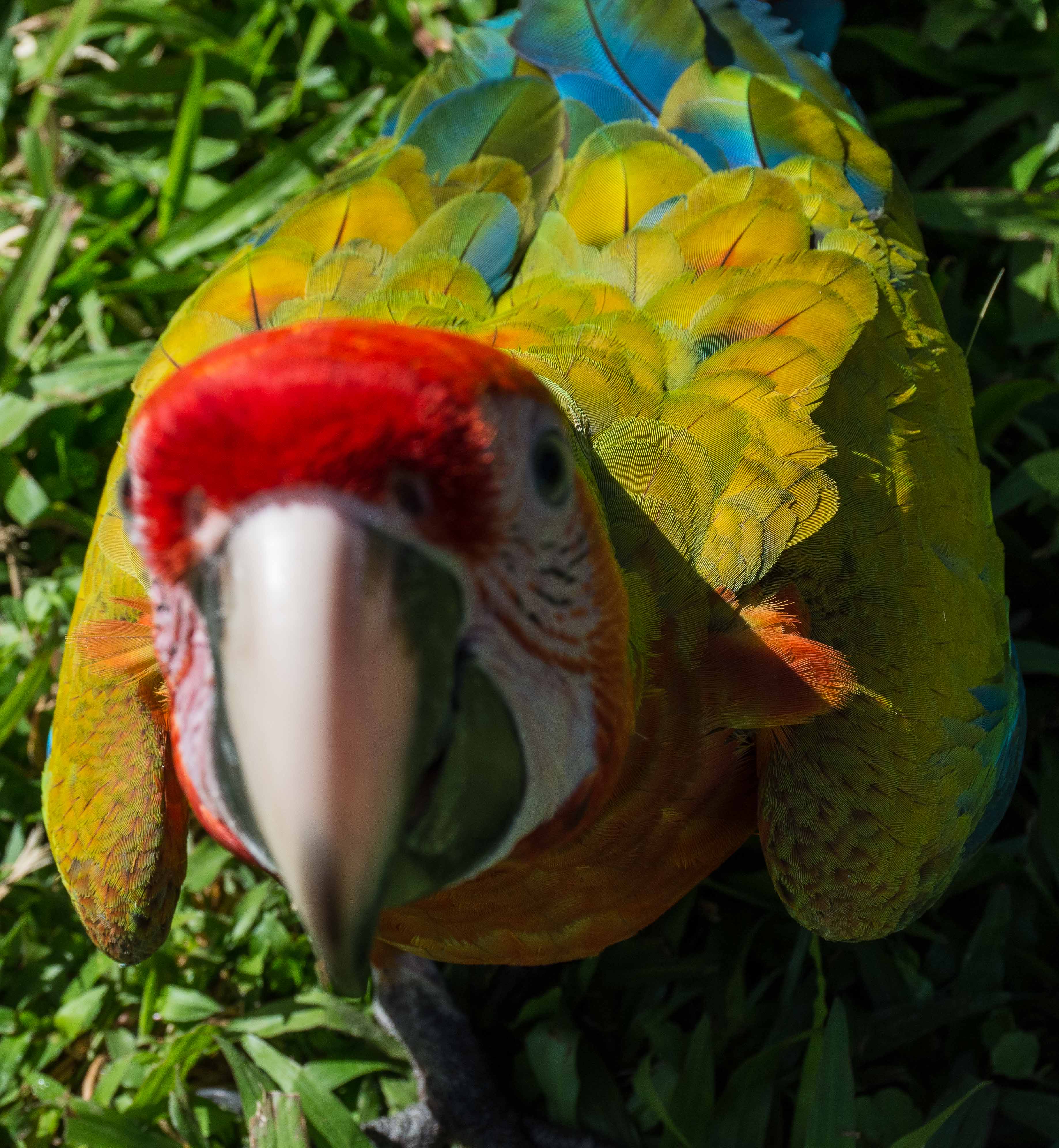
We had a terrific amount of fun at a macaw farm today. The farm was started by Alvaro Otoya who was concerned about the shrinking populations of green and scarlett macaws. Great green macaws are an endangered species today with only about 500 in the wild.
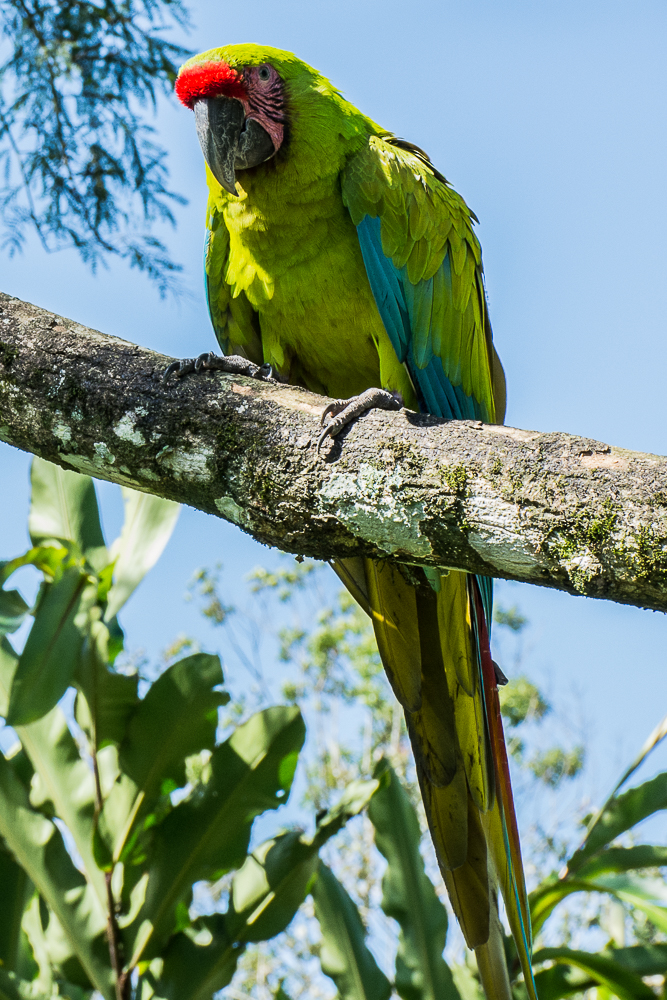
These birds have taken a fancy to Mr. Otoya’s peanuts and he was happy to show off his growing flock. How many of these uncaged birds transfer to the wild I do not know but as you can see from the lower collage, they seem to have plenty to discuss here at the farm.
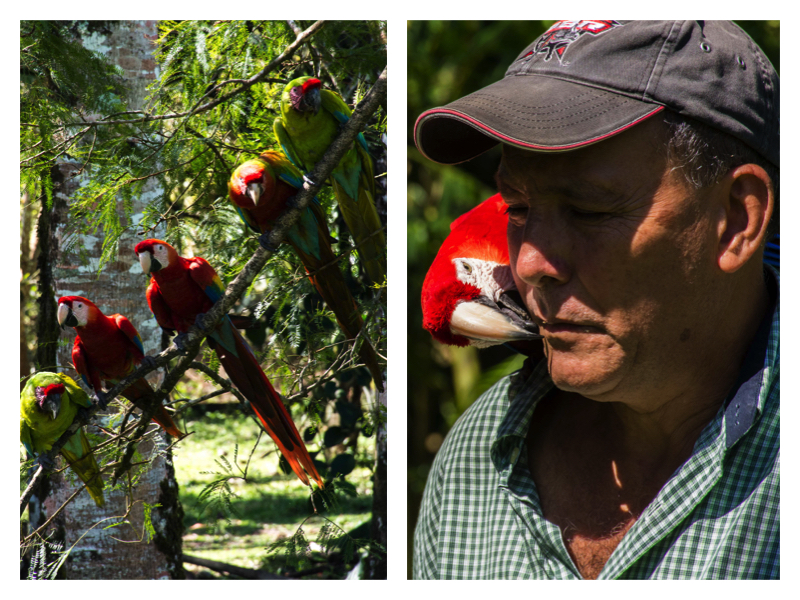
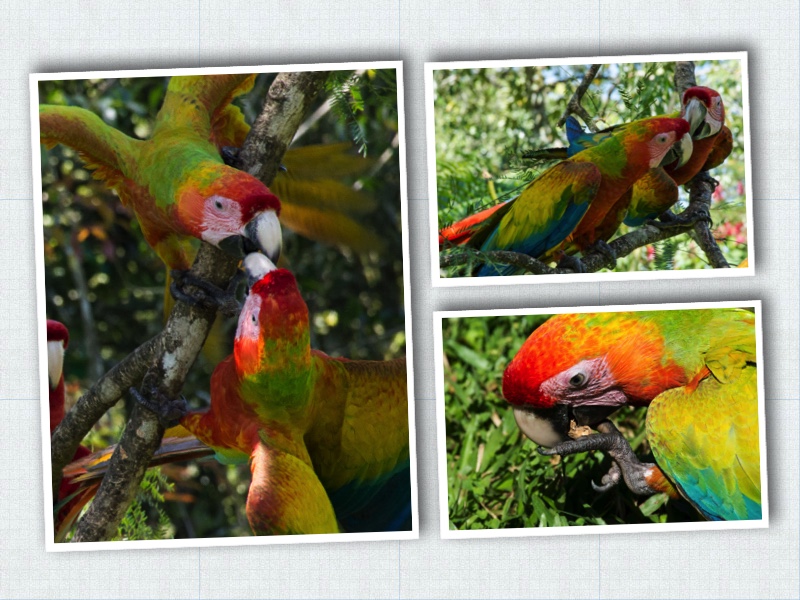
The great green macaws and the scarlett macaws occasionally mate resulting in a hybrid macaw. This hybrid looks like a scarlett macaw but has a green-yellow back, and cannot breed. One took a liking to the peanut I had on offer and came over to take it from my hand.
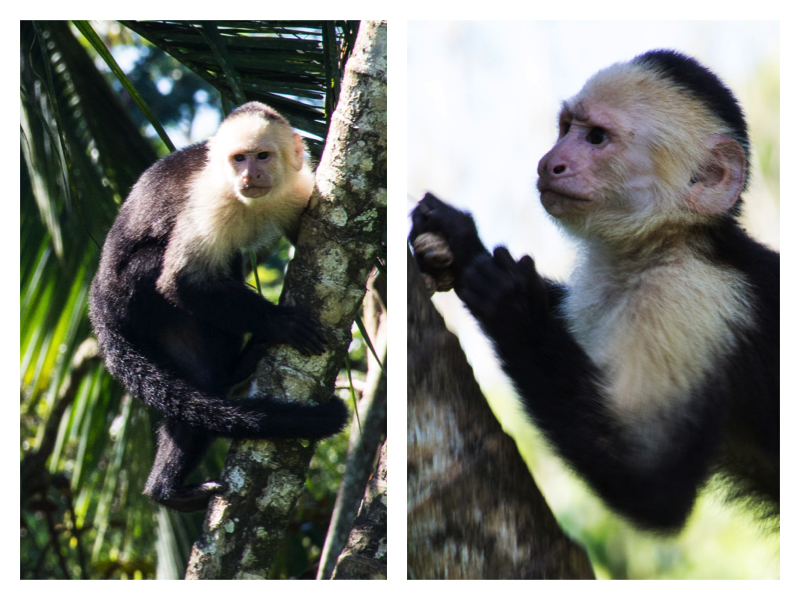
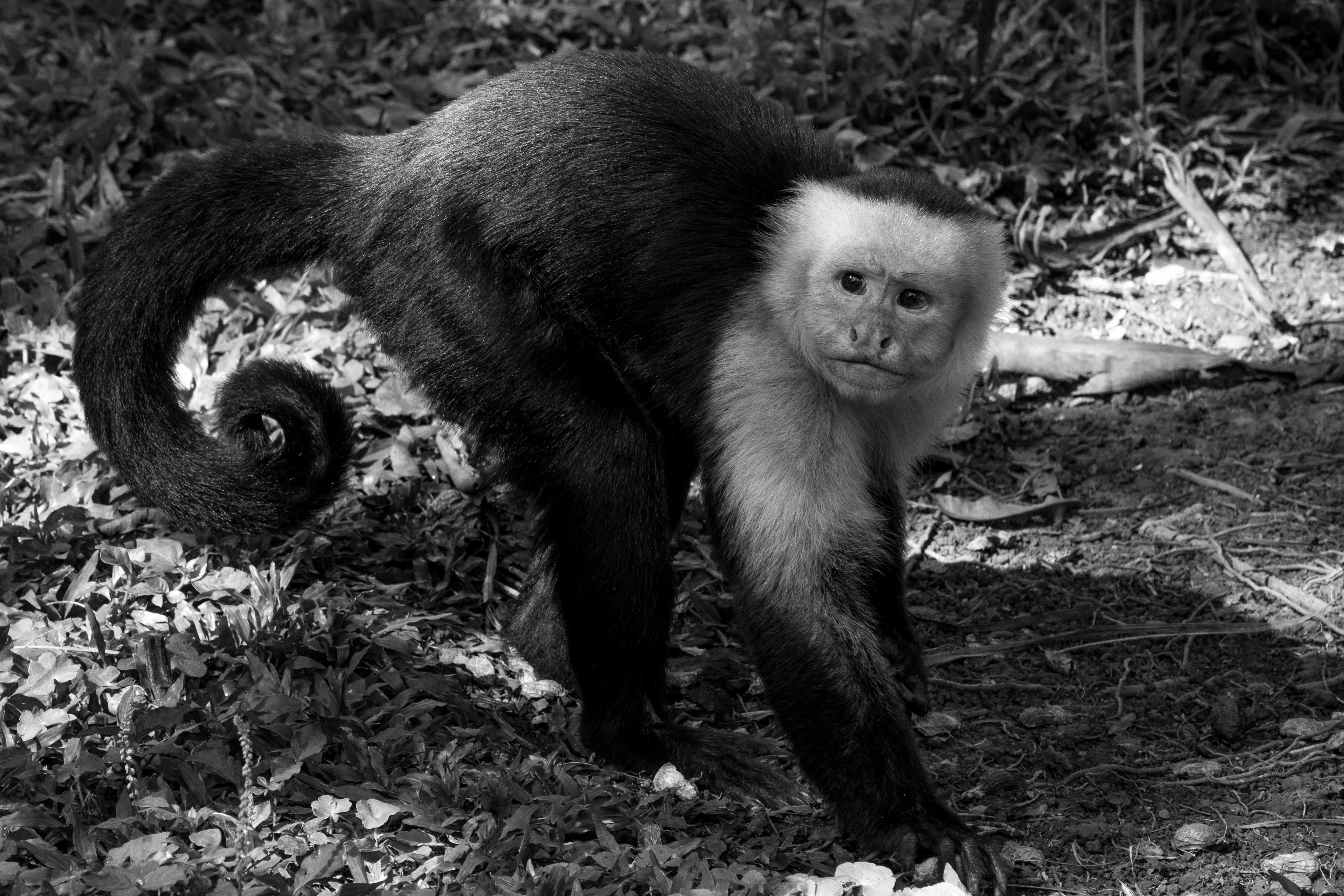 Hanging about the periphery and ready at a moment’s notice to pick up left-over peanuts is a family of capuchin monkeys. They are very quick, jumping about in the trees and racing down to snatch up dropped goodies. On occasion they chase the macaws away but in general the two species seem to get along quite well.
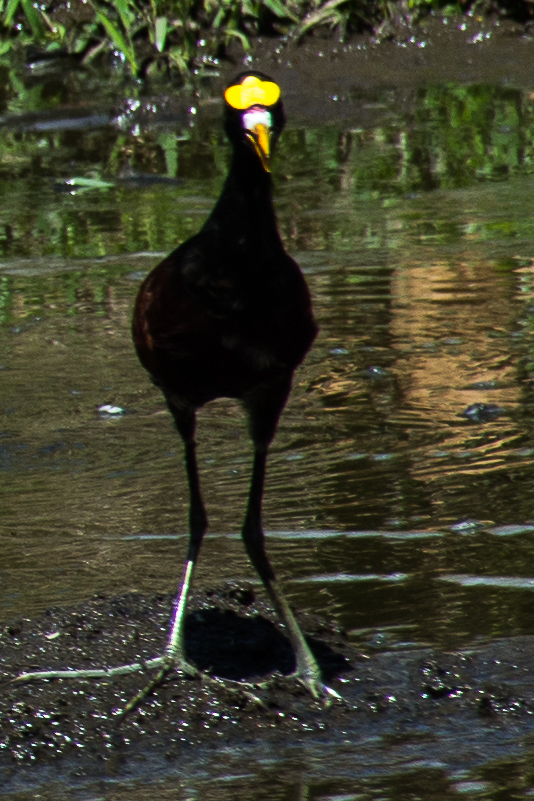
After a snack of fruit kindly provided by Mr. Otoya we headed back to Selva Verde, passing a northern jacana on the way.
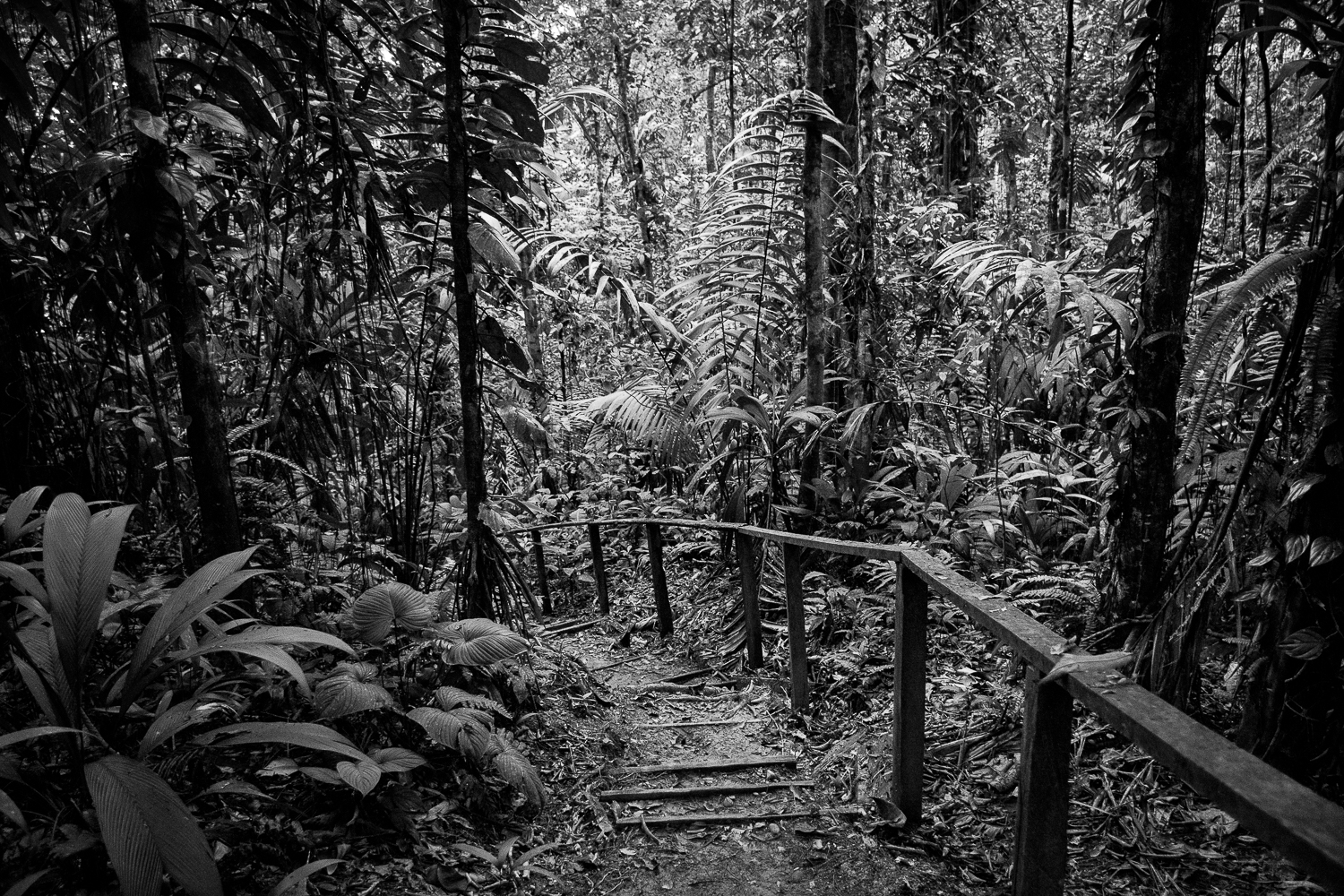
A quiet afternoon was followed by a jungle walk. The weather was very hot and humid but eight of us plus Tomás and Alejandro ventured forth.
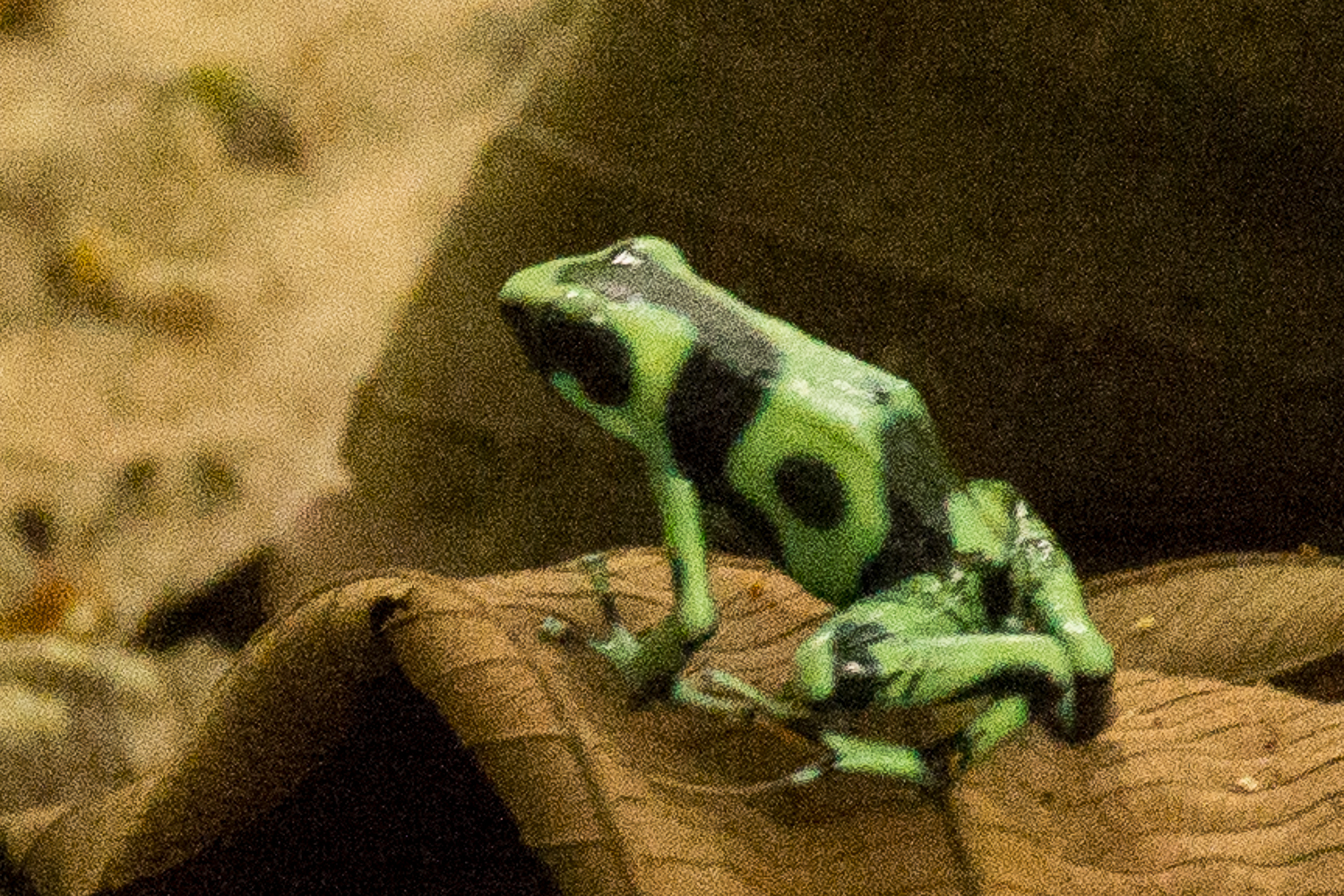
Along the way we discovered a green poison dart frog, a tiny, tiny creature that packs a punch. It won’t necessarily kill us but it will kill smaller animals that prey upon it.
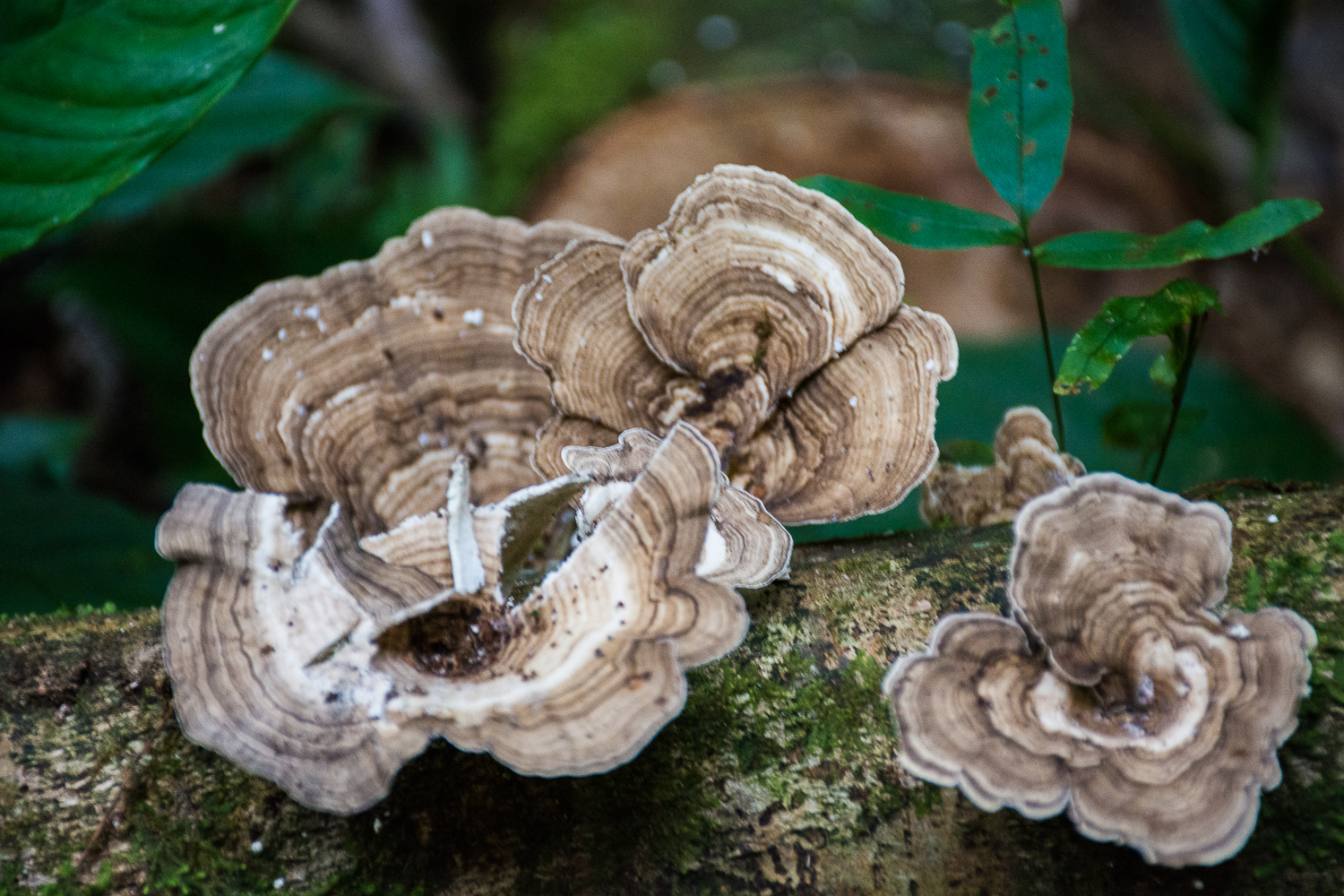
We also found some beautiful mushrooms.
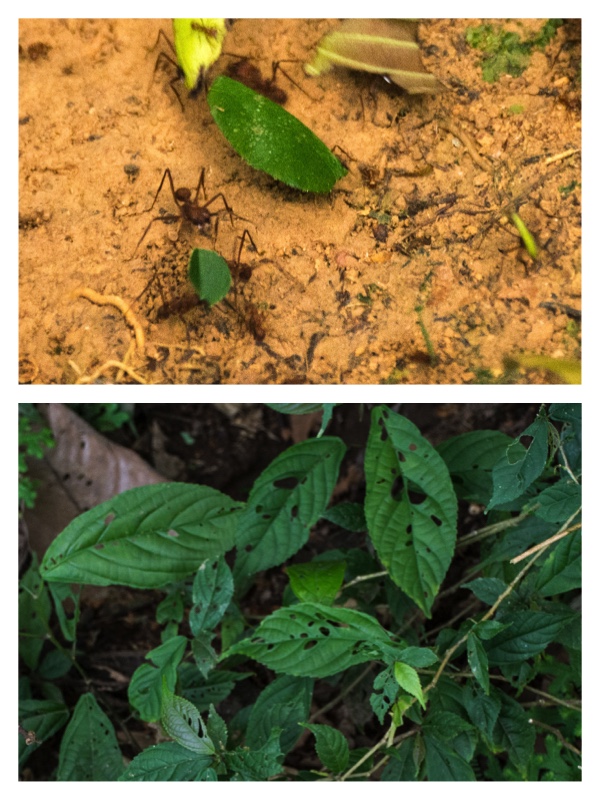
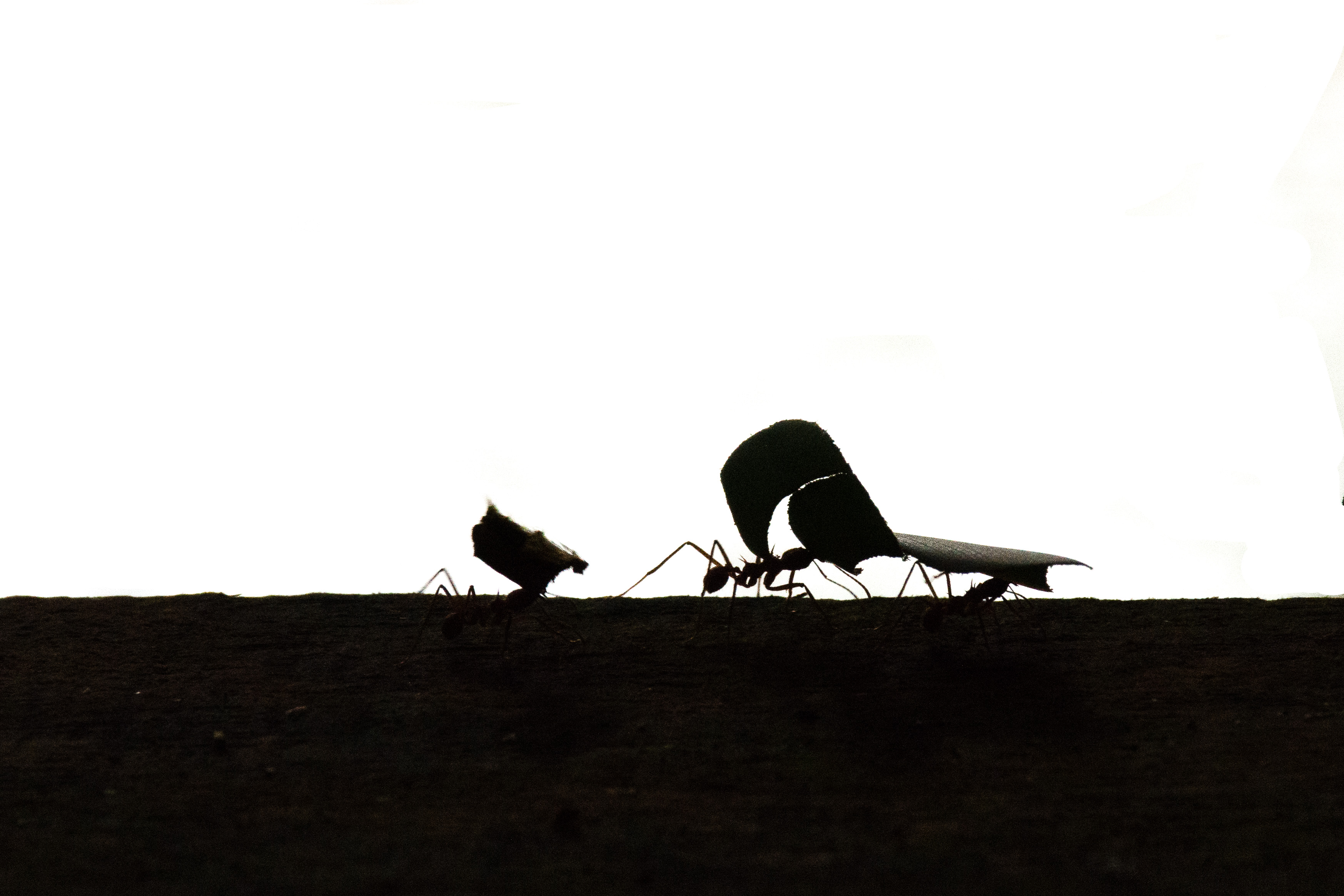
We came across columns and columns of leafcutter ants carrying their little bits of foliage along on their backs. The leaves are food for a fungus that processes it and creates food for ant larvae. The photos below show a few of the ants and a few leaves minus their little bits. The bottom photo shows a small column of leafcutter ants in silhouette carrying their bounty along a trail banister.
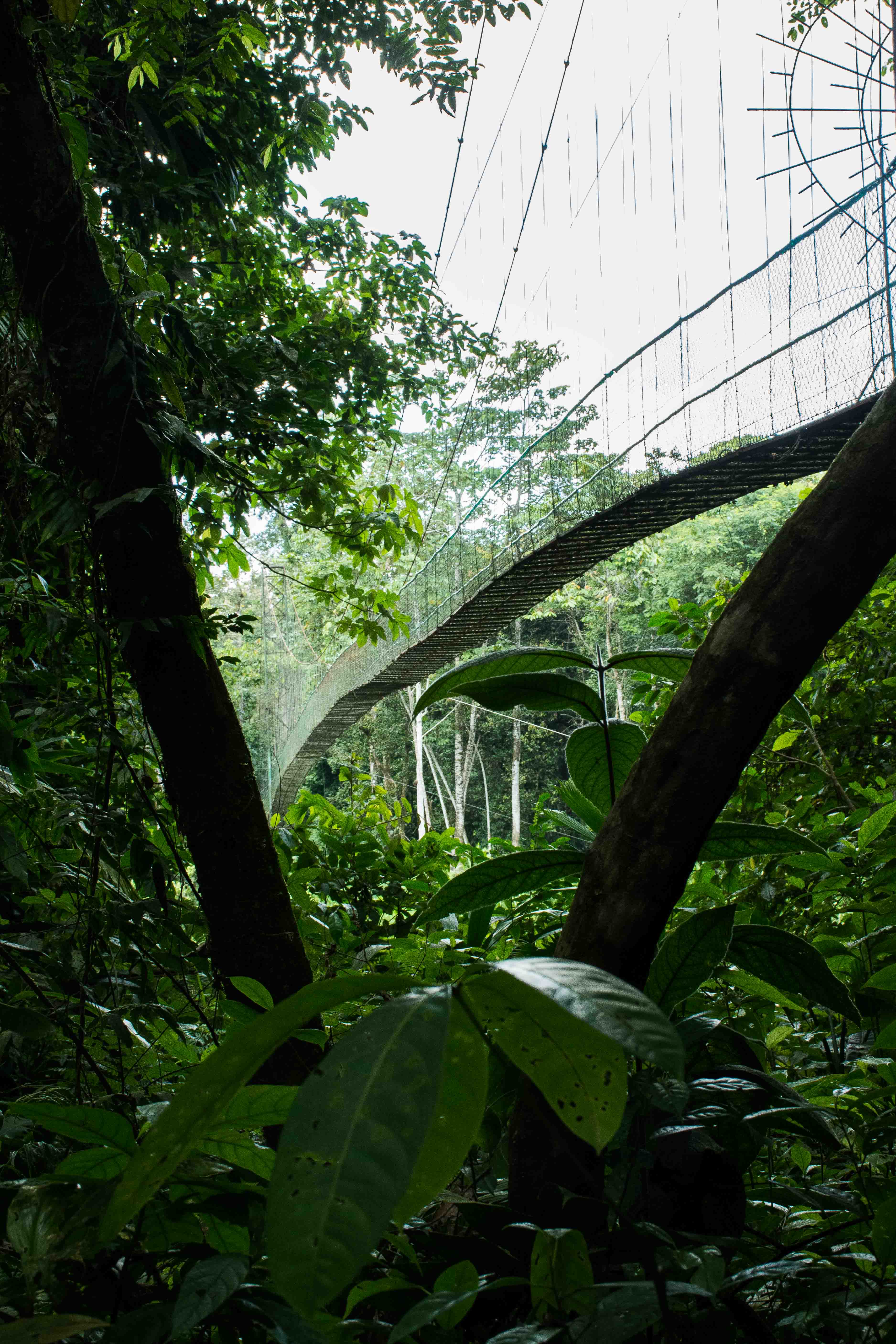
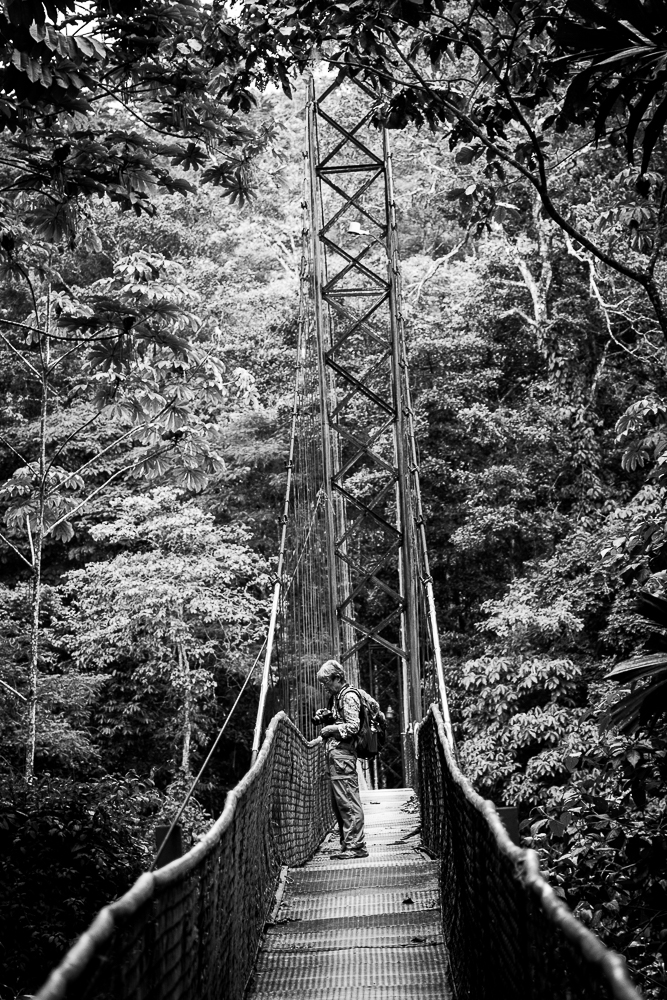
My final image for today is of the suspension bridge at the end of our jungle walk. Our tour-mate Alice is lingering to catch a few final photos of the river.


Leave a Reply