The C/O Gallery in Berlin displays a wide range of photography and visual media in its two-storey building near the Zoological Garden. There were three shows on today: Optical Illusions, work from several photographers; Still Life, the work of Hans Hansen; and Invasion/Exiles/Wall, the work of Josef Koudelka.
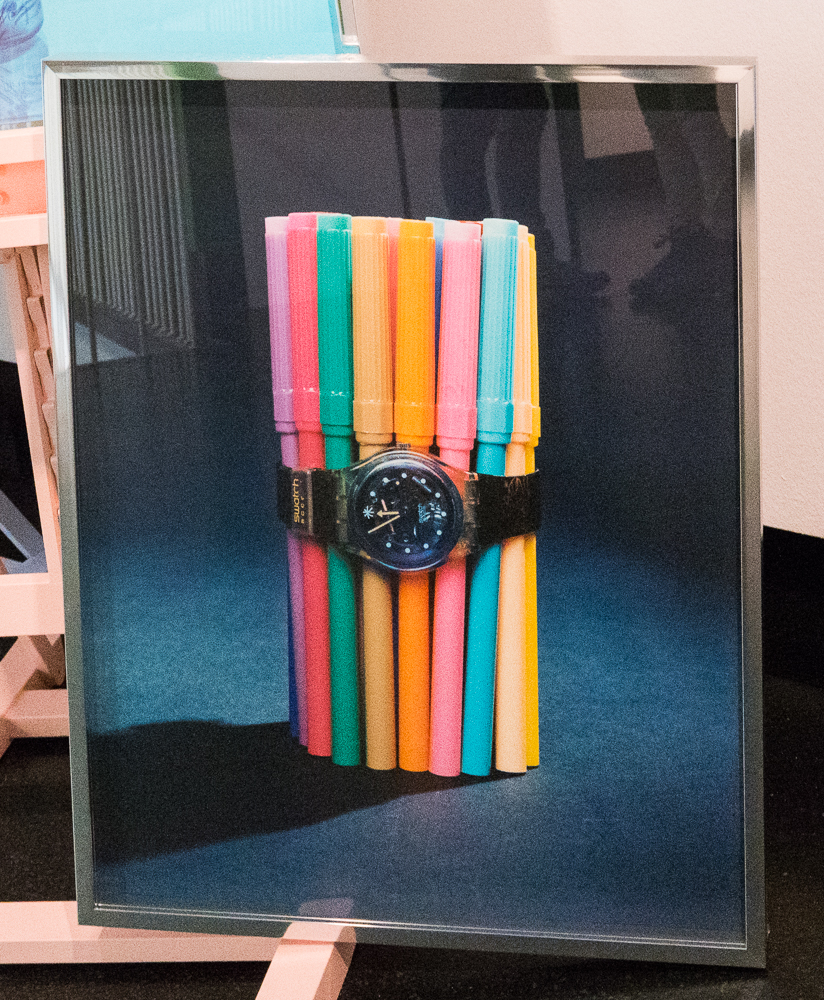
I love this photo by Hans Hansen and wish I could dream up still life arrangements like this one. Once again I apologize for the reflections in the glass. I looked online for a better copy of this photo but couldn’t find one.
There was lightness and gaiety in the Optical Illusions and Still Life shows, counteracted by the main exhibit Invasion/Exiles/Wall. Josef Koudelka lived in Prague in 1968 when the Russians invaded. The Invasion part of the exhibit contains photographs from this time. (In 2008 my sisters and I were in Prague. There was a large outdoor exhibit in Wenceslas Square of resistance street art created during the invasion. Were I at home, I could provide moving photos.) Koudelka left Czechloslovakia in 1968 and spent some years photographing people as he wandered through Europe – Ireland, Spain, Portugal, England, France among other countries – reflecting his own feeling of isolation as an exile from his home. Google Koudelka exiles for many amazing images from this time.
The part of this exhibit that really grabbed me was Wall, about the wall – or security barrier – Israel built to keep out Palestinian terrorists. The Palestinians call it a racial segregation barrier. The exhibit is in a fairly dark room with a large screen projecting the photos on display. The photos themselves are long and rectangular, and exhibited along a space so they look like a barrier themselves.
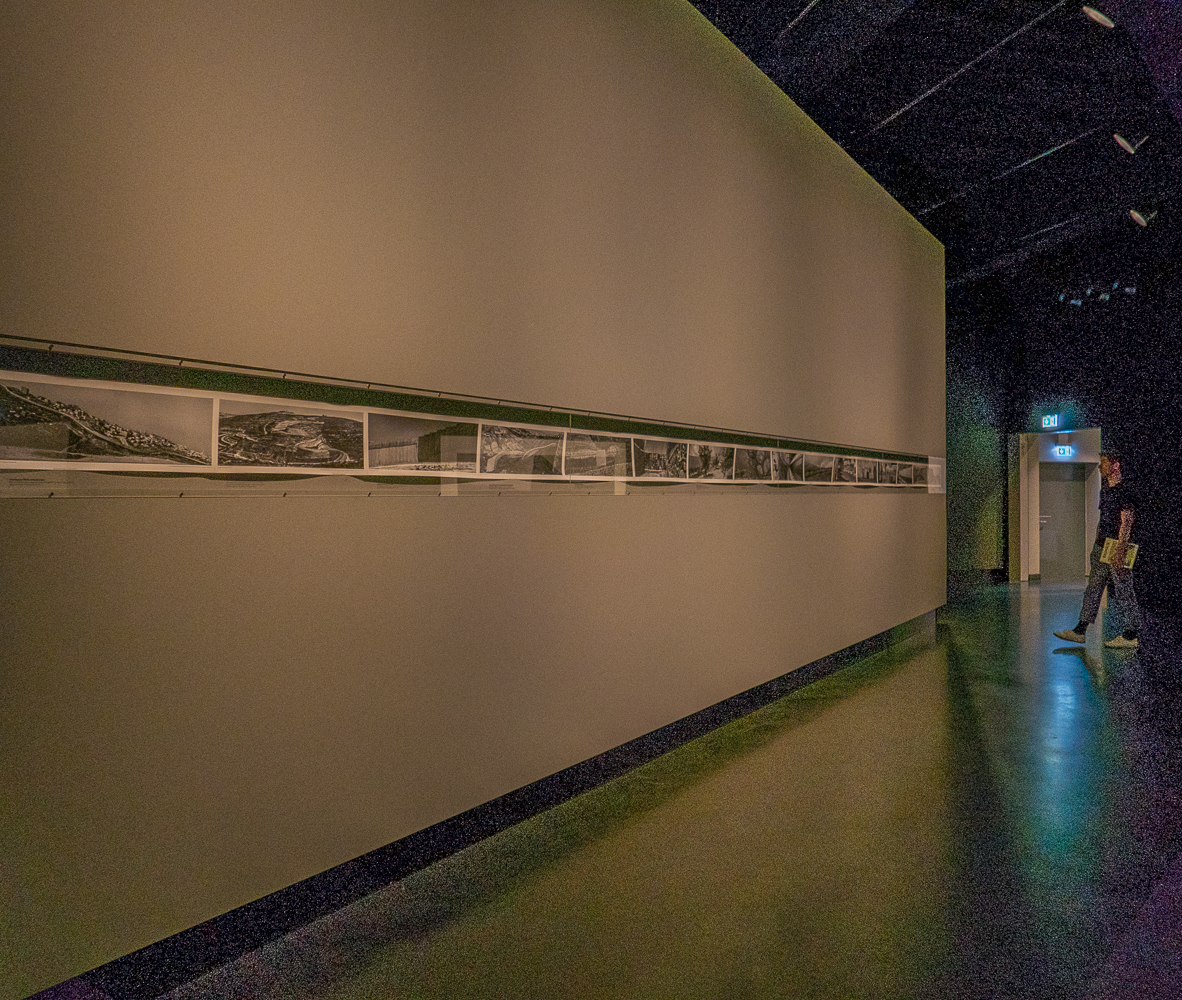
Koudelka is clearly critical of the wall. Captions with his photos note the difficulties this wall has caused the Palestinian people.
I lunched at an Asian fast food joint near the Gallery, not expecting – but receiving! – culinary greatness. Yum! Thai basil, only 6.5€. If I’m in the area at lunchtime again, I shall return.

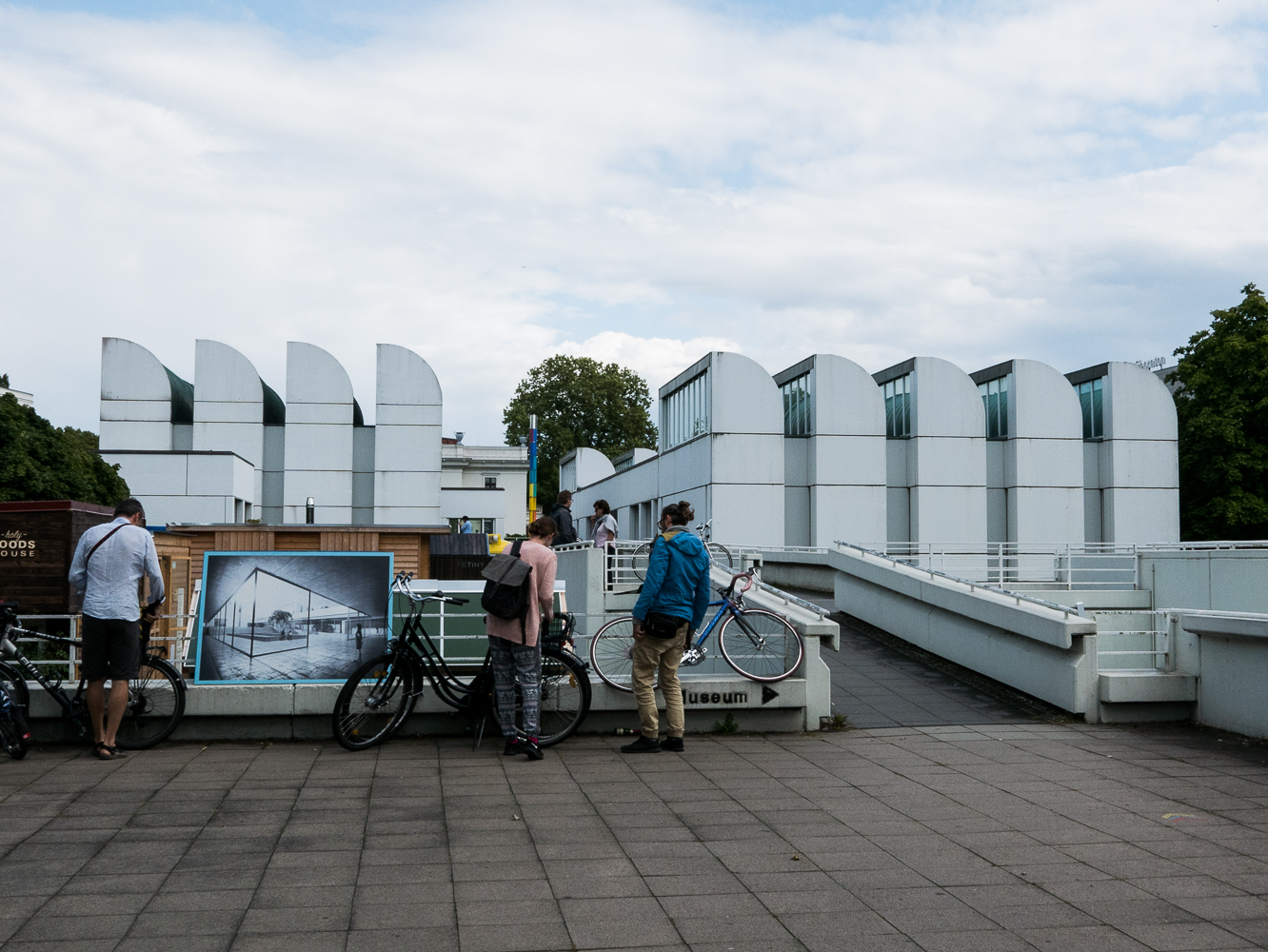
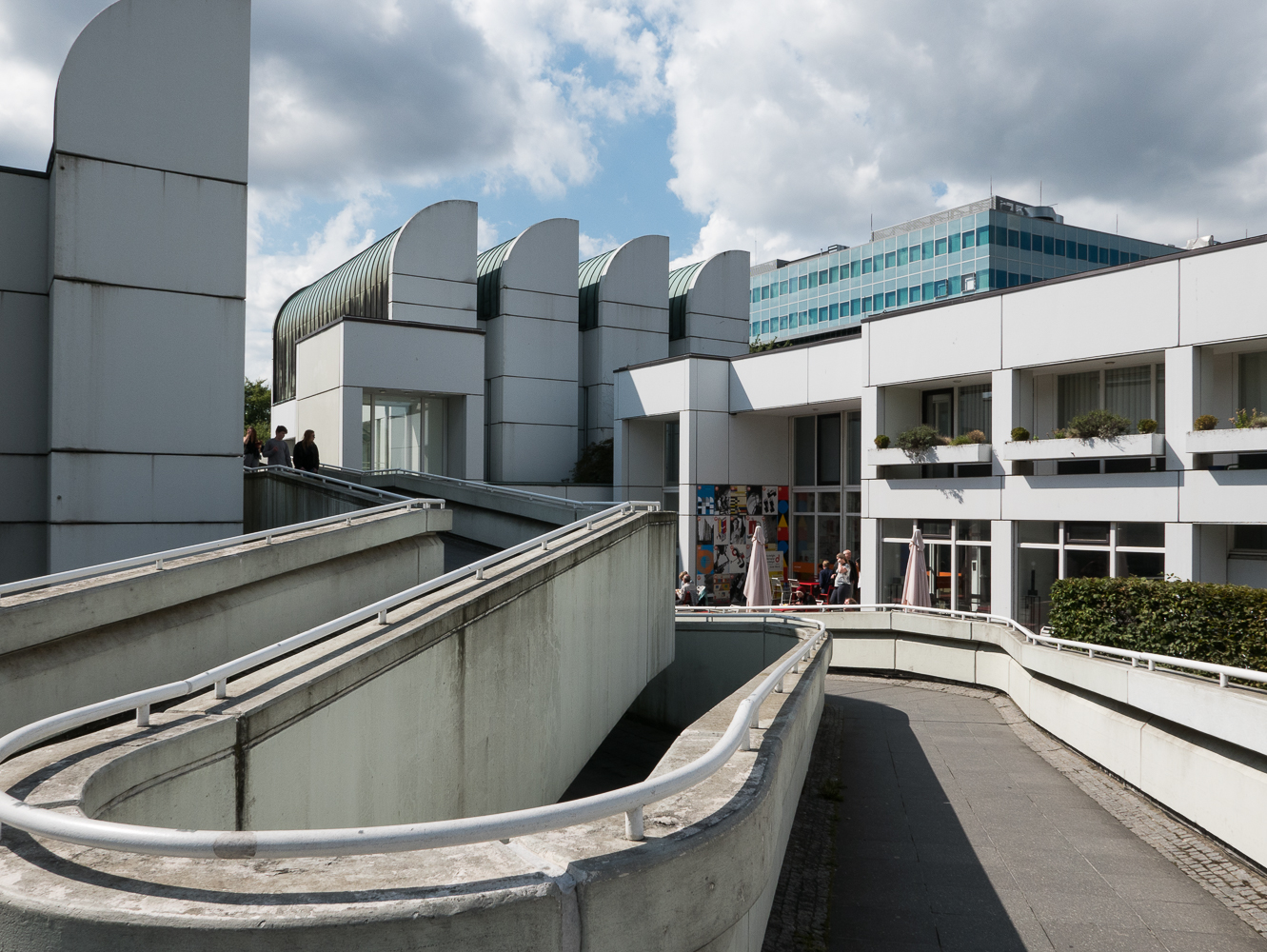
Following lunch I headed over to the Bauhaus-Archiv, the museum of design and architecture. It houses pieces, papers and photographs from its 1919-1933 school and workshop. A new building is under way for the Bauhaus, so this exhibition in its old space is a retrospective. The building, designed by Bauhaus founder Walter Gropius, is unique and difficult to describe. I will let my photos do the talking! The banner photo on this post is a close-up of detail on a coloured pole just out of the building photo.
It is Sunday in Berlin and most shops are closed so the streets by and large are much less crowded. But not in the old Jewish quarter north of the centre.
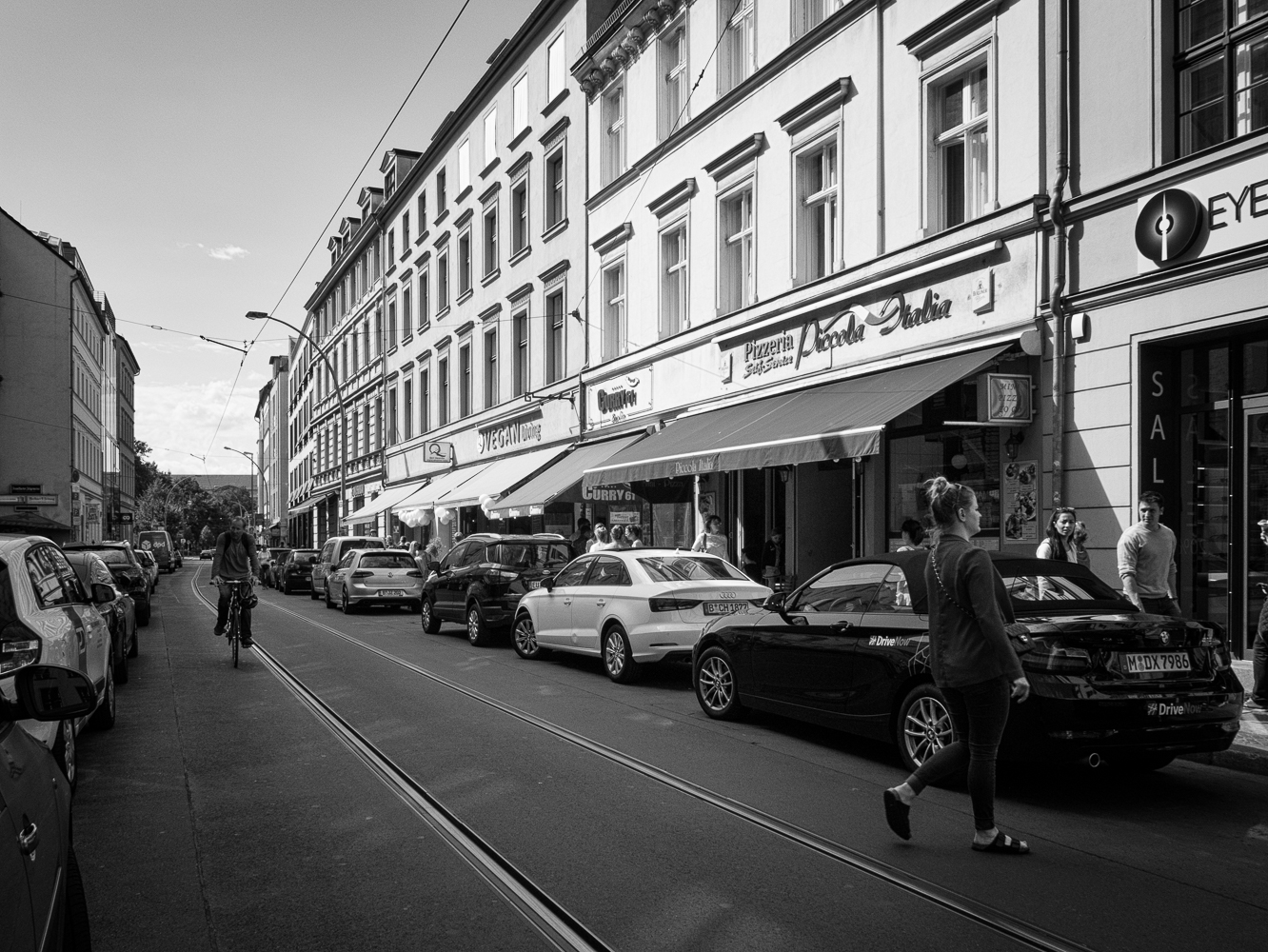
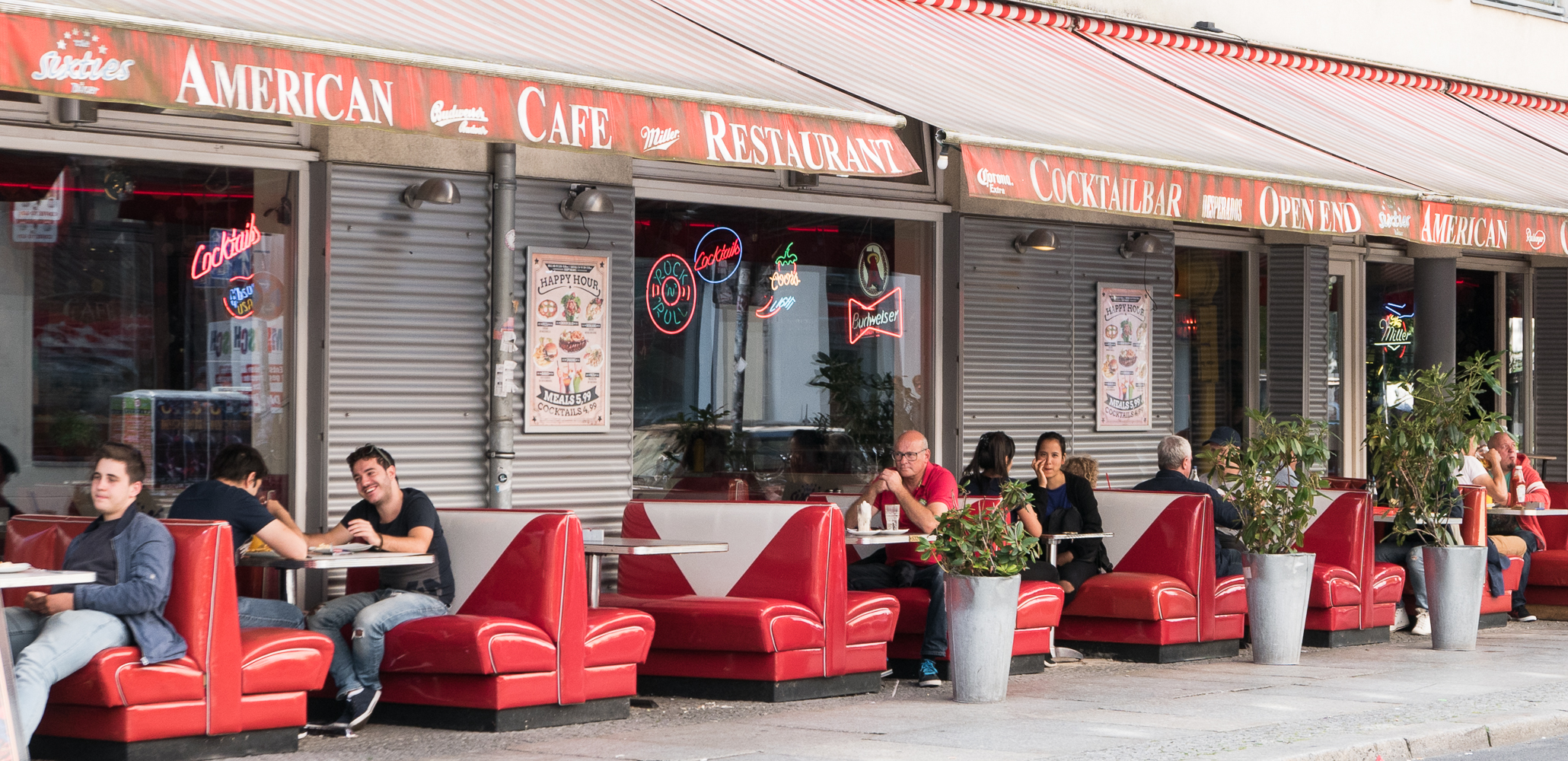
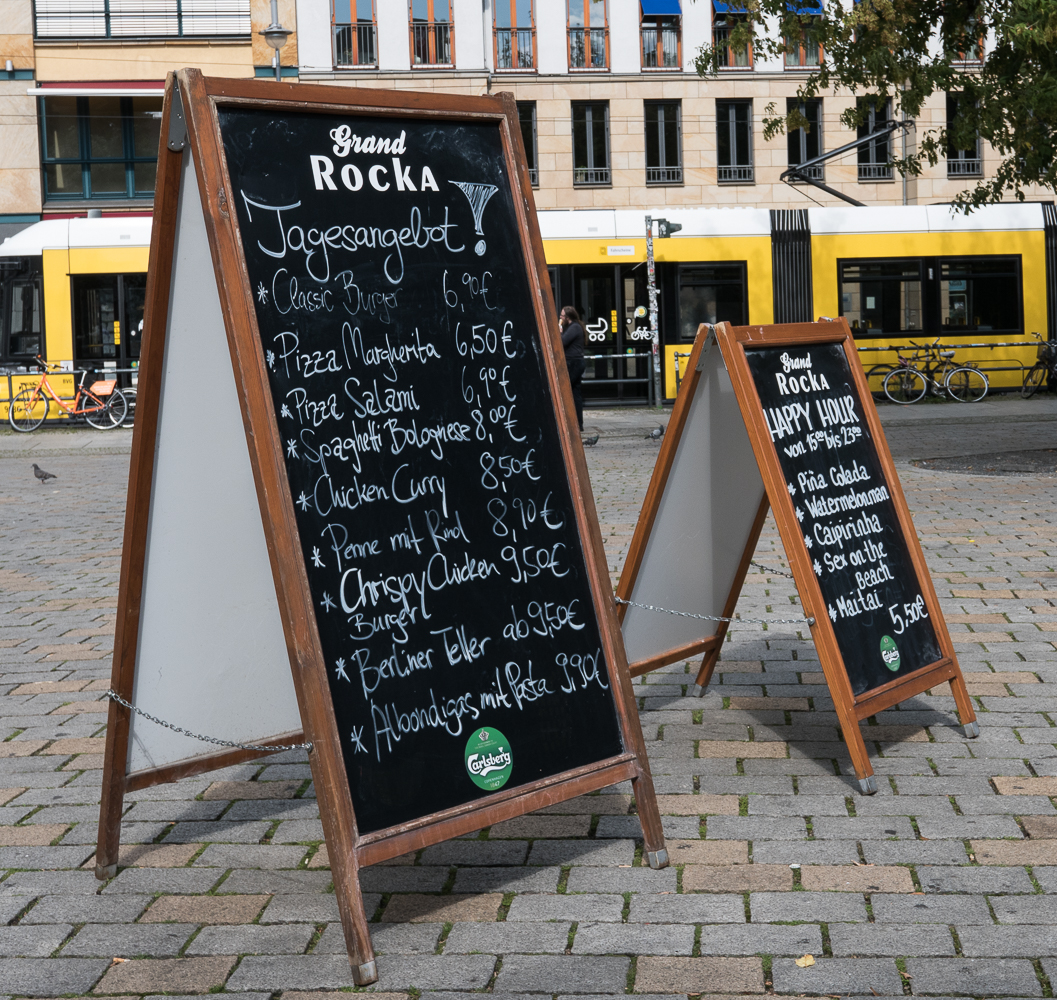
Restaurants operate cheek by jowl in Hackescher Markt, their outdoor tables stretching for what seemed like miles. Trade is clearly aimed at tourists – these are the first sidewalk menus I have seen in English.
What drew me to this neighbourhood was a Holocaust memorial outside the old Jewish cemetery. The sculpture by Will Lammert represents a group of Jews being led to their deaths during World War II. It is enough to bring tears to one’s eyes.
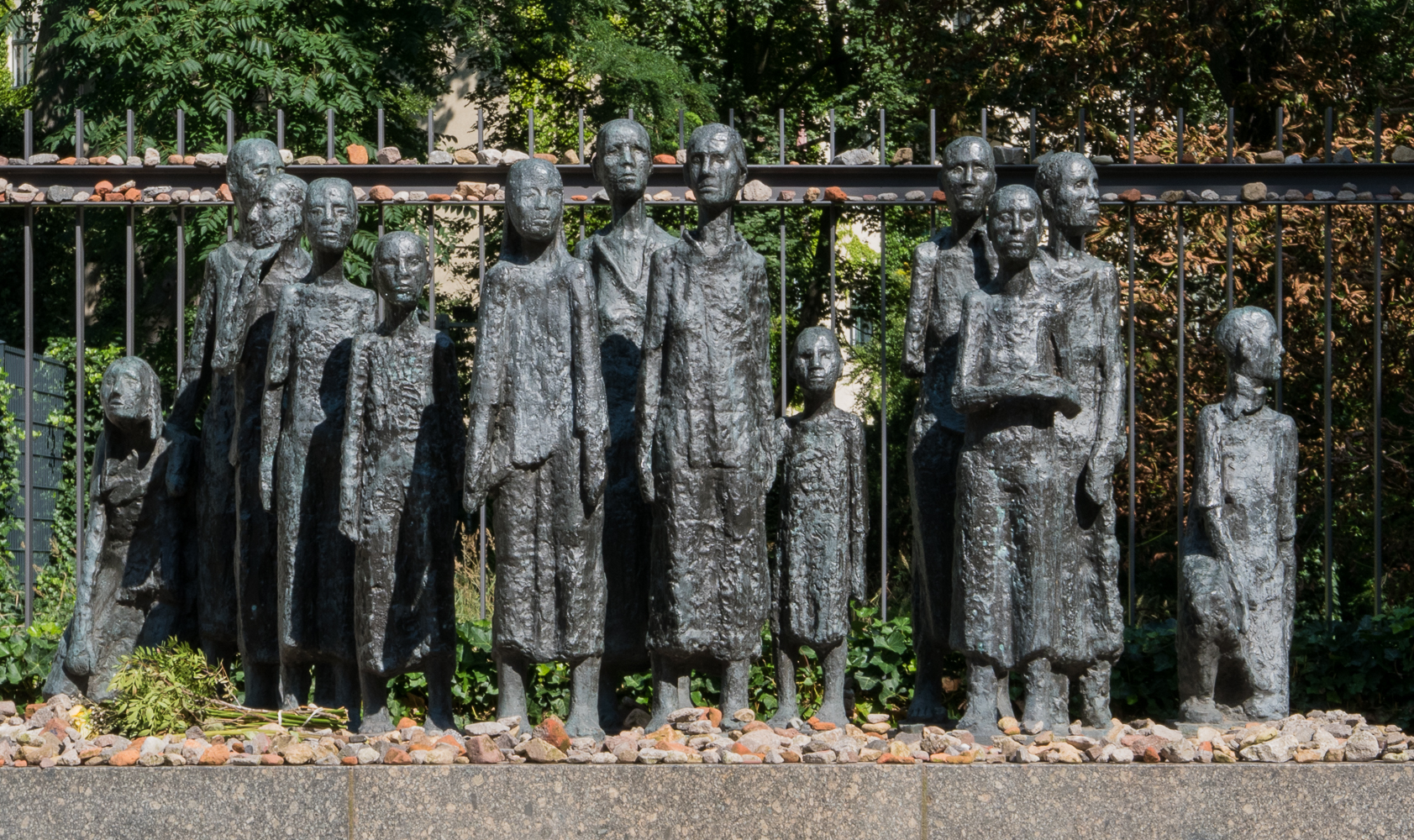
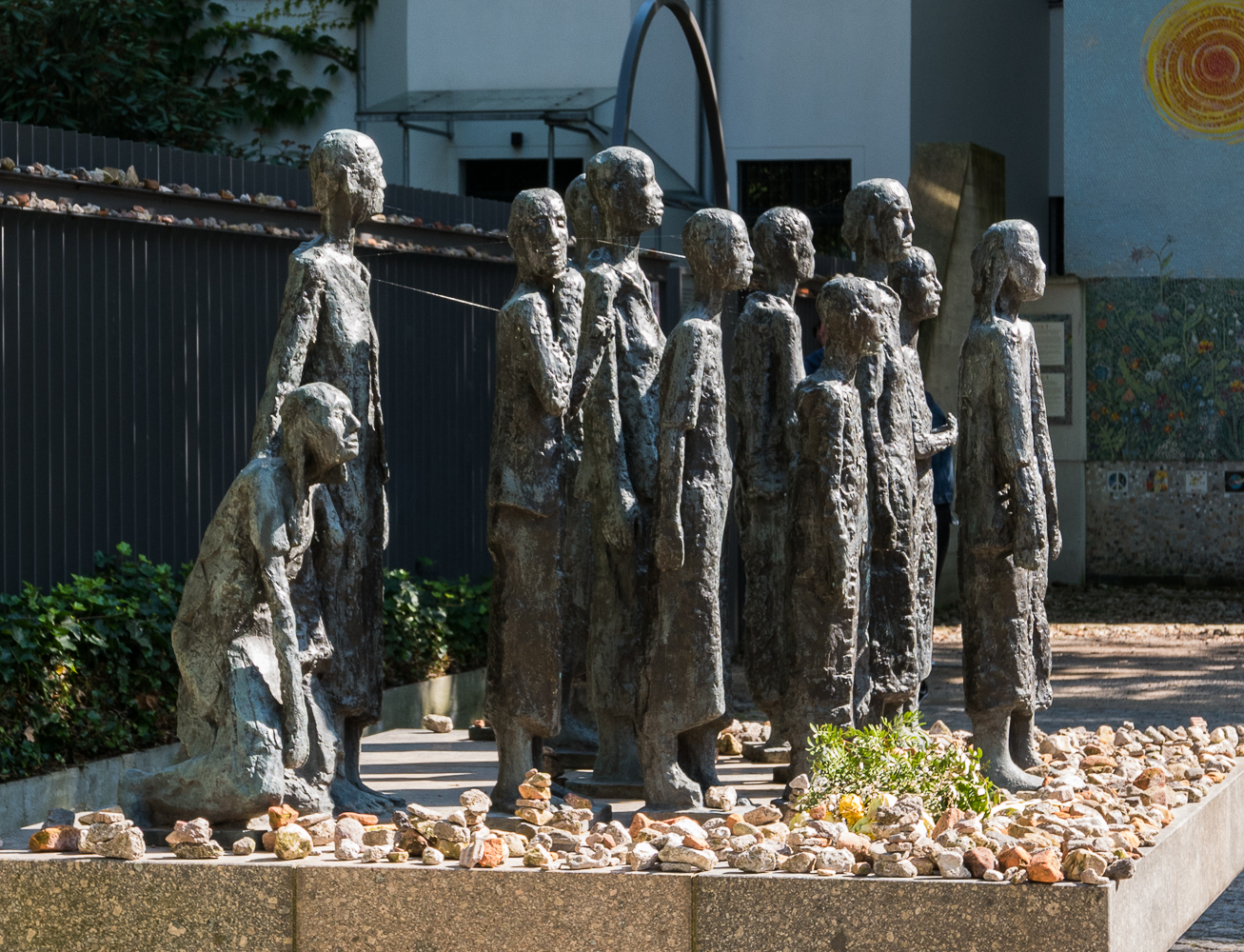
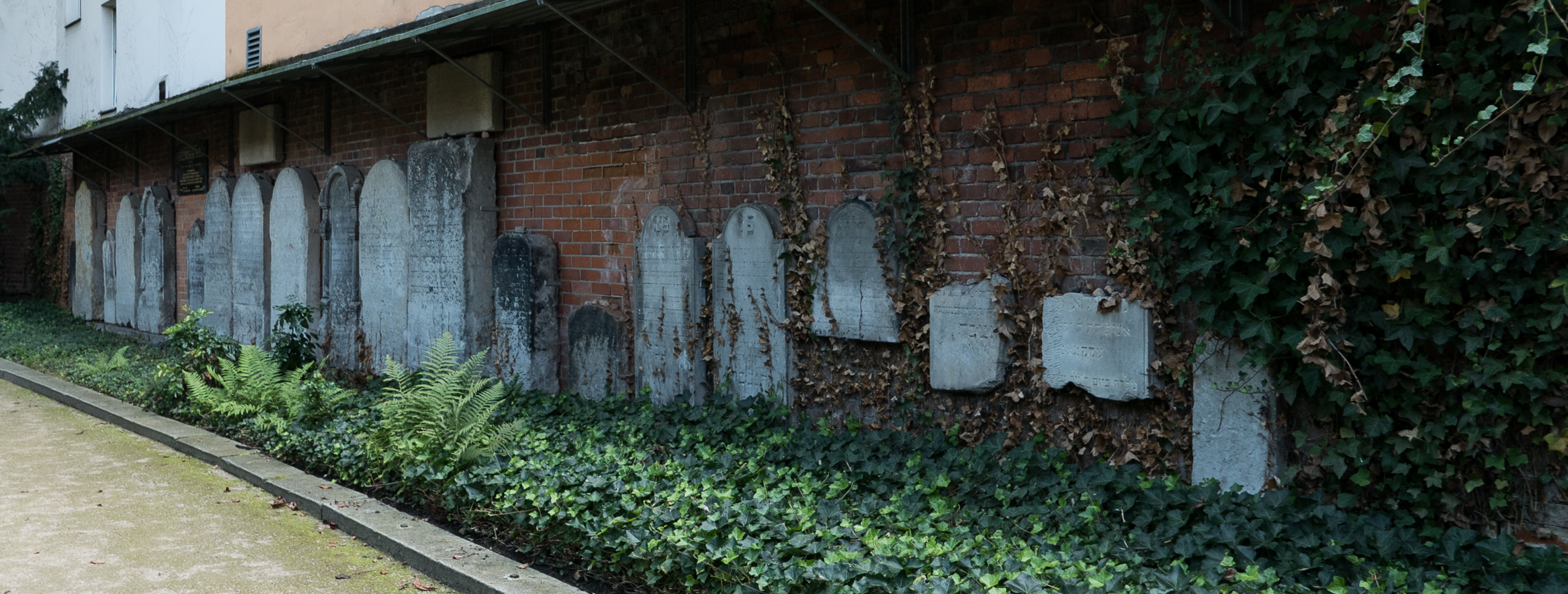
The Jewish Cemetery was destroyed by the Nazis and with the exception of a few headstones too securely embedded in a wall, there are almost none of the estimated 10,000 original graves left.
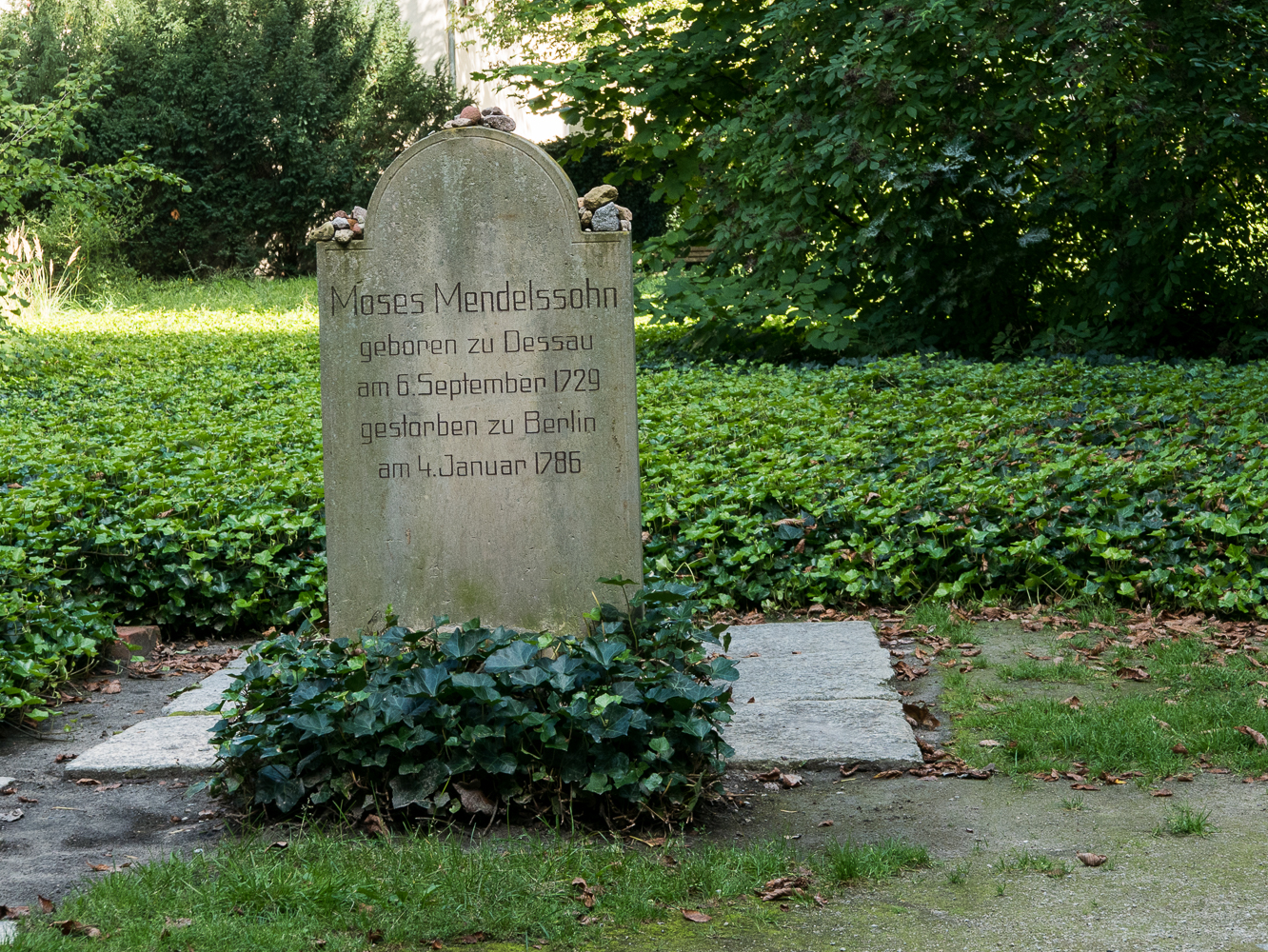
Some restoration is occurring. The only grave to date to be restored is that of philosopher Moses Mendelssohn. (Did you know that many thoroughfares in Berlin are named after philosophers? My home-away-from-home is near the intersection of Kantstraße and Leibnizstraße.)
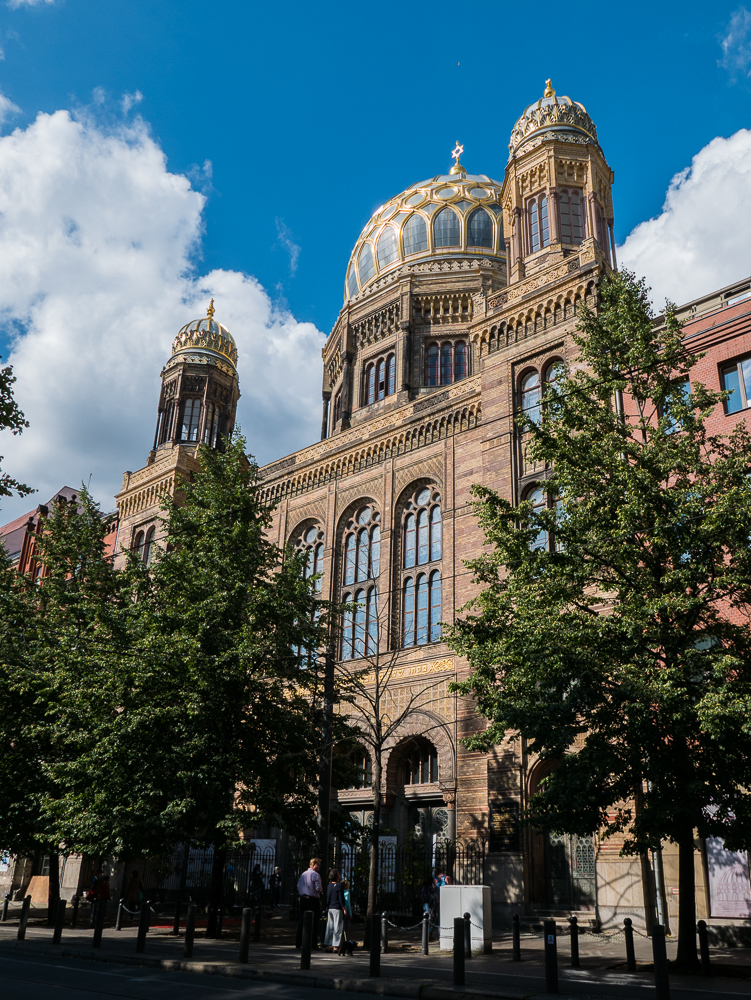
The New Synagogue, built in 1866, was partially destroyed in World War II, then completely demolished and rebuiilt in 1995. It is a glorious and imposing structure. The dome glitters in the sunlight and the entire building seems to large for its space. Unfortunately my photo does not do it justice. You will have to visit Berlin to see for yourself!
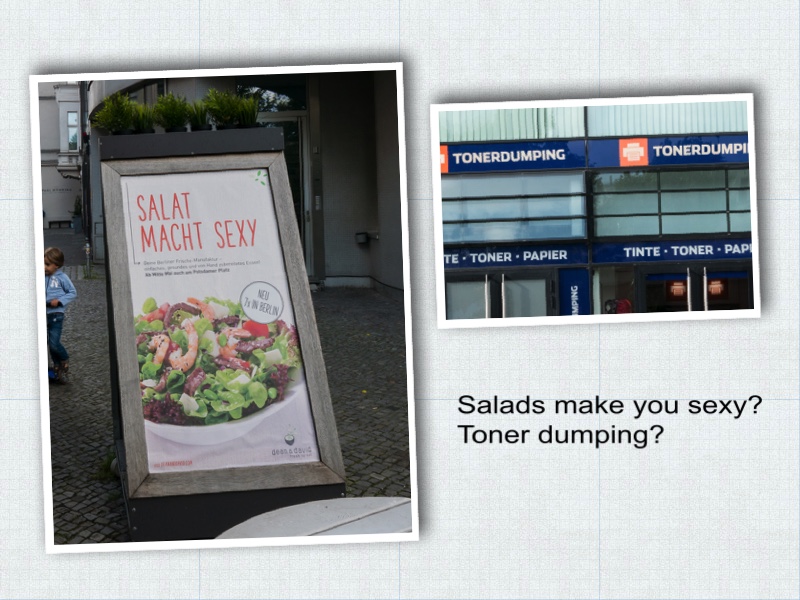
On a lighter note I will leave you with more entertaining signs. See you tomorrow!


Leave a Reply