On the Move

Marrakech – tours, dinners and farewells

A local guide took us on a walking tour of the Marrakech medina this morning. Marrakech is an imperial city – that is, it is or has been the site of a king’s palace. The city was established in 1042 as a trading centre with the walls being built during the 11th and 12th centuries. Marrakech is full of tourists! Issam tells me it has always been thus. Though the city is fascinating, I felt I had left the “real Morocco” behind in our previous stops.

We visited the Palace Bahia, home to prime ministers until 1912 when the French arrived and confiscated it for their own use. “Bahia” is Arabic for beautiful or magnificent. Here is where the wives hung out:
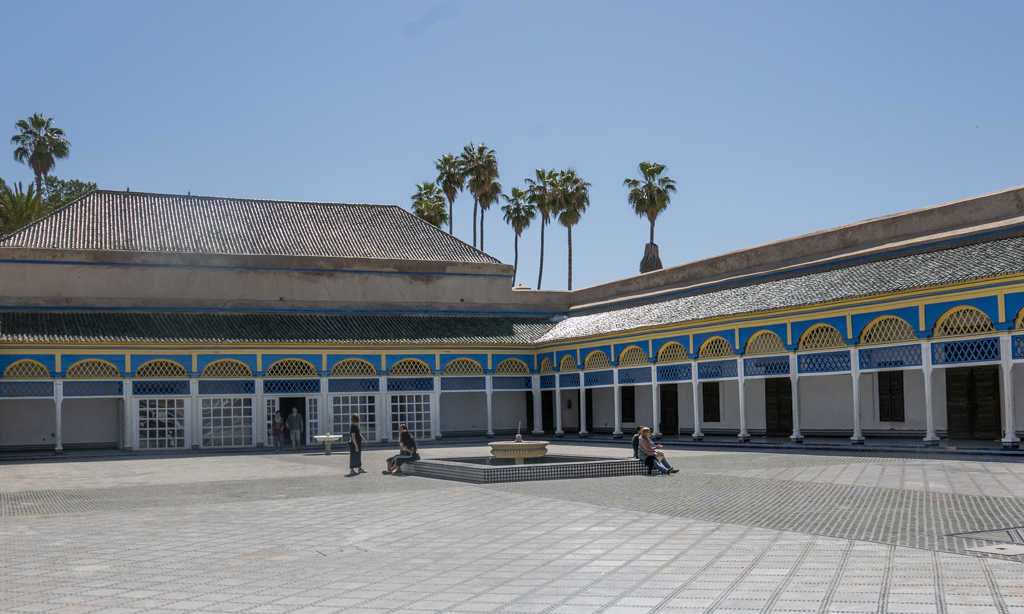
Central women’s courtyard
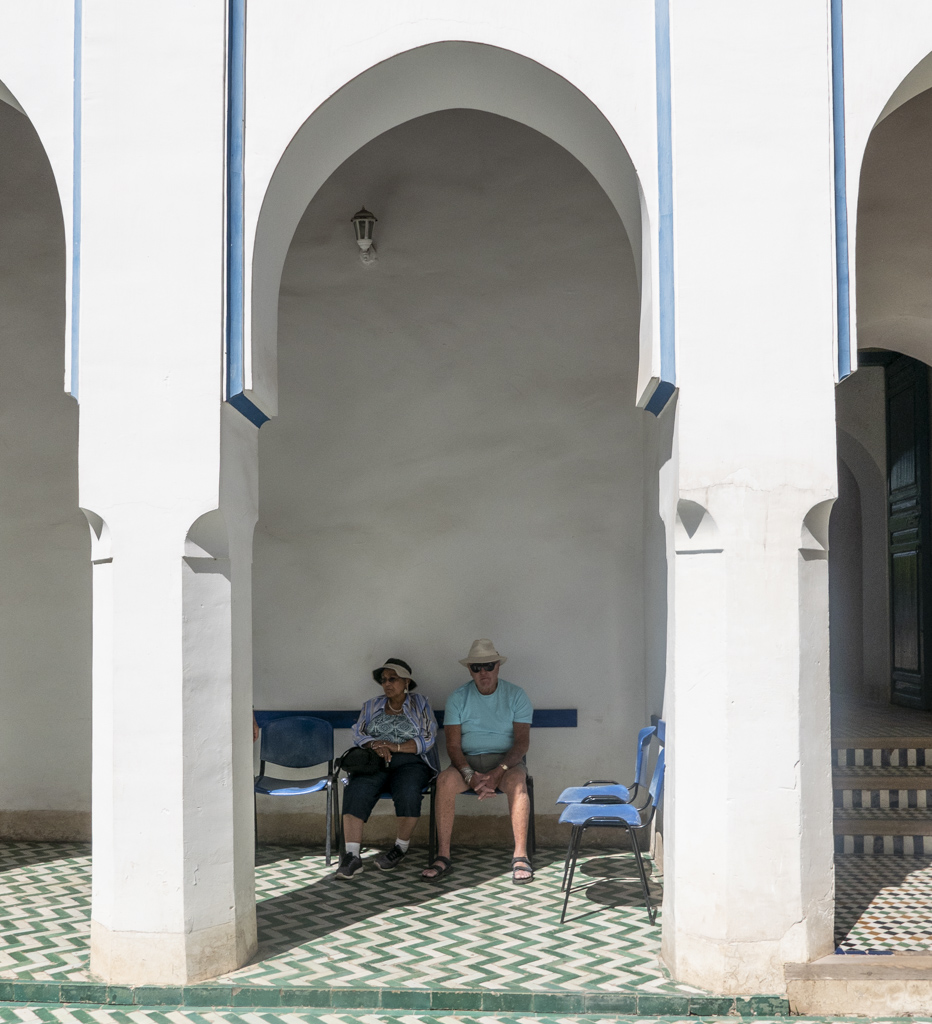
Here’s where two of my bushed tour mates hung out

The tour took us to the Tombeaux Sadiens, the tomb of prime ministers and other important people. “Sadiens” means happy in Arabic. Was that happy for those who were glad to be finally left behind, or for those on their future journey??

We next visited a carpet company. Two women demonstrated carpet making though they were there only for tourist purposes. All the carpets this firm sells are made by artisans around Morocco. Sadly for the company, none of us were in carpet buying mode though the range of colour and style was impressive.

We also walked past the Koutoubia Mosque, a Marrakech landmark. Its minaret can be seen 25 km from the centre of the city. “Koutoubia” means books in Arabic. The grounds in front of the mosque used to be prime book-selling territory. I was prepared to Photoshop out the black structure on top until our guide joked that it was used to dispatch wives who didn’t know how to cook. (Yikes!) But in fact every minaret has a “crane” on top; it points to Mecca.
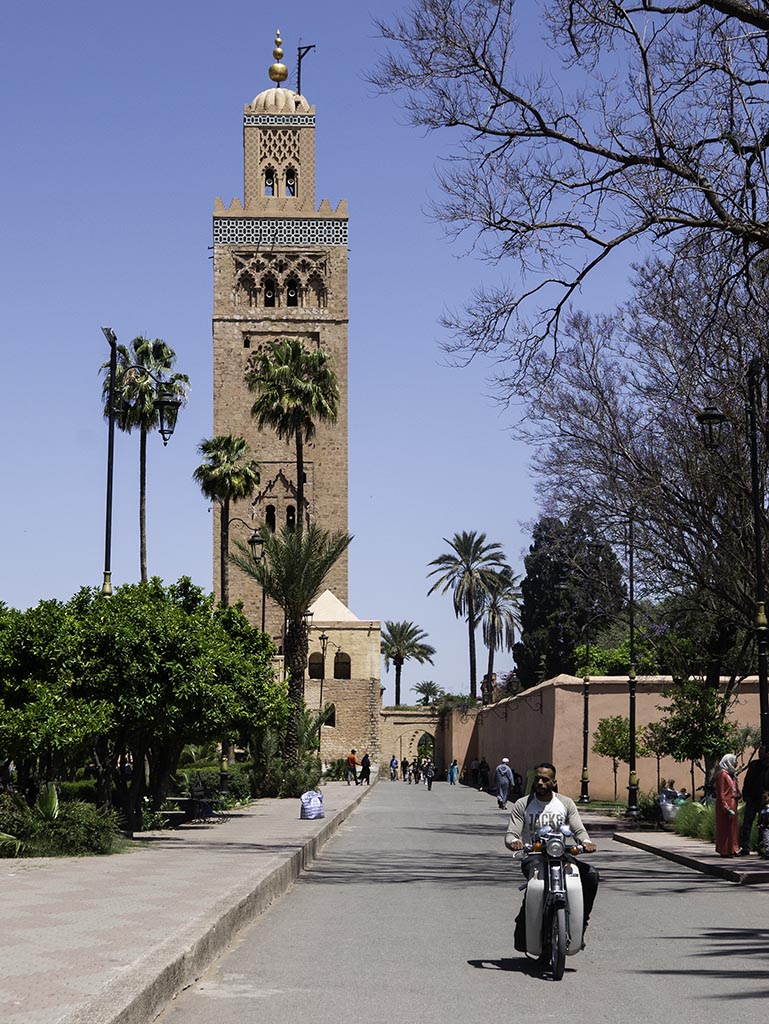
Koutoubia mosque and minaret

The main square in Marrakeh is Jemaa El Fna which buzzes day and night, but especially after 7 pm. There are (fake) snake charmers, strength testers, stand up comedians, drag queens who pray for the forgiveness of others’ sins, vendors of all imaginable trinkets, t-shirt, jelaba and caftan shops, fresh food and prepared. The souk branches off from this square. Here are some photos from the square.

This slideshow requires JavaScript.

Two places I visited deserve special mention: the Jardin Majorelle and the Yves St. Laurent Museum. Jacques Majorelle, a French man, created the garden in 1886. By 1980 the garden was a mess. Yves St. Laurent and his partner Pierre Bergé purchased the garden, restored it, created a Berber museum within the garden, and opened it to the public. The garden is a symphony of cacti with a few flowers and some bamboo thrown in for good measure.
This slideshow requires JavaScript.

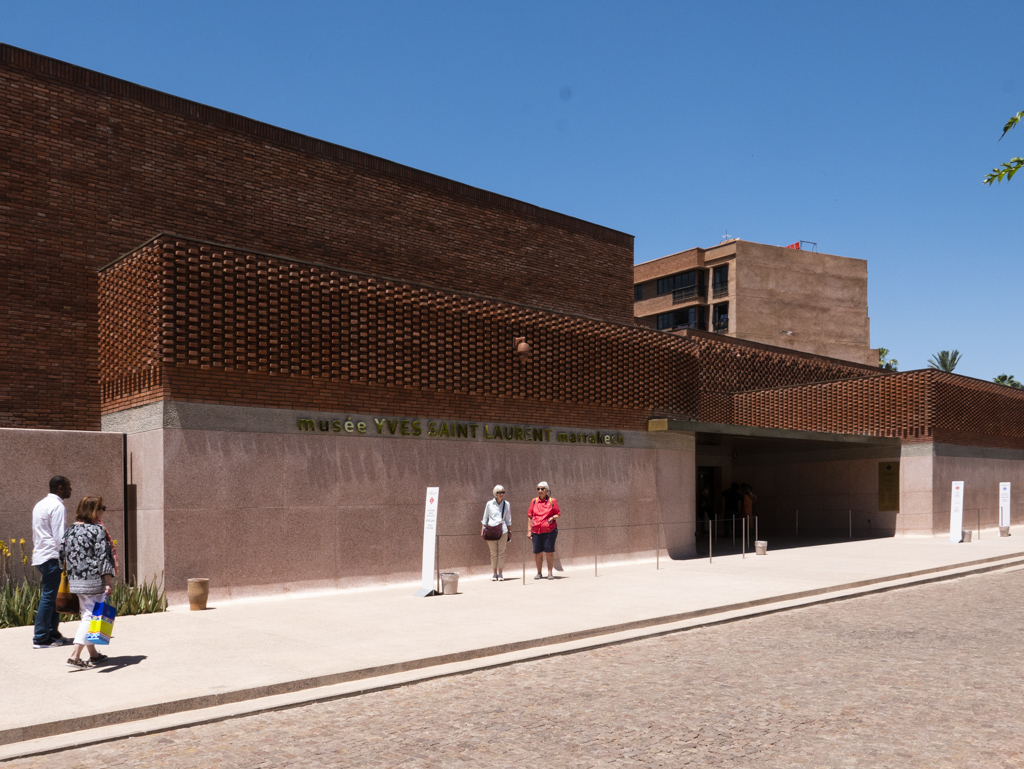
The Yves St. Laurent Museum

The temporary exhibition at the Museum was a collaboration by a poet, a scuptor and a musician, spiritual for those who dig that kind of thng. There was also a wonderful display of St. Laurent creations and, of course, a VERY expensive gift shop. Cheryl, Ellen, Terri and I had lunch at the Museum cafe, sitting beside a decorative infinity pool. These oases of calm in the middle of busy Marrakech are not to be missed.
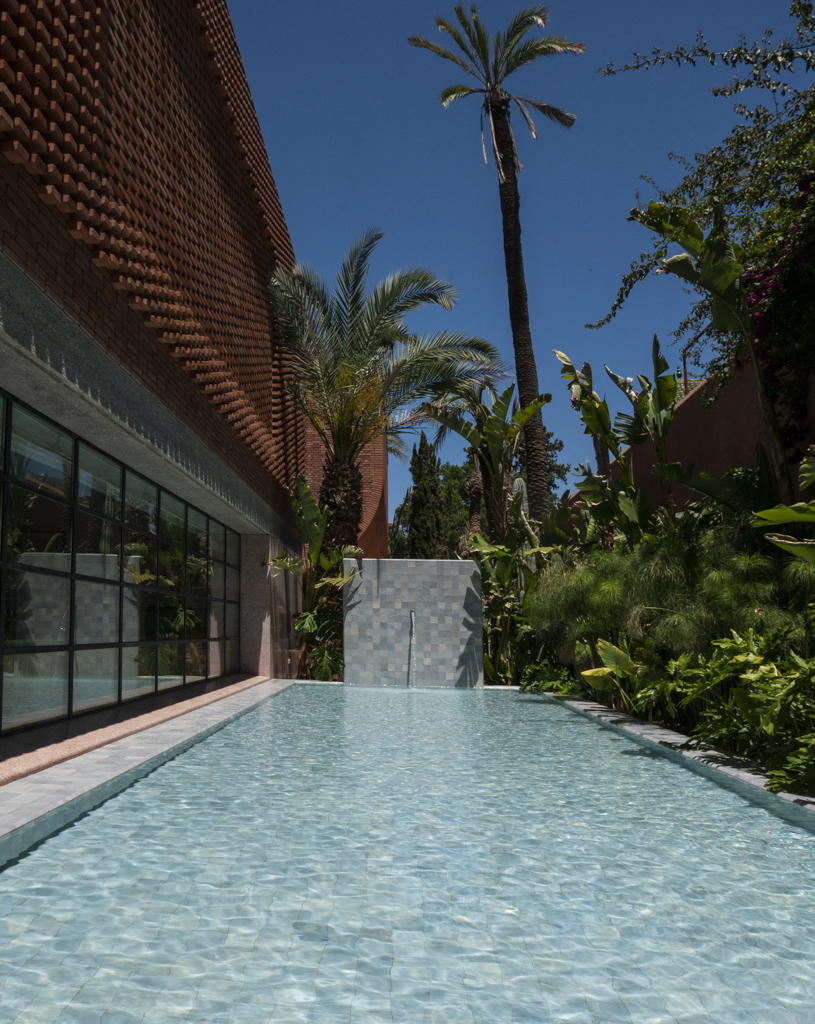
The view from our pool side table

Today marked the end of the tour for eight of our number. They would be going to Casablanca and then back to the US the following day. The five solo women, including myself, would be continuing on the optional tour to Essaouira. We were all taken on a lengthy calèche ride through the ville nouvelle, where we spotted another of the Hendrik Beikrich “Tracing Morocco” wall installations. I first mentioned this project in one of my Rabat posts.
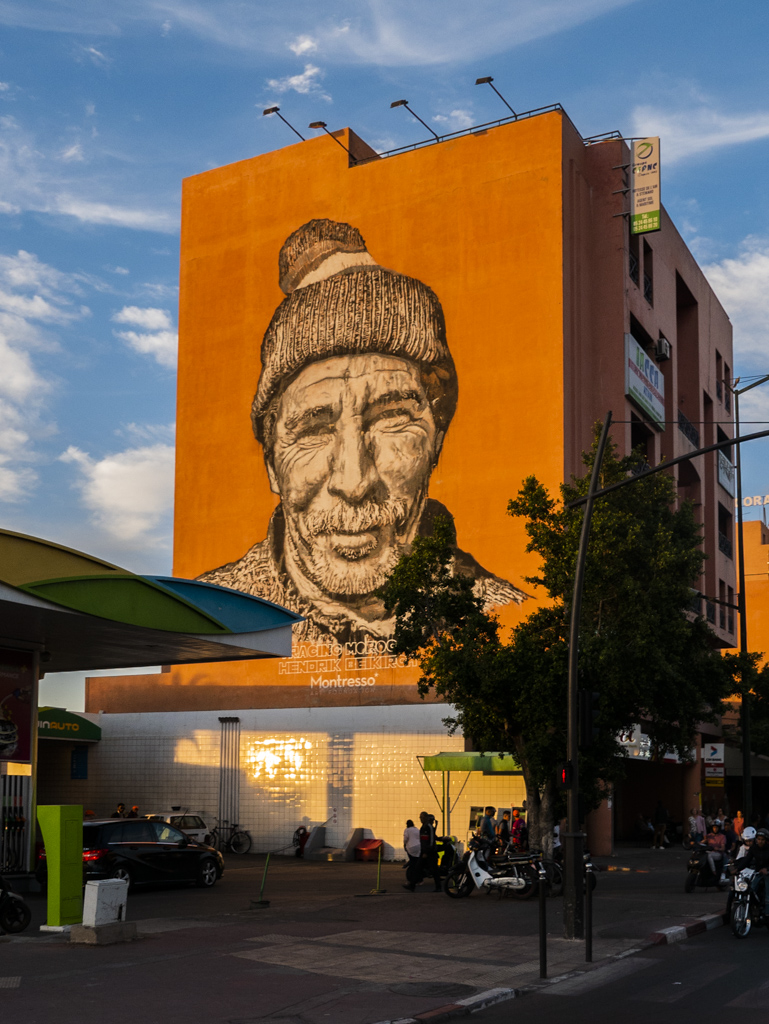
Tracing Morocco

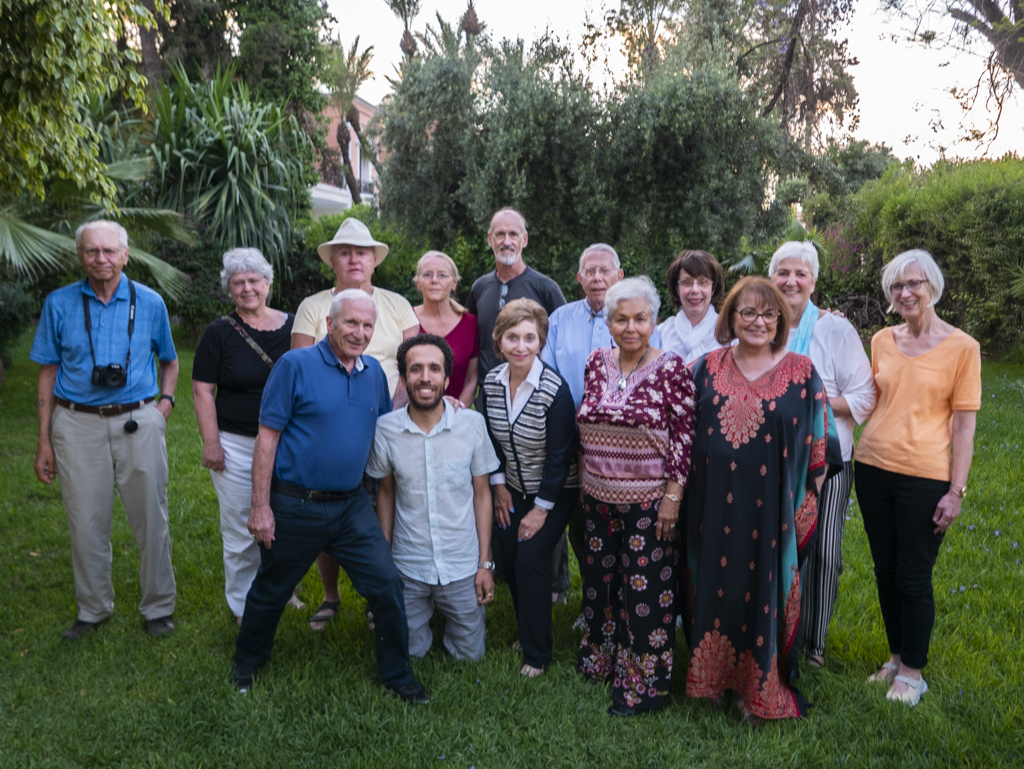
OAT treated us to an excellent farewell dinnner where our group posed for a photo. Issam is kneeling front and centre. 🙂  I can heartily recommend this tour to anyone interested in Morocco!!
10 responses to “Marrakech – tours, dinners and farewells”

  1. Terry Avatar
    Terry

    Beautiful pictures!

    Like

  2. Shelley Avatar

    i’m so glad you enjoyed your first OAT trip. Thanks for such great commentary and beautiful photos. One of your posts found its way onto my facebook page, so that my friends who are considering Morocco for 2020 will get a preview of what is to come.
    I’ll be interested to learn what you think of the post trip.

    Liked by 1 person

    1. nancywcaldwell Avatar

      Thanks Shelley. I will also be interested to learn what I think of the post trip. 😉

      Like

  3. Tracey Avatar
    Tracey

    Looks like a great group to travel with Nancy and Marrakesh is amazing.

    Like

    1. nancywcaldwell Avatar

      It has been a great group, and Issam has been a splendid tour leader. A good tour leader makes a huge difference!

      Like

  4. Helen Hesse Avatar
    Helen Hesse

    Glad you are continuing. I am so enjoying your blogs.

    Like

  5. Sigrid Avatar
    Sigrid

    Love your photos, especially the cacti, flowers, bamboo corridor and the photos taken at the market square. I feel that I learnt so much about Morocco from your blog, am very curious about your upcoming stories and pictures.

    Like

    1. nancywcaldwell Avatar

      Thanks for your kind words, Sigrid. This has been a wonderful trip. I really didn’t know much about Morocco and have found it a fascinating and welcoming country.

      Like

Leave a Reply

A local guide took us on a walking tour of the Marrakech medina this morning. Marrakech is an imperial city – that is, it is or has been the site of a king’s palace. The city was established in 1042 as a trading centre with the walls being built during the 11th and 12th centuries. Marrakech is full of tourists! Issam tells me it has always been thus. Though the city is fascinating, I felt I had left the “real Morocco” behind in our previous stops.

We visited the Palace Bahia, home to prime ministers until 1912 when the French arrived and confiscated it for their own use. “Bahia” is Arabic for beautiful or magnificent. Here is where the wives hung out:

Central women’s courtyard
Here’s where two of my bushed tour mates hung out

The tour took us to the Tombeaux Sadiens, the tomb of prime ministers and other important people. “Sadiens” means happy in Arabic. Was that happy for those who were glad to be finally left behind, or for those on their future journey??

We next visited a carpet company. Two women demonstrated carpet making though they were there only for tourist purposes. All the carpets this firm sells are made by artisans around Morocco. Sadly for the company, none of us were in carpet buying mode though the range of colour and style was impressive.

We also walked past the Koutoubia Mosque, a Marrakech landmark. Its minaret can be seen 25 km from the centre of the city. “Koutoubia” means books in Arabic. The grounds in front of the mosque used to be prime book-selling territory. I was prepared to Photoshop out the black structure on top until our guide joked that it was used to dispatch wives who didn’t know how to cook. (Yikes!) But in fact every minaret has a “crane” on top; it points to Mecca.

Koutoubia mosque and minaret

The main square in Marrakeh is Jemaa El Fna which buzzes day and night, but especially after 7 pm. There are (fake) snake charmers, strength testers, stand up comedians, drag queens who pray for the forgiveness of others’ sins, vendors of all imaginable trinkets, t-shirt, jelaba and caftan shops, fresh food and prepared. The souk branches off from this square. Here are some photos from the square.

This slideshow requires JavaScript.

Two places I visited deserve special mention: the Jardin Majorelle and the Yves St. Laurent Museum. Jacques Majorelle, a French man, created the garden in 1886. By 1980 the garden was a mess. Yves St. Laurent and his partner Pierre Bergé purchased the garden, restored it, created a Berber museum within the garden, and opened it to the public. The garden is a symphony of cacti with a few flowers and some bamboo thrown in for good measure.

This slideshow requires JavaScript.

The Yves St. Laurent Museum

The temporary exhibition at the Museum was a collaboration by a poet, a scuptor and a musician, spiritual for those who dig that kind of thng. There was also a wonderful display of St. Laurent creations and, of course, a VERY expensive gift shop. Cheryl, Ellen, Terri and I had lunch at the Museum cafe, sitting beside a decorative infinity pool. These oases of calm in the middle of busy Marrakech are not to be missed.

The view from our pool side table

Today marked the end of the tour for eight of our number. They would be going to Casablanca and then back to the US the following day. The five solo women, including myself, would be continuing on the optional tour to Essaouira. We were all taken on a lengthy calèche ride through the ville nouvelle, where we spotted another of the Hendrik Beikrich “Tracing Morocco” wall installations. I first mentioned this project in one of my Rabat posts.

Tracing Morocco

OAT treated us to an excellent farewell dinnner where our group posed for a photo. Issam is kneeling front and centre. 🙂  I can heartily recommend this tour to anyone interested in Morocco!!