
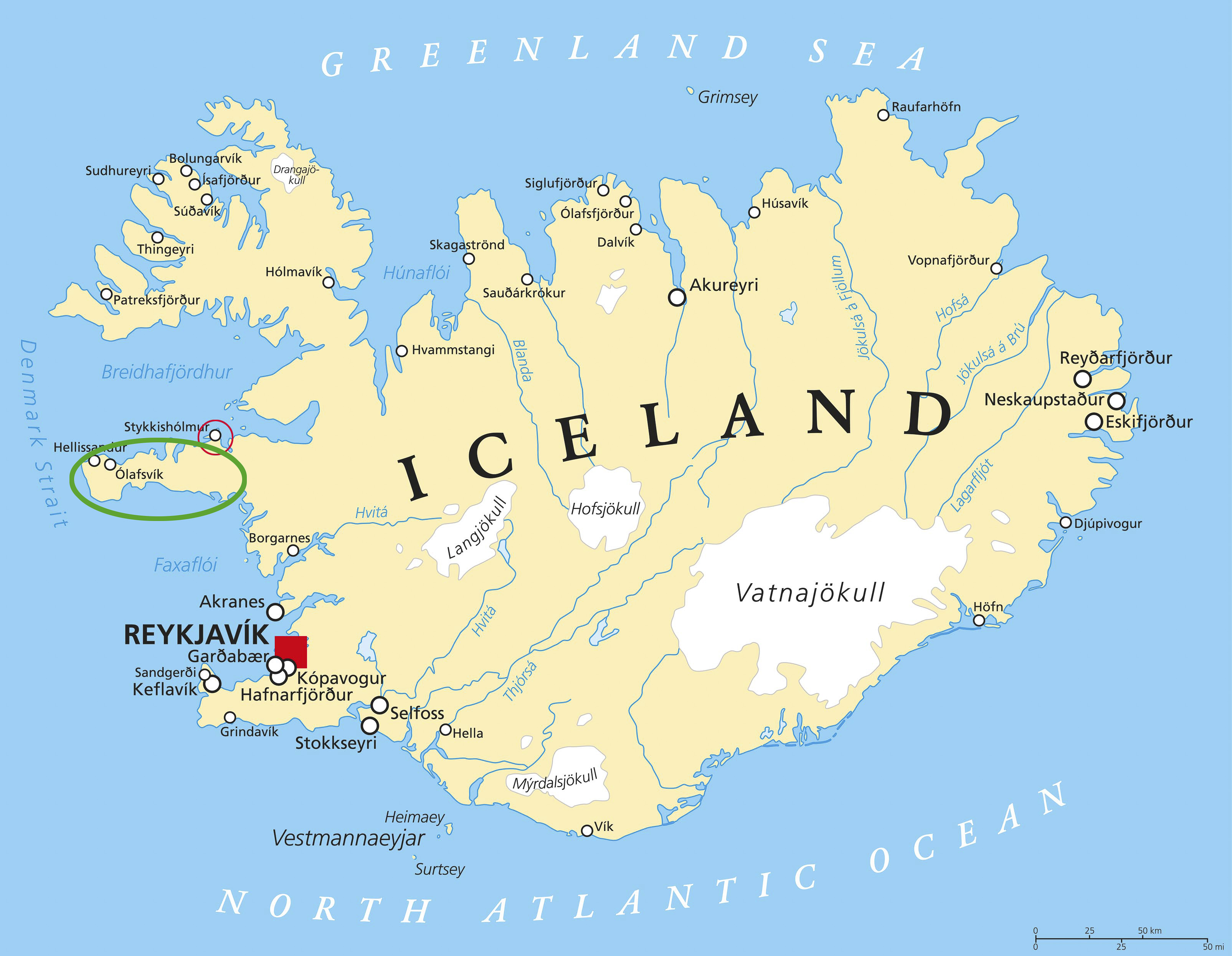
 Today we spent exploring the Snaefellsnes peninsula. (See green circle on map to the left.) This area is one of Ísland’s oldest with remains of volcanic activity from 3.5 million years ago overlaid with more activity from tens of thousands of years ago. The OAT booklet tells me that this peninsula “marks the entry point to Jules Verne’s Journey to the Centre of the Earth.”
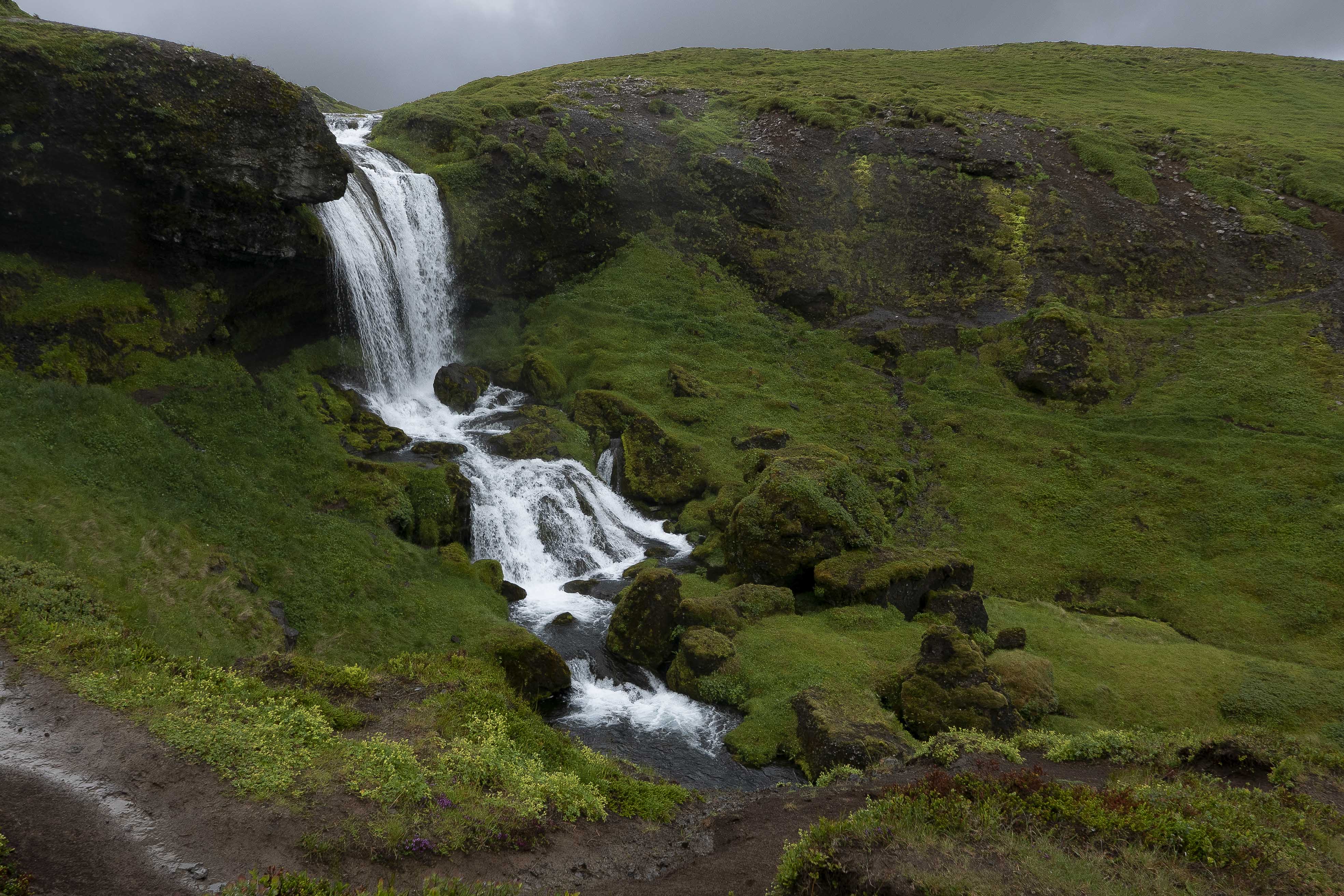
In the rain and wind that have dogged us from the start we headed out to view a waterfall. The weather did not detract from the beauty of the waterfall, it just made it slippier to reach and less comfortable to view.
We hurried back to the bus and carried on to Tunga beach. Happily the rain decreased to a light drizzle so we spent some time watching for seals – a few way out in the water – and birds. Common snipes hopped back and forth across the foreshore oblivious to my camera.
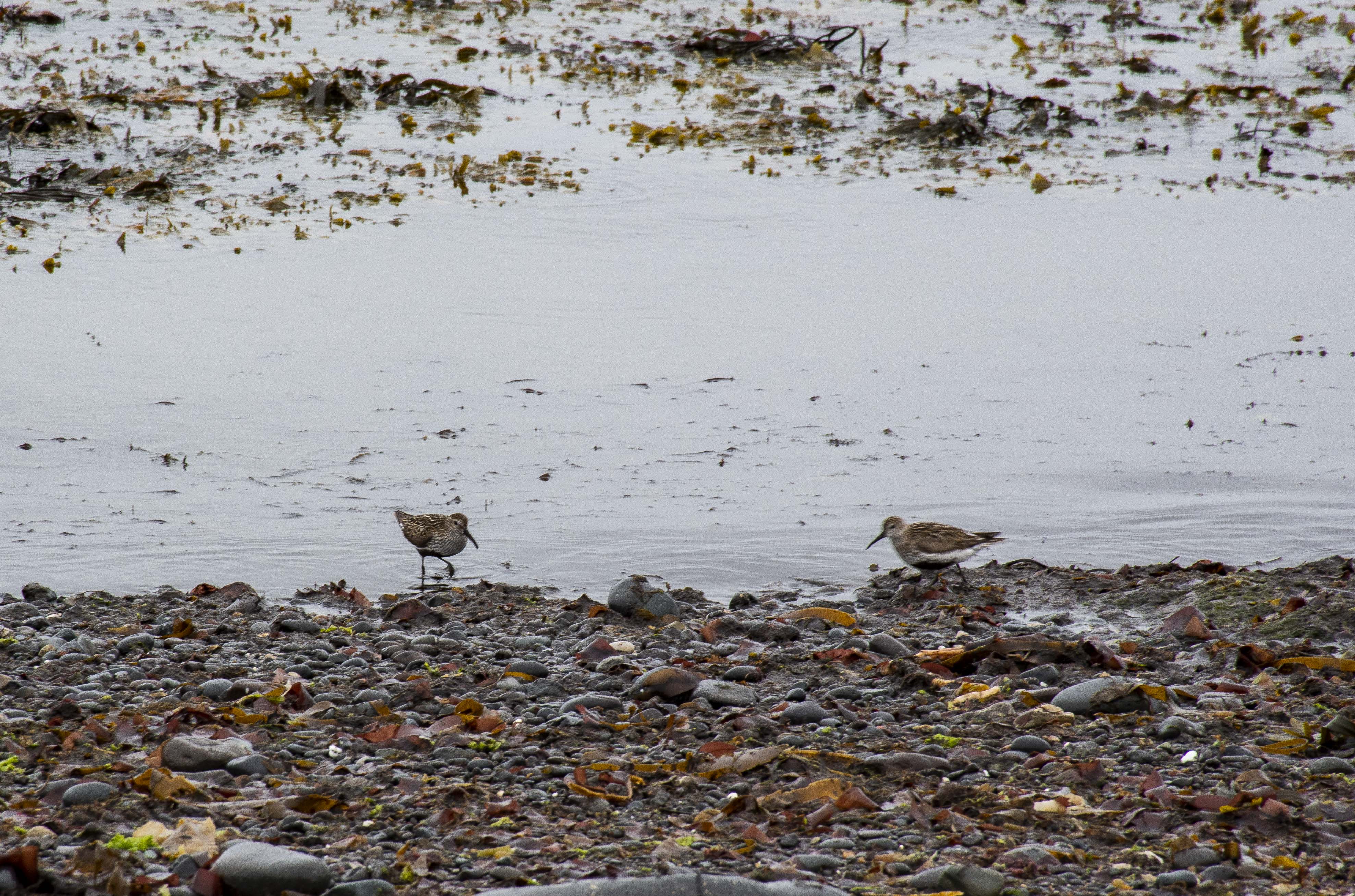
Arctic terns were busy searching for food for their chicks. I had fun photographing them!
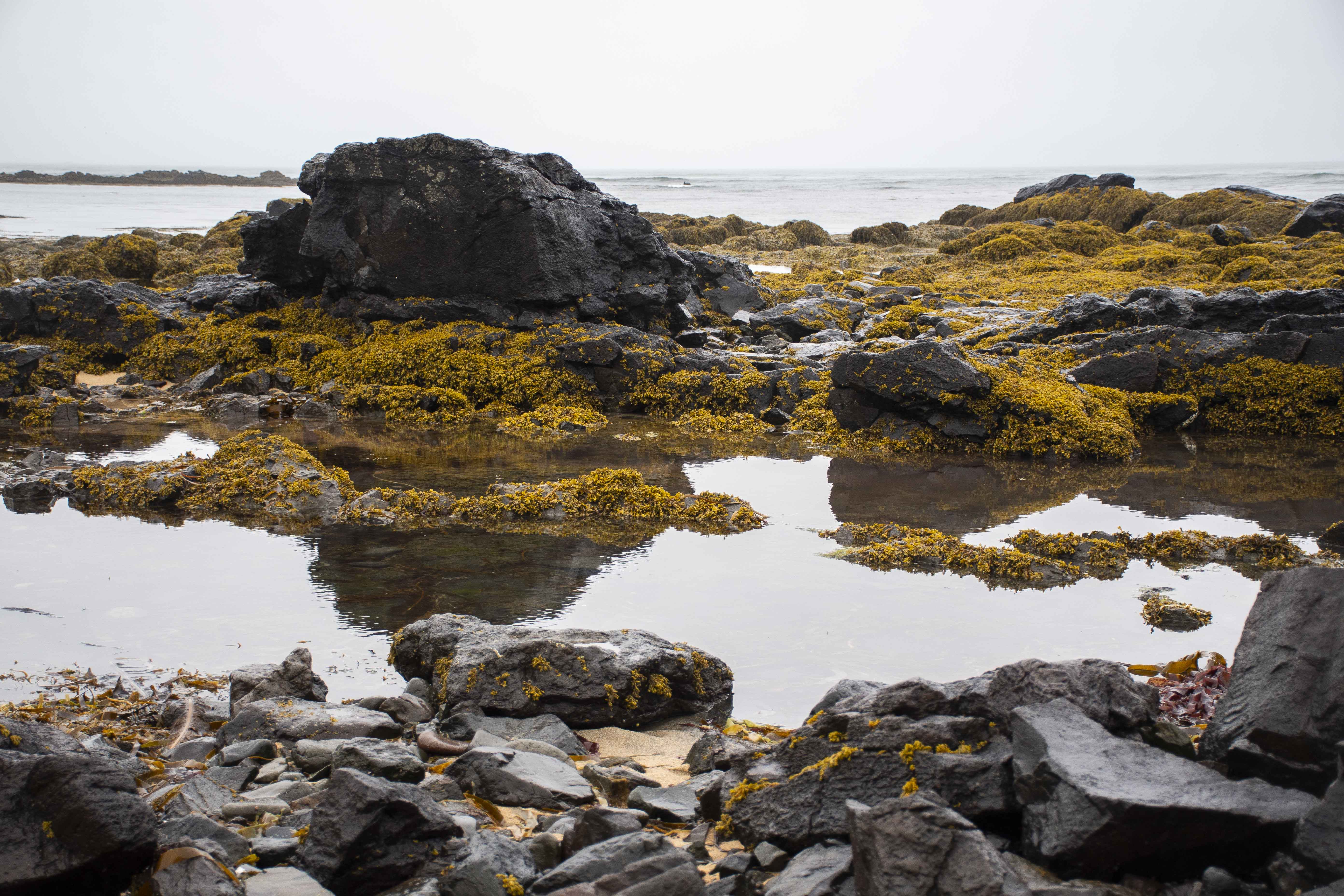
The beach was rocky with small pools reflecting the surrounding stones.
And a previous visitor had kindly left a bit of art for us to enjoy.
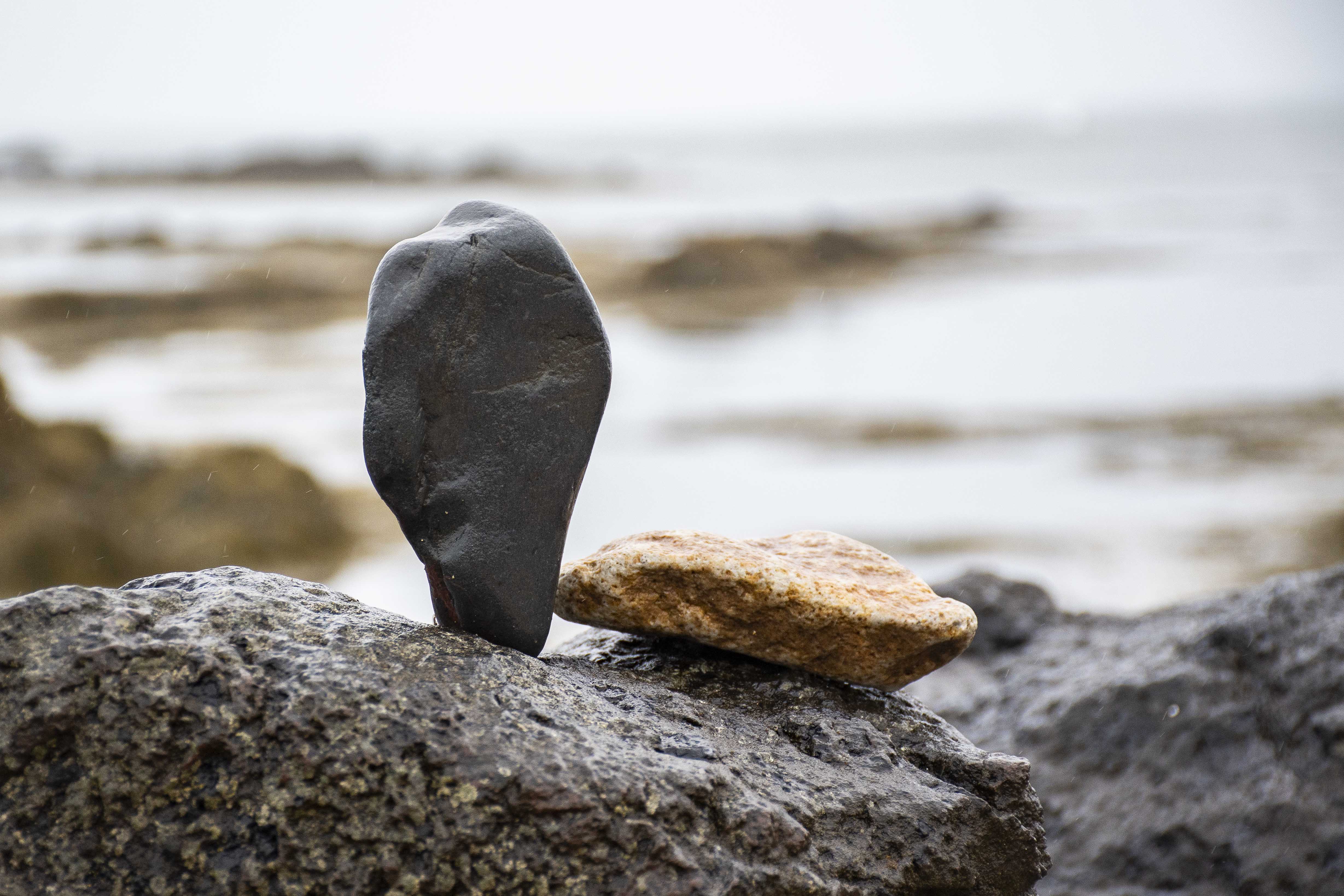
Following lunch we inspected the Arnarstapi lava field to decide whether it was safe to cross. Eight of us foolhardy souls looked at it and said “no sweat” in spite of the renewed wind and drizzle. The experience was somewhat more challenging than we had expected. A mucky waterlogged rocky path created difficulties as we headed toward two volcano plugs in the foggy distance. I was glad I had invested in a pair of waterproof hiking shoes!
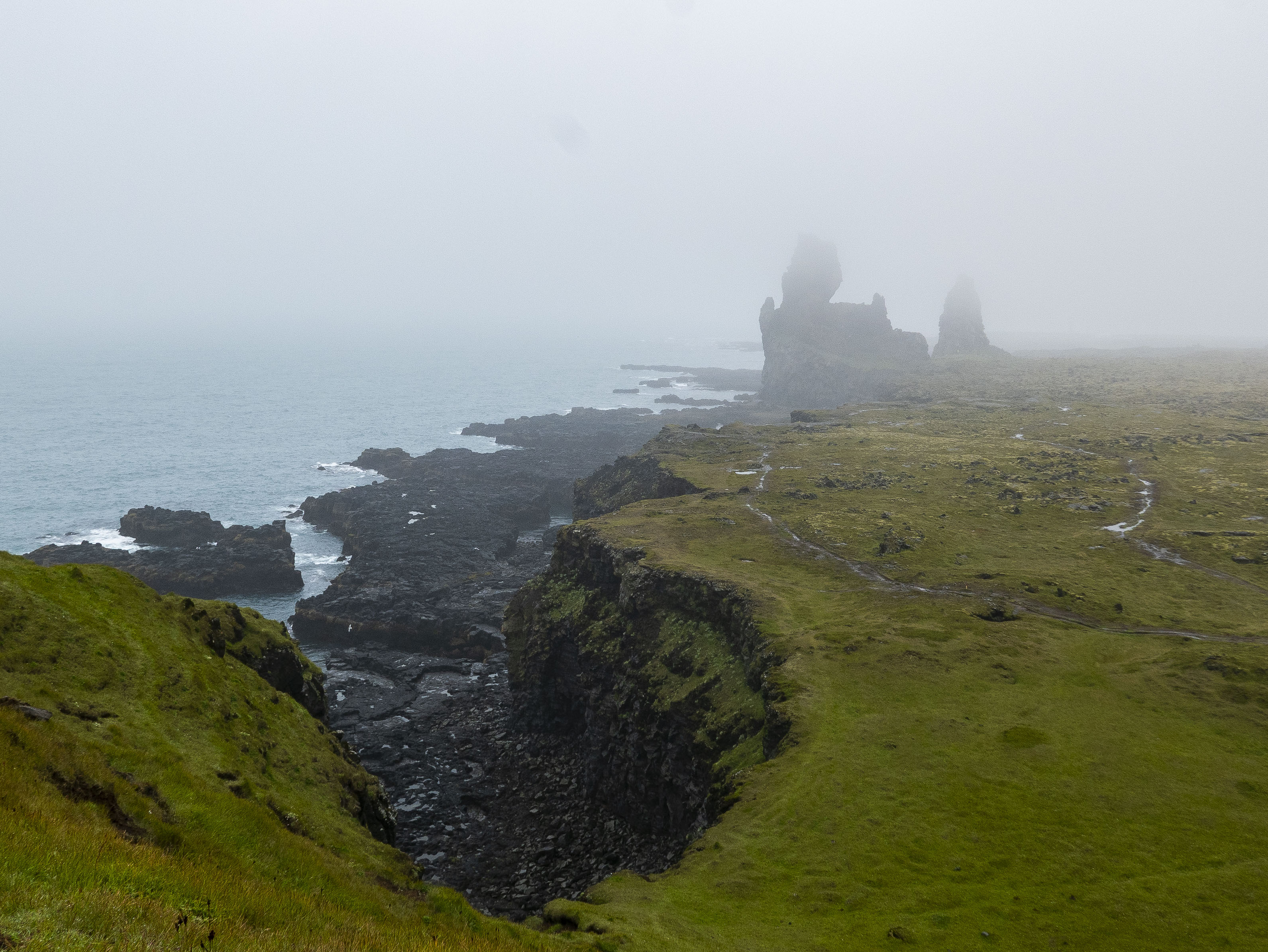
These basalt formations are cooled lava that once, possibly 10 million years ago, formed out of moltan magma inside a volcano. The natural elements over the years eroded the exterior of the volcano and left the “plugs” standing. Eventually these too will be eroded to nothing, but not in my lifetime!
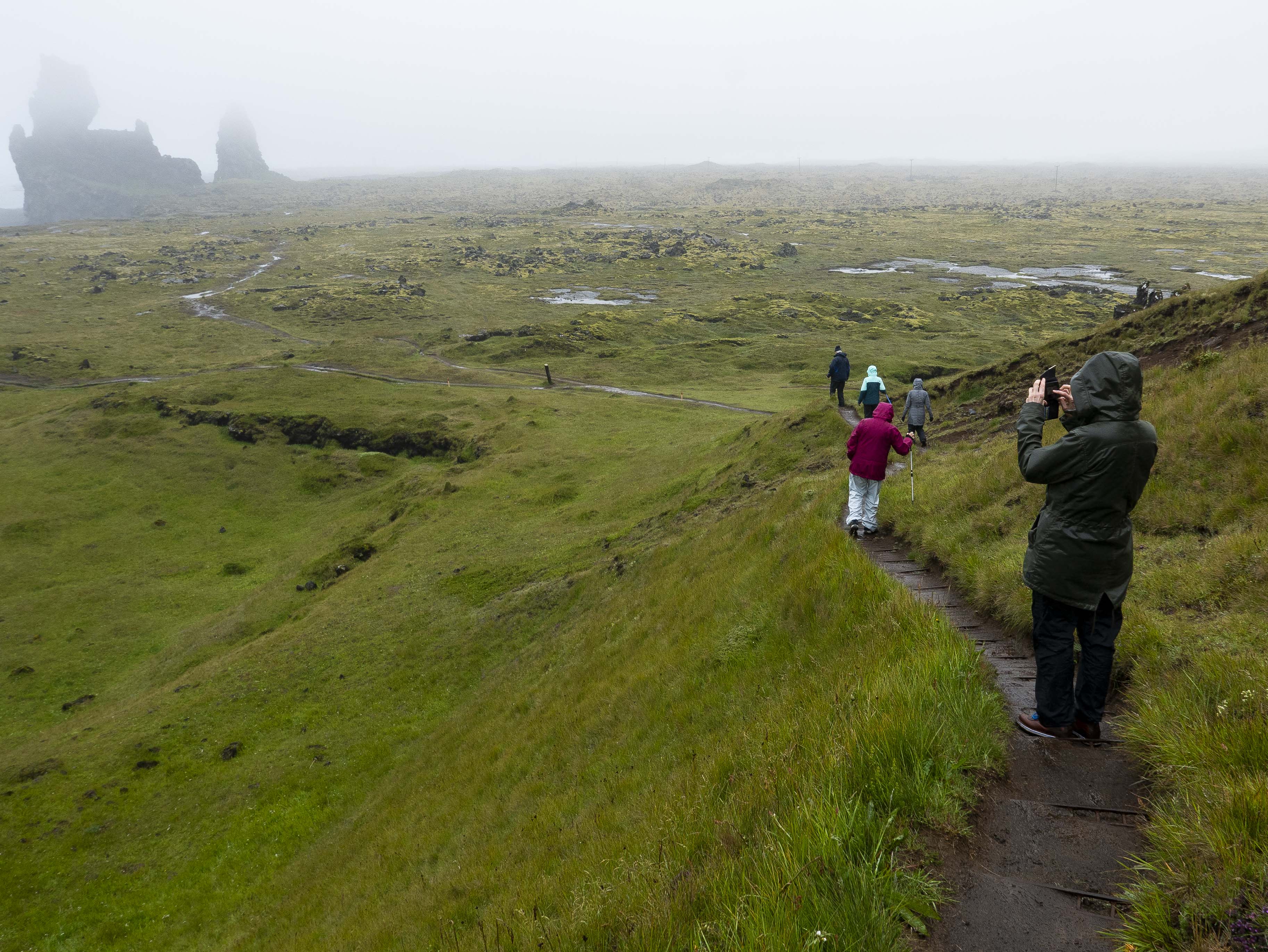
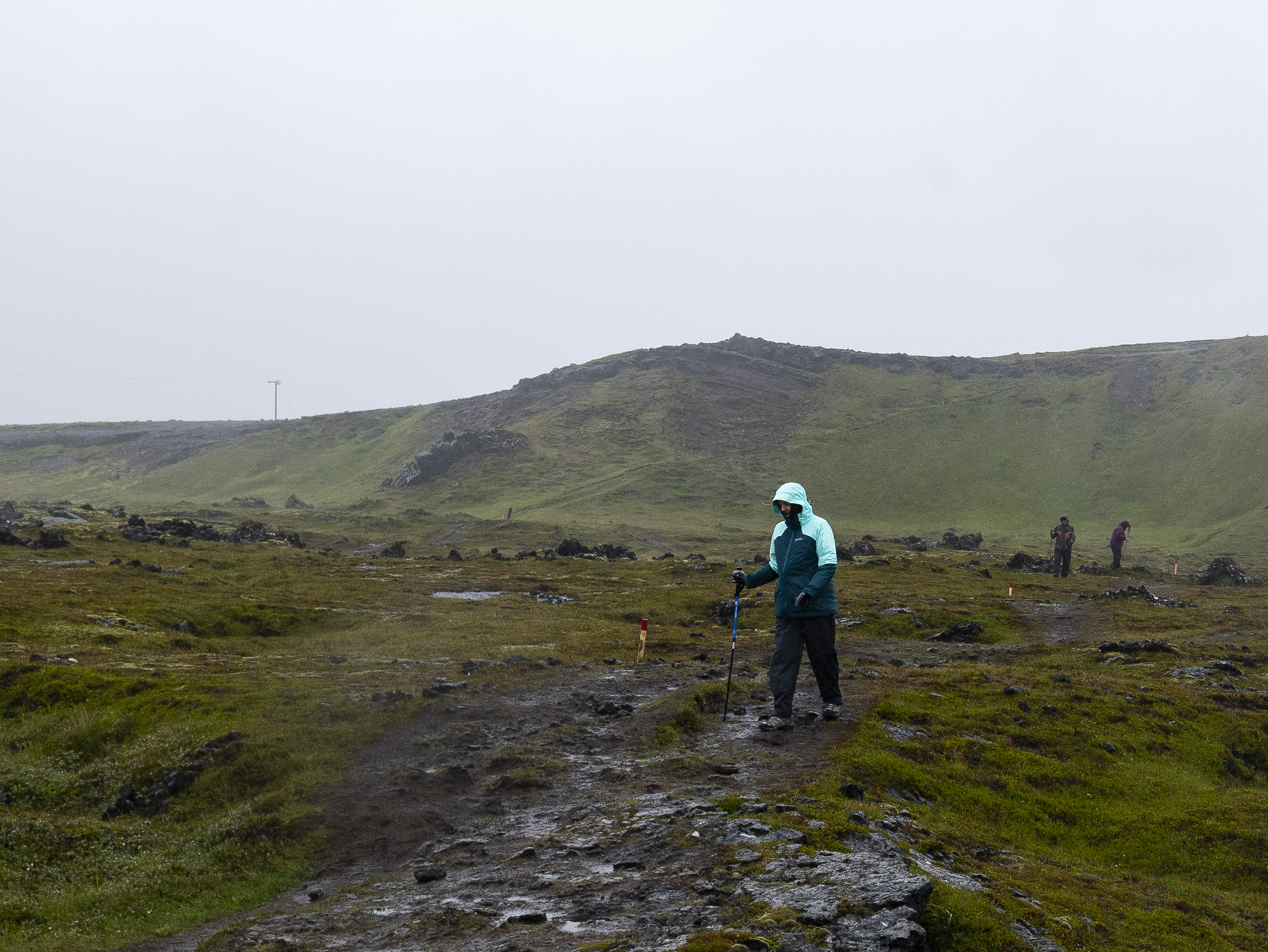
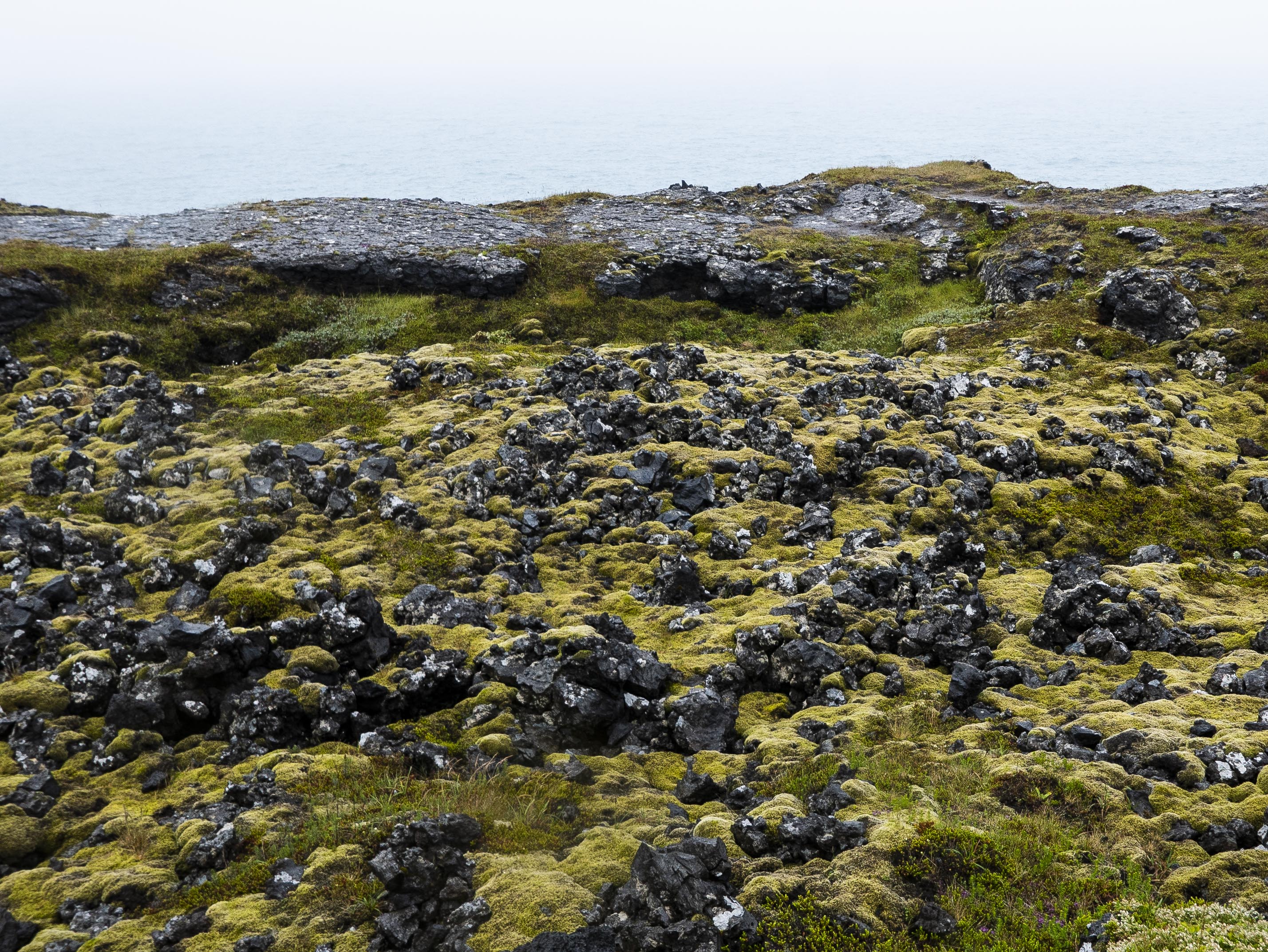
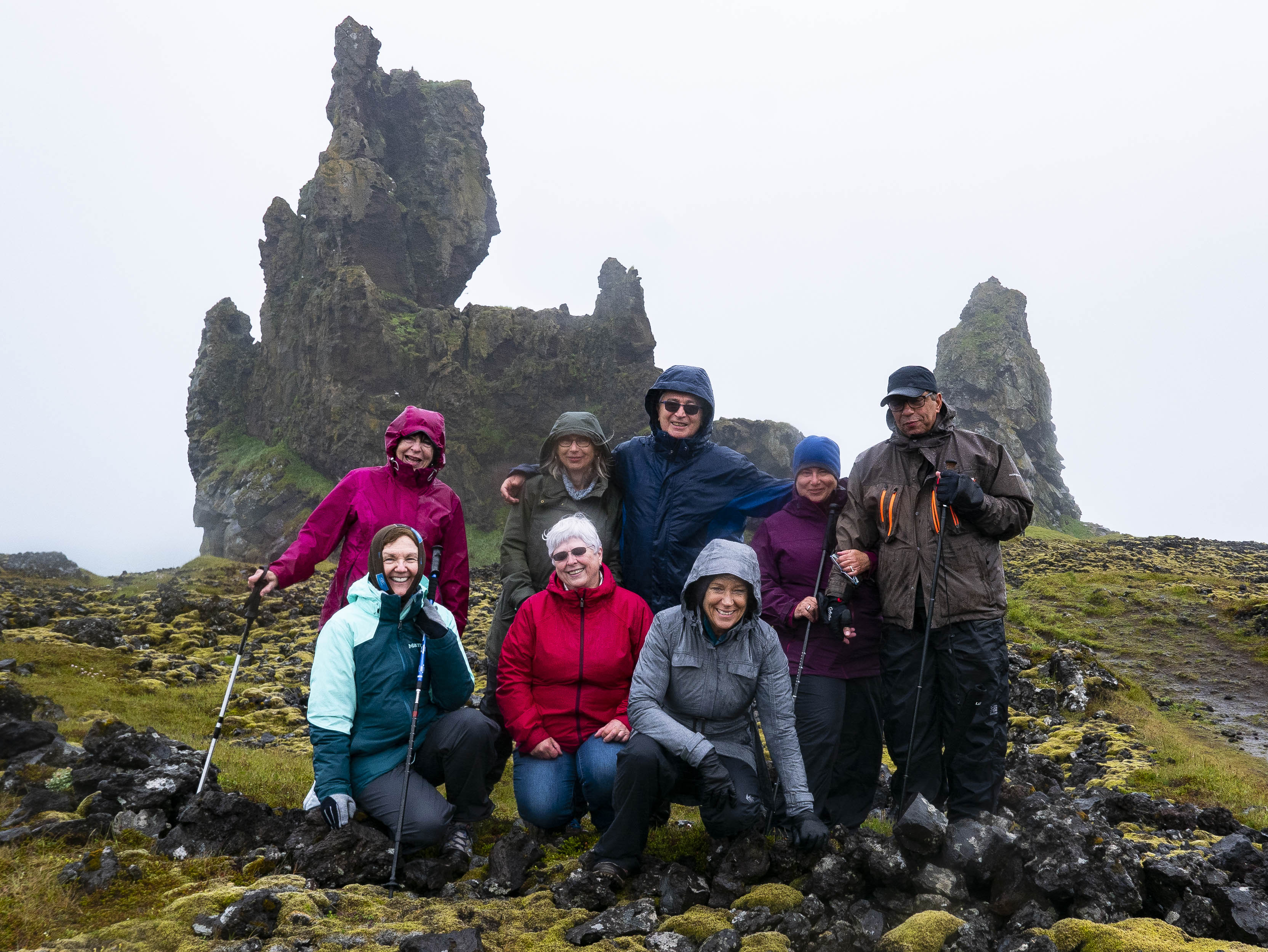
We were all happy, over an hour later, to reach the exhibition centre at the edge of the lava field where the five others of our group awaited us.
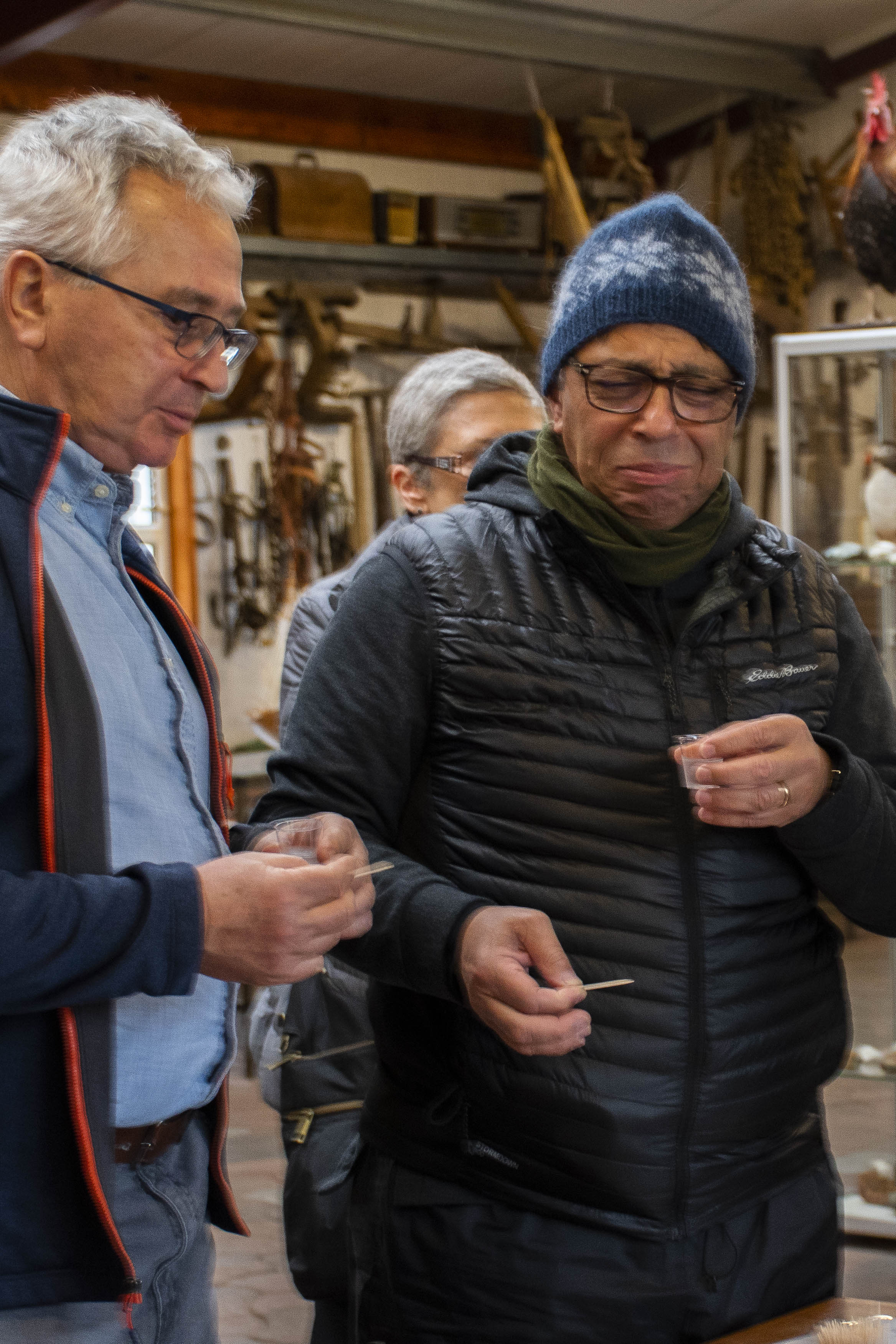
As if the hike across the Arnarstapi lava field weren’t challenging enough for one day, we were taken to the Bjarnarchöfn Shark Museum where we had an “opportunity” to taste hárkarl, fermented shark meat. Greenland shark is harvested off Ísland; the meat is a delicacy here. The fresh shark flesh is inedible. The shark has no effective urinary system, so its urine floats around in the meat. Cut up hunks of meat must be cured for six weeks by being buried or otherwise removed from air while the urine “ferments” and in the same process kills all other bacteria in the flesh. It is then hung and dried for four months.
The hákarl is cut into small pieces, soaked for a few seconds in schnapps and then eaten – chased by the scnapps. Luis, in the pale blue shirt above, went first and announced it wasn’t that bad, in fact it was actually okay. Sam went second but didn’t seem to enjoy it quite as much as Luis. Tricked by Luis’s assertion that fermented shark meat was pretty good, I tried too. I’ll let the photos below tell the story of my response.
A dinner out with the group made for a more delectable and enjoyable meal!


Leave a Reply