
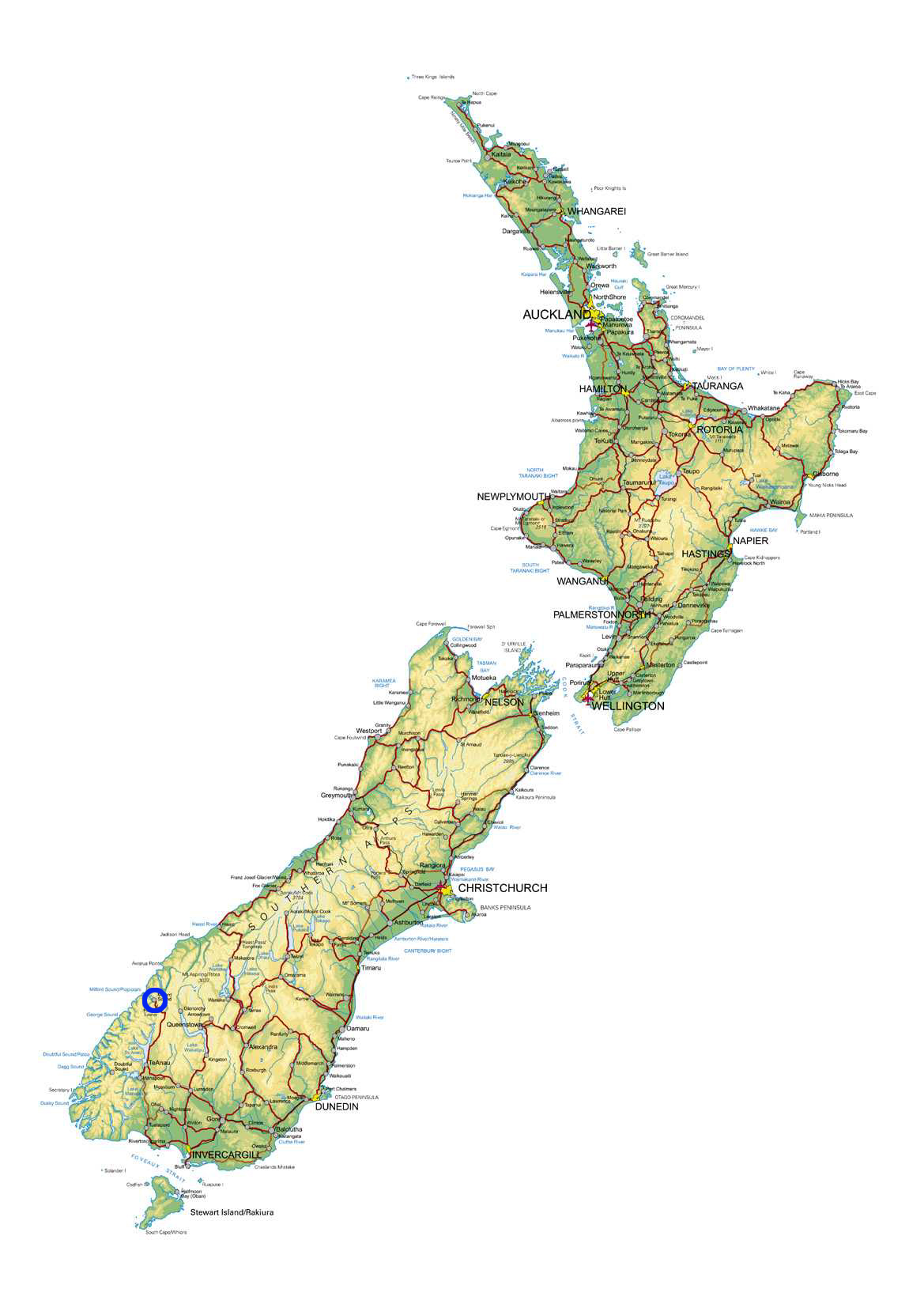
Milford Sound on the south west coast of New Zealand is in Fiordland National Park and is part of Te Wahipounamu, a UNESCO World Heritage site. Milford Sound gets around 9 metres of rain each year, so it was no surprise that we encountered a little bit of it today.
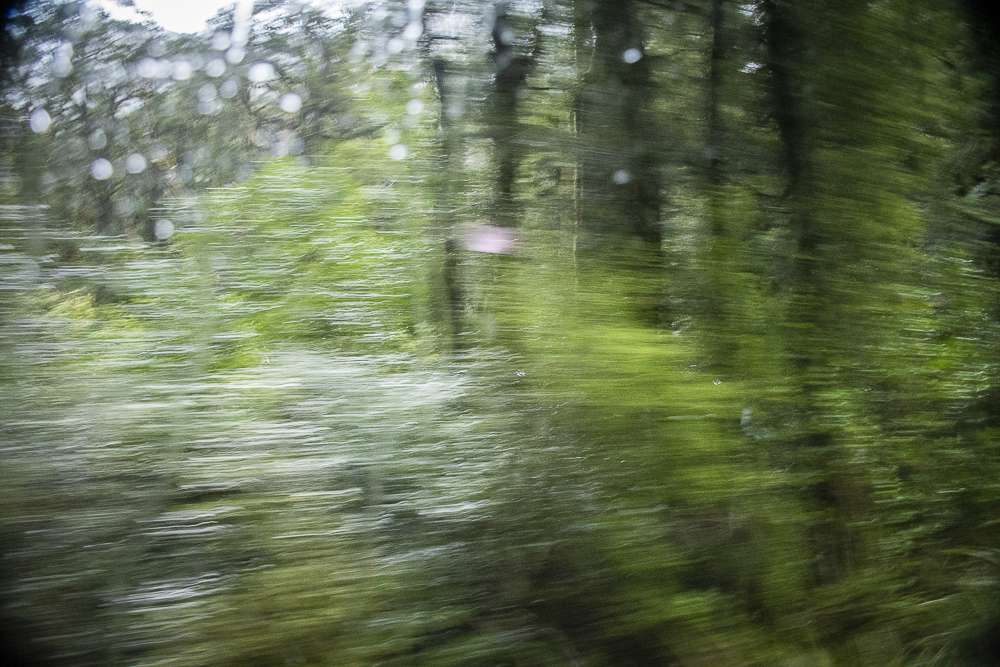
We left early this morning for the two-hour drive from Te Anau, making several stops along the way to view more of New Zealand’s natural wonders. Even sitting on the bus, speeding past lush forests with rain splattering the window, is a visual treat.
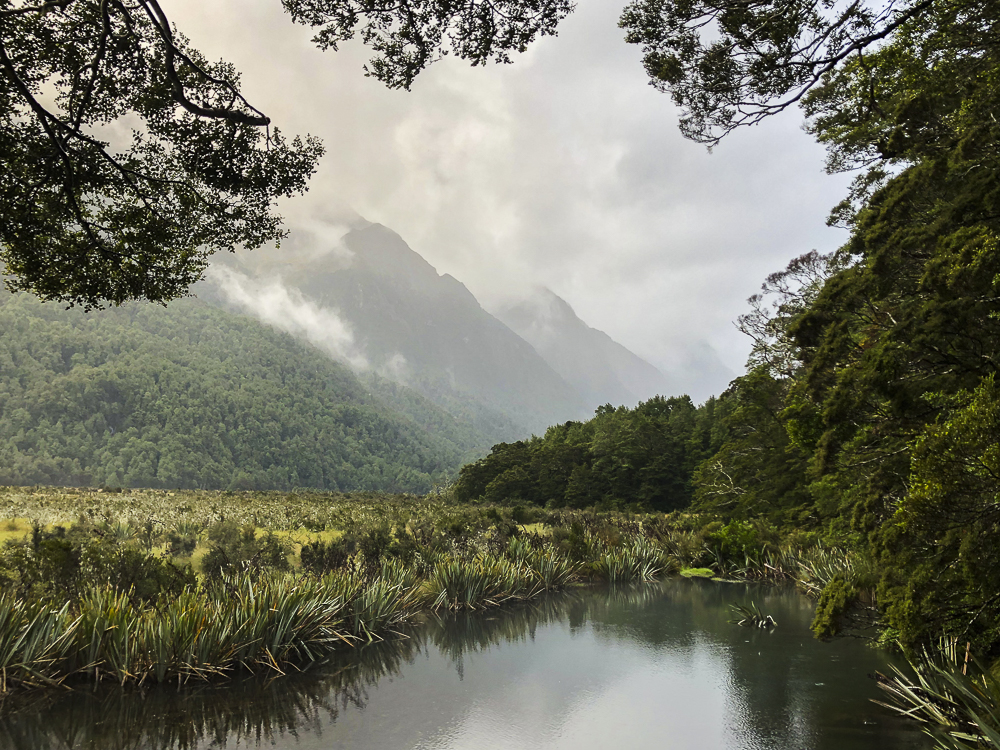
The mountains surrounding Milford Sound are granite which does not absorb water thus the rain creates waterfalls that cascade in sheets to the water below. The day was mostly overcast, at times rainy, always windy and occasionally even sunny – everything but cold. Our first view of the Sound from the dock set the stage for more stunning scenes to come.
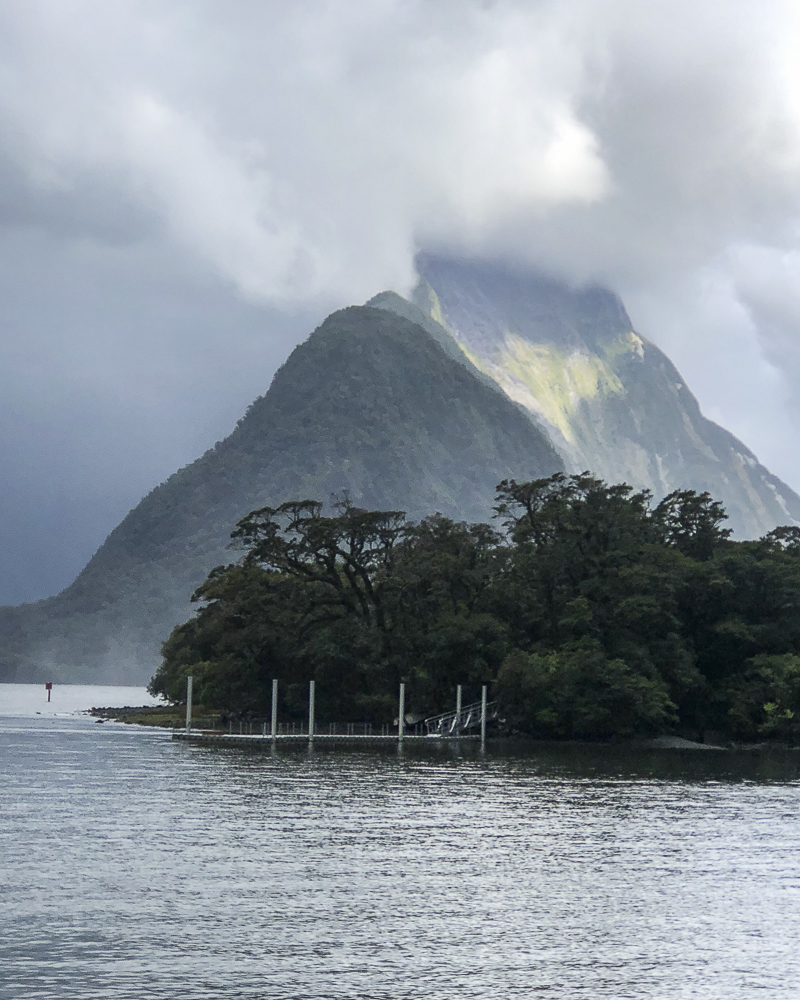
I tool so many photos during our cruise of the Sound, but I won’t bore you with all, just with many. 🙂 Watch for the waterfall to be blown away in the wind. One little fall never reached the Sound; it was blown entirely away as water droplets. I have turned several of my photos into black and white images as they were so moody already, so your eyes are not playing tricks when you see no colour.
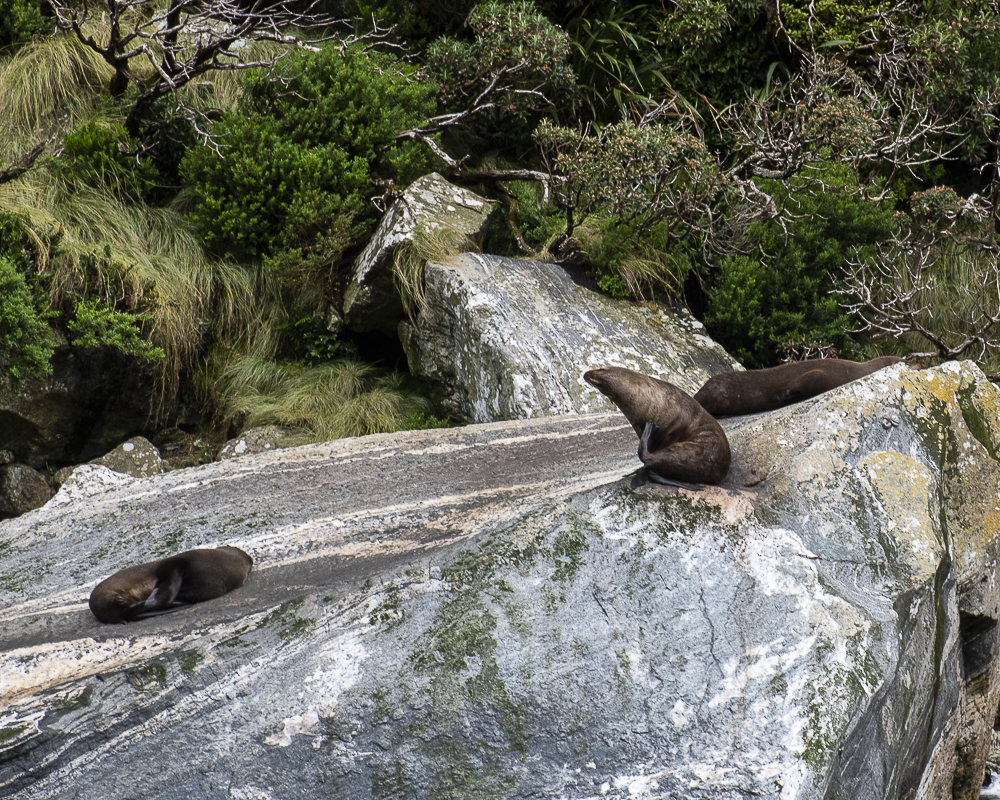
We passed by three fur seals taking it easy on a rock. One put on an act for us or perhaps he had an itchy ear.
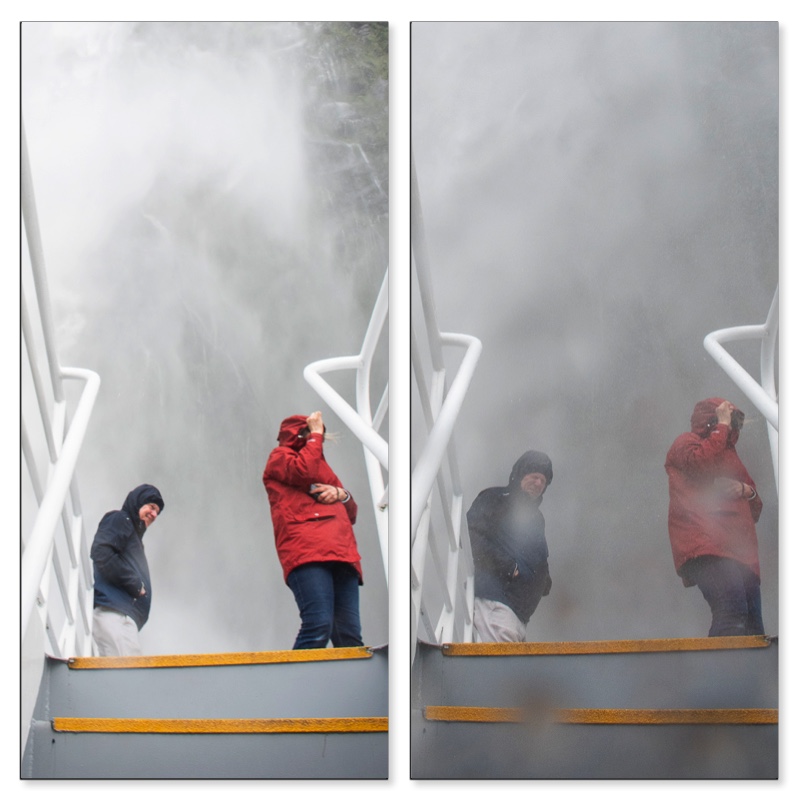
The boat’s captain arranged an interactive experience for us, steering close to one very large waterfall to drench the foolhardy on the upper deck. I took the photo on the right a second or two after the one of the left, through a pretty water-spotted lens. Note, waterfall interaction worries me, so I was downstairs hiding, trying unsuccessfully to stay dry. 🙂
Back in sunny Te Anau, we headed off across Lake Te Anau to experience a glow worm cave.
Glow worms live in dark damp places. They cling to cave (or other) ceilings and walls and send down little sticky filaments the guides call fishing lines. The fishing lines catch small flying insects – and sometimes larger ones! – and gobble them up. The glow is in the tail of the worm, so each little spot of bright blue-green we saw was an individual worm.
Photos are not allowed, and indeed not possible, in the cave as it is virtually pitch black. We trekked a short distance through the cave, occasionally having to bend over to continuue, and then were loaded into a barge-type boat and pulled by some mechanism through the cave. Water from rivers and rain pours through the cave making a heck of a racket, so there was no talking either. Here’s a short (and cheesy) promotional video that shows what our experience was like.
Back to Queenstown tomorrow for more interesting adventures! Kia ora!


Leave a Reply