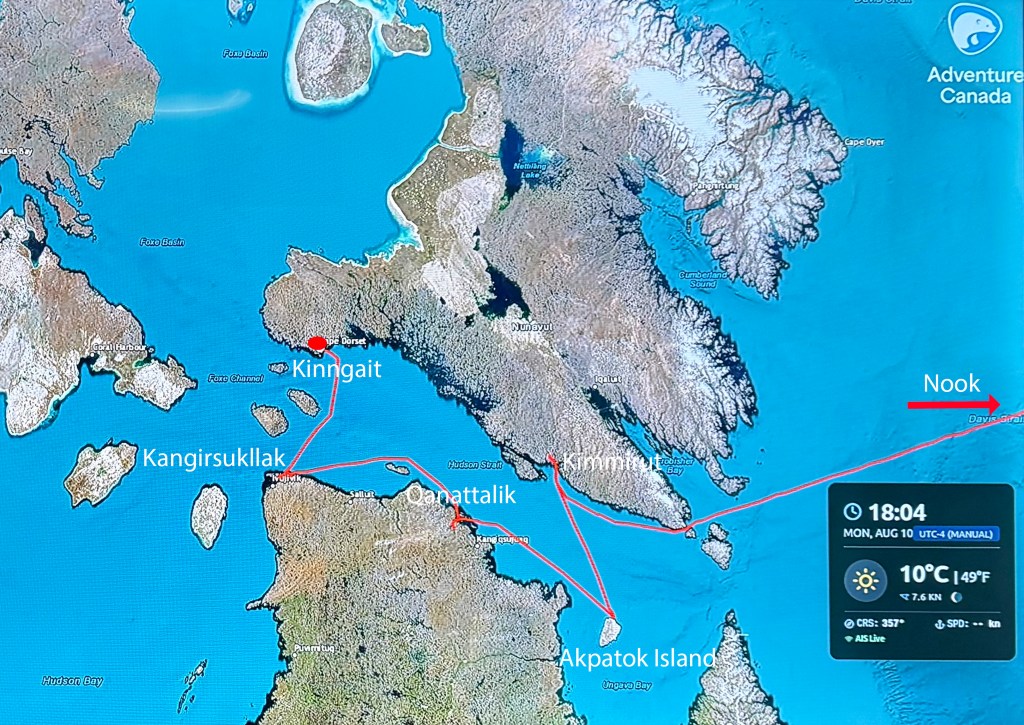
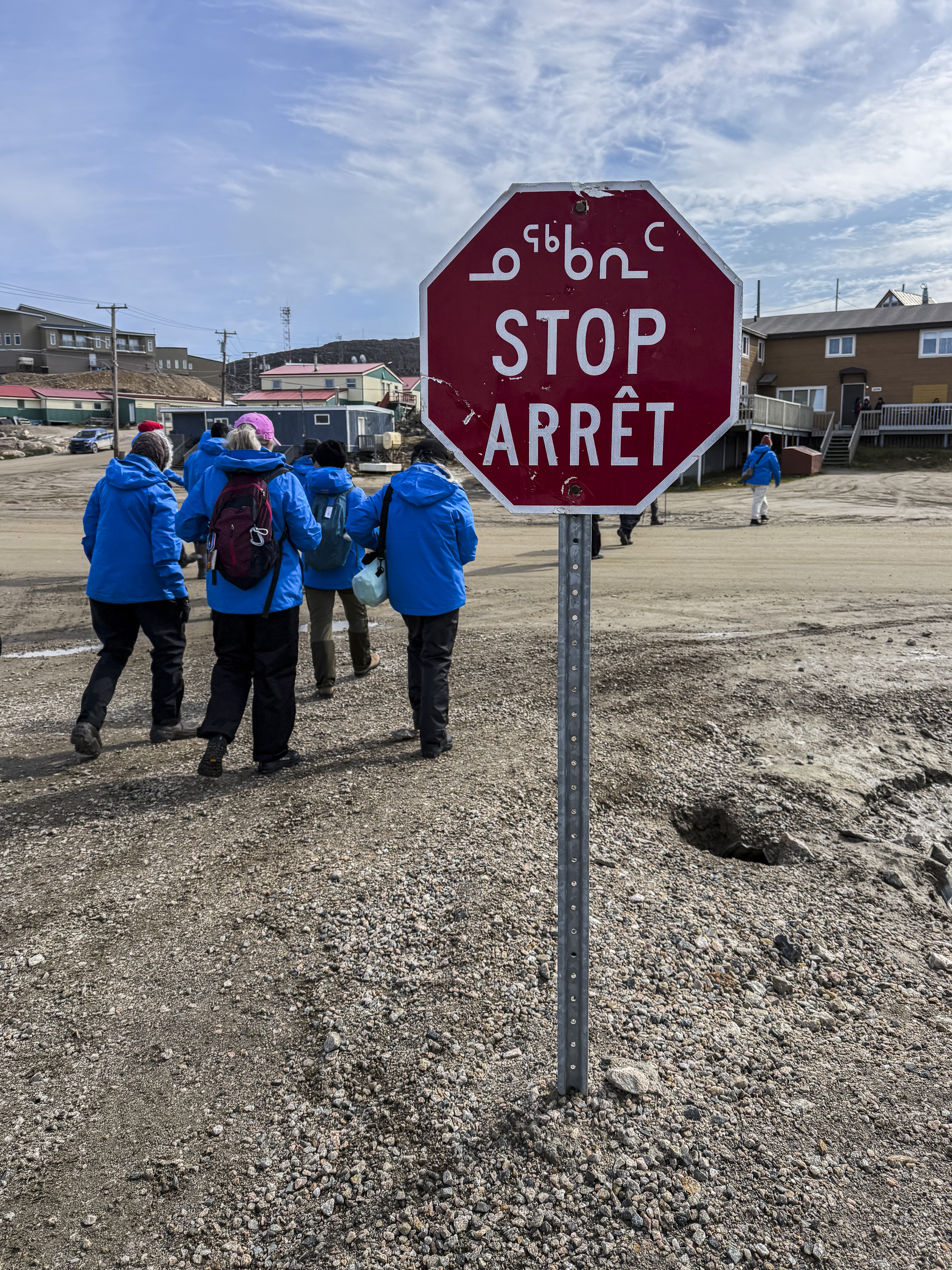
Back in Nuunavut, we spent the day around Kinngait, until 2020 called Cape Dorset. See the map above. In Inuktitut, “kinngait” means “high mountain.” This hamlet is world renowned for its stonecut prints and carvings.
The day began with a hike on Mallikjuat Island, a Nunavut territorial park, and ended with a visit to the Kenojuak Cultural Centre and Print Shop.
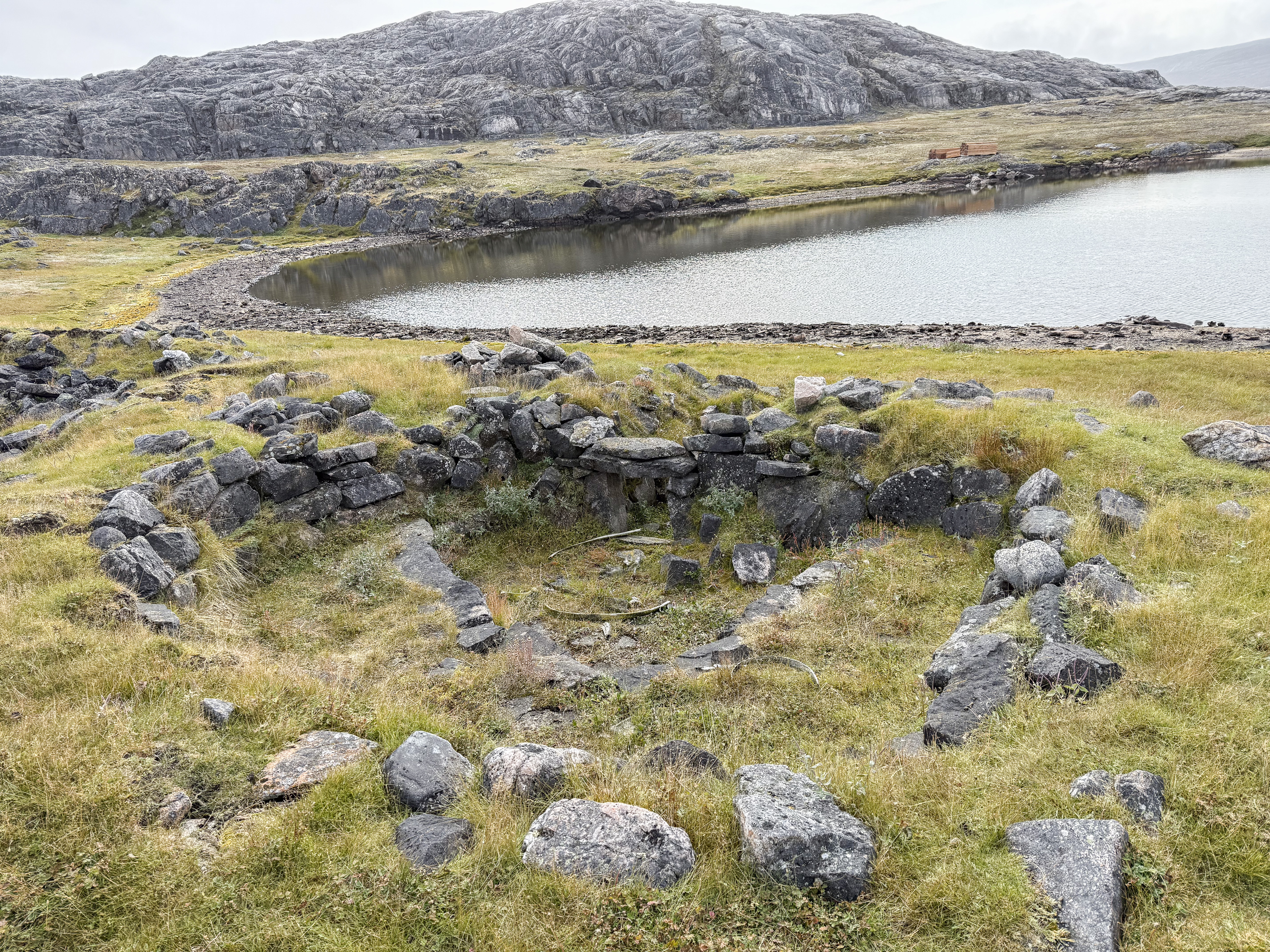
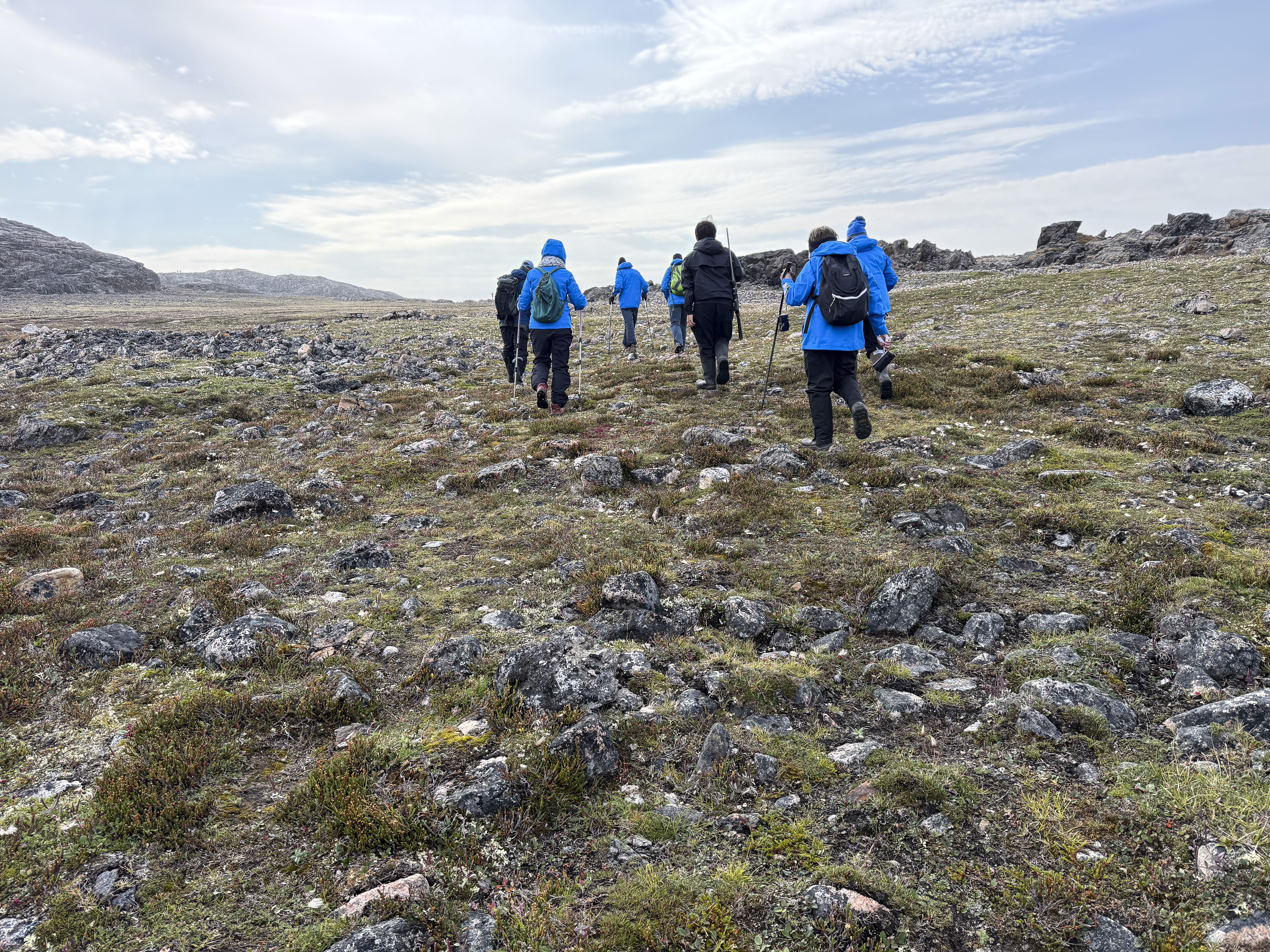
Mallikjuat Island is known for its remains of Thule winter houses built 300 to 800 years ago. They were circular, constructed on at least two levels with one almost below ground for cooking and eating, with warmer (heat rises!) sleeping areas above. Whale bones would have been used as a frame for sealskin covering. A person would have to crawl in through a small opening, but would be able to stand and move around once inside. We could see the remains of several houses in a row which suggests communal living.
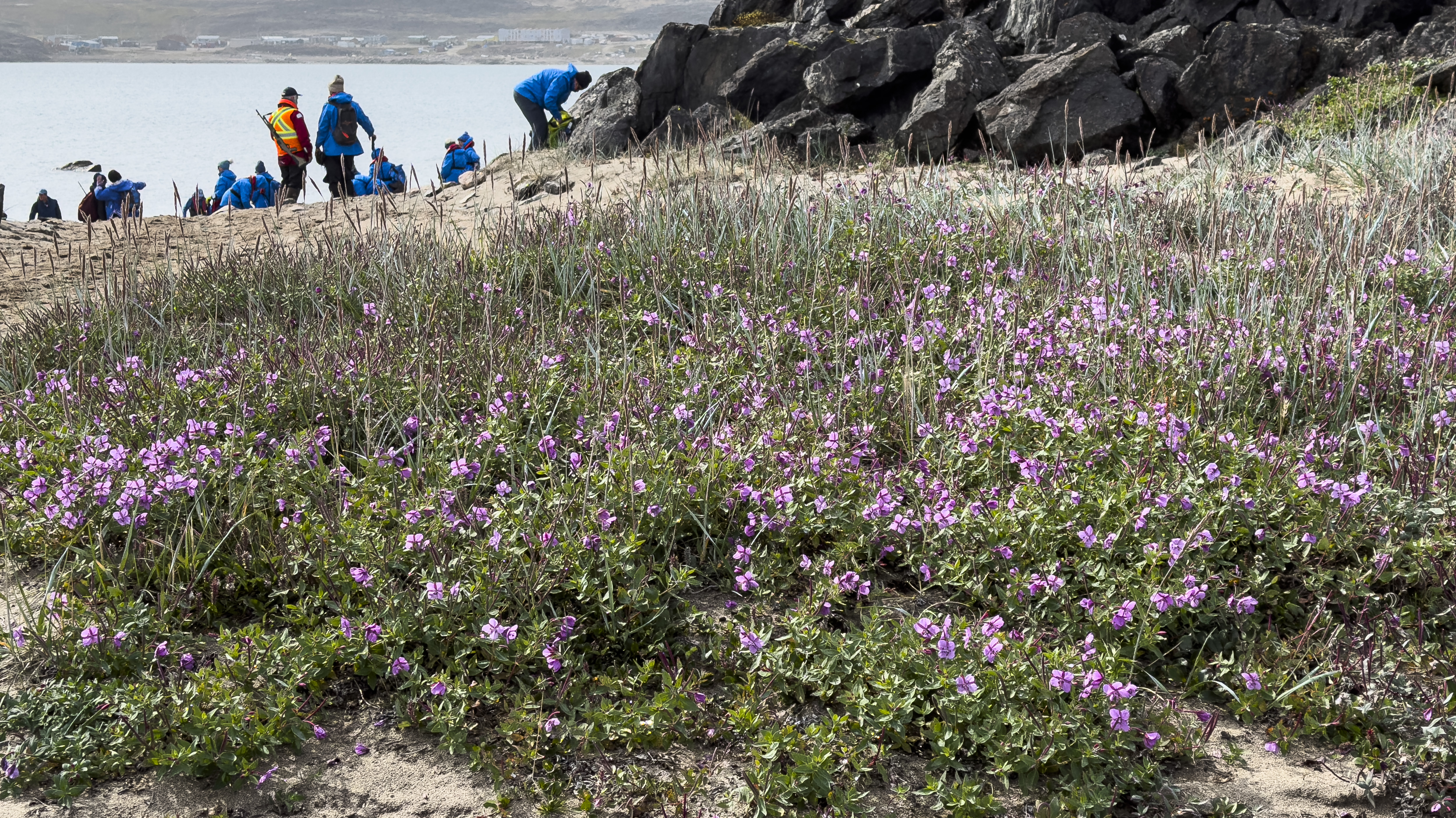
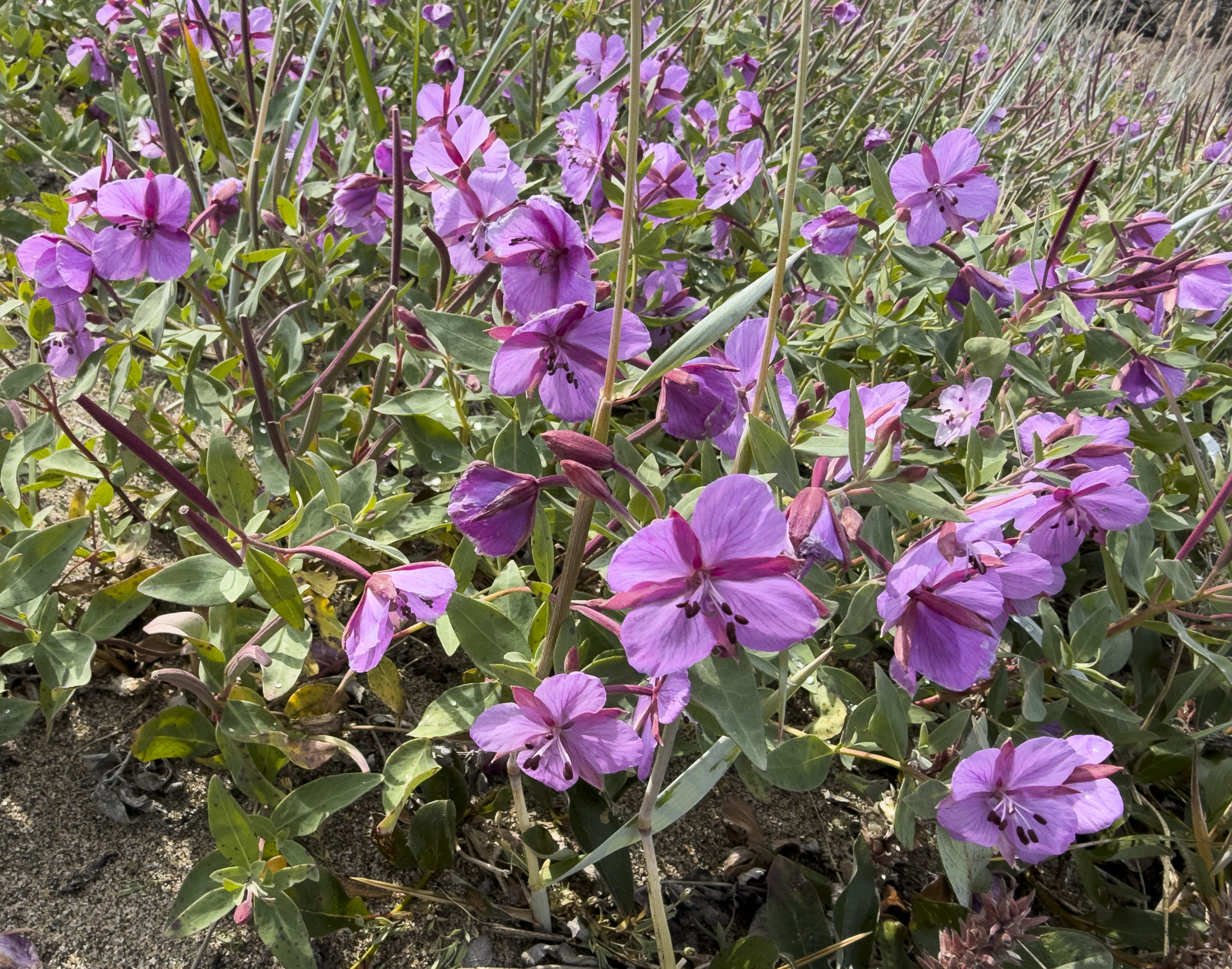
Many of us found the walking a little treacherous with large rocks strewn about. But our guide, a lovely young man of 17, was somehow able to walk backwards while talking to us, and never get tripped up by a rock. The dwarf fireweed does well here and provides cheery colour.
This afternoon we visited the Kenojuak Cultural Centre and Print Shop. An artist demonstrated print making using a slate base which he had already carved with his design. The process is very labour intensive, and must be repeated for each different colour.
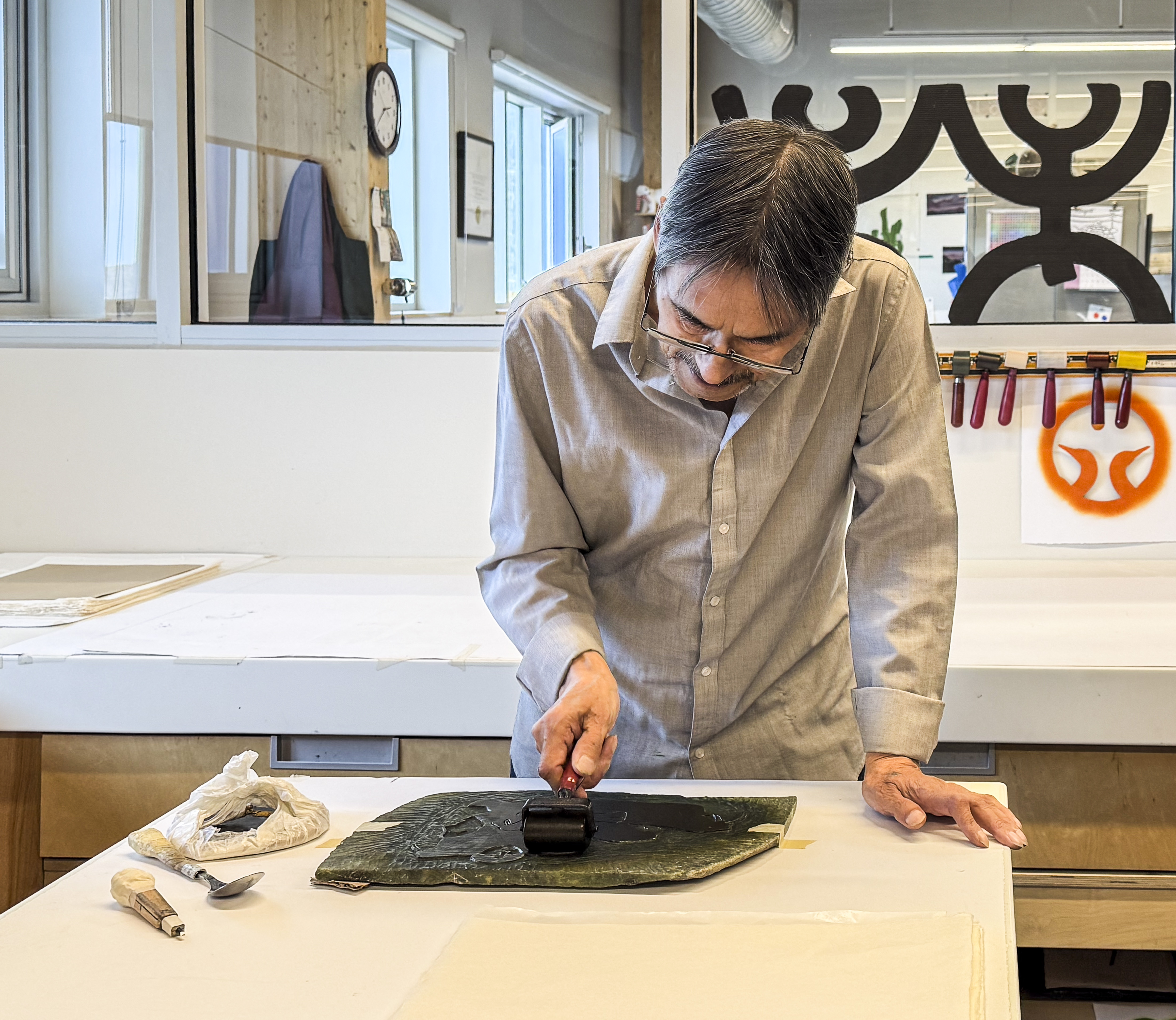
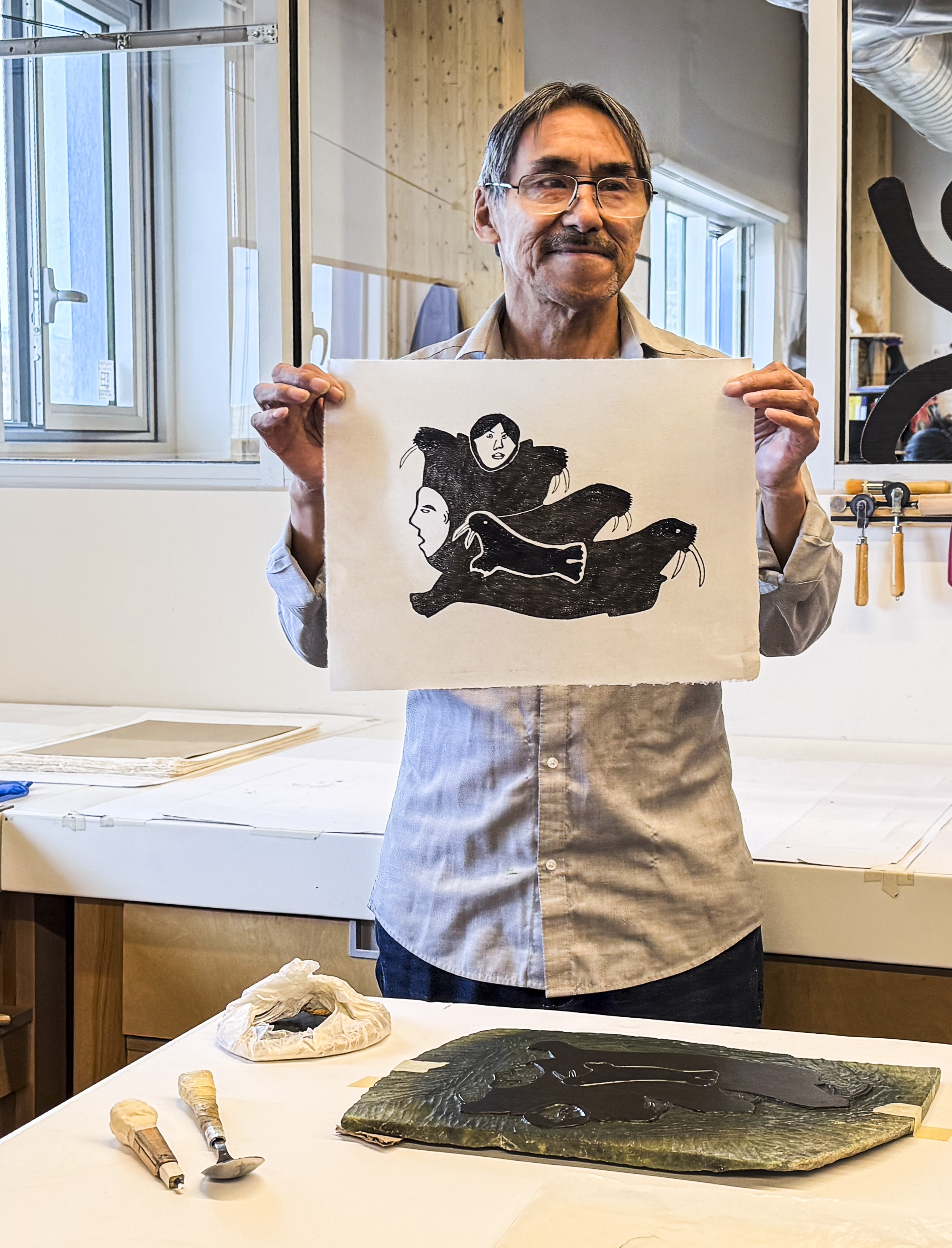
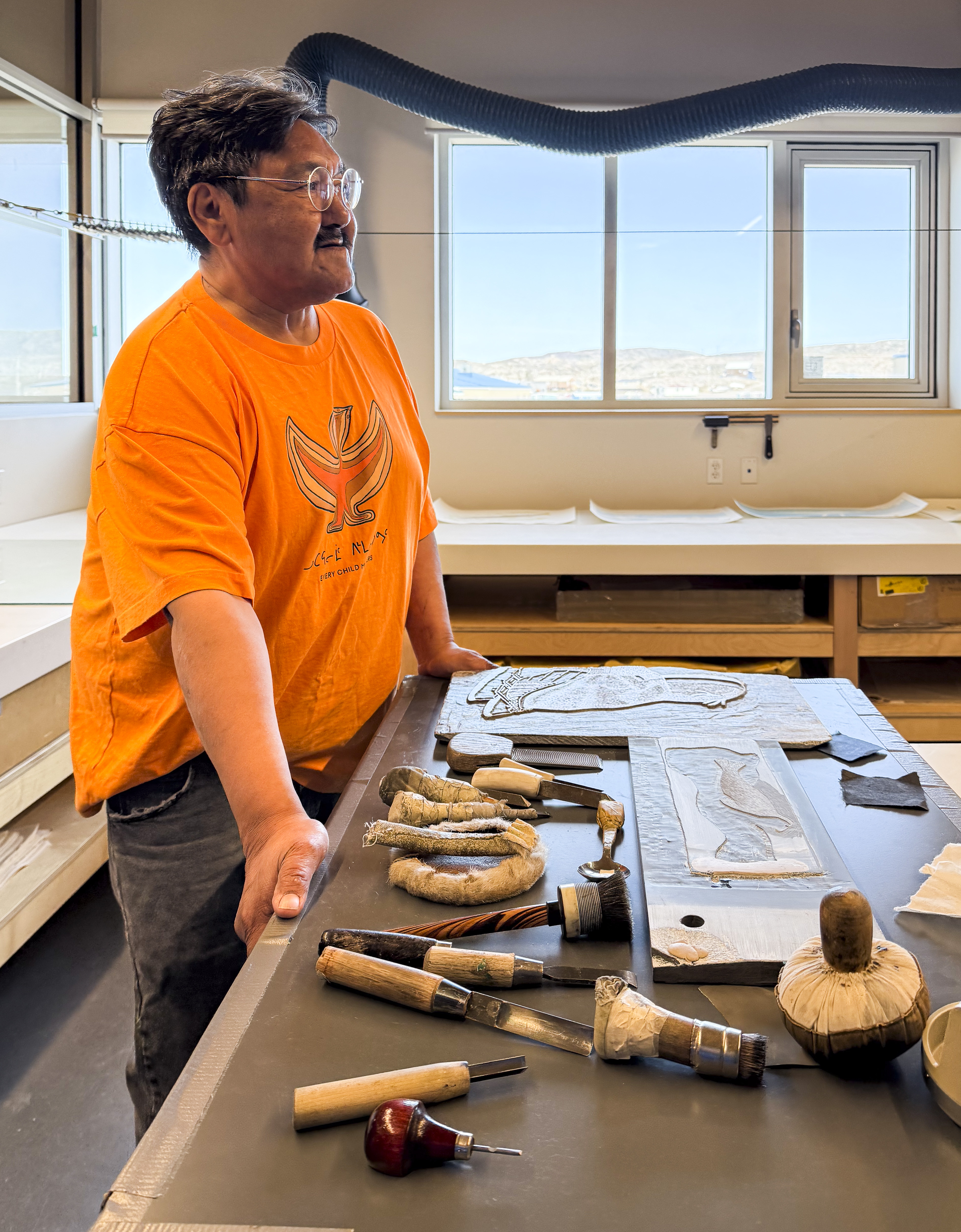
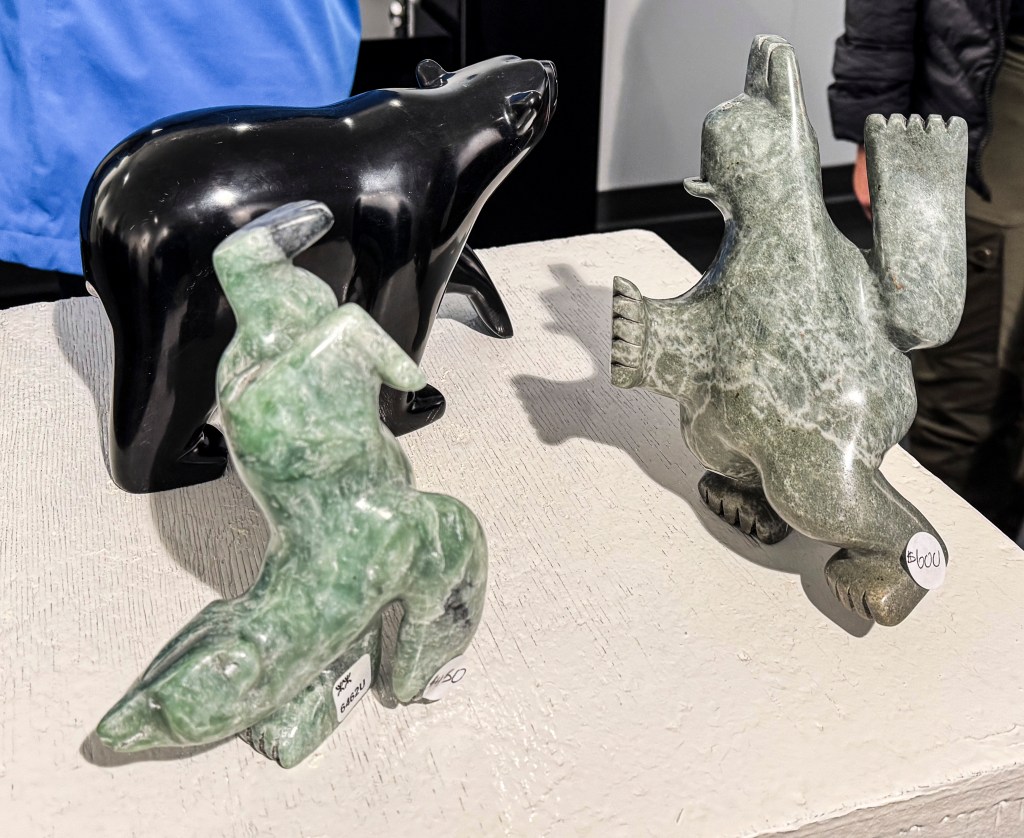
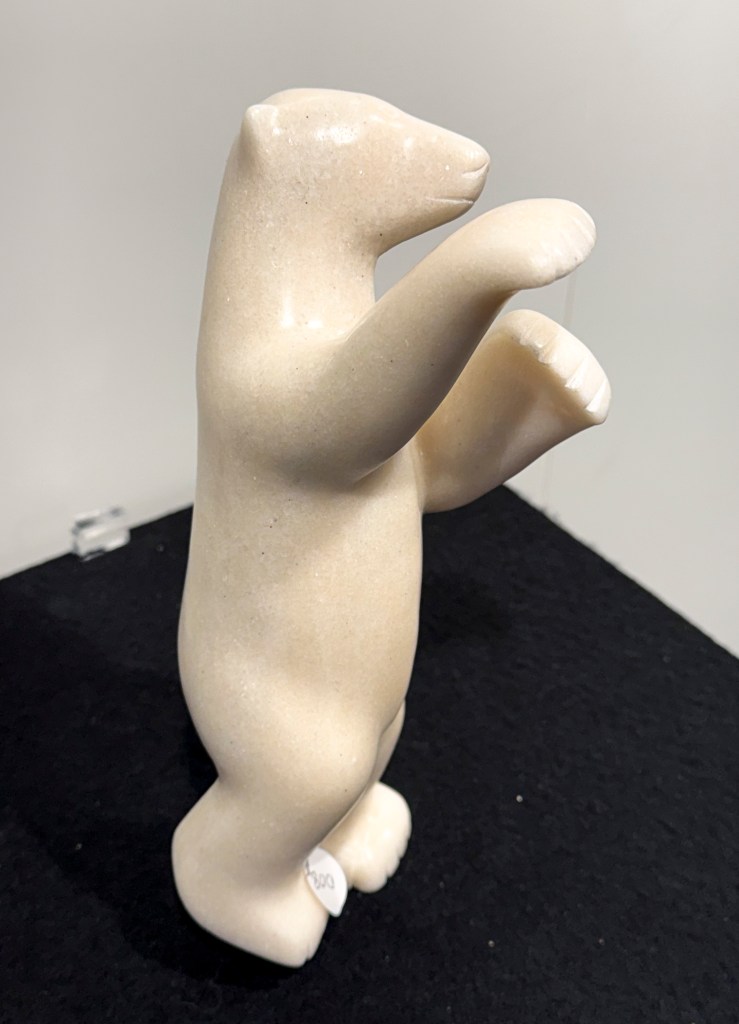
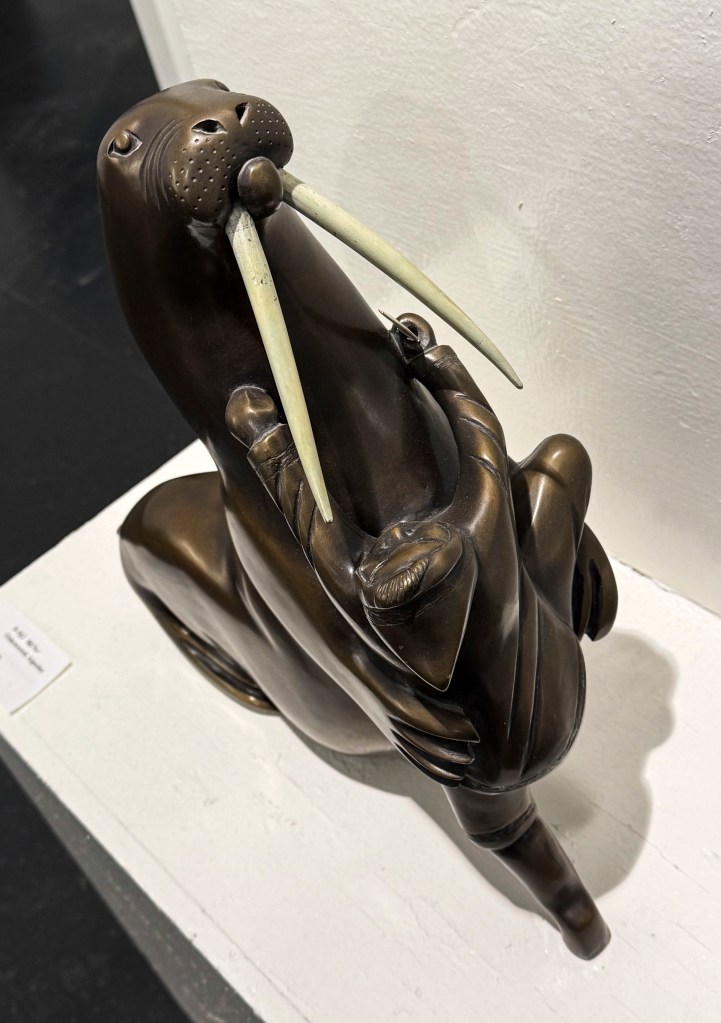
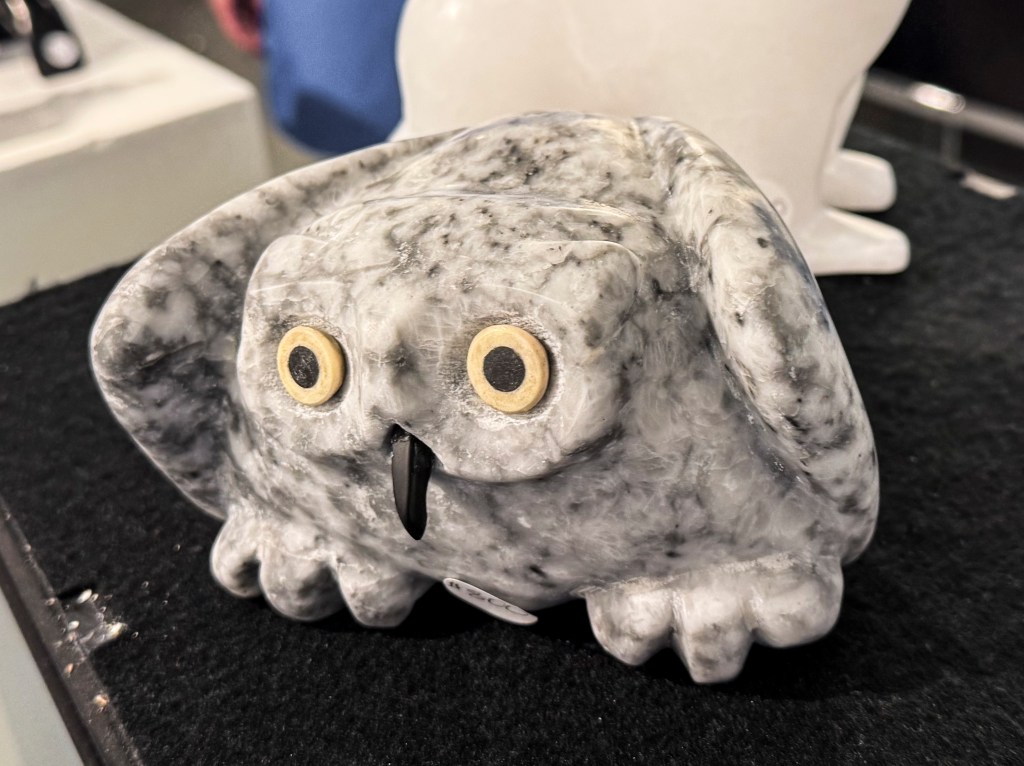
The Cultural Centre provides artists’ materials and space for the artists to work. They then sell their art through the Centre. Kinngait is also well known for its sculptures. Here are some that are for sale in the gallery.
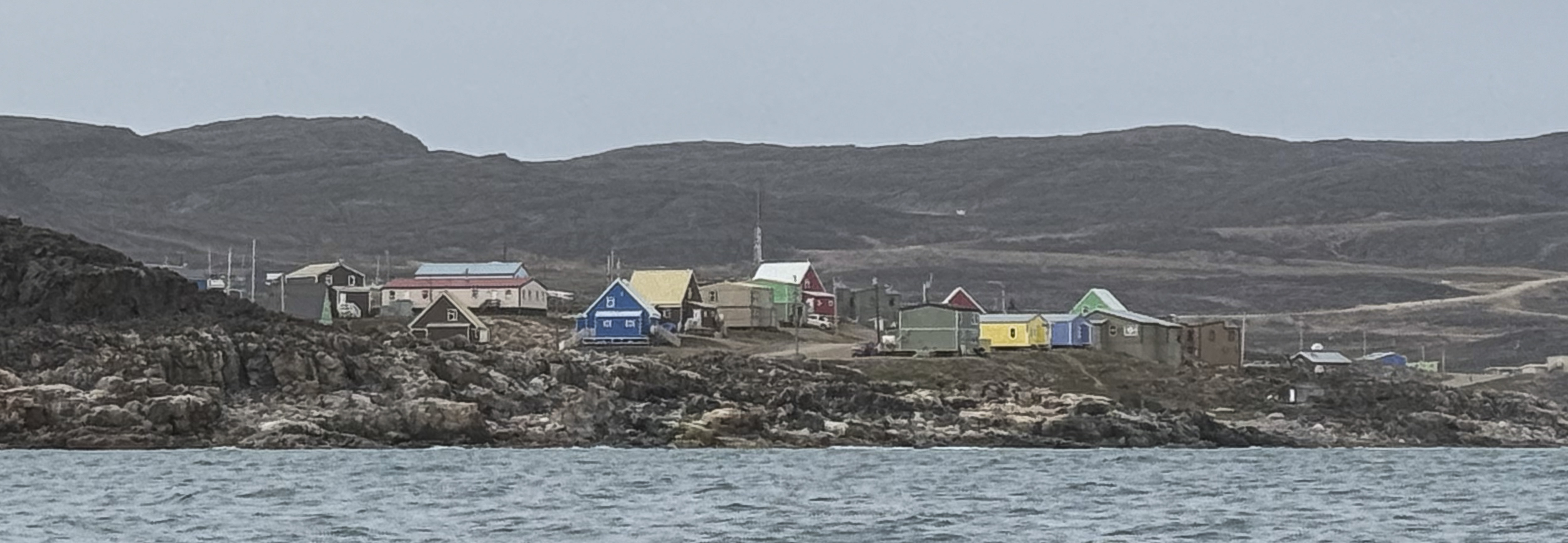
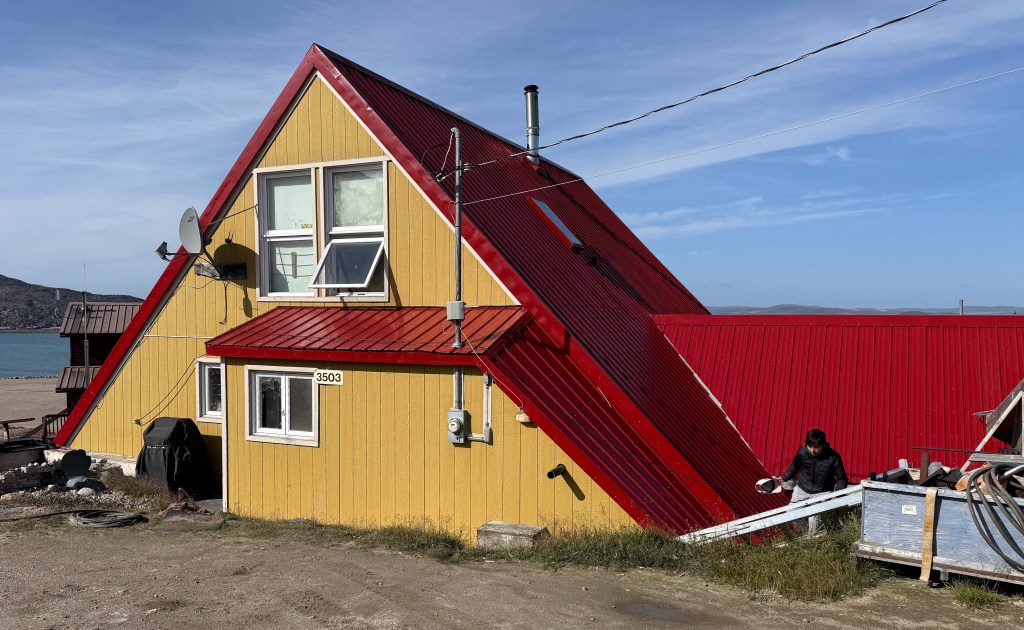
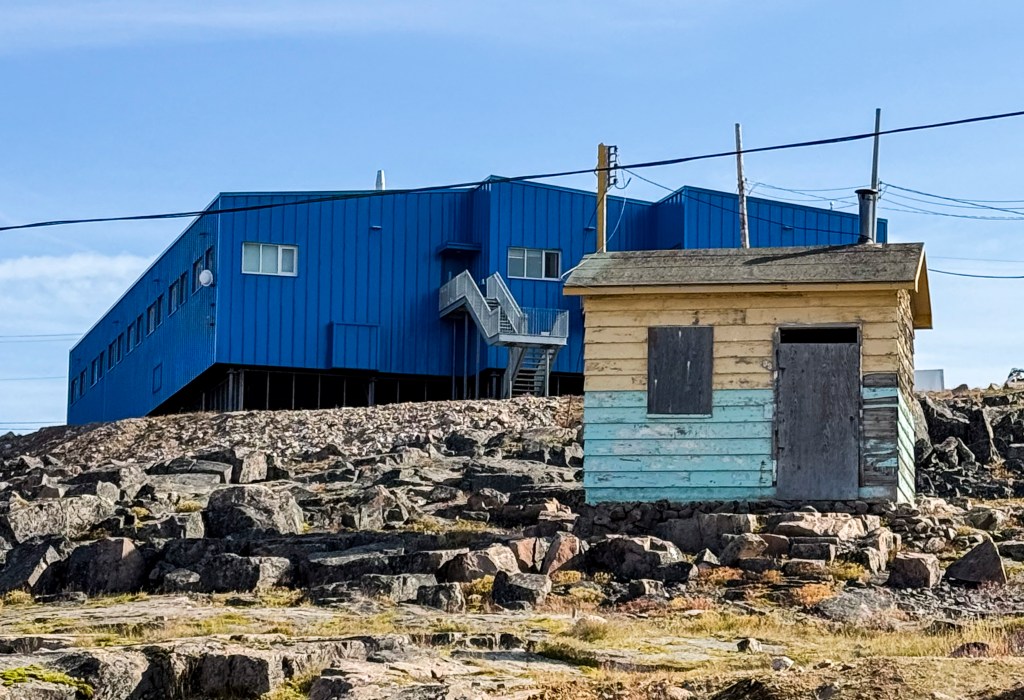
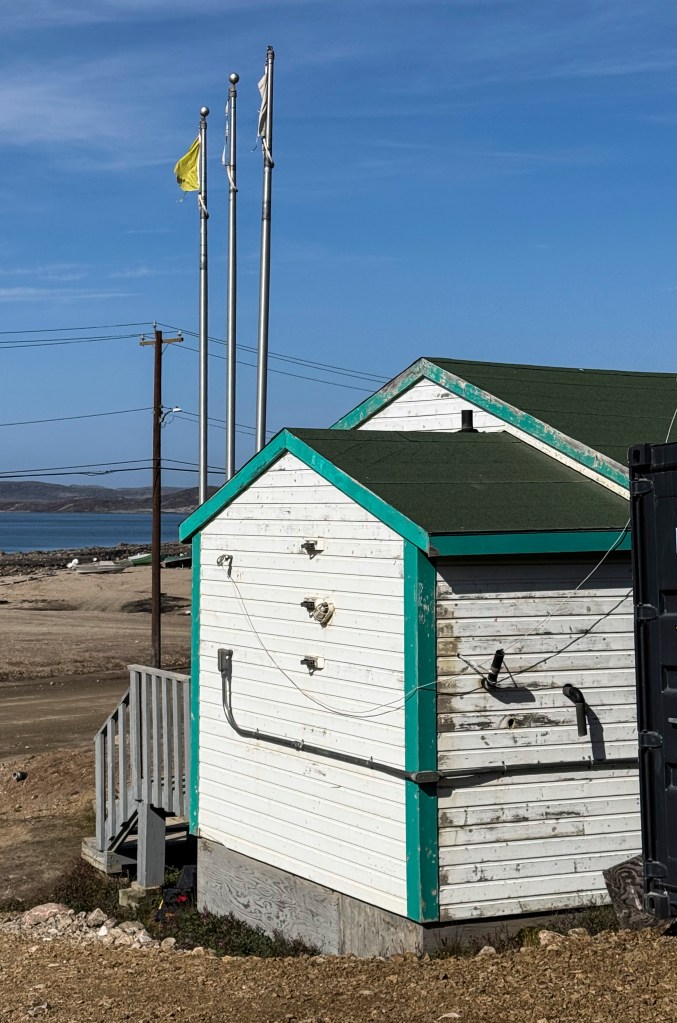
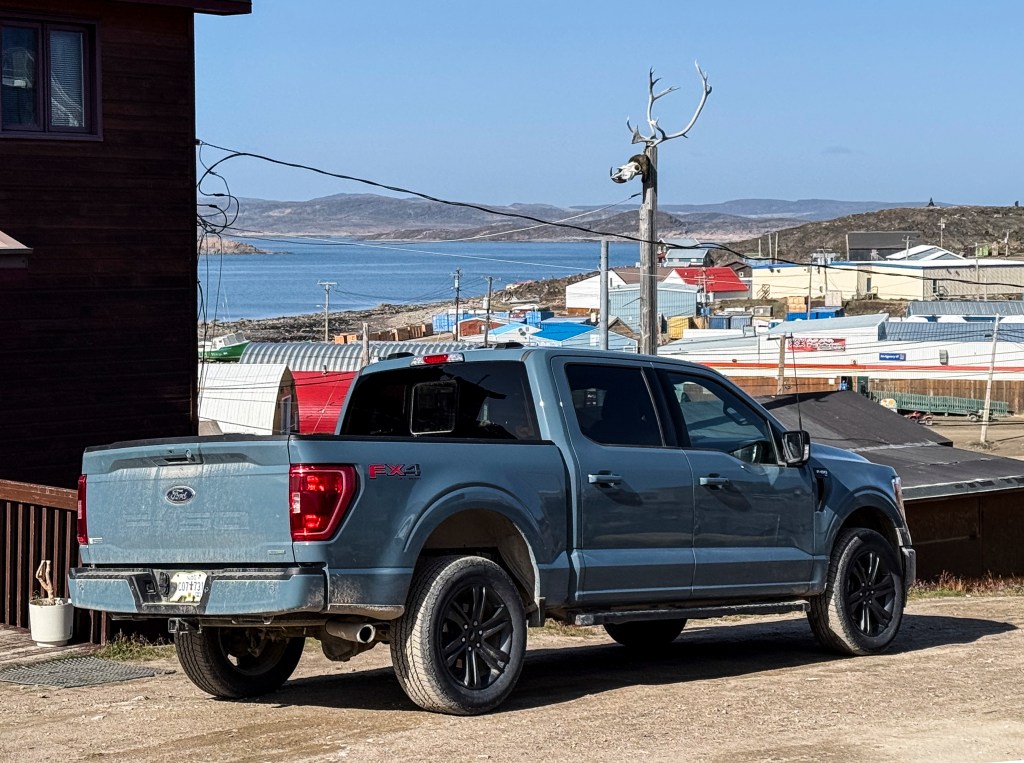
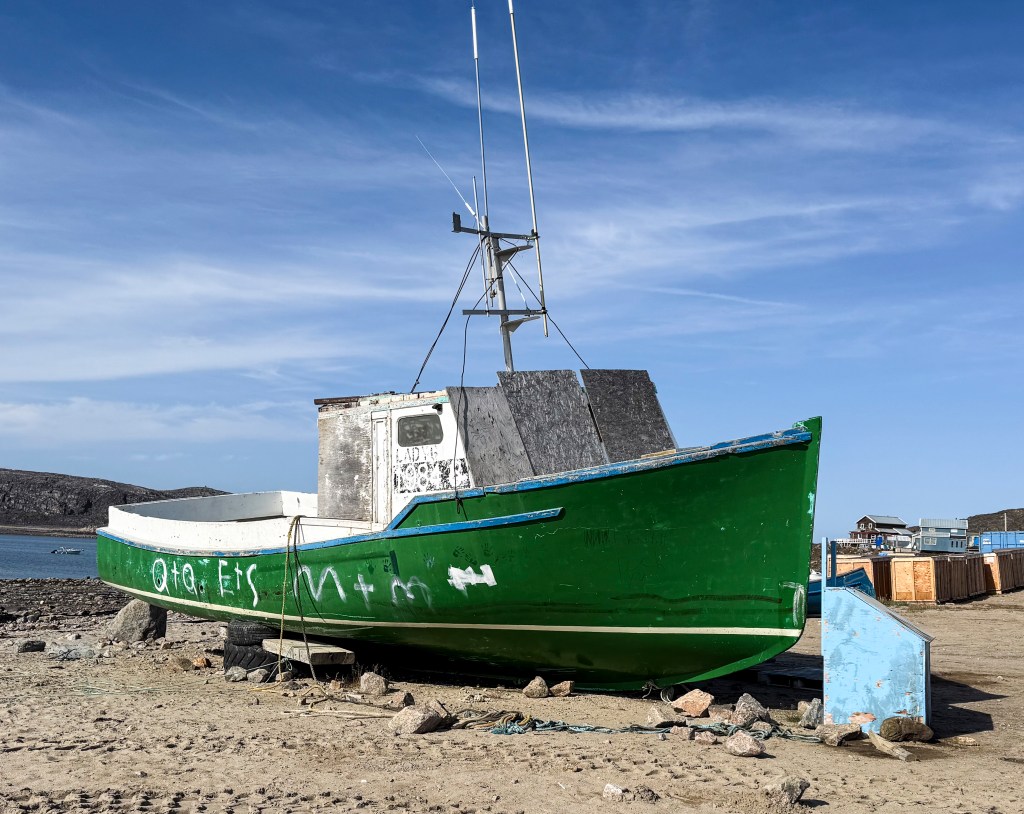
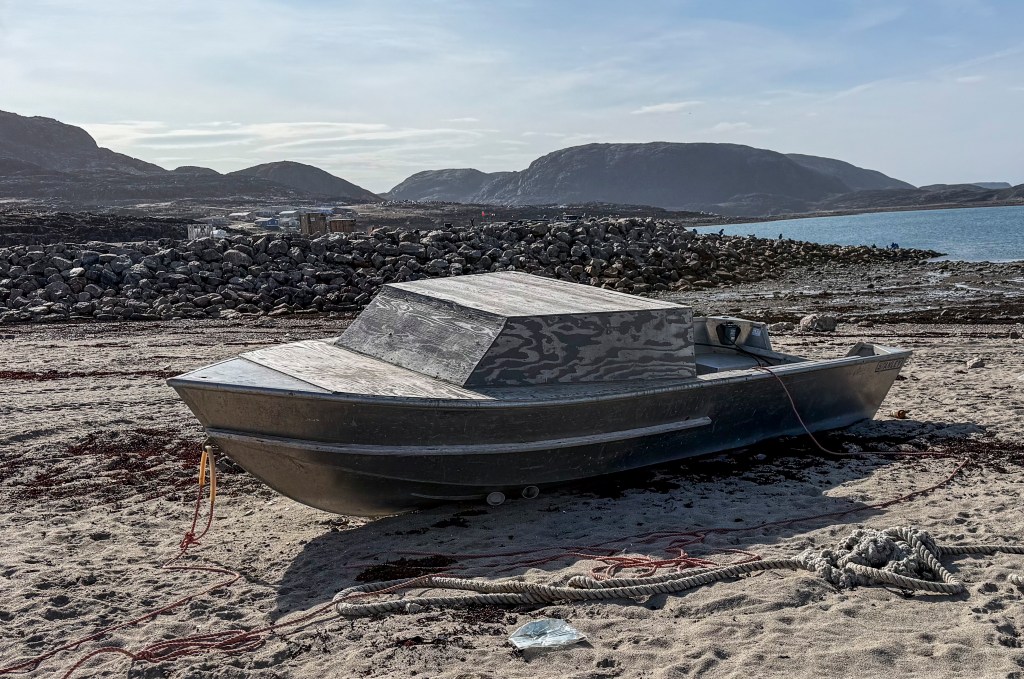
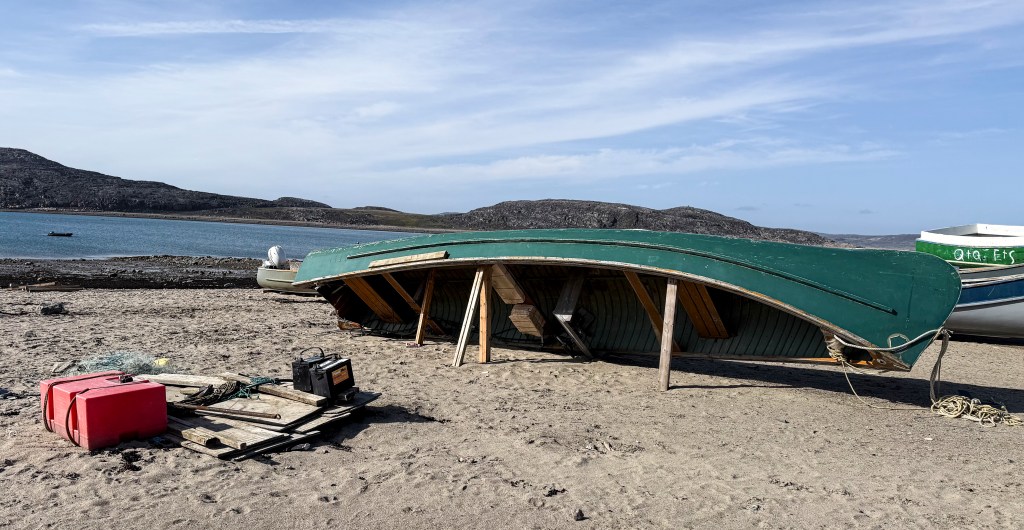
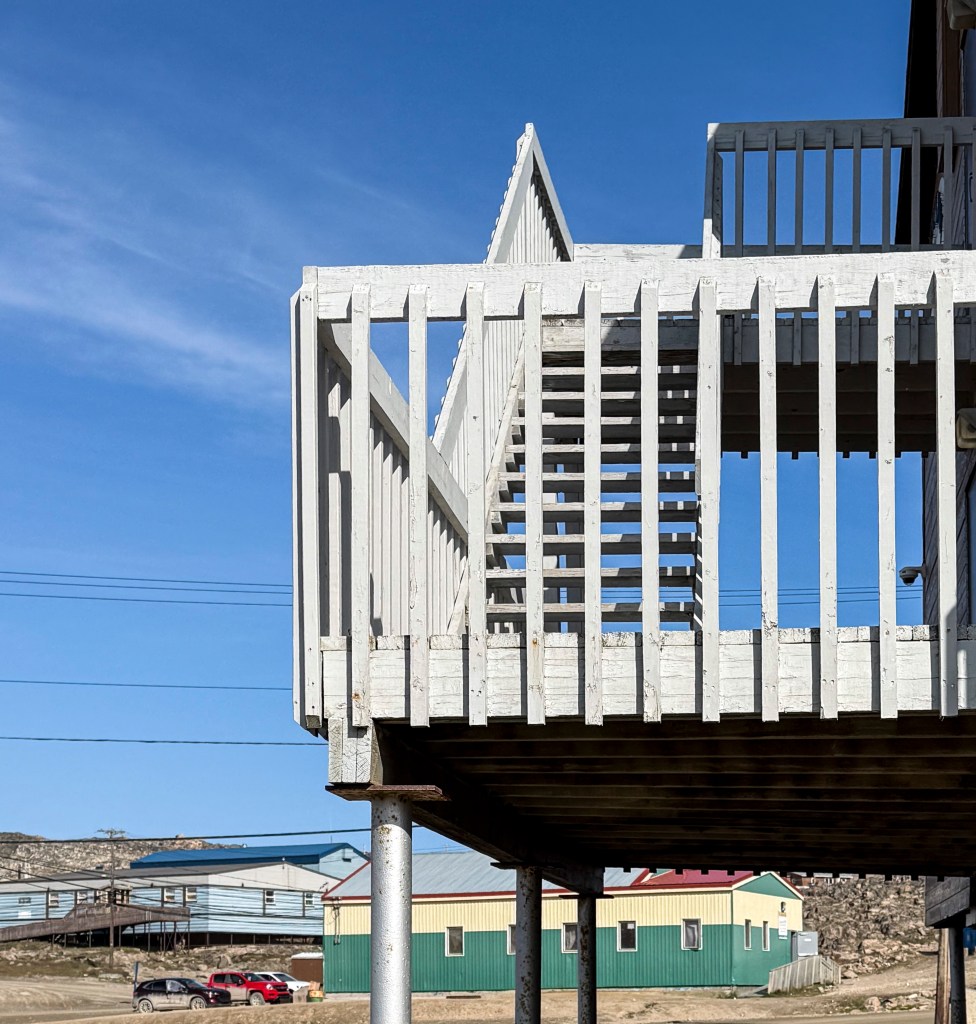
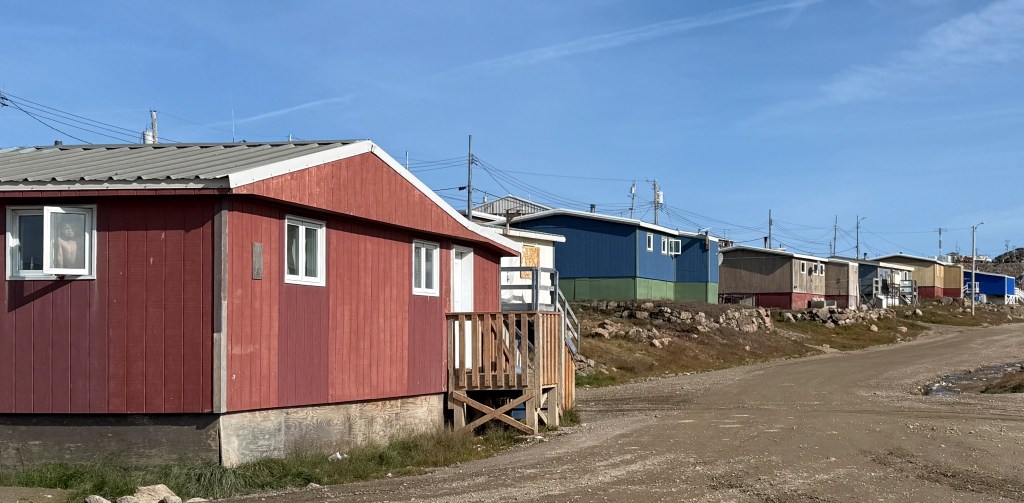
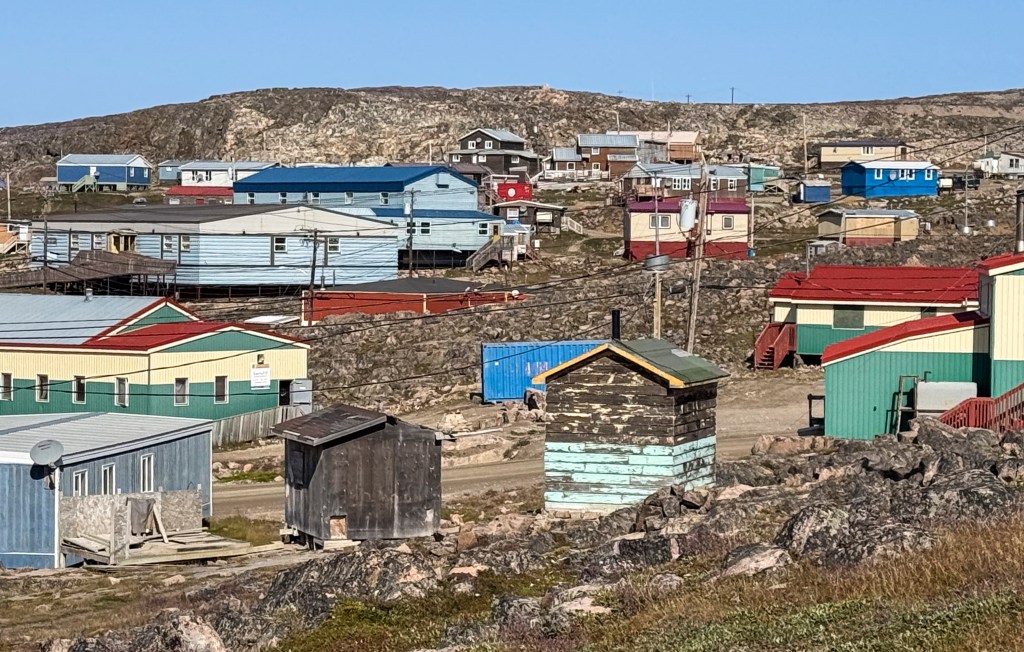
There was a little time left before we had to return to the ship, so I took a wander around the village.
Tomorrow we return to Nunavik to visit Salluit. See you then.


Leave a Reply