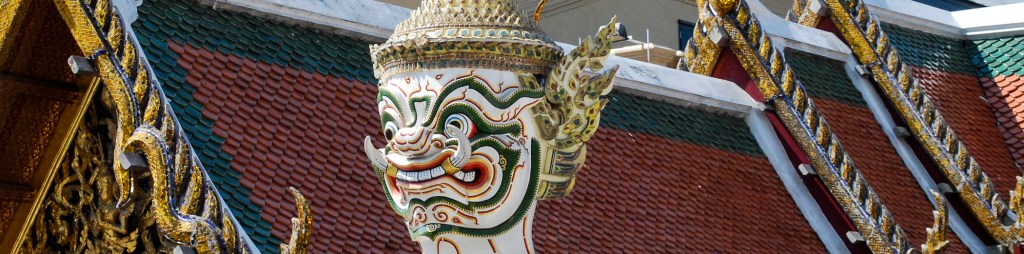
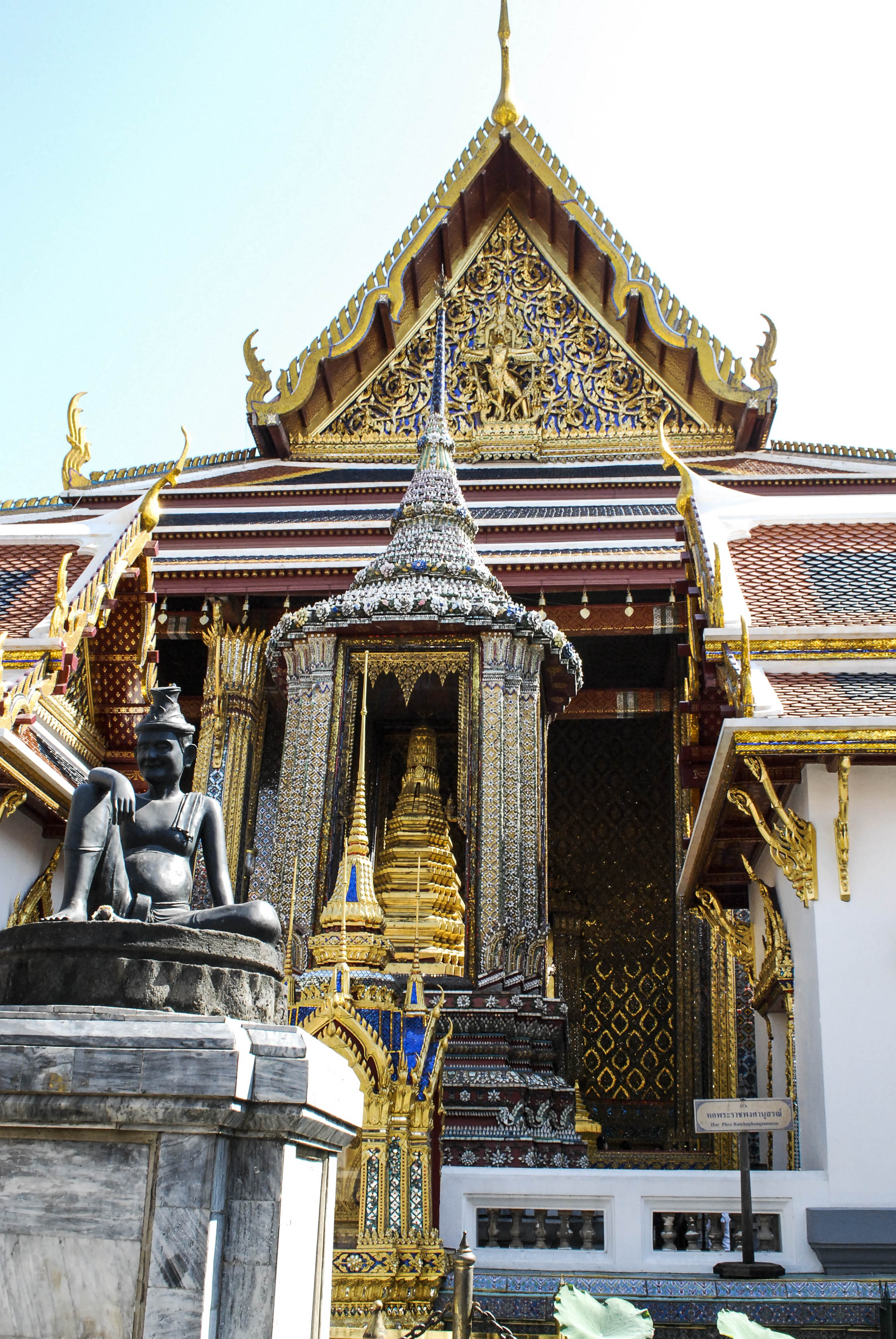
This morning was one of excess of statuary and pavilions and temples and stupas all exquisitely crafted.
Our first stop was at Wat Pho, a Buddhist temple set on 20 acres of land. Monks live in this compound and each morning chant in the temple. We hoped to arrive in time to hear the chanting, but unfortunately did not.
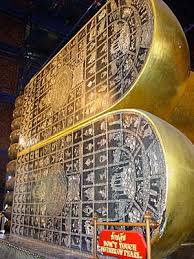
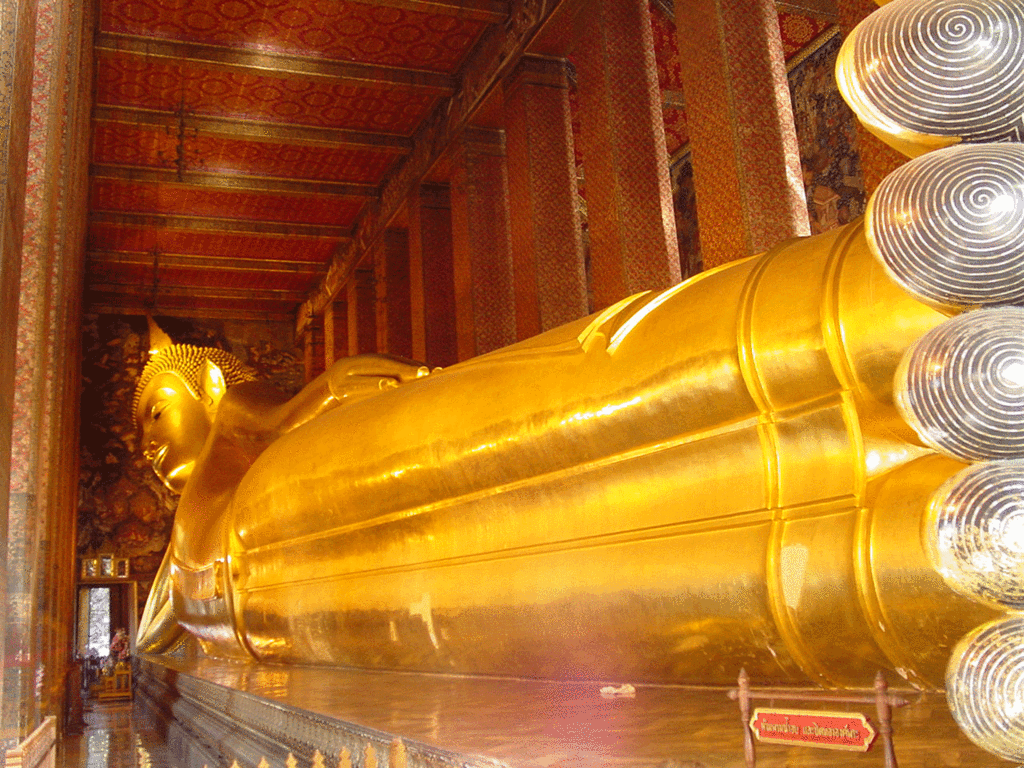
Wat Pho is the home of the Reclining Buddha, one of the largest Buddhas in the world at 10 feet high and 15 feet long, cast in shining bronze. It is really quite breathtaking to see a statue so large at eye level! Buddha’s feet are adorned with intricate designs made of inlaid mother of pearl.
In the same compound is a bodhi tree apparently propagated from the tree in India under which Buddha first sat awaiting enlightenment. I had a small photographic accident today and lost all my photos of Wat Pho, so I have downloaded a few from the Thailand tourism site for you to see.
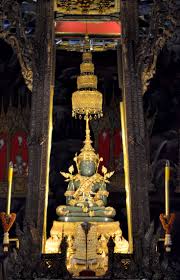
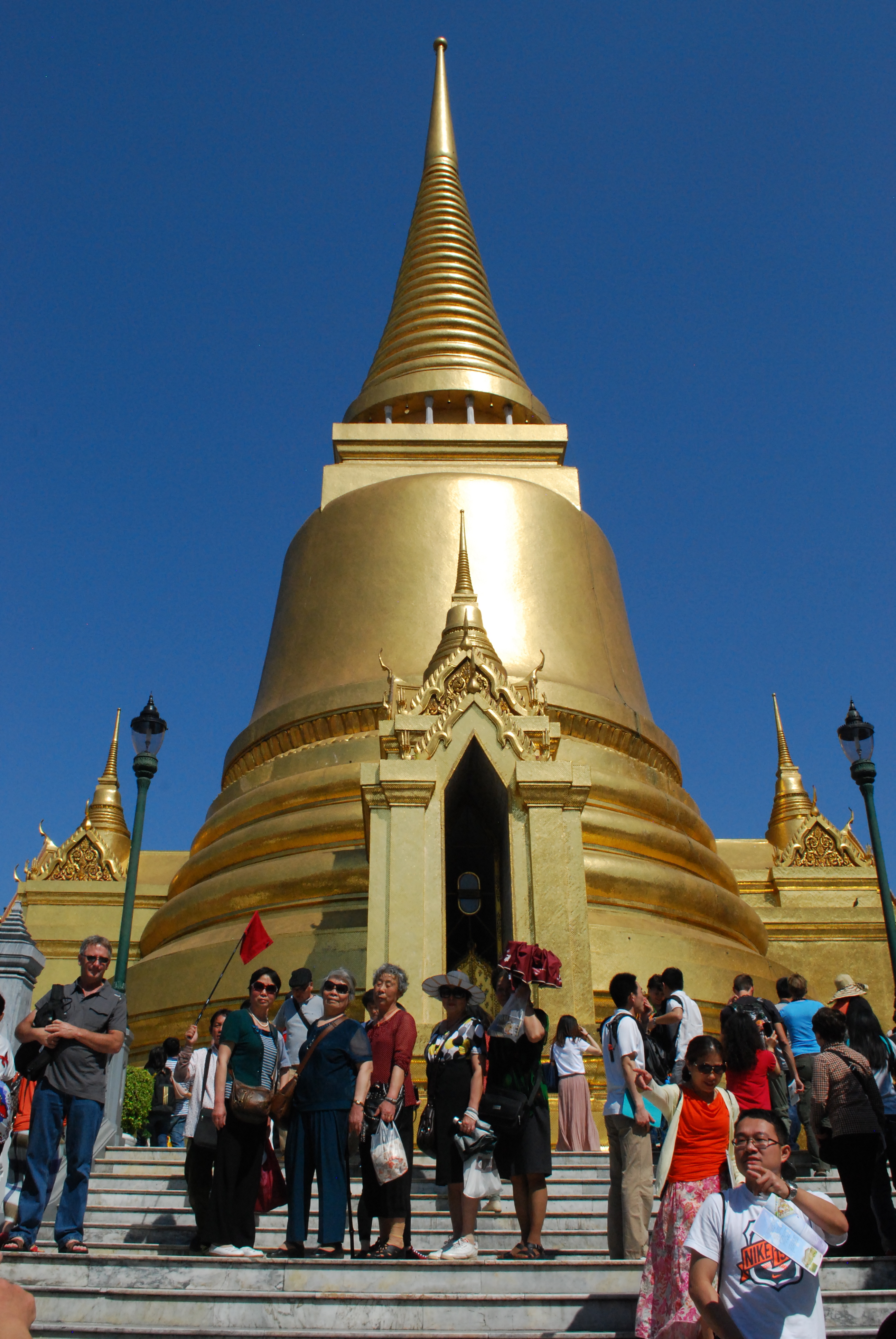
From Wat Pho we travelled three miles to the mis-named Grand Palace. It should have been named the Utterly Magnificent Palace. The Grand Palace sits on 50 acres of land along with a temple that is home to the Emerald Buddha (which is quite small and made of jade not emerald, and which we were not allowed to photograph) and numerous stupas (mausoleums for individual Buddhist saints – it’s not too hard to become a saint, and you can nominate yourself or donate generously to a temple) among many other buildings. No one lives in the Palace now, but 22 million people visit every year. Since they were all present today, Shelley, your visit should be blissfully uncrowded!
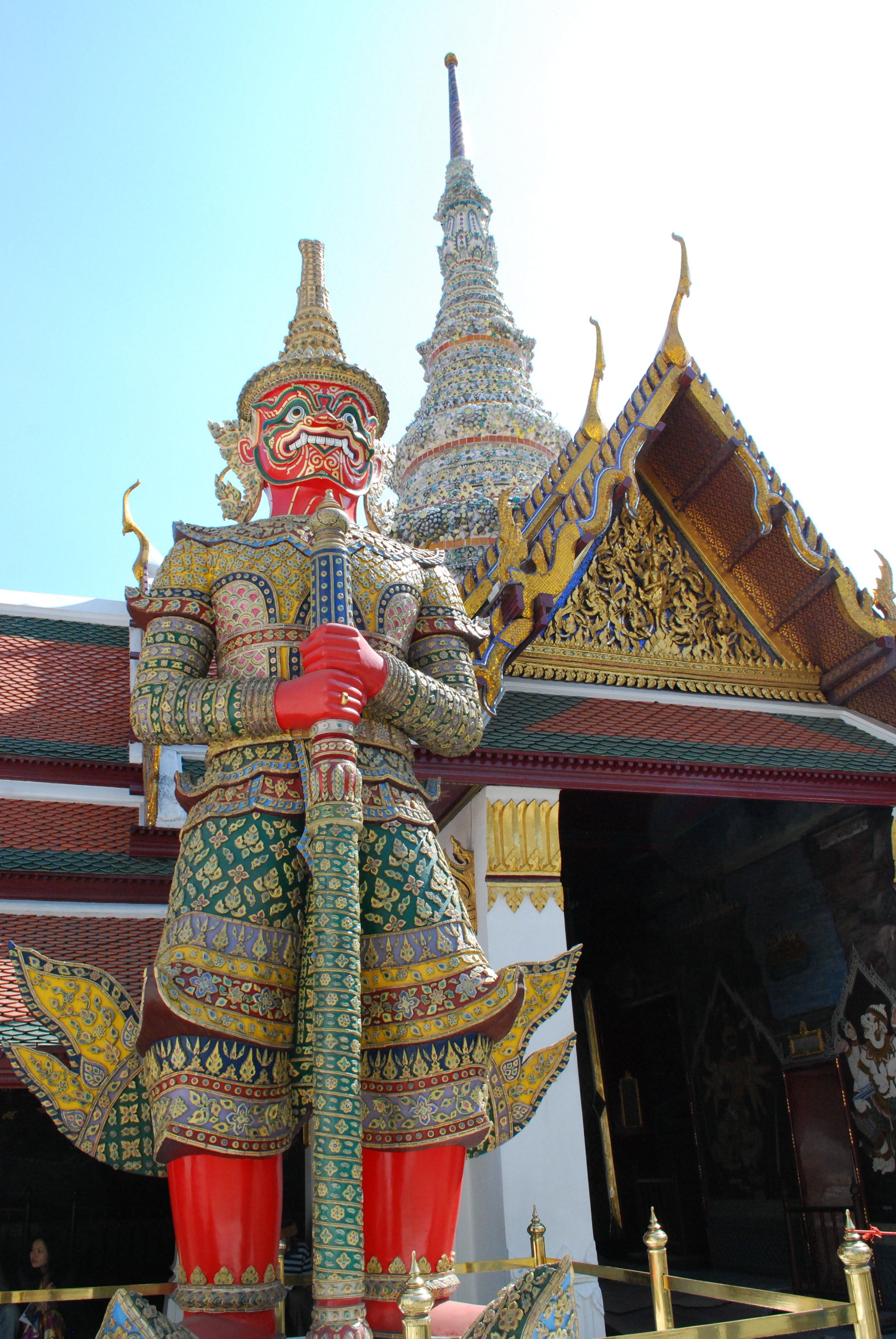
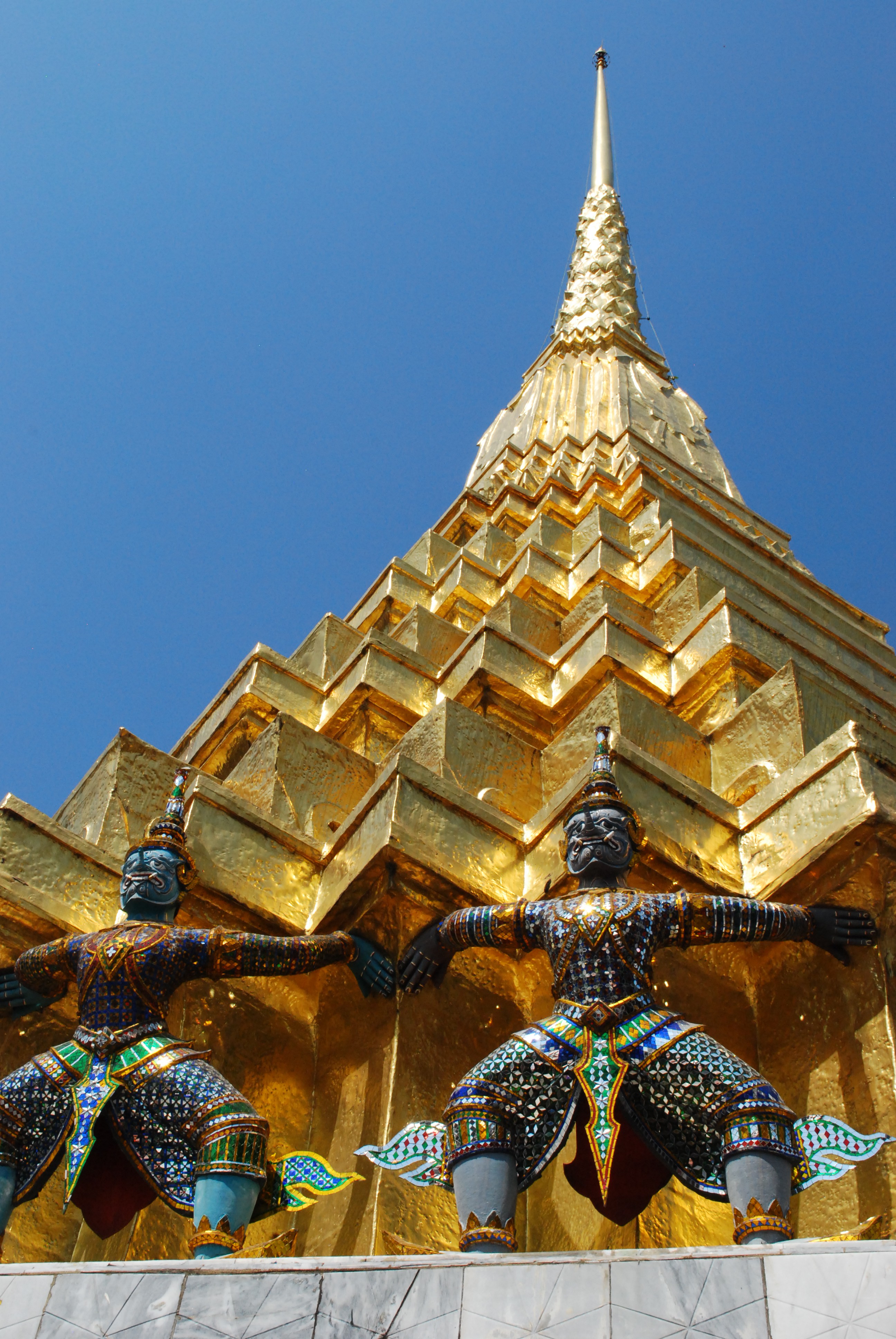
The animism which is part of Theravada Buddhism as practiced in Thailand is on glorious display at the Grand Palace. Every building is protected by gargoyles and statues of monkeys and part human/part animal figures, all to keep out bad spirits. The statues are mostly painted, but some are stone or what appears to be concrete, and incorporate aspects of Chinese and Khmer as well as Thai design. Most stupas are sheathed in painted ceramic tiles and look like they could have come from a fancy pastry shop. The flamboyance and sheer excess of the place is breathtaking, and I felt I had entered an alternate reality akin to Alice’s Wonderland.
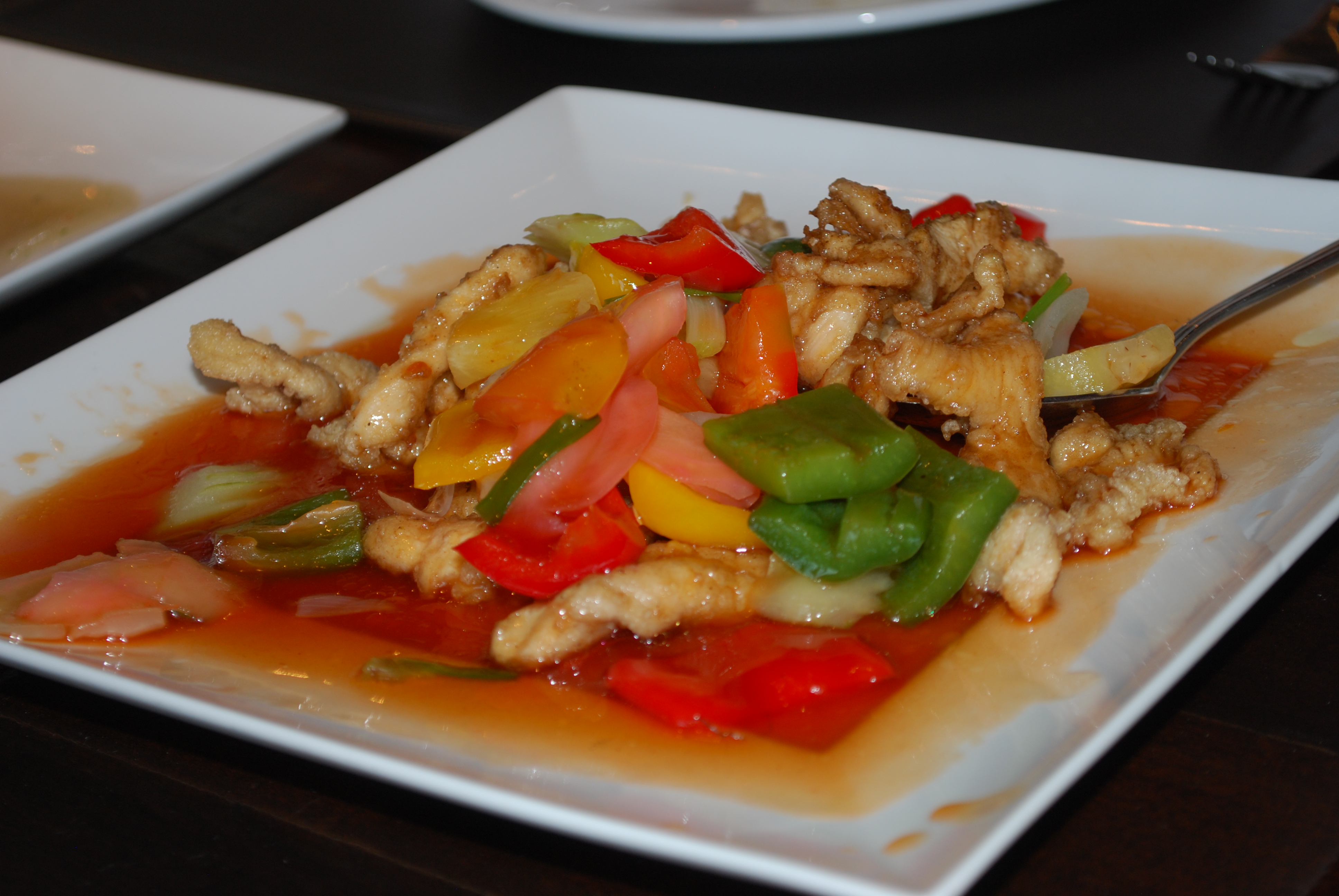
After an excellent lunch of Thai food at the Supatra River House restaurant, Jim Lehman, an American who first came to Thailand as a Peace Corps volunteer and then spent his career working for the Peace Corps and US AID in southeast Asia, talked to us about Thai Buddhism, its history and the ways in which it differs from Mahayana Buddhism, and about other Thai cultural practices.
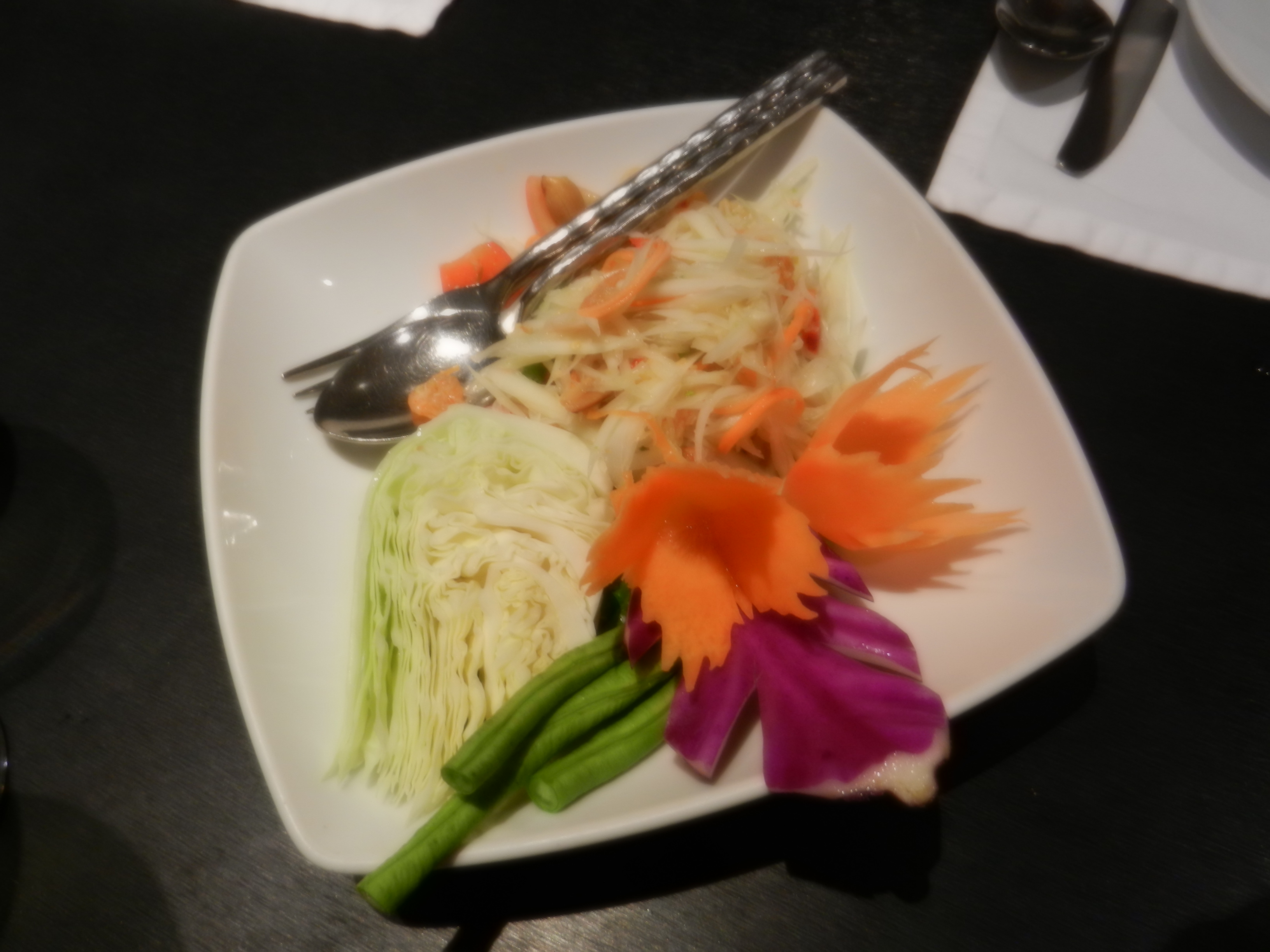
Theravada Buddhism is conservative relative to the Mahayana sect and is practiced in Burma, Sri Lanka, Laos and Cambodia as well as Thailand. Recently a respected elder monk told a newspaper interviewer that the Thai people no longer have a religion, that consumerism is the new religion. People, he said, don’t go to temples any more, they go to shopping malls. Given the number of shopping centres I have seen, he may be right. But given the attention and care that the Thai people appear to give to their shrines and spirit houses, I wonder.
We finished the day with another delicious meal of Thai food, this time at the Baan Khanitha restaurant. At lunch and this evening the presentation of the food has been beautiful. Clearly the Thai people love their food in more ways than one!
Tomorrow – Chiang Mai. See you then!


Leave a Reply