
On the Move

Exploring and Visiting
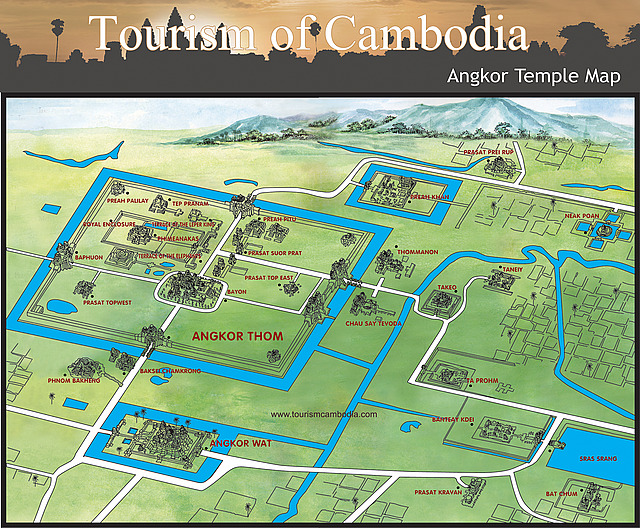
Map of the Angkor Complex

An early start this morning saw us at Ta Prohm before the crowds, but still there were lots of tourists taking in the sights with us.  Ta Prohm is a small part of the overall Angkor complex – you will see it in the bottom right-hand part of the map – and was constructed around 1180 AD.  The reconstruction of this area is financed by India which has an interest due to the Hindu images and influences in Angkor Thom.  And while reconstruction has come a long way, there are still piles of uncatalogued stones no one yet knows how to fit into the larger puzzle.
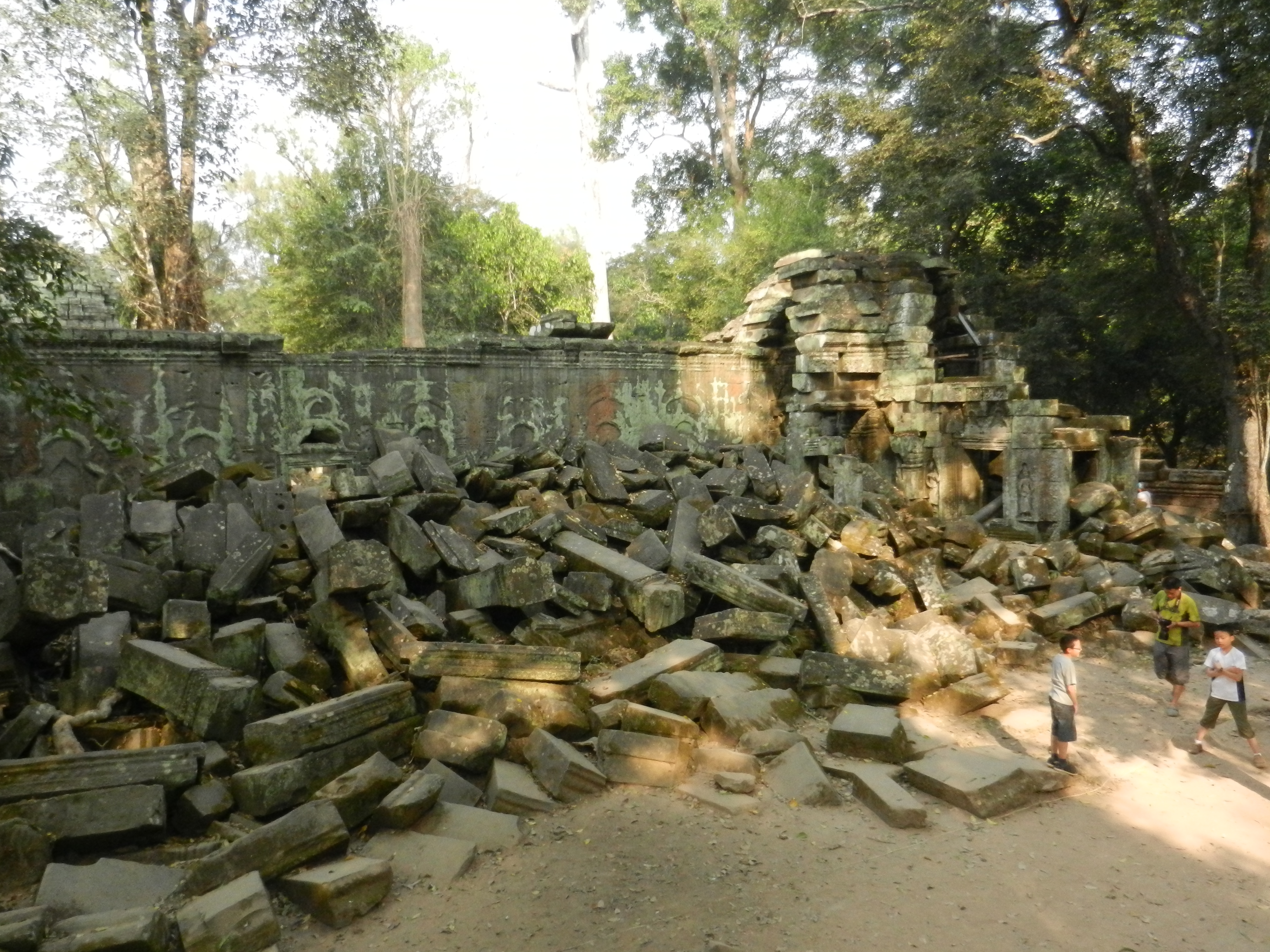
Puzzle pieces waiting to be catalogued

The existing ruins have been almost swallowed by the forest so much of the reconstruction has required cutting away plant life.  When a tree can be removed without damaging the structure, it is, as is the case with the tree in the photo with preparatory scaffolding around it.
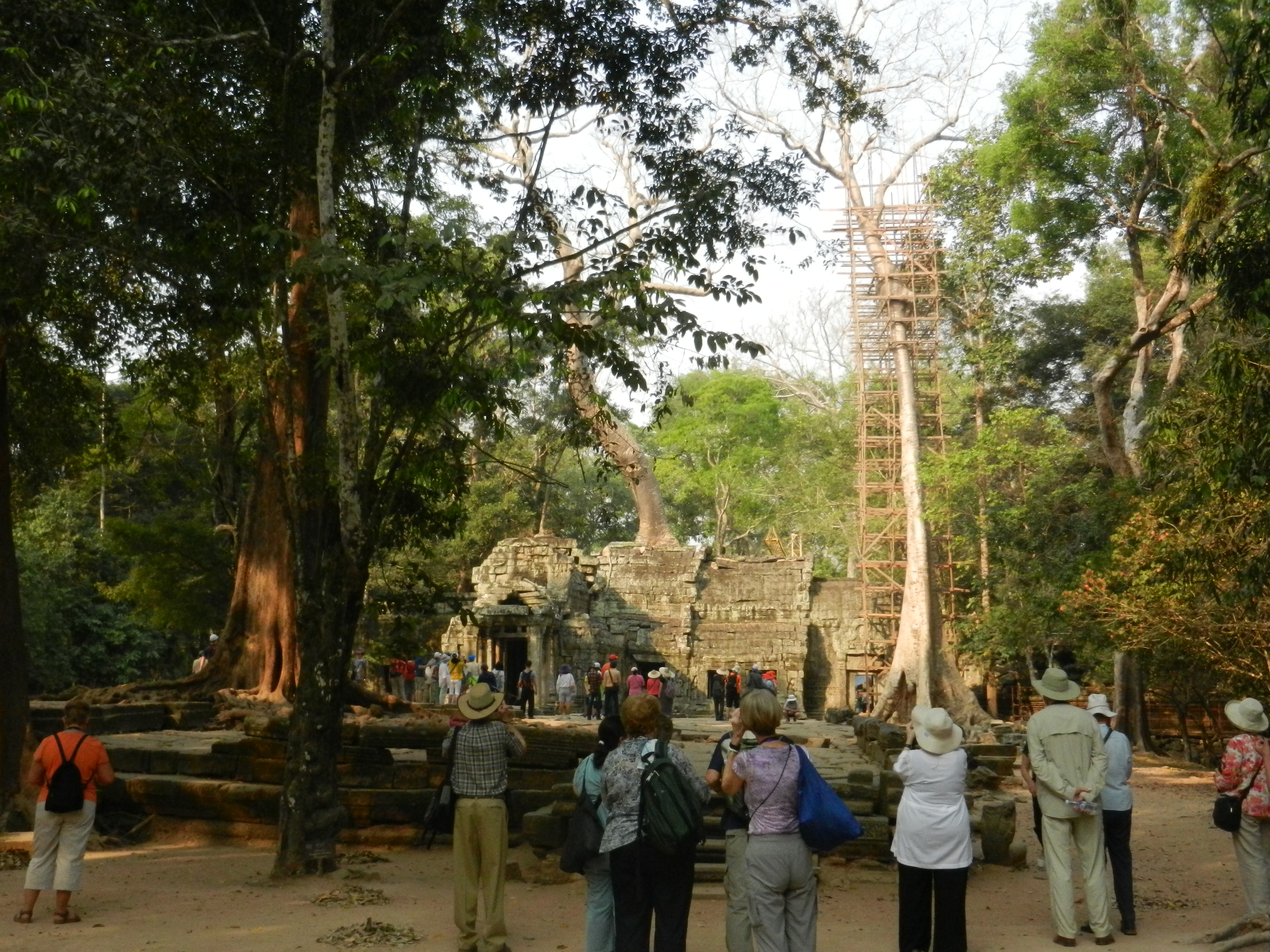
Tree growing on temple roof

The other tree in the photo below growing on the roof of the structure.  Its roots have now penetrated the stones to such an extent that removing it would cause the structure to collapse.
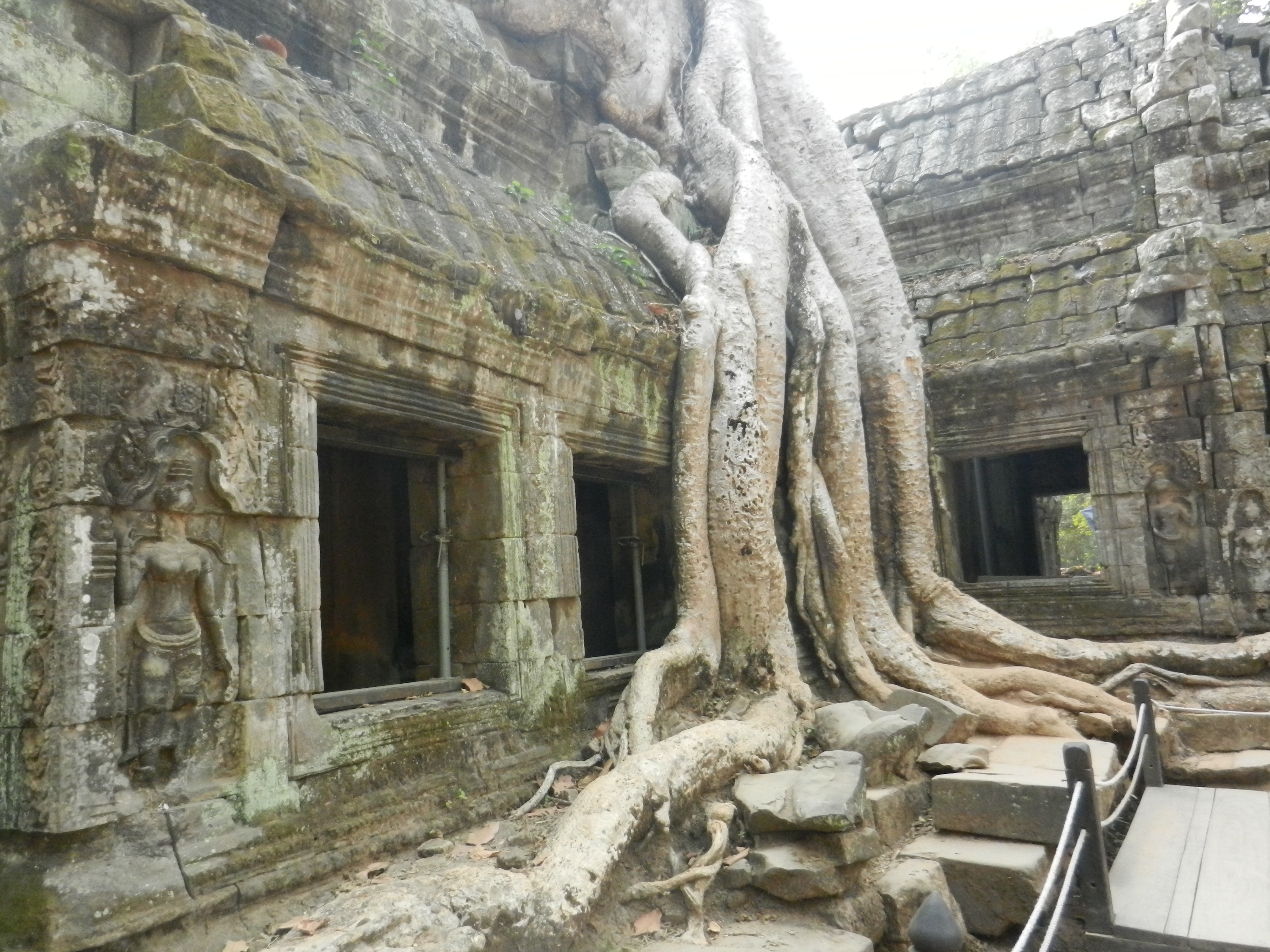
Tree roots swallowing structire

On occasion trees swallow other trees and are thus called strangle trees.  You can see in the photo below the smaller tree growing around the larger one, “strangling” the larger tree.  Bros, our local guide, says that if small trees are not cut back when they are very young, in five years they will be too large and will have done too much damage to remove them.
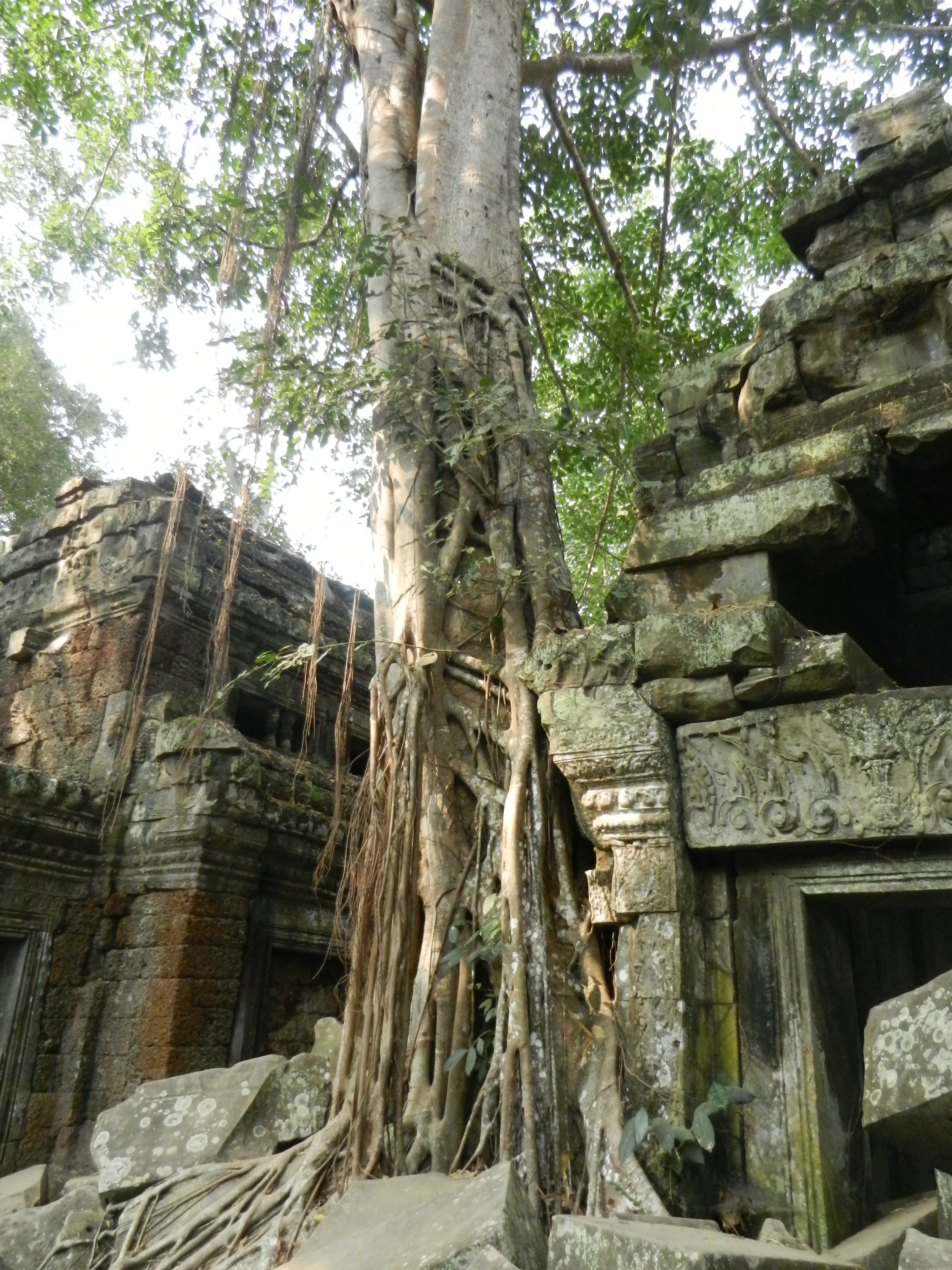
Strangle tree
Strangle tree

The artisans who built the Angkor complex cut the stones so carefully that no cement or mortar was needed to hold them in place.  Stone carvers went to work after the walls had been constructed, leading to the smooth transition of the carved image from one stone to the next.
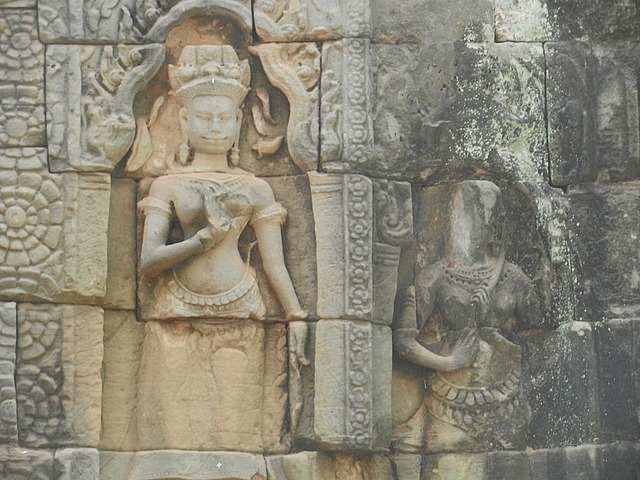
Carving at Ta Prohm
Carving at Ta Prohm

We visited the Royal Angkor Museum this afternoon.  The collection traces the history of Cambodia from its early influences by the Chinese and the Indians through the building of the Angkor temples and beyond.  There is so much to learn and so much to see that the four visits we are making to the site will only give us a small taste for 12th century life in Siem Reap.

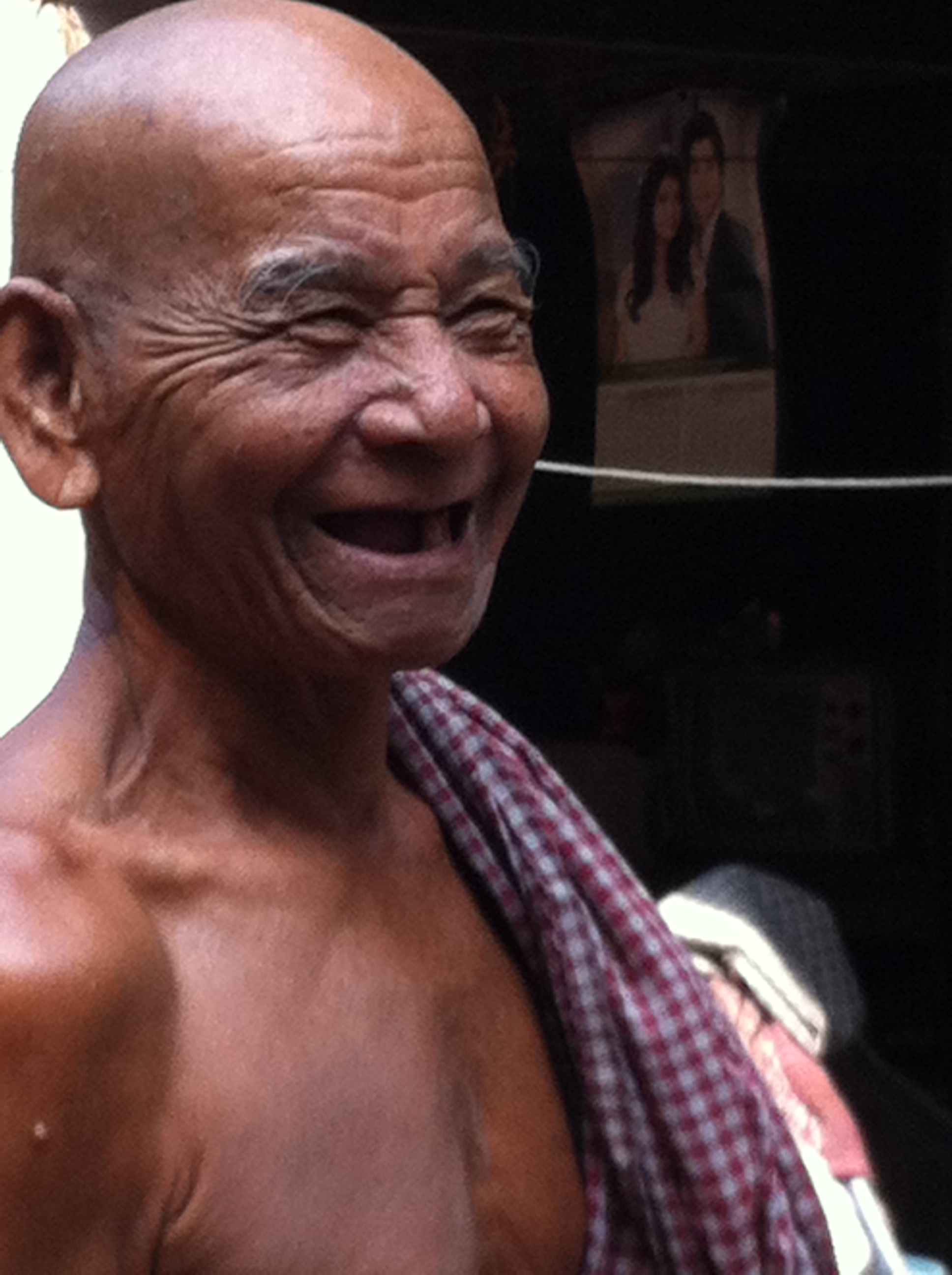
Following our excursion to Ta Prohm we visited a small village whose name translates to “Royal Palm.”  This village is within the Angkor area and because the whole site is a UNESCO Heritage Site, no new houses can be erected.  About 90 people still live in the Angkor protected area, not all of them in this village.  Typically the people who live in these villages are not well educated and are quite poor.  There is no running water or electricity in Royal Palm though one enterprising resident obtained funds from an NGO for a generator for the village to share.  He now runs the village general store. These villagers make some of their money from selling trinkets to tourists near the gates to the Angkor complex, and from agriculture.  They grow rice in the rainy season and make the handicrafts to sell to tourists in the dry season.
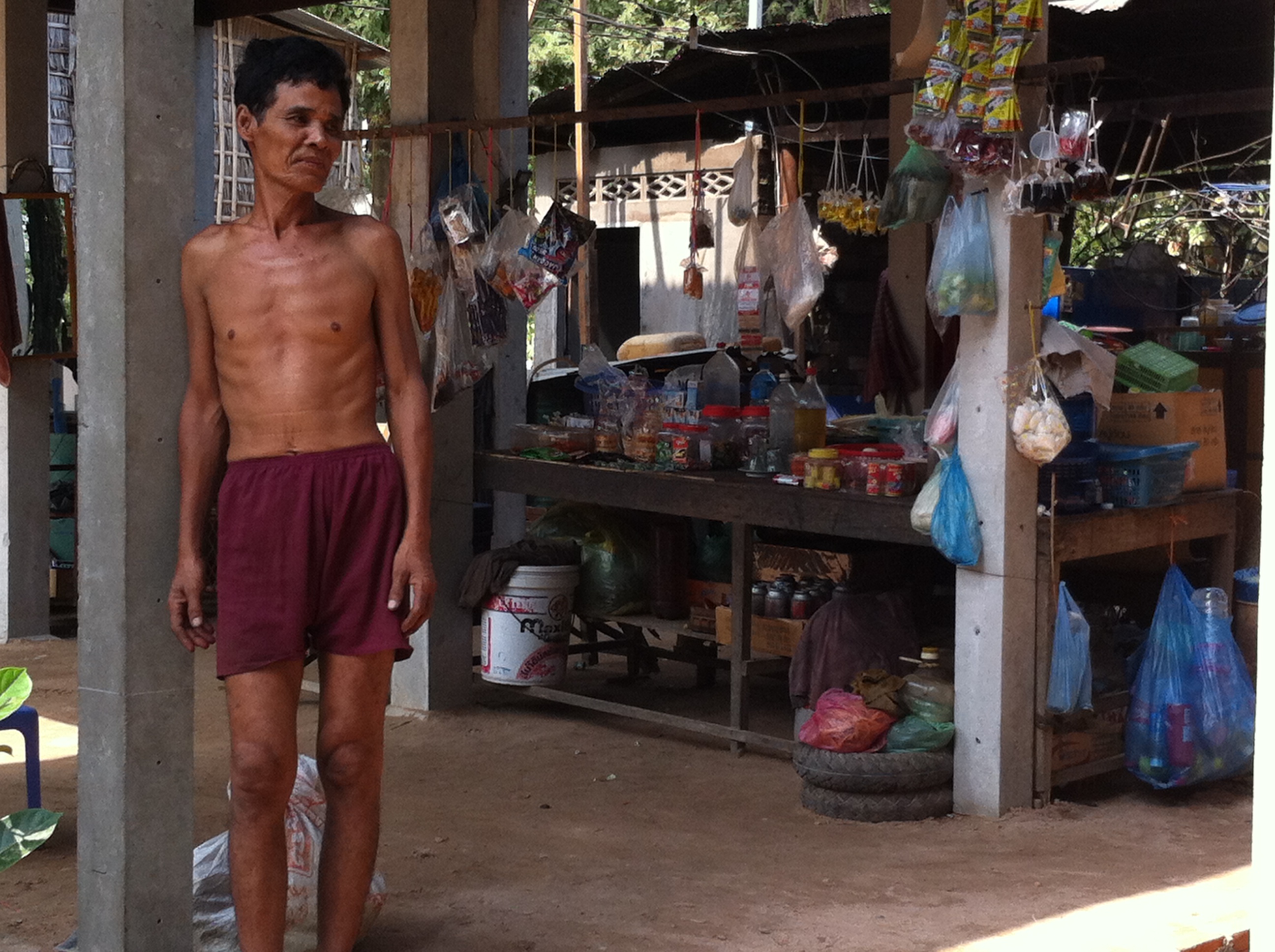
Village general store
90-something villager

Fabien Lucot , a social anthropologist who talked to us about life in the village, built a house here – pre-UNESCO designation –  while she was doing research on their way of life.  She returns from time to time from Phnom Penh where she now lives.  The village chief and his wife cooked lunch for us which we ate in Fabien’s very comfortable home.  Her house is on stilts, as are all houses in the village.  The area under the house is used for many purposes, and today seemed to be used by many villagers as a place to stretch out on a hammock for a snooze in the noonday heat.
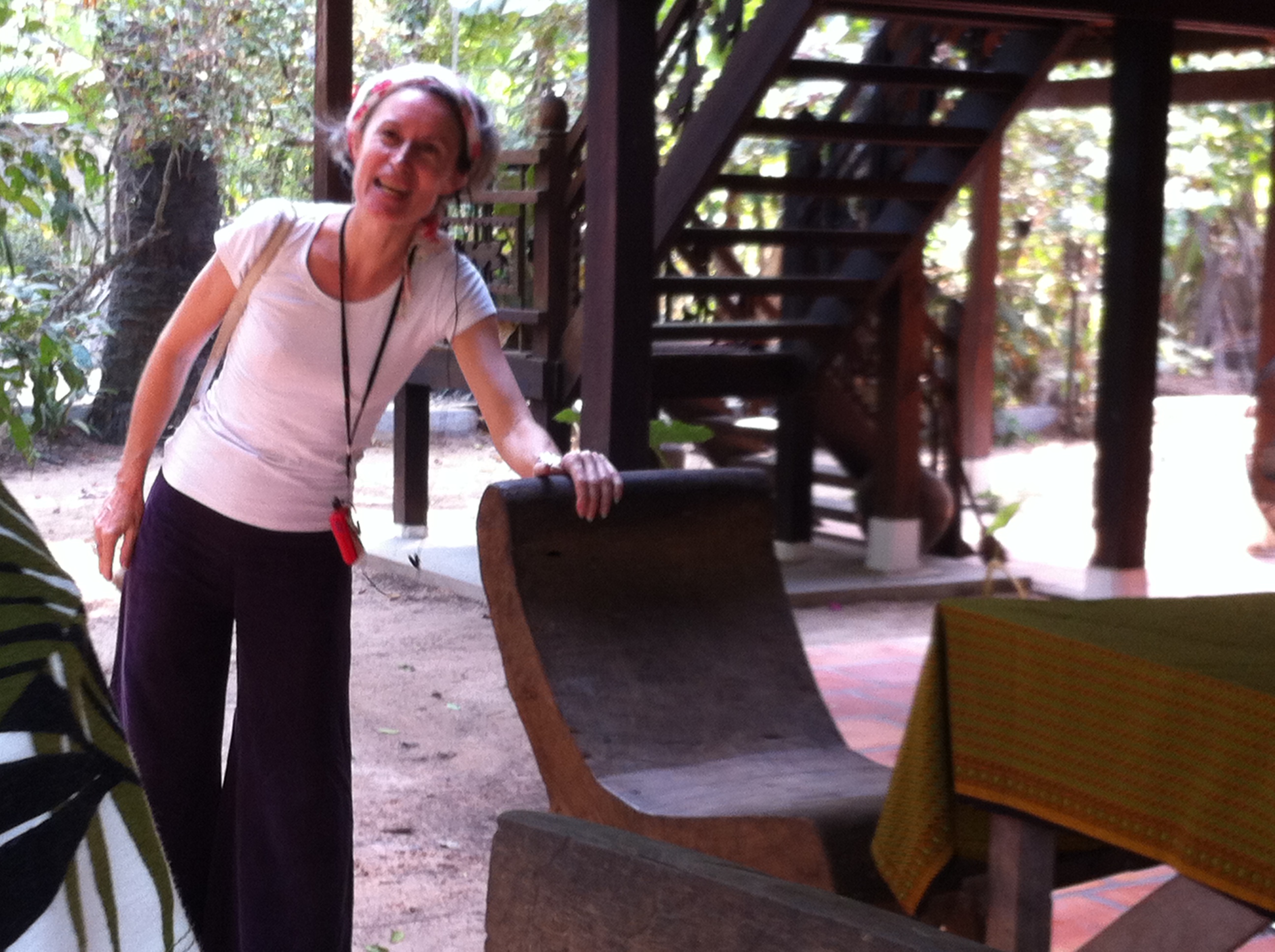
Fabien Lucot and her under-the-house area
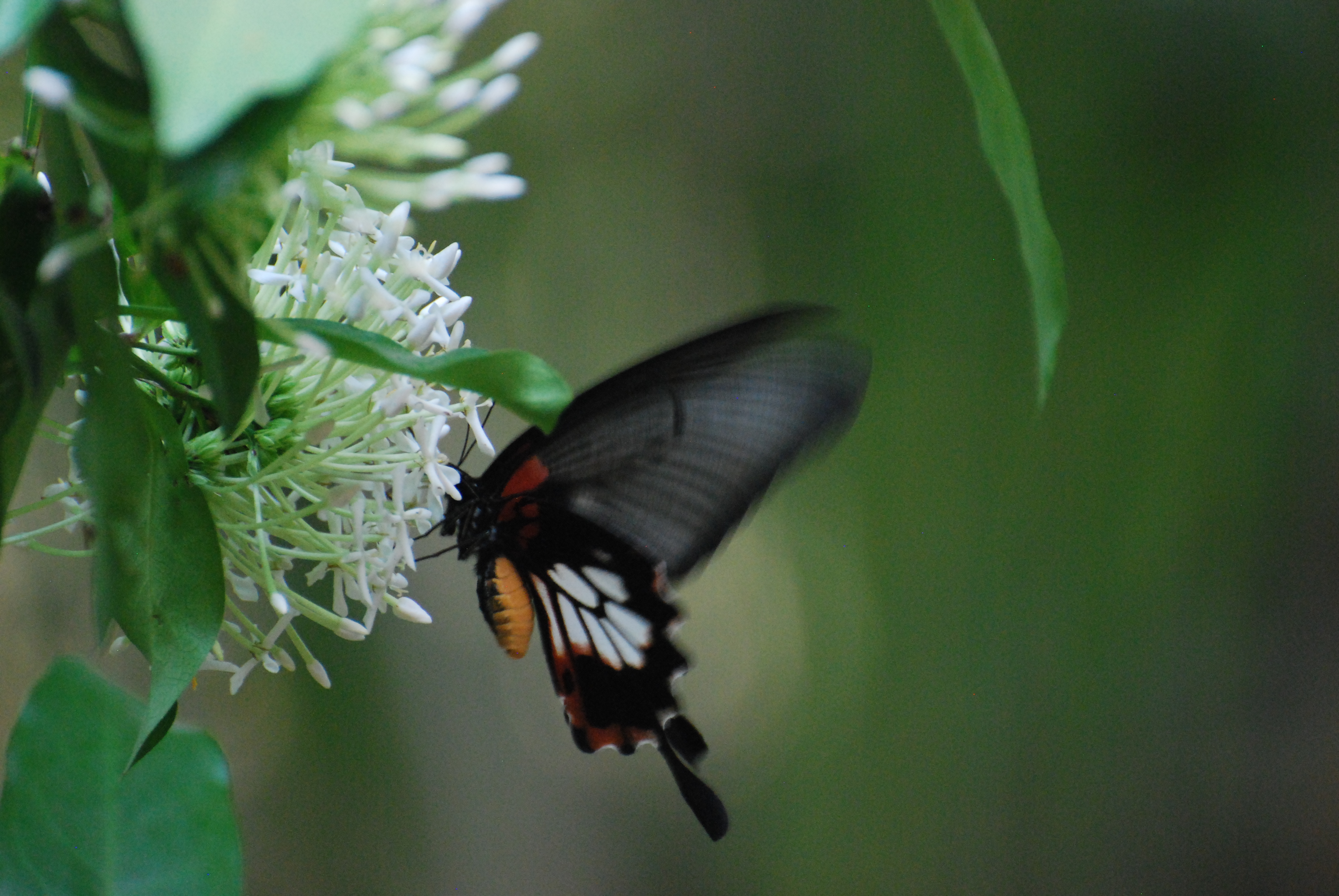
Beautiful butterfly at Fabien Lucot's home
Beautiful butterfly at Fabien Lucot’s home
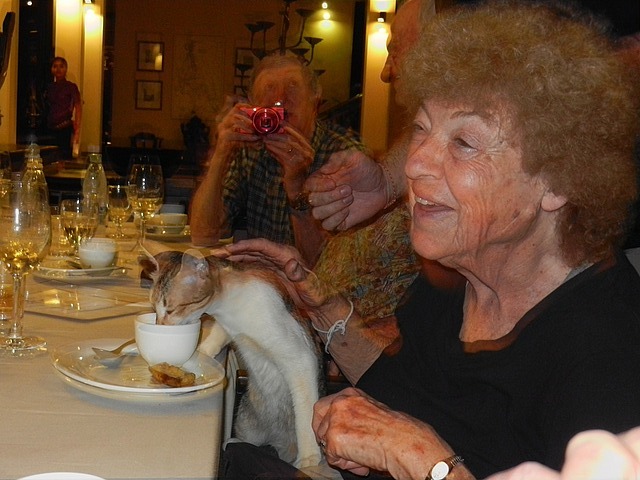
An unexpected guest at dinner!

We ended the day with a lovely meal of fish and chicken at a restaurant called Fou-Nan.  We had a special treat when an unexpected guest graced us with her presence!

Leave a Reply

Map of the Angkor Complex

An early start this morning saw us at Ta Prohm before the crowds, but still there were lots of tourists taking in the sights with us.  Ta Prohm is a small part of the overall Angkor complex – you will see it in the bottom right-hand part of the map – and was constructed around 1180 AD.  The reconstruction of this area is financed by India which has an interest due to the Hindu images and influences in Angkor Thom.  And while reconstruction has come a long way, there are still piles of uncatalogued stones no one yet knows how to fit into the larger puzzle.

Puzzle pieces waiting to be catalogued

The existing ruins have been almost swallowed by the forest so much of the reconstruction has required cutting away plant life.  When a tree can be removed without damaging the structure, it is, as is the case with the tree in the photo with preparatory scaffolding around it.

Tree growing on temple roof

The other tree in the photo below growing on the roof of the structure.  Its roots have now penetrated the stones to such an extent that removing it would cause the structure to collapse.

Tree roots swallowing structire

On occasion trees swallow other trees and are thus called strangle trees.  You can see in the photo below the smaller tree growing around the larger one, “strangling” the larger tree.  Bros, our local guide, says that if small trees are not cut back when they are very young, in five years they will be too large and will have done too much damage to remove them.

Strangle tree
Strangle tree

The artisans who built the Angkor complex cut the stones so carefully that no cement or mortar was needed to hold them in place.  Stone carvers went to work after the walls had been constructed, leading to the smooth transition of the carved image from one stone to the next.

Carving at Ta Prohm
Carving at Ta Prohm

We visited the Royal Angkor Museum this afternoon.  The collection traces the history of Cambodia from its early influences by the Chinese and the Indians through the building of the Angkor temples and beyond.  There is so much to learn and so much to see that the four visits we are making to the site will only give us a small taste for 12th century life in Siem Reap.

Following our excursion to Ta Prohm we visited a small village whose name translates to “Royal Palm.”  This village is within the Angkor area and because the whole site is a UNESCO Heritage Site, no new houses can be erected.  About 90 people still live in the Angkor protected area, not all of them in this village.  Typically the people who live in these villages are not well educated and are quite poor.  There is no running water or electricity in Royal Palm though one enterprising resident obtained funds from an NGO for a generator for the village to share.  He now runs the village general store. These villagers make some of their money from selling trinkets to tourists near the gates to the Angkor complex, and from agriculture.  They grow rice in the rainy season and make the handicrafts to sell to tourists in the dry season.

Village general store
90-something villager

Fabien Lucot , a social anthropologist who talked to us about life in the village, built a house here – pre-UNESCO designation –  while she was doing research on their way of life.  She returns from time to time from Phnom Penh where she now lives.  The village chief and his wife cooked lunch for us which we ate in Fabien’s very comfortable home.  Her house is on stilts, as are all houses in the village.  The area under the house is used for many purposes, and today seemed to be used by many villagers as a place to stretch out on a hammock for a snooze in the noonday heat.
Fabien Lucot and her under-the-house area
Beautiful butterfly at Fabien Lucot's home
Beautiful butterfly at Fabien Lucot’s home
An unexpected guest at dinner!

We ended the day with a lovely meal of fish and chicken at a restaurant called Fou-Nan.  We had a special treat when an unexpected guest graced us with her presence!