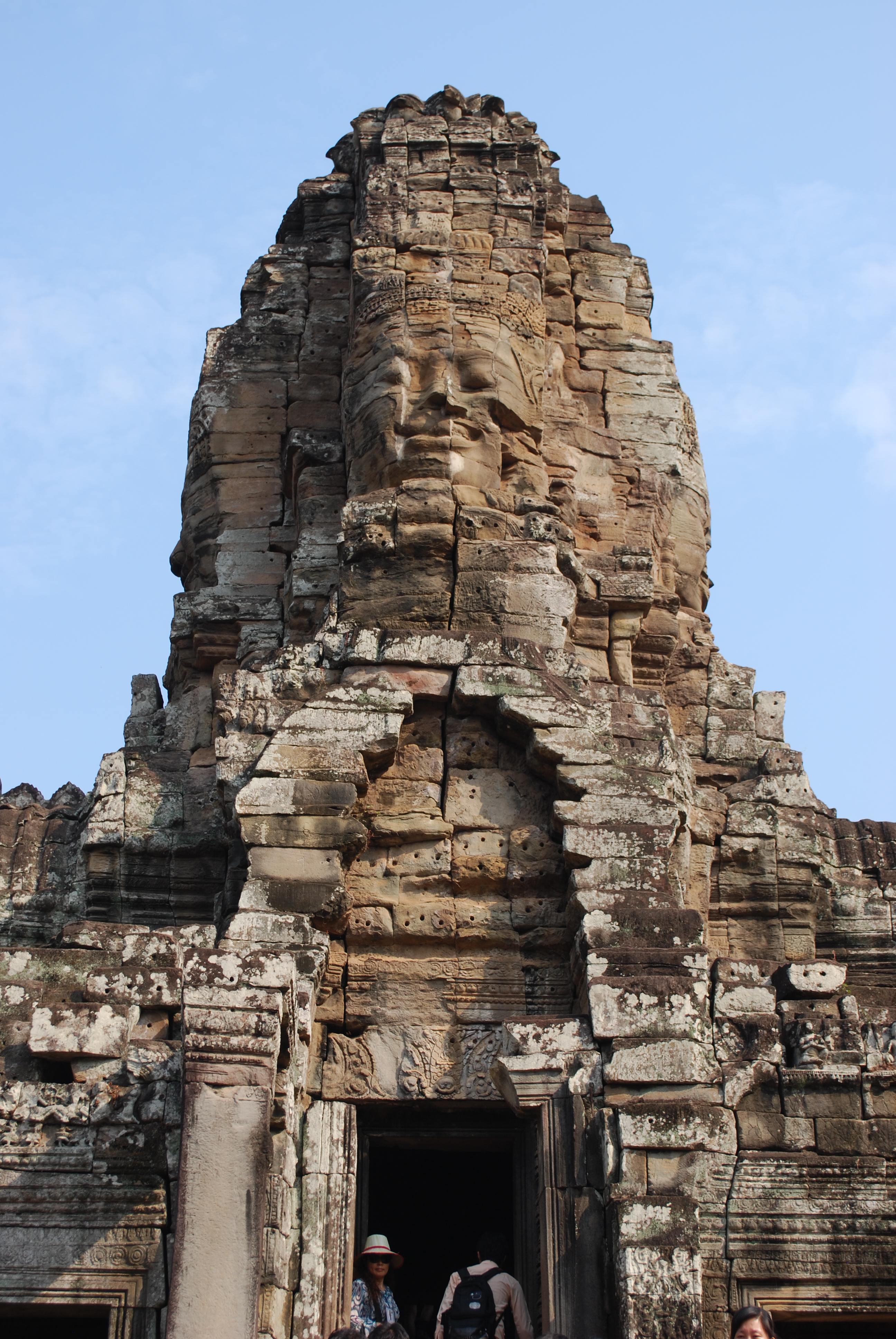
I hardly know where to start. Bayon Temple inside Angkor Thom contains an fantastic collection of faces.
Everywhere there are faces, not quite smiling, but not neutral either – kind of the late 12th century version of the Mona Lisa.
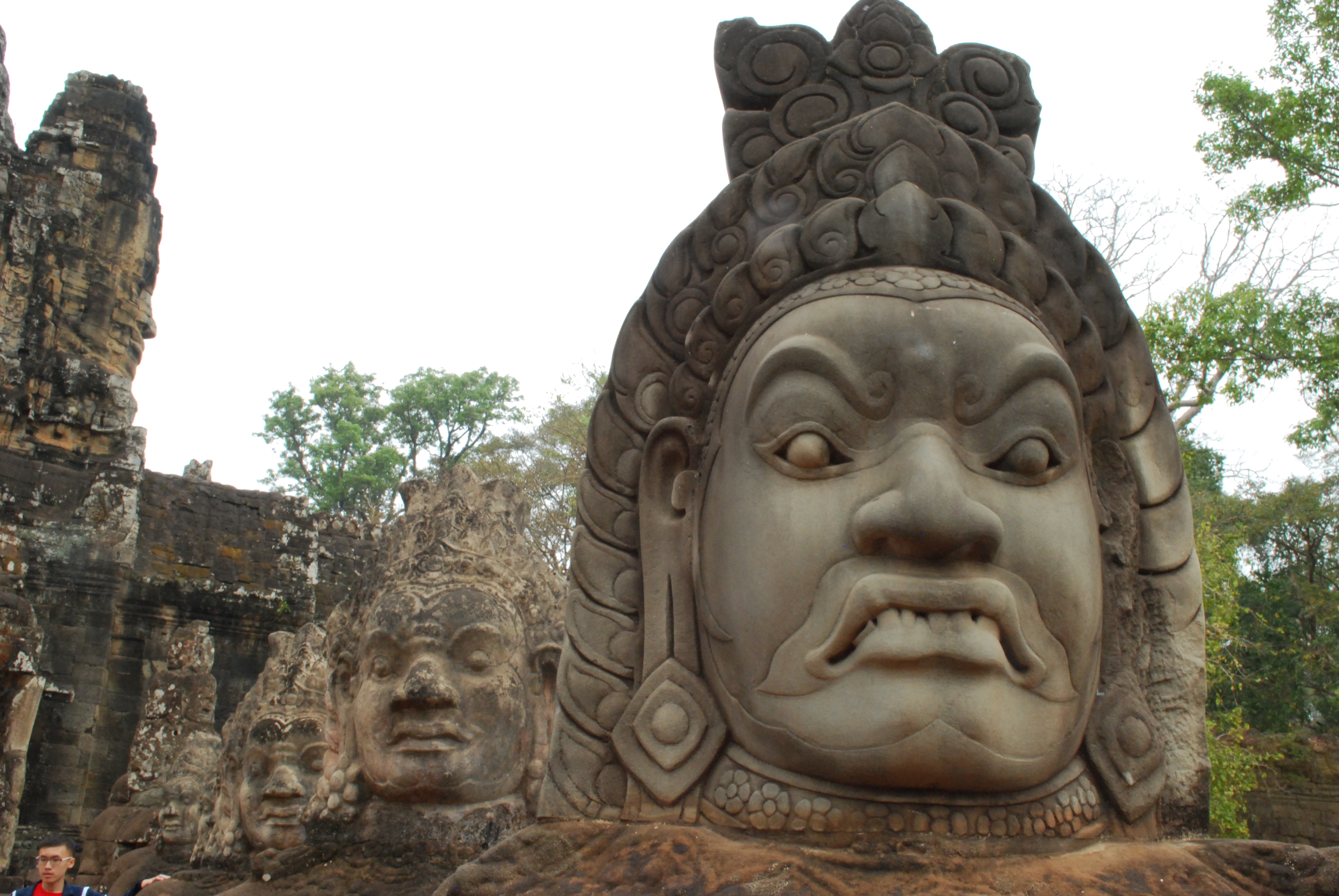
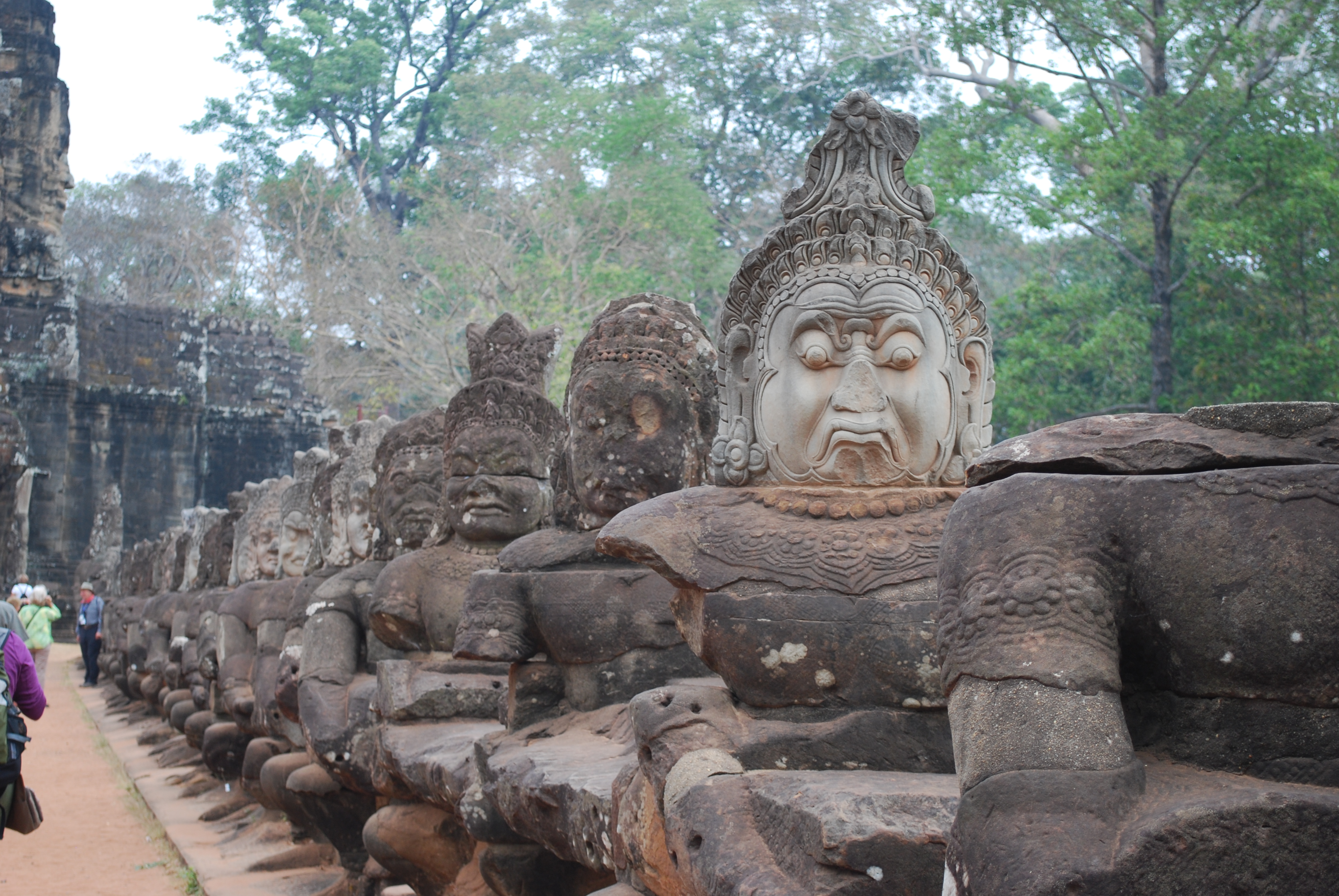
But first we had to cross over the moat surrounding Angkor Thom in the process passing a collection of scary faces, all different, designed to ward off evil spirits. Some faces were scarier than others!
Once inside the complex, we took a shuttle bus to Bayon Temple. The interior road was clogged with tuk tuks, shuttle buses, bicycles and elephants ferrying tourists to their intended sights. Cambodia has announced a plan to restrict access inside Angkor Thom to electric vehicles within the next few years. It seems like a good idea!
Bayon Temple is being restored by the Japanese; about 30% has been finished so far. Other temples are being restored by the Chinese, the Swiss, and other countries that believe we all have a stake in preserving this UNESCO Heritage Site. (My local guide did not mention Canada, and noted that the Americans restoring part of Angkor Thom were doing so with private donations, not government money.)
Archeologists believe there were originally 54 towers forming the temple, with faces looking all four directions on most towers. The number 9 is an auspicious number, so the 54 towers represented not only the 54 states of Cambodia but also lucky numerical combinations: 5 plus 4 equal nine, and 54 + 54 equal 108 and 1 plus 0 plus 8 equal nine. Only 37 towers are still standing.
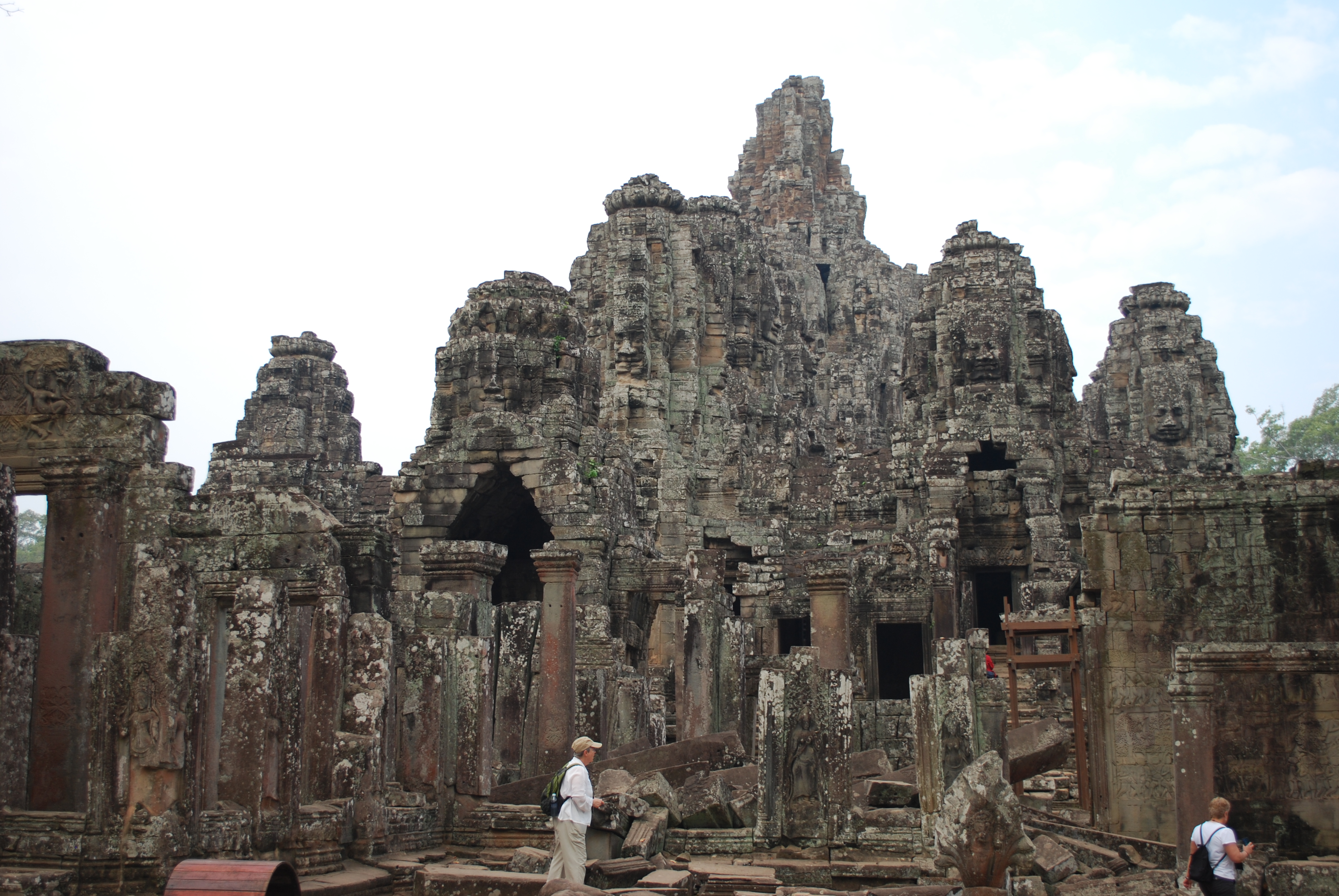
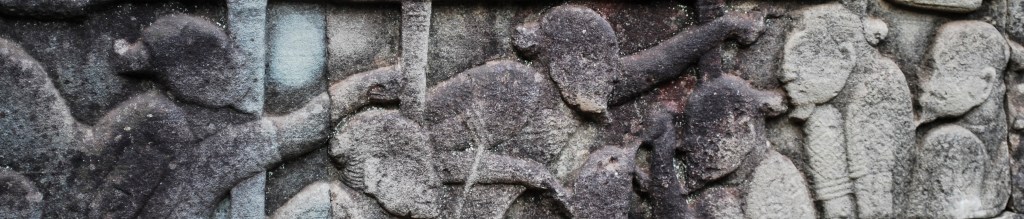
Bas relief carving covers almost all wall space. Some has been well preserved by overhangs that protected them to some extent from the elements. The carvings tell the story of wars between the Khmers and the Chinese, and the Khmers and the Chams, and story of every day life from cooking to drinking to childbirth.
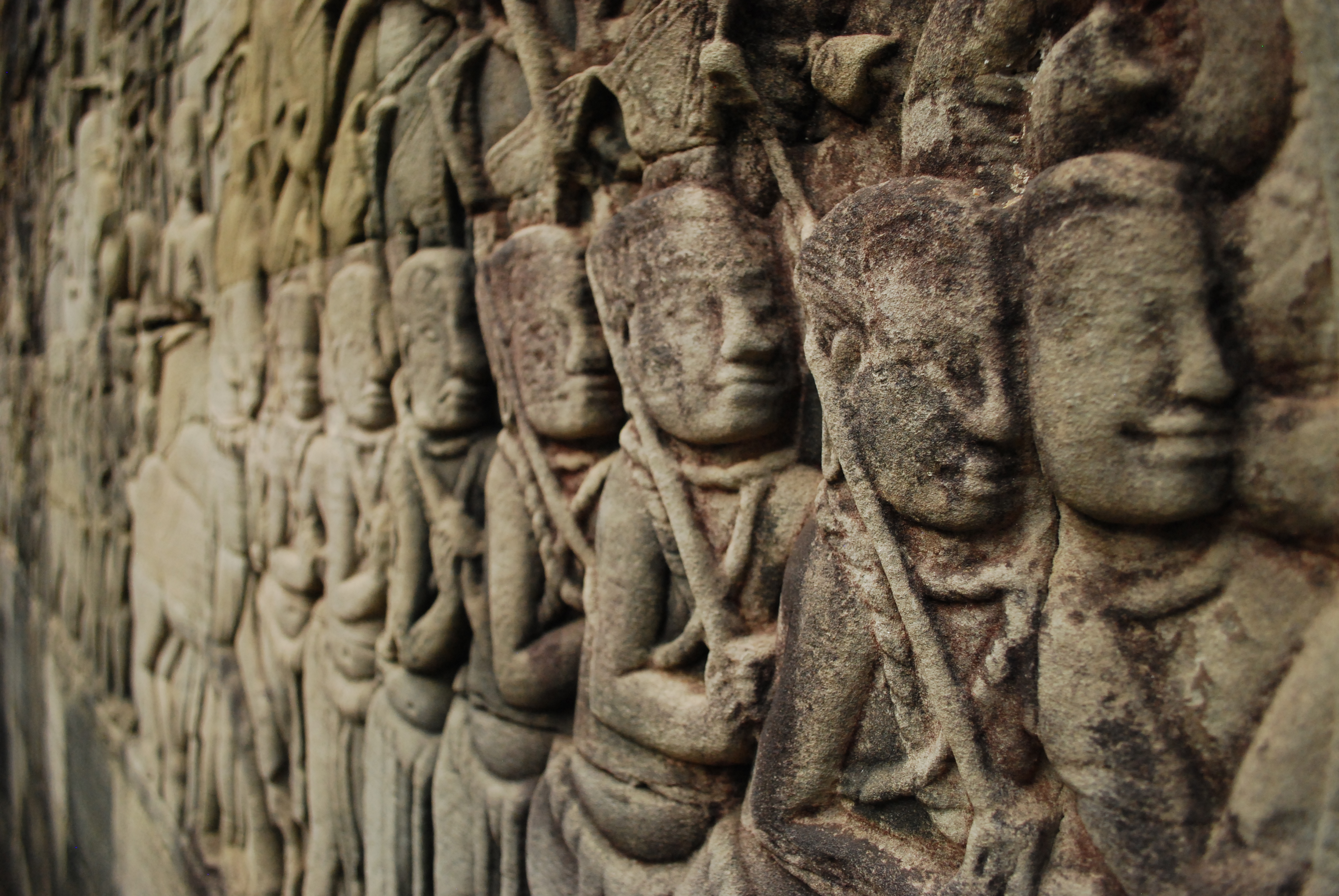
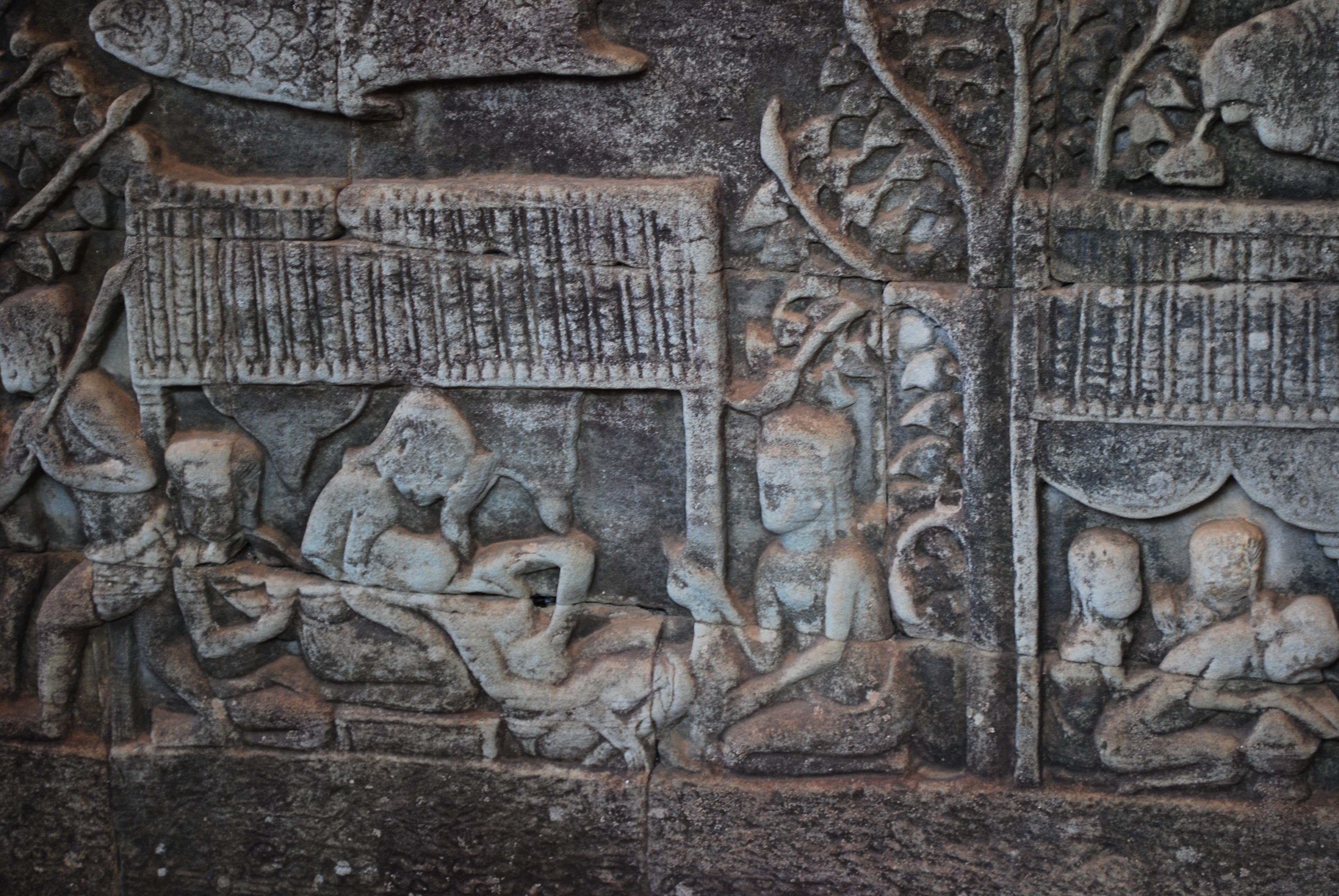
There were rooms inside rooms which would most likely have been used for praying and meditation. There is also a small building on the site that French archeologists believe was once a library. This temple was built for monks and dignitaries (not royals) since its entrance is at ground level.
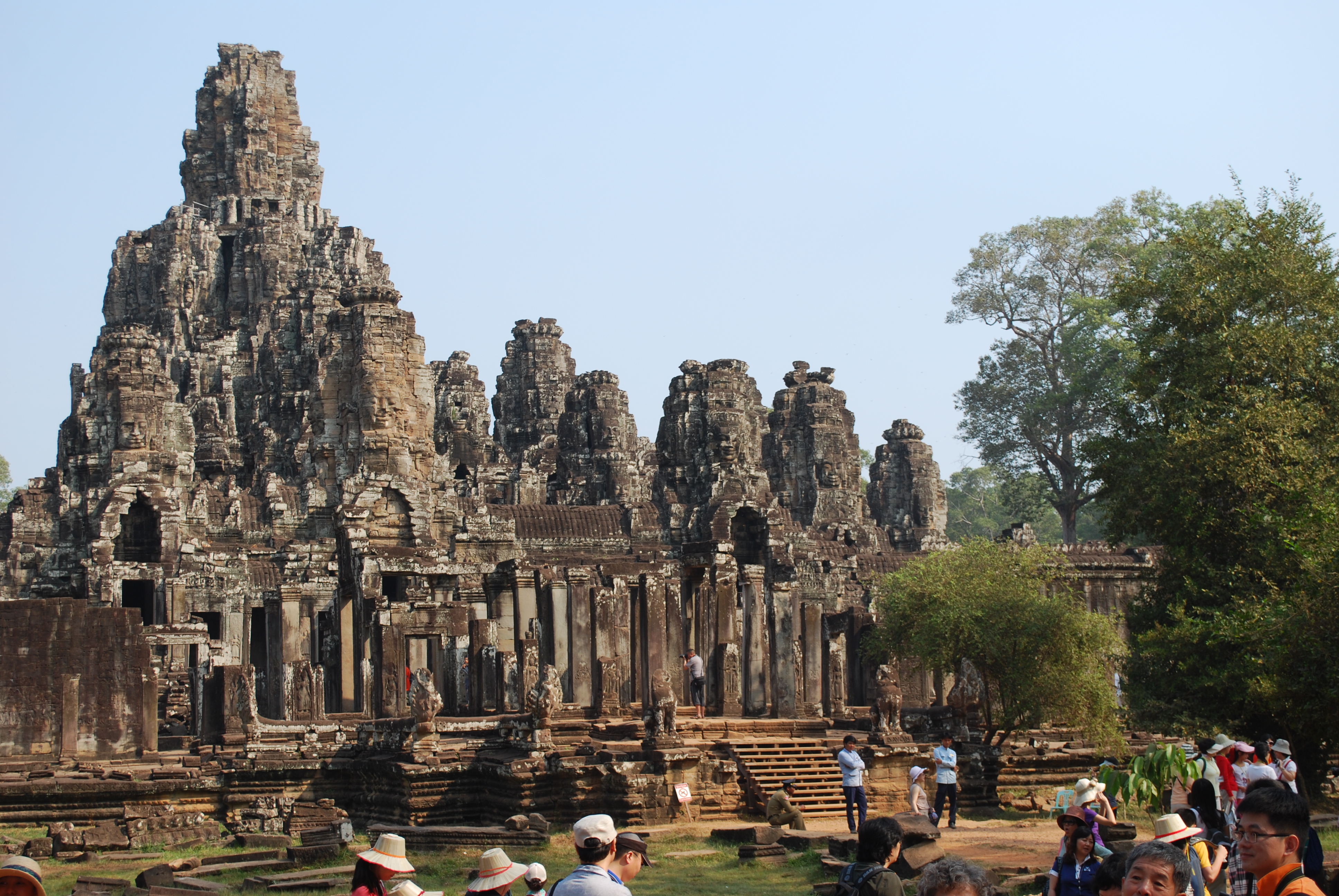
It’s difficult to convey with a few pictures the grandeur of this ruin and to imagine what this temple would have looked like in its day. At one point a million people lived in the Angkor Thom complex, so there would have been masses of humanity buzzing around as indeed there were today.
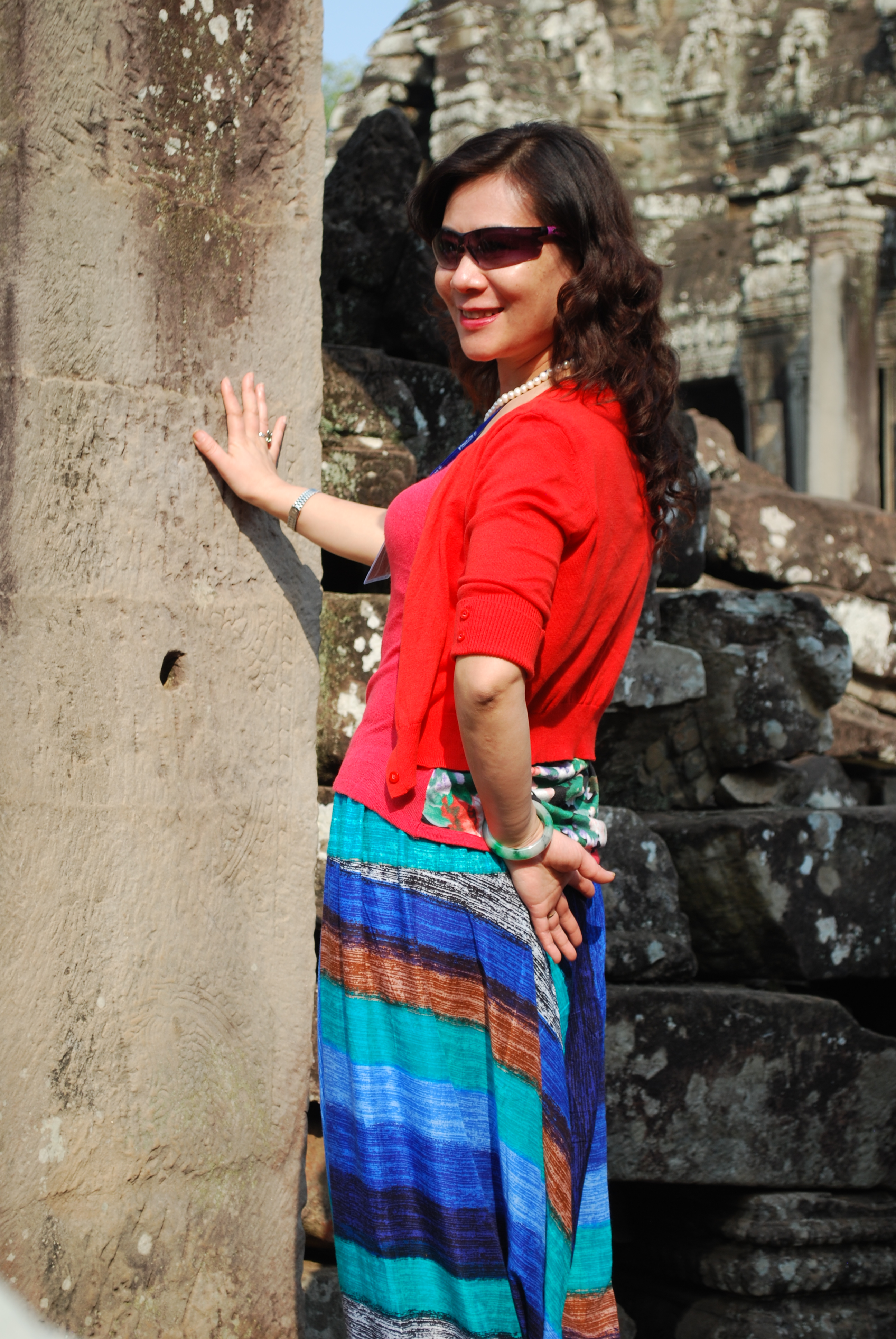
More than a few of those masses were particularly concerned with getting just the right picture to send home. Some time after I took this photo and in another part of the temple, this same woman shoved me out of the way so I would not sully her photo with an elbow or a straggling foot!
We also visited the small temple Banteay Srei, or “Citadel of the Women” constructed in the late 10th century, about an hour’s drive from Angkor Thom. Banteay Srei is famous for its beauty – its stone is not just one colour, but has shades of pink and green as well. It is also famous for containing a lot of Hindu imagery. Currently in almost total ruin, it is being restored by the Swiss.
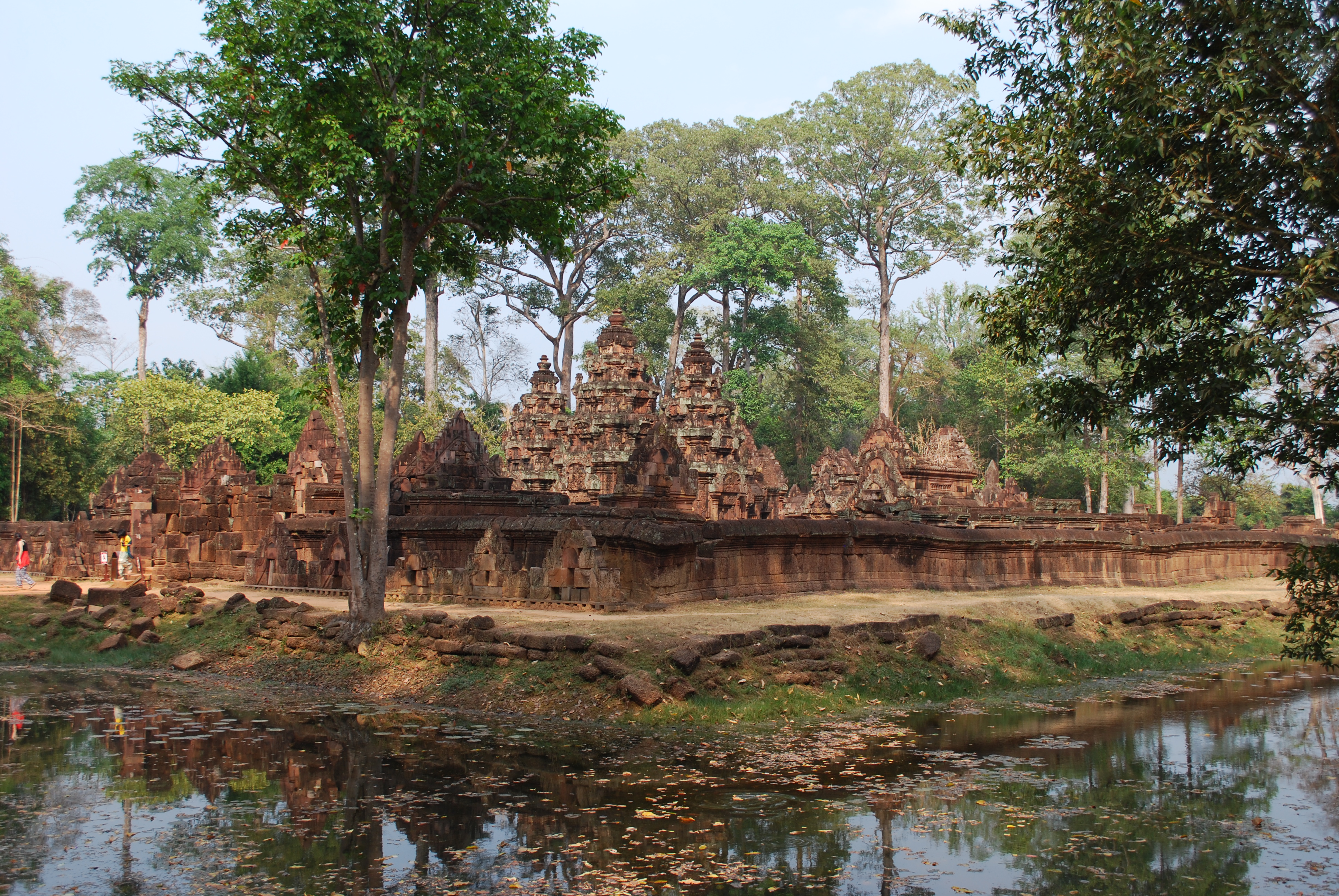
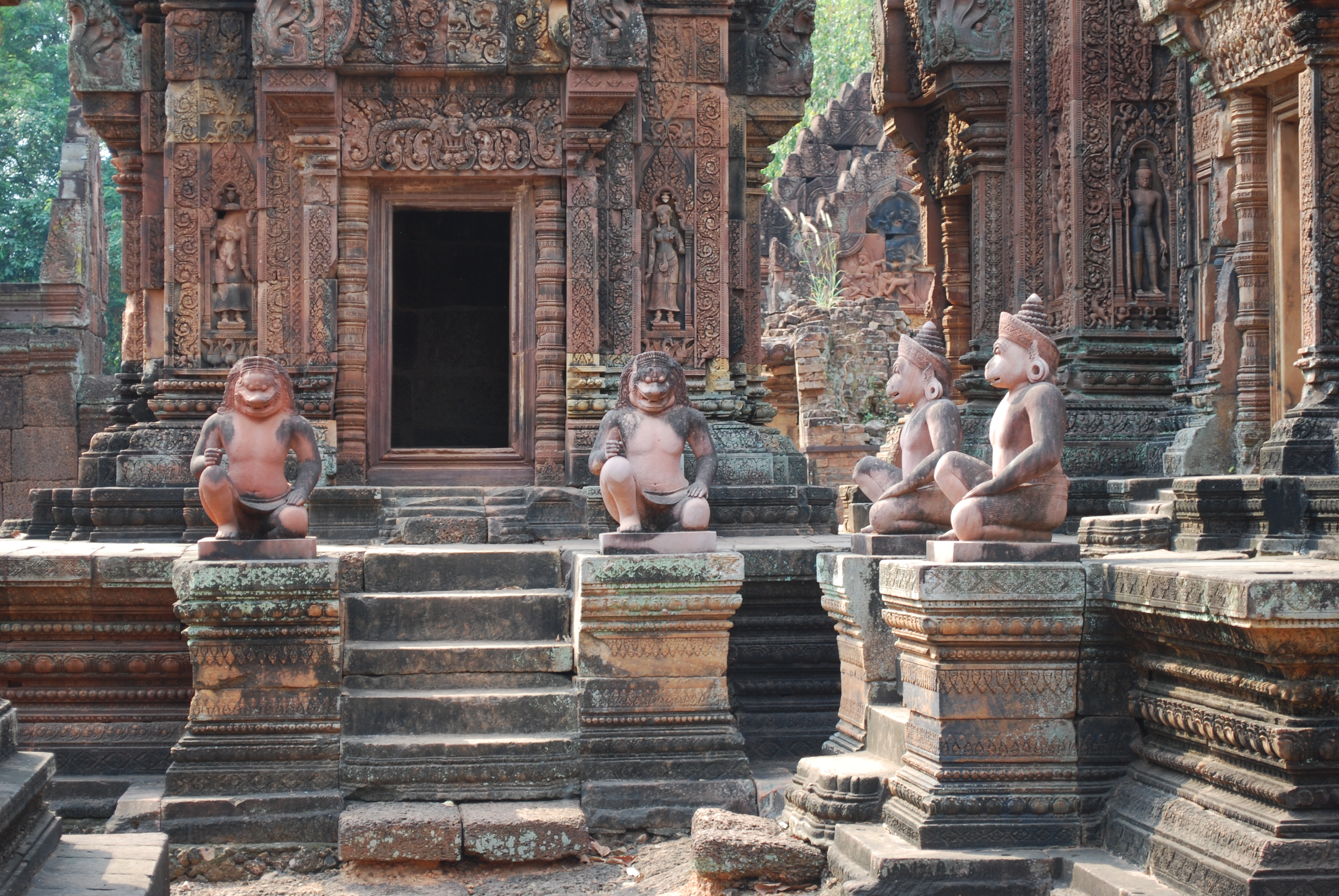
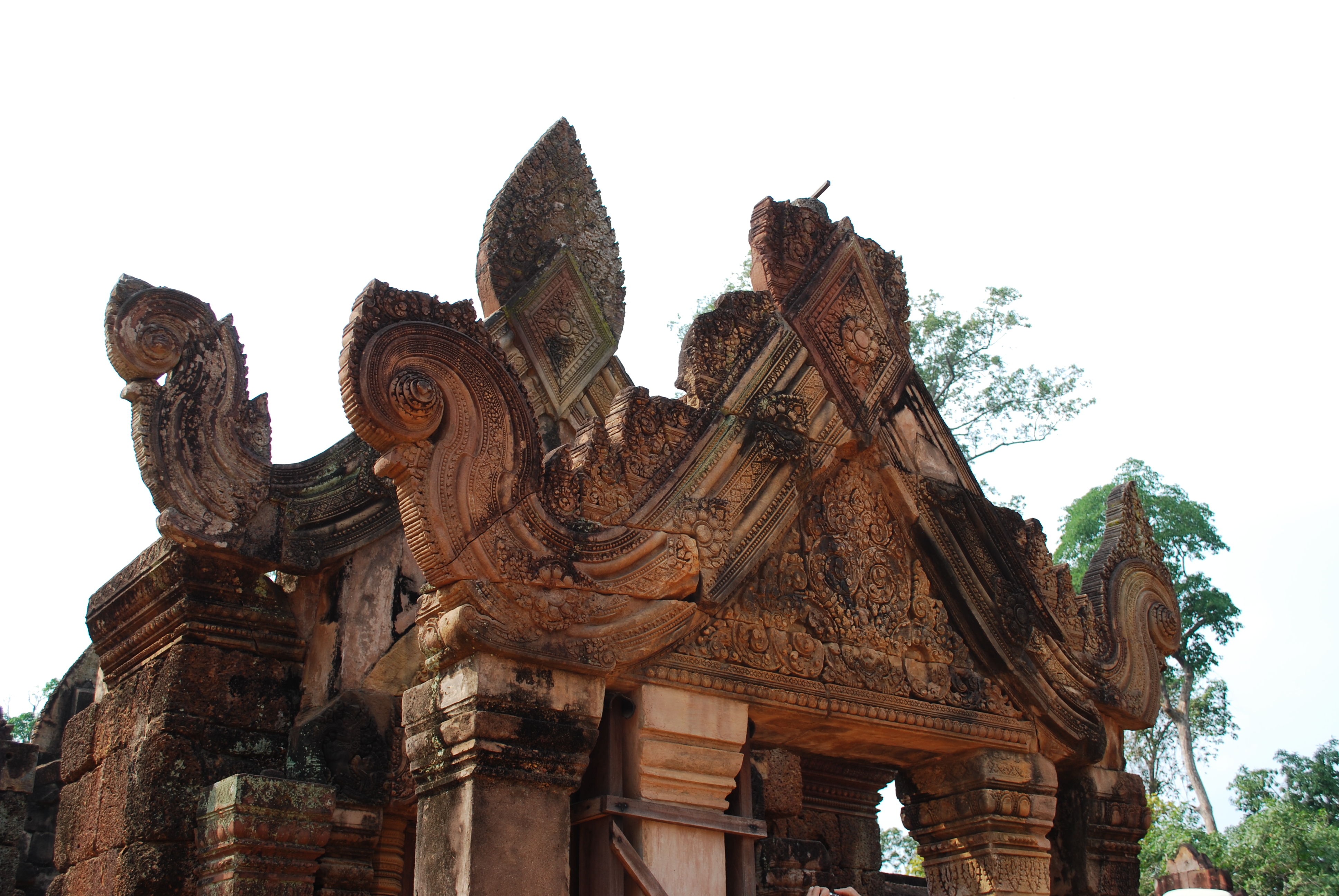
As with Ta Prohm and Bayon, Banteay Srei was built with carved sandstone and another stone called laterite using no mortar or cement. It is remarkable that the architects and builders could create lintels like the one in the photo, and in other areas of the temple openings for windows with perfectly mitered corners. Not many people were visiting this out-of-the-way temple today.
We stopped briefly at the Angkor Hospital for Children which was started as a Friends Without a Border project. FWB was founded by a Japanese photographer who came to Cambodia and was shocked by the lack of healthcare for children and decided to do something to improve it. At the Hospital we found another mass of humanity as healthcare for children is still at a premium. Parents bring their children not only for emergency treatment, but also for general wellness checks, and the hospital sees them all without charge. When the parents have come from out of Siem Reap, the hospital pays for their food and for transport back to their homes. Road Scholar supports this hospital by donating $10 for each tour member who visits while in Siem Reap and I and many of my tour mates added small sums to that total. For privacy reasons we were not allowed to take photos.
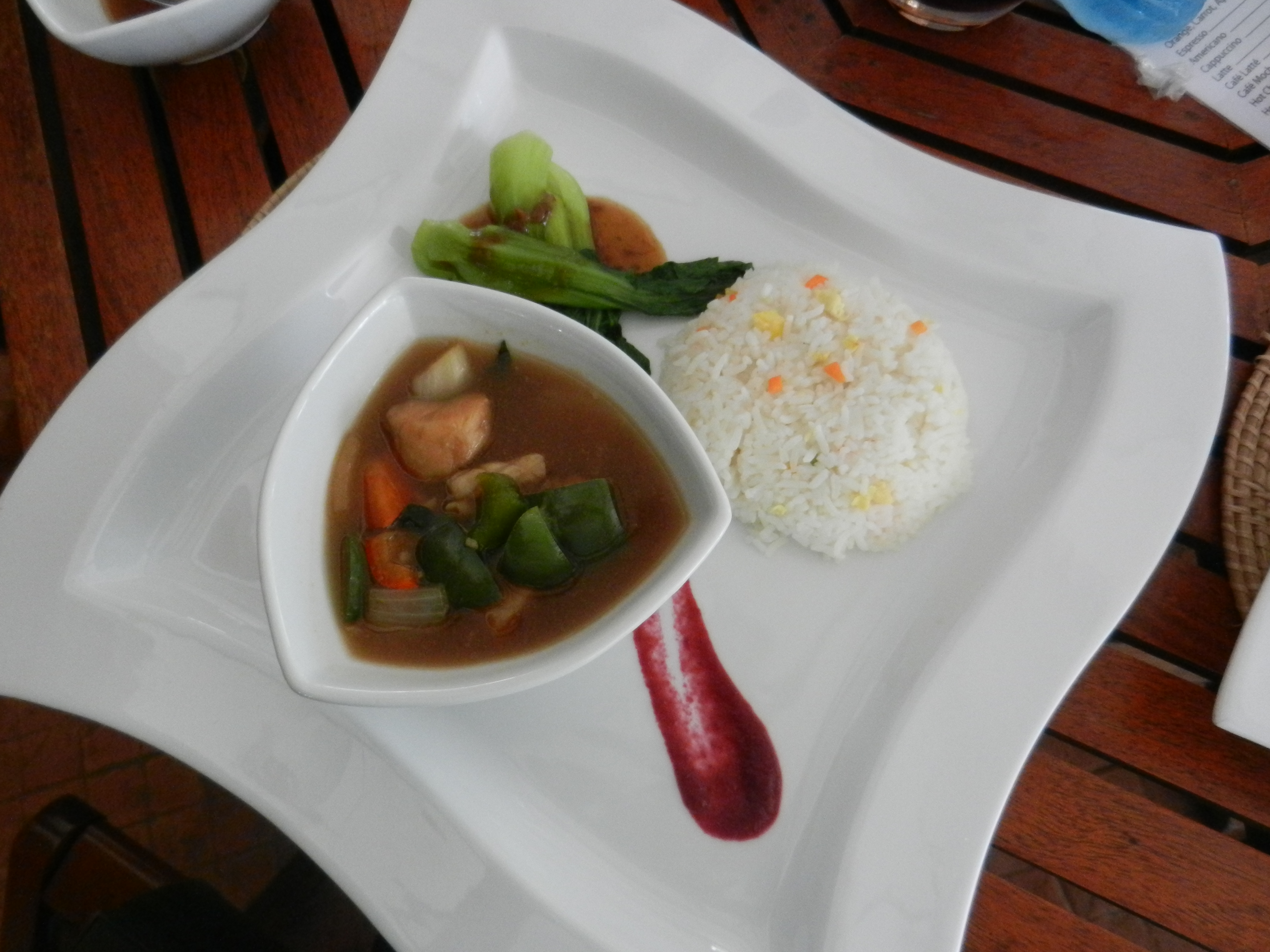
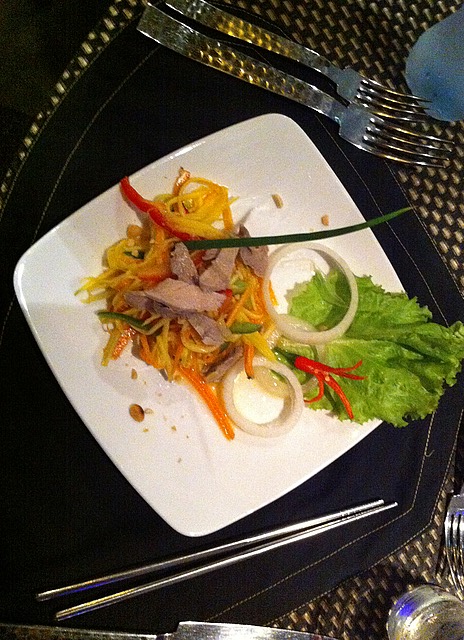
Lunch and dinner were in French-owned restaurants with meals beautifully prepared and presented. The food is probably Khmer fusion rather than pure Khmer. Whatever – it was delicious!


Leave a Reply