
Each island in the Galápagos archipelago is unique. North Seymour is an important nesting ground for frigate birds, both the magnificent and the great varieties. These birds survive on food stolen from blue-footed boobies, as the boobies can dive for fish while the frigates with their two-metre wingspans cannot.
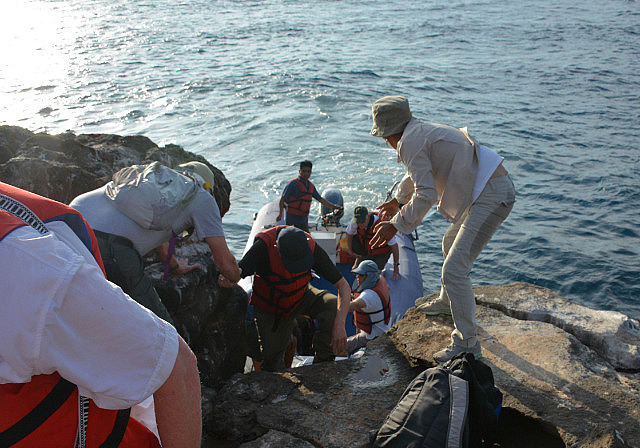
Our dry landing this morning consisted of hopping out of a pitching dingy onto a ledge about 18 inches by 18 inches, then climbing a fairly steep but stepped rock face to a plateau about 30 feet above. I am proud of my tour mates and myself for accomplishing this task with aplomb. I am the second youngest of us, the oldest will soon be 80, and the majority are in their 70s.
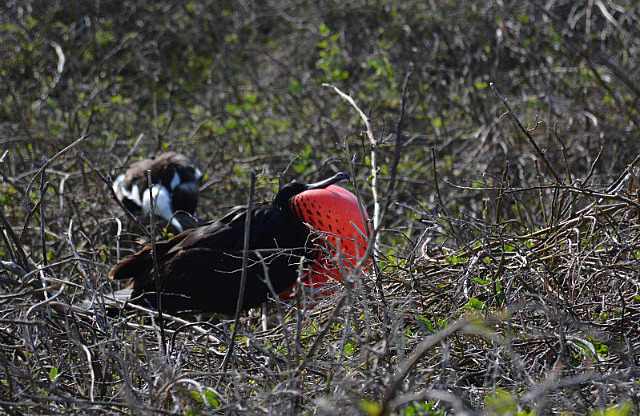
While mating season is almost over, there were a few hopeful male magnificent frigate birds showing off their red pouches to attract females. Once they have mated, they retract the pouch until it is visible only as a thin pink vertical line beneath the chin.
The magnificent frigate bird nests on the ground, often very close to paths taken by tourists. This female is sitting on her eggs and cooling off at the same time. She has lifted her feathers to allow for air circulation.
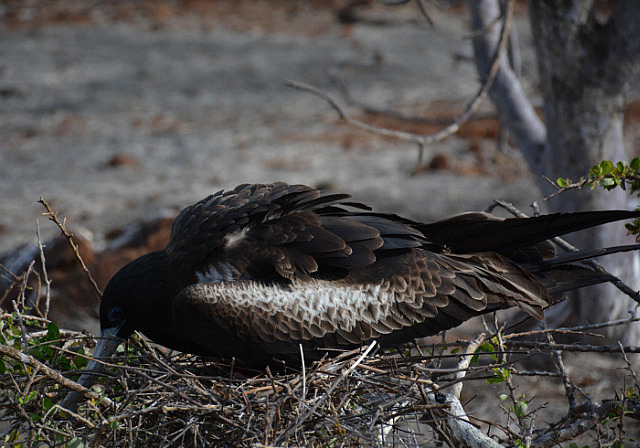
The male and female take turns sitting on the eggs – they are very much a team. The chicks are white and fluffy, and gradually turn black over the first three years of their lives.
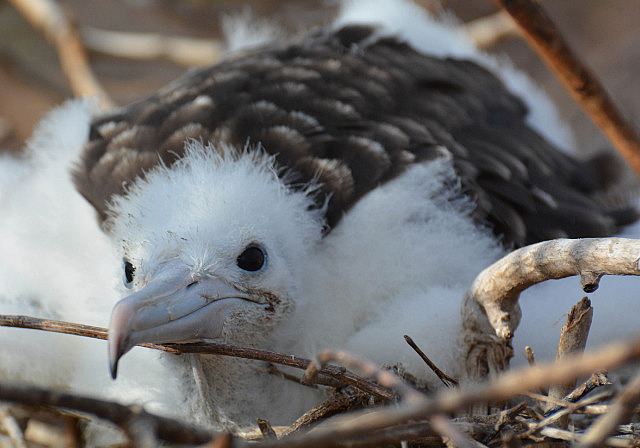
The juveniles are part way there – they have black bodies and white heads.
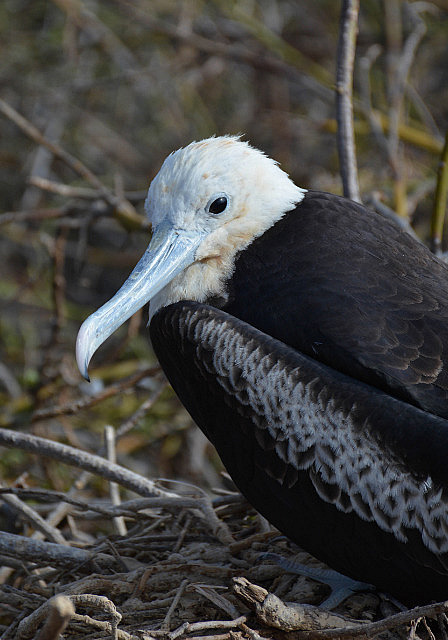
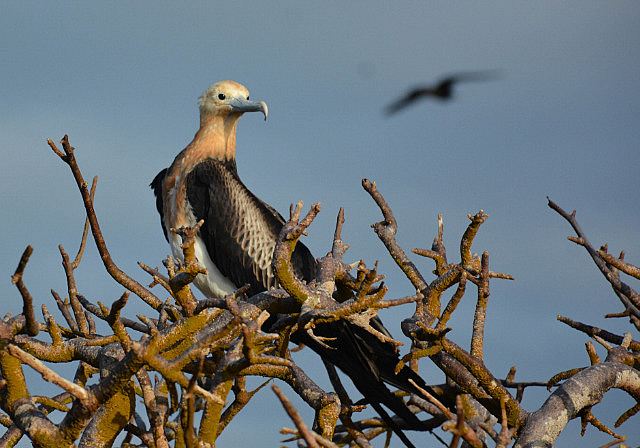
The great frigate females and juveniles are distinguished by brown feathers on their chests. These remarkable birds have a regal bearing that would inspire fear in me were I the prey!
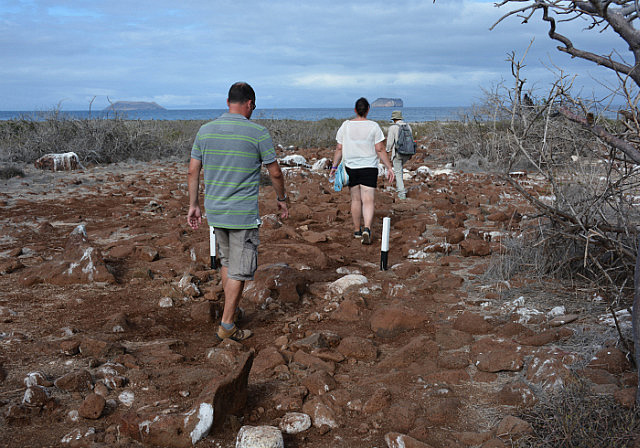
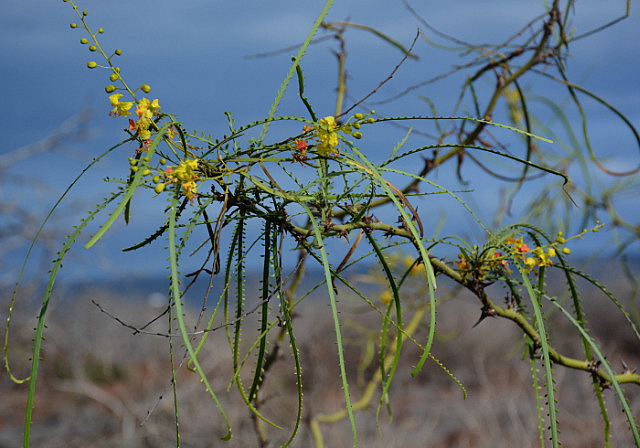
Along the path we passed Jerusalem thorn plants. Many of the plants in Ecuador have names linked to Catholicism. The Jerusalem thorn plant, the passion fruit flower with its ten petals representing the 10 disciples, a small yellow flower that opens to resemble a slipper is commonly called the shoe of Christ.
An example of the importance of letting Nature take her course is found here on North Seymour Island. Rats were, at some point in the past, introduced to the island. They ate tortoise eggs, a fact that explains the absence of tortoises roaming freely here. Authorities used poison to treat the problem.
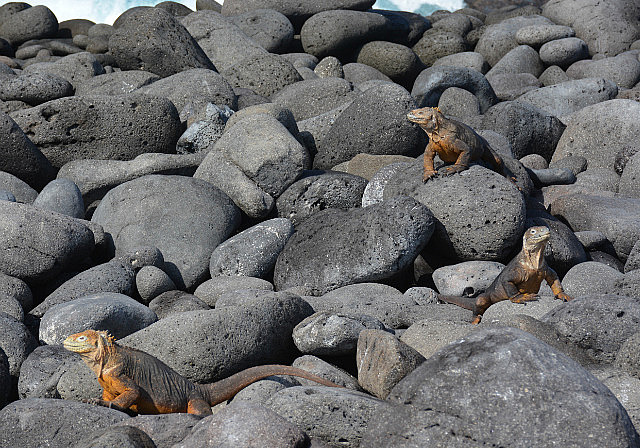
This seemed like a good solution because lava lizards and iguanas and tortoises secrete a digestive hormone that neutralizes the poison. The unintended consequence was the death of Galápagos hawks that preyed on the lizards.
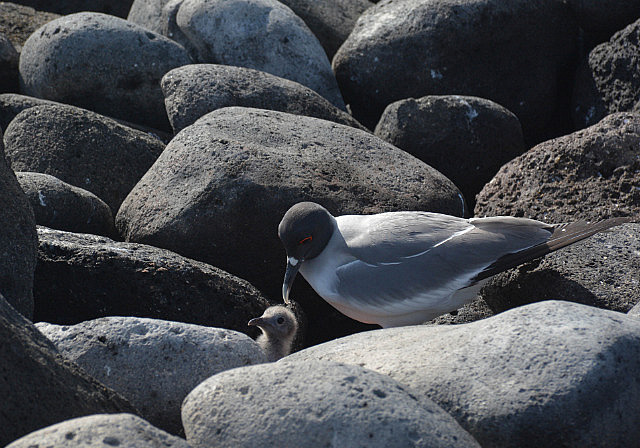
On the way back to our dry landing precipice, we were fortunate to spot a swallow-tail gull with her chick.
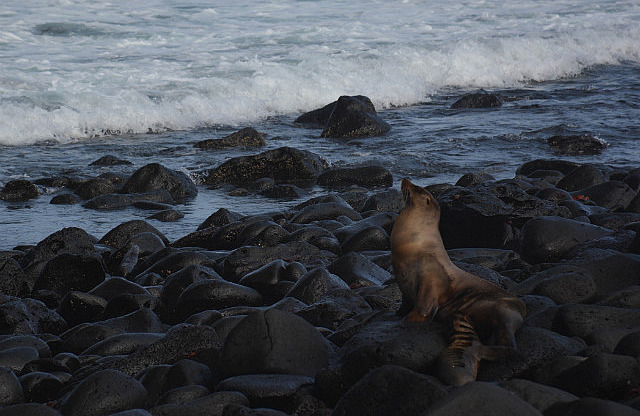
As we waited for our dingies to come for us, we watched a sea lion comically playing tag – at least from the sea lion’s perspective – with Sally Lightfoot crabs.
https://www.flickr.com/photos/64513024@N07/21197698046/in/datetaken/
Our deep-water snorkel off North Seymour Island was even more spectacular than the swim the day before. This time we also saw white-tipped sharks and other smaller varieties of sharks. Thankfully they felt well fed and seemed oblivious to us. We saw more colourful parrot fish and reef cornet fish and concentric puffer fish. I missed seeing some eels poking their heads out of the sand, but was fortunate to spot two manta rays! I have never been much of a birder or a snorkeler, but I can now see the allure of both activities. Perhaps I have discovered a new hobby or two!
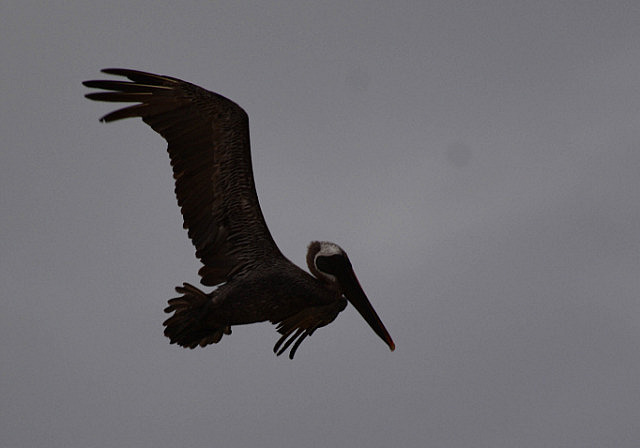
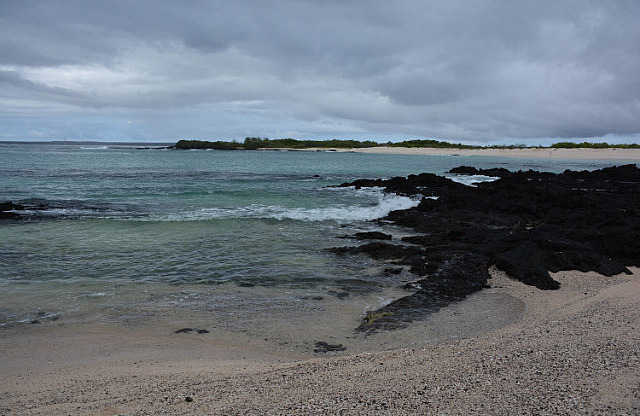
Our afternoon walk took us to Santa Cruz Island for another wet landing. This time there were fewer sea lions in evidence, though we saw ruddy turnstones hopping along and a bright female yellow warbler, much prettier than the somewhat duller male, and brown pelicans and blue-footed boobies dive-bombing for dinner.
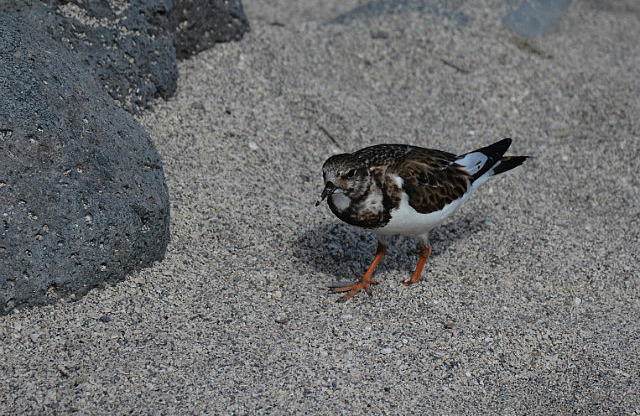
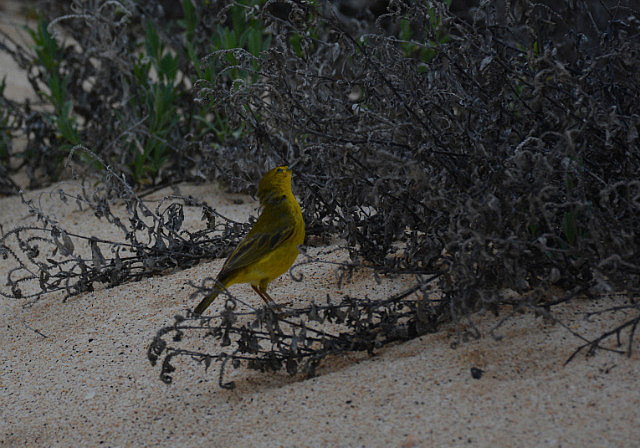
We also encountered the elusive ghost crab and a lagoon with five beautiful pink flamingos. These flamingos can fly long distances but choose to remain within the Galápagos archipelago.
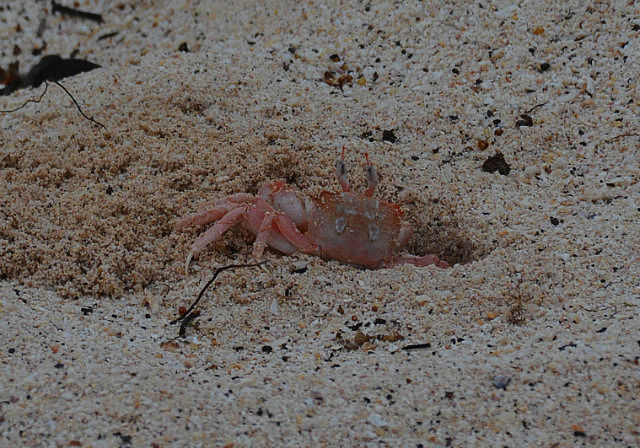
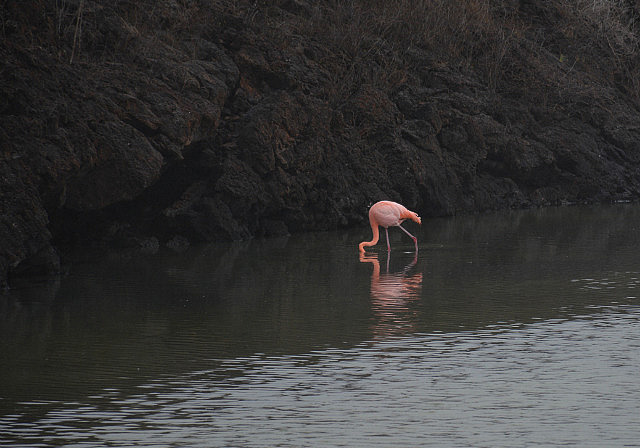
Flamingoes will start with human presence so we walked slowly and spoke in low voices, and soaked in the slow grace of these stunning birds.
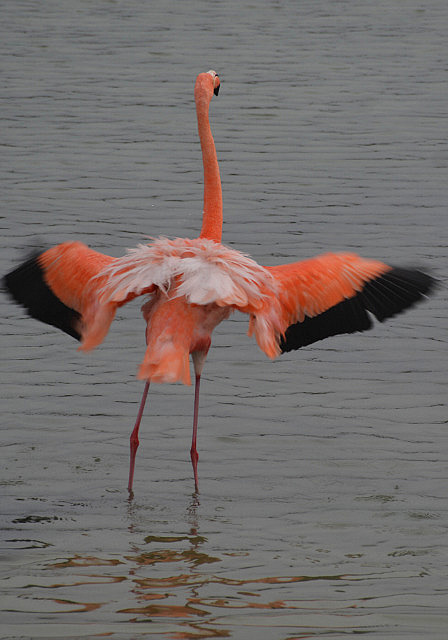
Their loud raucous call seemed out of place in this serene setting. The video shows a flamingo noshing and, at the end, calling.
https://www.flickr.com/photos/64513024@N07/21036132860/in/datetaken/
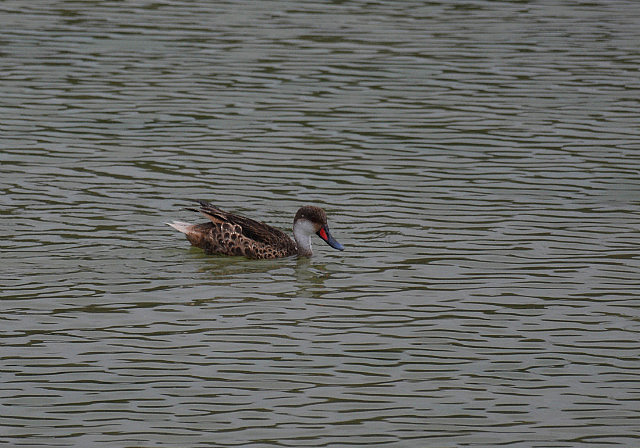
Joining the flamingoes were a pair of sedate white-cheeked pintail ducks.
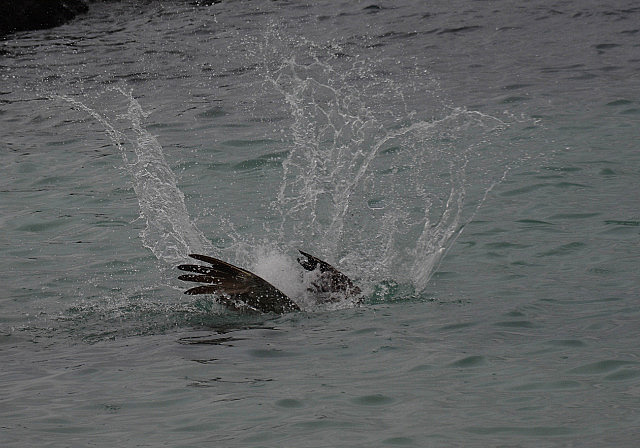
We snorkeled again, this time off the beach, but the water was quite murky from the surf. It was fun to note that our presence in the water, and the presence of another tour group of 36 people, did not deter the pelicans and blue-footed boobies from their search for food. They just dive-bombed among the snorkelers whenever they spied a fish in an open space.


Leave a Reply