On the Move

Meeting sea lions … and more!
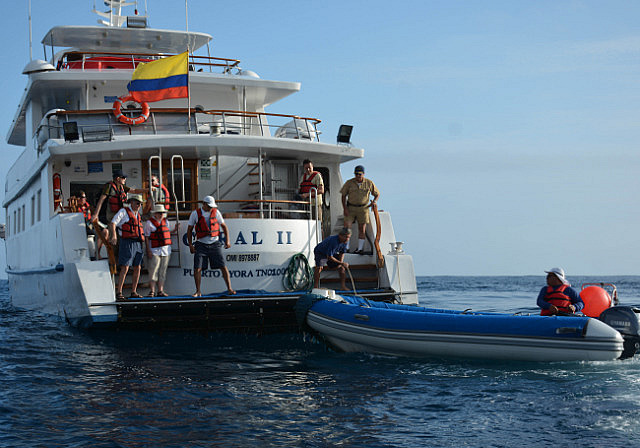
Waiting to board the dingy

Our two full days in the Galápagos Islands began with early wake-up calls to take advantage of the cooler mornings. First up would be a walk for a couple of hours, then back to the Coral II to change for an hour of snorkelling, then lunch and a quiet time.  Around 3:30 pm we would head back out for another long walk or a short walk and another snorkel.  In spite of the quiet time following lunch, this schedule proved demanding but oh so worthwhile.
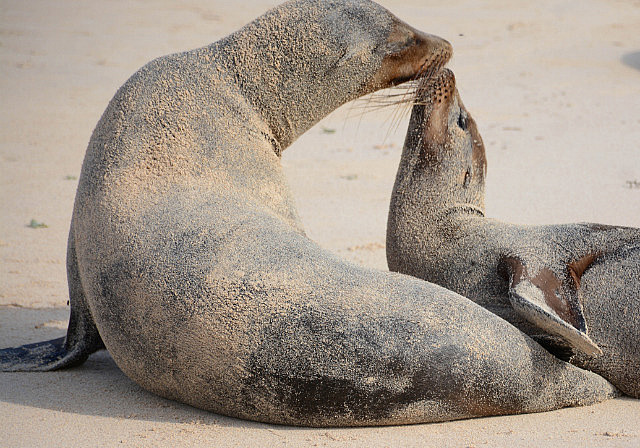
Mom and baby sea lion

Our first full day we visited Santa Fe Island, a volcanic island as are they all though the volcanoes on Santa Fe are no longer active, coming ashore in a wet landing.  Wet means we jumped into shallow water and waded ashore.  With dry landings we theoretically don’t get wet, but it depends on the sea and the landing itself – more on dry landings later!

On the beach we encountered dozens of sea lions lolling around in the sun or taking lazy swims off the beach.  These animals – and in fact all animals and most birds we saw – are not the least bit nervous with us around and usually ignore us altogether … except for one sea lion who came to say hello to my tour mate George.  While George was impressed, the sea lion clearly wasn’t!
Our "path" on Santa Fe Island
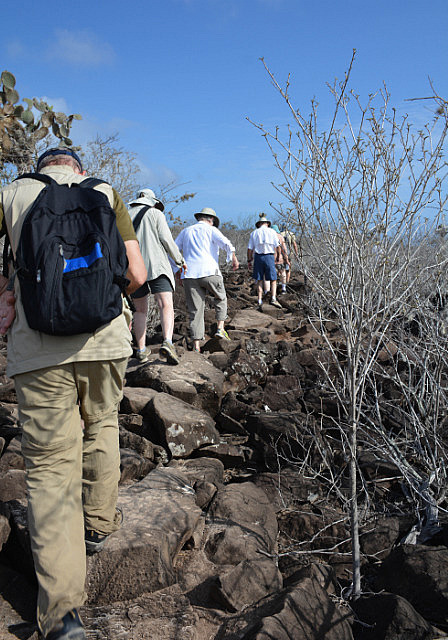
Our “path” on Santa Fe Island

We took an uneven rocky path up into the interior of the island.  This path was typical of the many paths we would take.  The Gapápagos has been left as much as possible in its natural state, so with the exception of black and white 18-inch-high posts marking the path, no alternations have been made to ease the lot of the tourist.   On our walk Marcella, our naturalist park ranger guide, pointed out animals and plants of interest. Iguanas are everywhere as long as there are cacti to munch on.  They don’t seem to mind the spines which are supposed to provide protection for the cactus as well shade for the delicate skin of the plant.
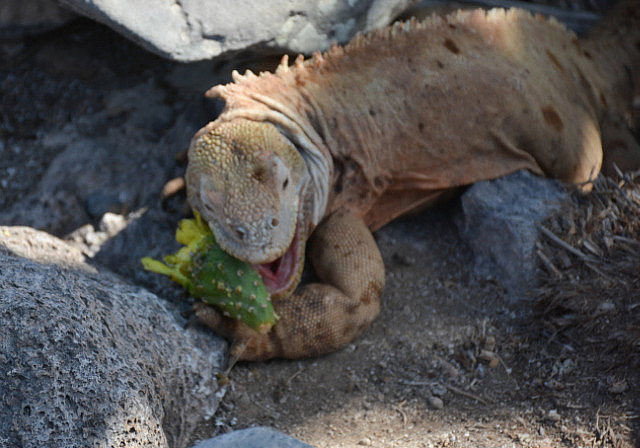
Young yellow iguana noshing on a piece of cactus

We also saw one of the very few blue-footed boobies that we would see this trip.  Usually they are everywhere, but most of them must have been at a family reunion on another island when we came through.
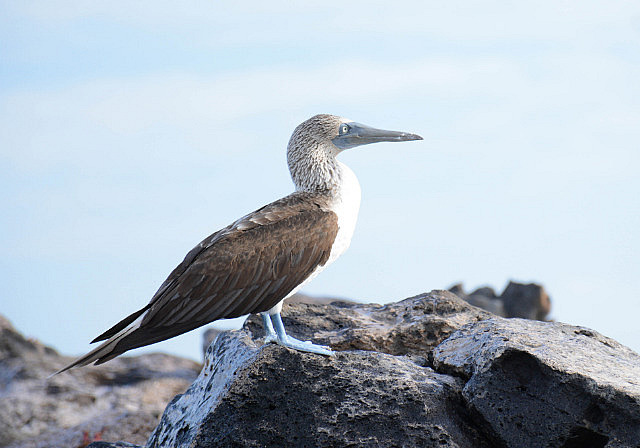
Blue-footed booby
Blue-footed booby

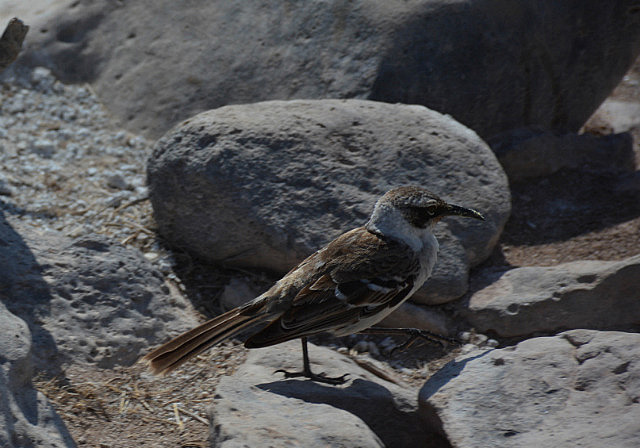
Back on the beach we saw a Galápagos dove chatting with a lava lizard, and a Galápagos mocking bird.
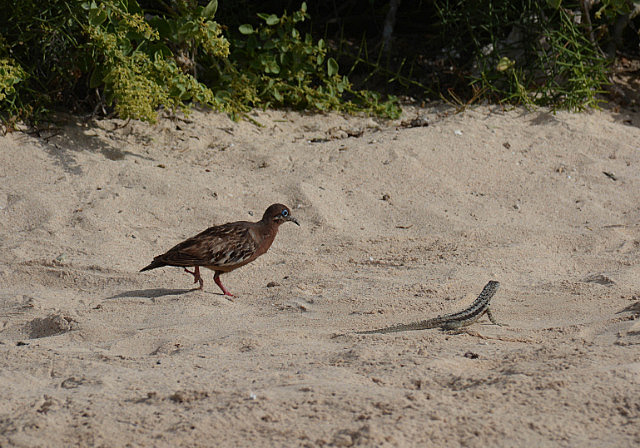
Galápagos dove with lava lizard
Galápagos mocking bird

These islands are teeming with wildlife; everywhere we turned Marcella had to warn us not to step on an iguana or a lizard or some other form of life we hadn’t noticed.  It’s not possible to explore the islands without a guide for a very good reason!
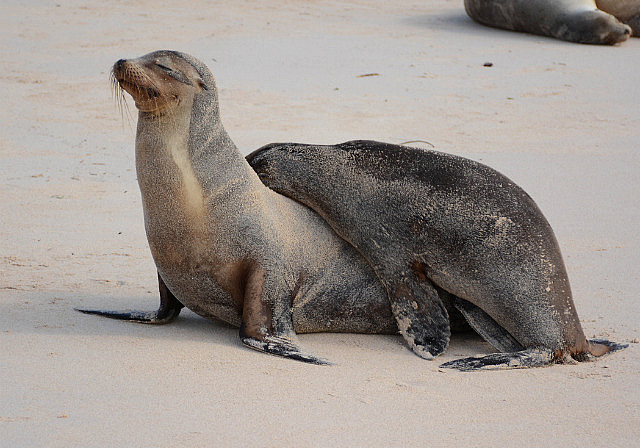
Pals!
Pals!
Getting ready to go snorkeling

Snorkelling proved an amazing experience. The dingy dropped us off the coast of Santa Fe Island where the water was clear and warm with rocks nearby to attract fish.  I have downloaded stock photos of some of the beautiful fish we saw.  (I took an underwater camera with me but won’t be able to get the film developed til I am home.)  A few sea lions played with us in the water; one swam very close by me and gave me quite a start.  Simon told us a sea lion nibbled on his fin!

View from South Plaza Island toward the Coral II

Following lunch and quiet time we made a dry landing on South Plaza Island. The dingies pulled up to an old cement pier so we could clamber out onto dry land.  However keep in mind that the sea is not calm and the dingies were moving while the pier was not.  Occasionally a wave crashed over the pier making the landing not quite as dry as it might have been!

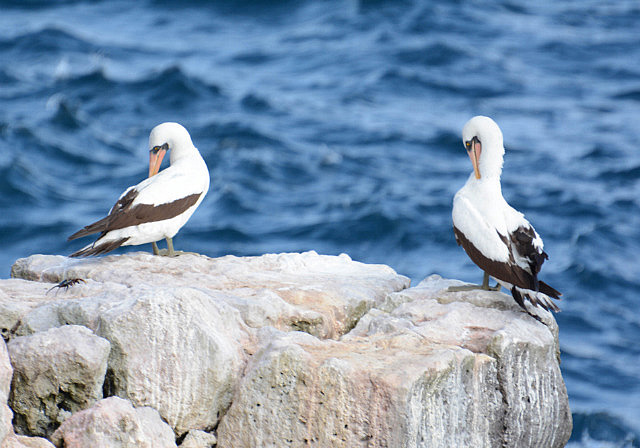
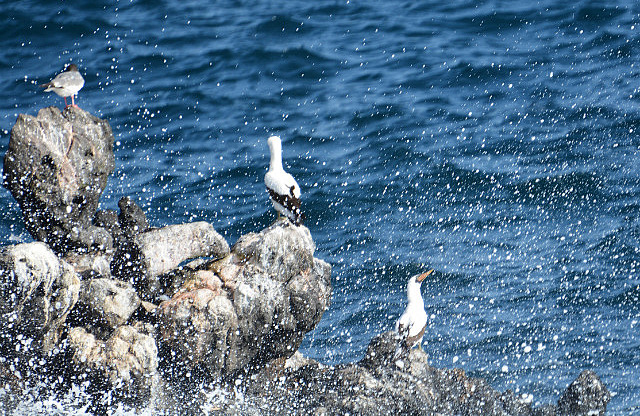
South Plaza Island is a bird-watcher’s paradise!  We saw many swallow-tail gulls, singles, mated pairs and the white fluffier immatures, as well as the black and white nazca boobies though they tended to stay on cliffs away from us.

Swallow-tail gull
Swallow-tail gull
Immature swallow-tail gull
3.1391709448.nazca-boobies
Nazca boobies
Swallow-tail gull and two Nazca boobies

There were cactus finches with their long toes that allow them to navigate cacti without being hurt by the spines and frigate birds that hovered in the air above us.

Cactus finch
Cactus finch

On the animal side of life, we saw more sea lions, one of which was nursing her pup.  Sea lions’s lives are much like ours.  The mom carries her baby for nine months before giving birth, and then the baby nurses for one year.  The difference is that the alpha male sea lion is responsible for teaching the pups how to swim;  how many dads do that?

Mother sea lion and nursing pup

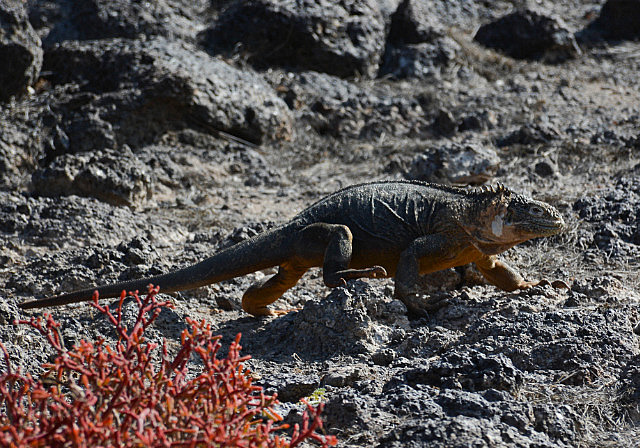
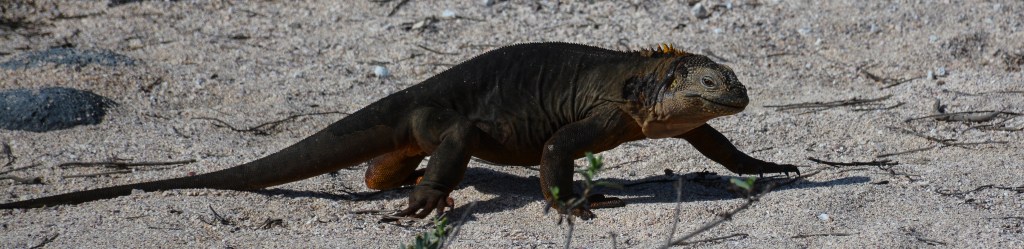
We also saw both marine and land iguanas almost everywhere we looked.

Marine iguana
Marine iguana
Marine iguana on the move

Sally LIghtfoot crabs are a common presence on the rocky shores of the islands.  A search of the web provides background for the crab’s name, though this may not be the absolute truth.  Sally Lightfoot was a nightclub dancer in the Caribbean who wore brightly coloured, skimpy costumes, and moved quickly and skillfully to avoid the roving hands of lonely mariners.  When some of those mariners landed in the Gapápagos Islands the bright colour and quick, lively movements of the crabs reminded them of Sally Lightfoot.

Sally Lightfoot crab

We also spotted a young marine iguana with its tail curving up into the air.  Marcella told us that scientists have yet to determine why some of these reptiles exhibit this behaviour.

Juvenile iguana with tail in air

I will leave you with a photo I couldn’t have taken had I tried.  Somehow I accidentally caught this nazca booby at a very delicate moment.  🙂

TMI with a Nazca booby

Cuentos más sorprendente a venir mañana!  Ciao.

Leave a Reply

Waiting to board the dingy

Our two full days in the Galápagos Islands began with early wake-up calls to take advantage of the cooler mornings. First up would be a walk for a couple of hours, then back to the Coral II to change for an hour of snorkelling, then lunch and a quiet time.  Around 3:30 pm we would head back out for another long walk or a short walk and another snorkel.  In spite of the quiet time following lunch, this schedule proved demanding but oh so worthwhile.

Mom and baby sea lion

Our first full day we visited Santa Fe Island, a volcanic island as are they all though the volcanoes on Santa Fe are no longer active, coming ashore in a wet landing.  Wet means we jumped into shallow water and waded ashore.  With dry landings we theoretically don’t get wet, but it depends on the sea and the landing itself – more on dry landings later!

On the beach we encountered dozens of sea lions lolling around in the sun or taking lazy swims off the beach.  These animals – and in fact all animals and most birds we saw – are not the least bit nervous with us around and usually ignore us altogether … except for one sea lion who came to say hello to my tour mate George.  While George was impressed, the sea lion clearly wasn’t!

Our "path" on Santa Fe Island
Our “path” on Santa Fe Island

We took an uneven rocky path up into the interior of the island.  This path was typical of the many paths we would take.  The Gapápagos has been left as much as possible in its natural state, so with the exception of black and white 18-inch-high posts marking the path, no alternations have been made to ease the lot of the tourist.   On our walk Marcella, our naturalist park ranger guide, pointed out animals and plants of interest. Iguanas are everywhere as long as there are cacti to munch on.  They don’t seem to mind the spines which are supposed to provide protection for the cactus as well shade for the delicate skin of the plant.

Young yellow iguana noshing on a piece of cactus

We also saw one of the very few blue-footed boobies that we would see this trip.  Usually they are everywhere, but most of them must have been at a family reunion on another island when we came through.

Blue-footed booby
Blue-footed booby

Back on the beach we saw a Galápagos dove chatting with a lava lizard, and a Galápagos mocking bird.

Galápagos dove with lava lizard
Galápagos mocking bird

These islands are teeming with wildlife; everywhere we turned Marcella had to warn us not to step on an iguana or a lizard or some other form of life we hadn’t noticed.  It’s not possible to explore the islands without a guide for a very good reason!
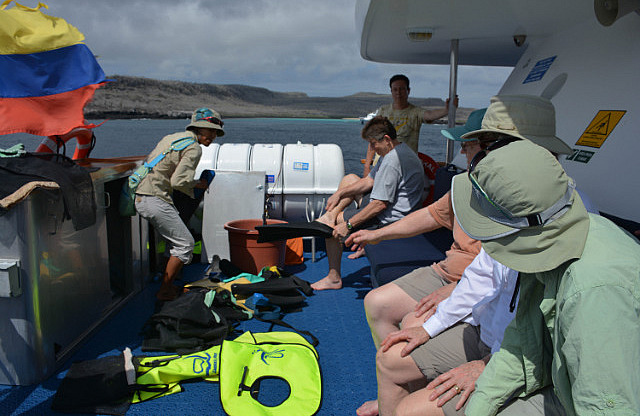
Pals!
Pals!
Getting ready to go snorkeling

Snorkelling proved an amazing experience. The dingy dropped us off the coast of Santa Fe Island where the water was clear and warm with rocks nearby to attract fish.  I have downloaded stock photos of some of the beautiful fish we saw.  (I took an underwater camera with me but won’t be able to get the film developed til I am home.)  A few sea lions played with us in the water; one swam very close by me and gave me quite a start.  Simon told us a sea lion nibbled on his fin!
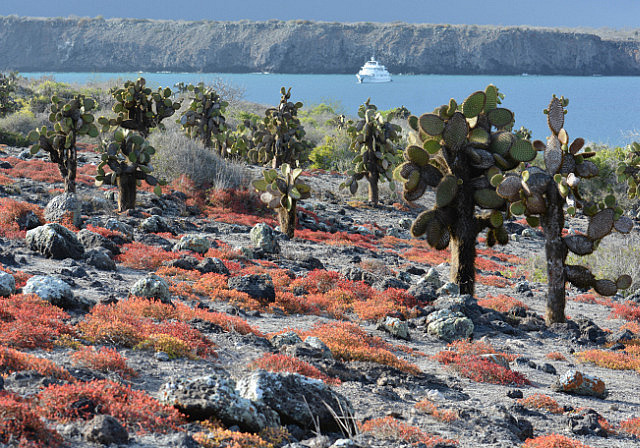
View from South Plaza Island toward the Coral II

Following lunch and quiet time we made a dry landing on South Plaza Island. The dingies pulled up to an old cement pier so we could clamber out onto dry land.  However keep in mind that the sea is not calm and the dingies were moving while the pier was not.  Occasionally a wave crashed over the pier making the landing not quite as dry as it might have been!

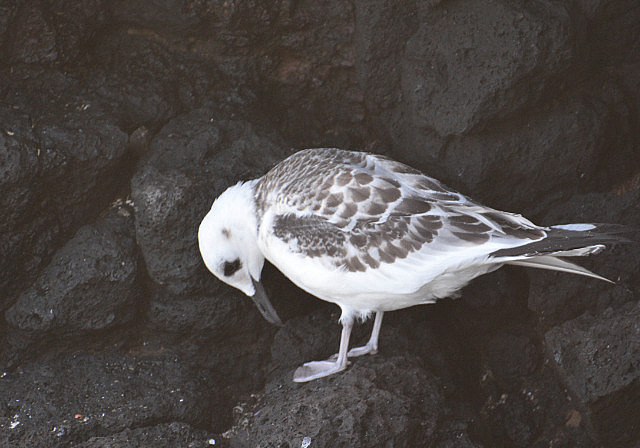
South Plaza Island is a bird-watcher’s paradise!  We saw many swallow-tail gulls, singles, mated pairs and the white fluffier immatures, as well as the black and white nazca boobies though they tended to stay on cliffs away from us.
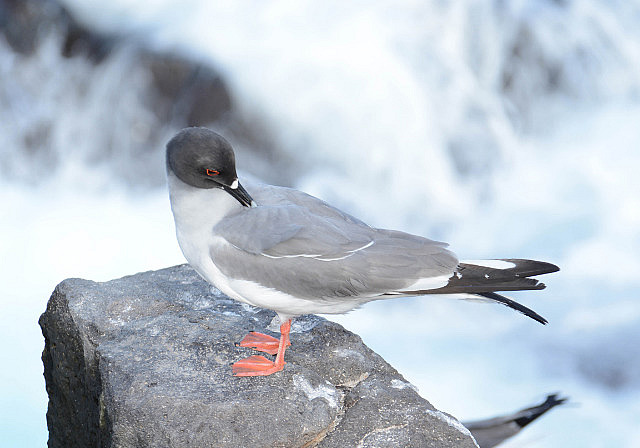
Swallow-tail gull
Swallow-tail gull
Immature swallow-tail gull
3.1391709448.nazca-boobies
Nazca boobies
Swallow-tail gull and two Nazca boobies

There were cactus finches with their long toes that allow them to navigate cacti without being hurt by the spines and frigate birds that hovered in the air above us.
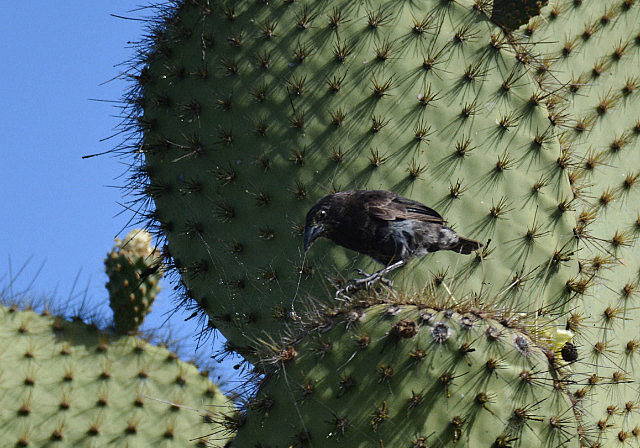
Cactus finch
Cactus finch

On the animal side of life, we saw more sea lions, one of which was nursing her pup.  Sea lions’s lives are much like ours.  The mom carries her baby for nine months before giving birth, and then the baby nurses for one year.  The difference is that the alpha male sea lion is responsible for teaching the pups how to swim;  how many dads do that?
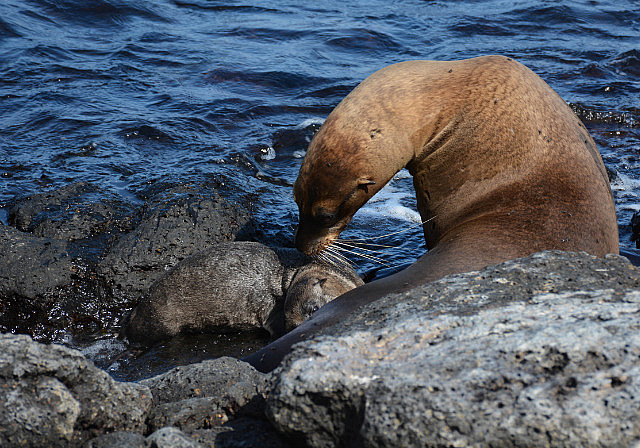
Mother sea lion and nursing pup

We also saw both marine and land iguanas almost everywhere we looked.
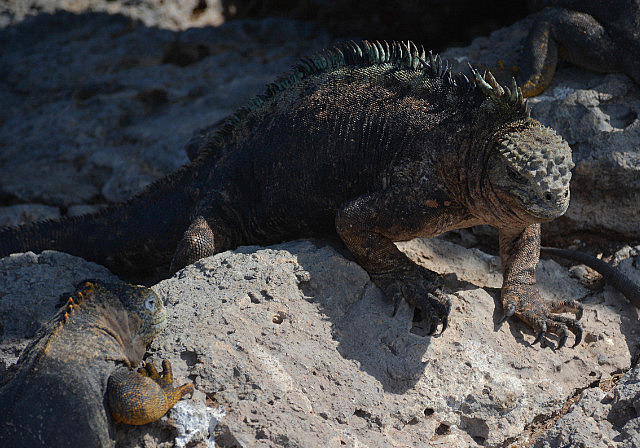
Marine iguana
Marine iguana
Marine iguana on the move

Sally LIghtfoot crabs are a common presence on the rocky shores of the islands.  A search of the web provides background for the crab’s name, though this may not be the absolute truth.  Sally Lightfoot was a nightclub dancer in the Caribbean who wore brightly coloured, skimpy costumes, and moved quickly and skillfully to avoid the roving hands of lonely mariners.  When some of those mariners landed in the Gapápagos Islands the bright colour and quick, lively movements of the crabs reminded them of Sally Lightfoot.
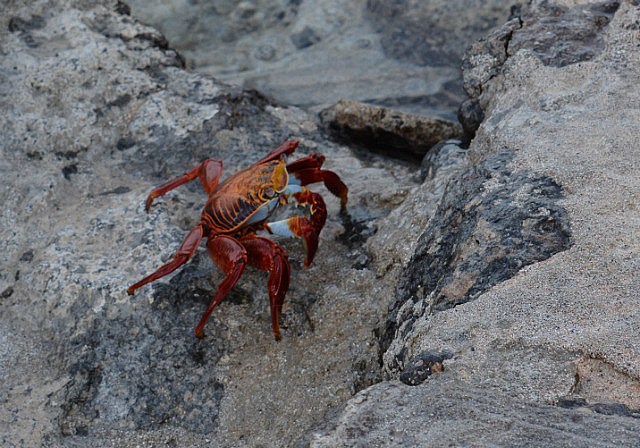
Sally Lightfoot crab

We also spotted a young marine iguana with its tail curving up into the air.  Marcella told us that scientists have yet to determine why some of these reptiles exhibit this behaviour.
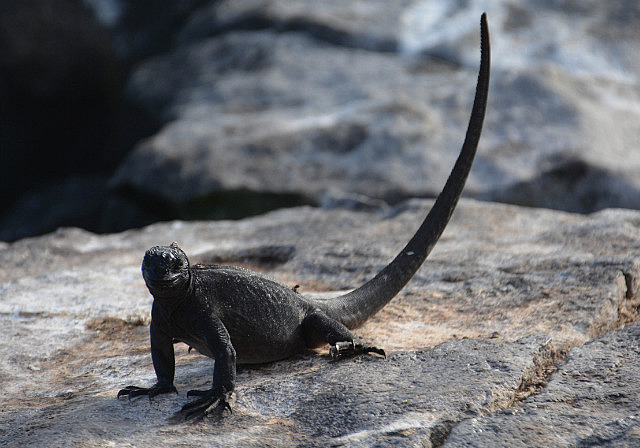
Juvenile iguana with tail in air

I will leave you with a photo I couldn’t have taken had I tried.  Somehow I accidentally caught this nazca booby at a very delicate moment.  🙂
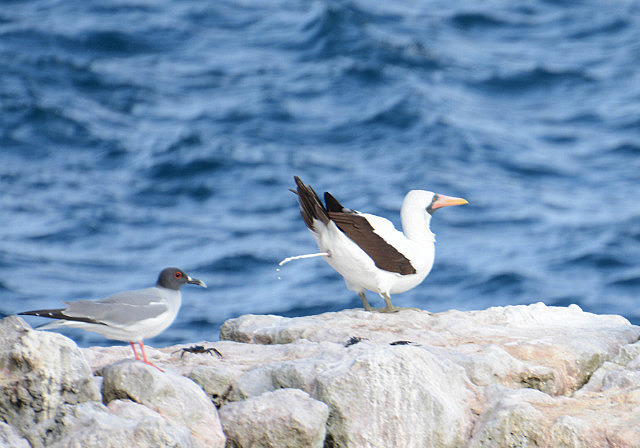
TMI with a Nazca booby

Cuentos más sorprendente a venir mañana!  Ciao.