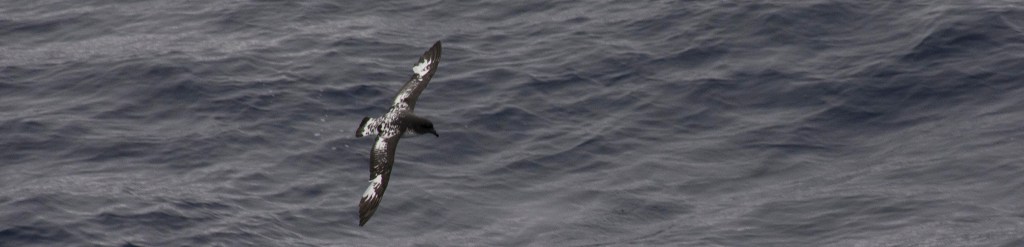
The Drake Passage: 59.1 ° S, 62.4° W, 3C (°37F)
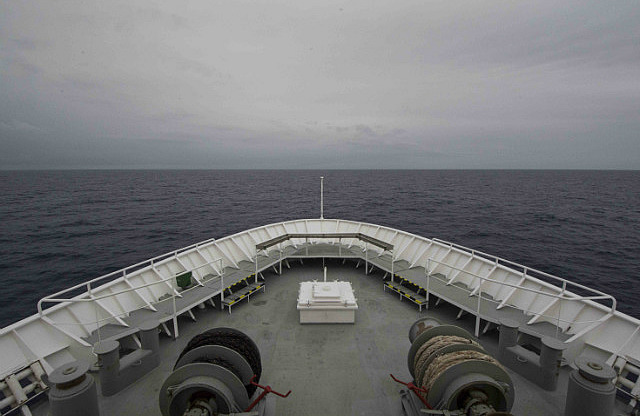
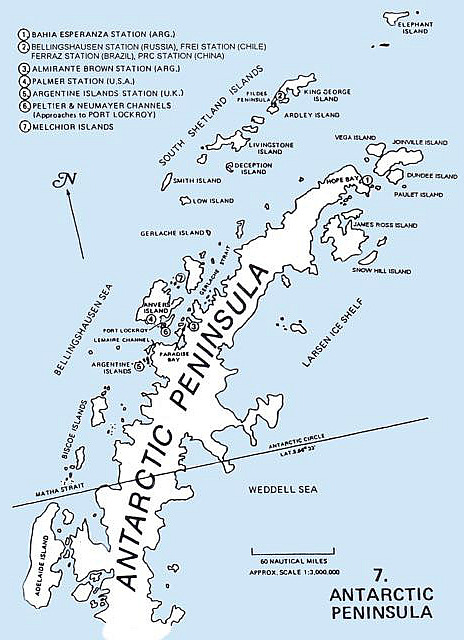 Setting off, DAY 4! As I noted in my first post, it’s not that easy to visit to Antarctica. We left Ushuaia last night around 8:00 pm, and have spent today crossing the Drake Lake – known by cartographers as the Drake Passage, but when the winds are light the Passage becomes quite calm. We are enjoying a very easy voyage.
We expect to reach the South Shetland Islands tomorrow afternoon, and at last disembark to introduce ourselves to the local penguin population. One of the photographic instructors advised us not to get too excited and connected to our cameras at this first encounter as we will see “a crapload of penguins.” Yay! Yesterday in the Beagle Channel provided good picturing-taking practice for us – photo courtesy of Shirley Tilghman.
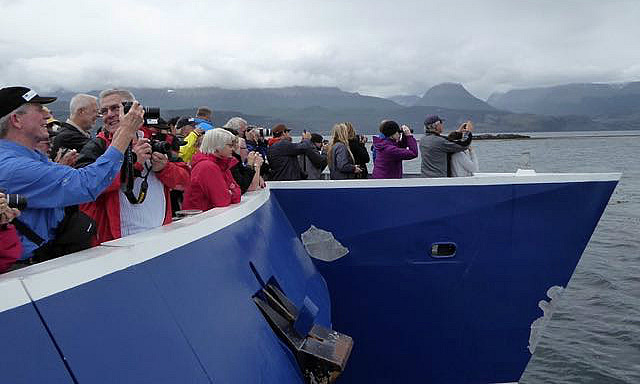
What does one do all day on ship? Lindblad Expeditions has discovered the perfect mix of informational gatherings and downtime. This morning there was a photography session with breakout groups for beginner, intermediate and advanced photographers. I attended the intermediate group and soon discovered that with those relative skill levels, I am of the advanced species! I learned a few good tricks for Antarctic photography and hope to put them to good use.
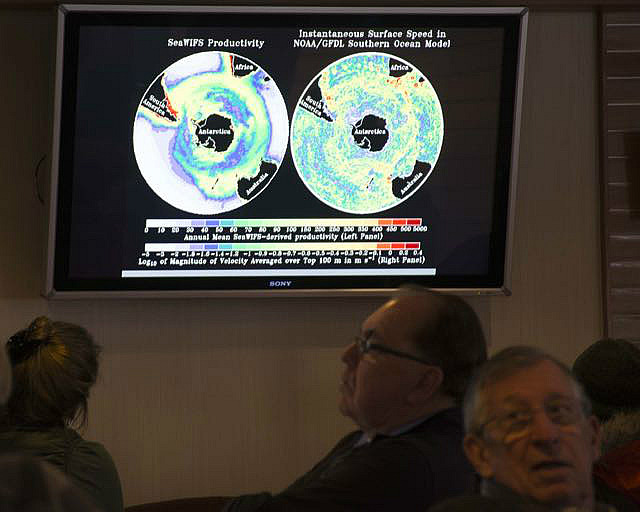
This afternoon one of the naturalists gave a fascinating talk about the evolution and identification of Antarctic sea birds. For information sessions and lectures we gather in the lounge, large enough to seat us all in comfortable groupings, with five or six large screen monitors mounted around the room so everyone can see the slide shows.
The three most interesting things I learned this afternoon: first, the far north and far south seas are the most productive for sea birds because the water is cold and retains a lot of gas. Algae and krill, two basic food groups for sea birds, require that gas to live, hence lots of food, lots of birds.
Two, all birds including penguins have oil glands under their tails. They use their beaks to squeeze out a bit of oil with which they groom themselves – quite a feat to reach their backs and the tops of their heads with no arms or hands. We were counseled to be patient and watch the process if the opportunity arises.
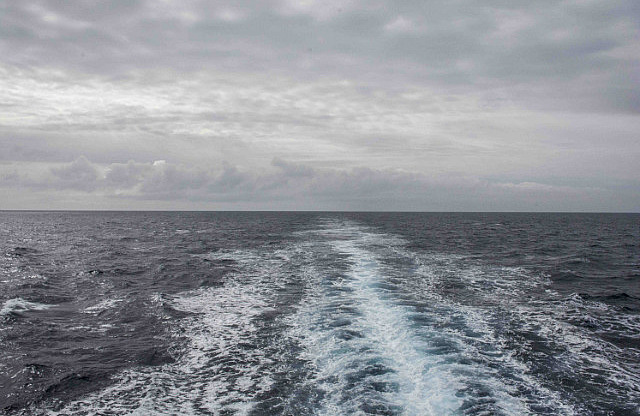
Three, penguins’ black and white coloration is a defense against predators. When on water, they blend in with the ocean when viewed from above while they merge with the bright sky when viewed from below. The main penguin predator is the killer whale. Following the talk, we congregated on the back deck of the ship and watched white-chin petrels glide to and fro over our wake.
 Following a delicious dinner Shirley and I donned our parkas and ventured outside to look for albatrosses and giant petrels. We were not disappointed! The temperature has dropped from about 5.5°C (41.5°F) to 3°C (37°F) within a few hours. We have reached the Antarctic convergence where the northern body of warmer water meets the southern body of colder water creating a drop in both water and air temperature going south.
See you tomorrow hopefully with some penguin photos! Stay warm!


Leave a Reply