On the Move

Arches National Park, Utah
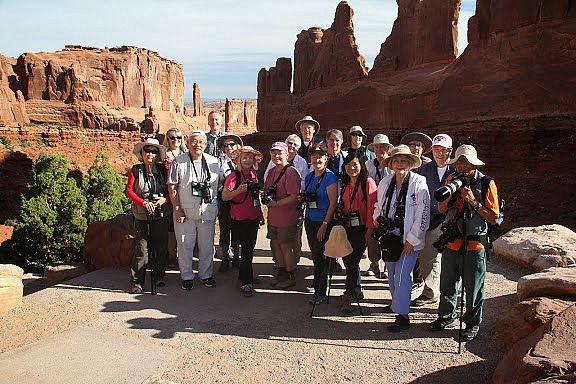
Road Scholar tour group

A hot and sunny Saturday in Moab, Utah. What better way to spend the day than hiking in Arches National Park with my Road Scholar group.  And so I did.  The name of the park derives from the many natural arches found here.  But there is a lot more than arches in Arches National Park.

https://www.flickr.com/photos/64513024@N07/21293006396/in/datetaken/

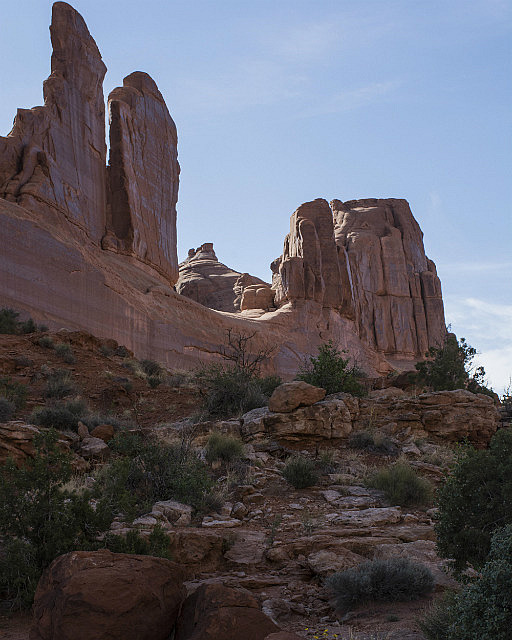
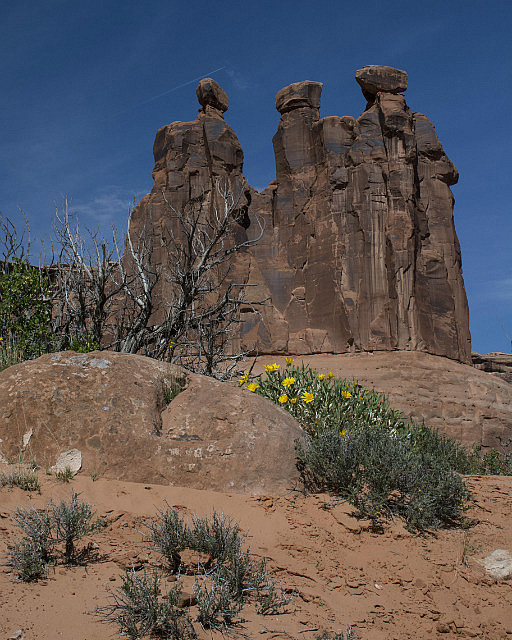
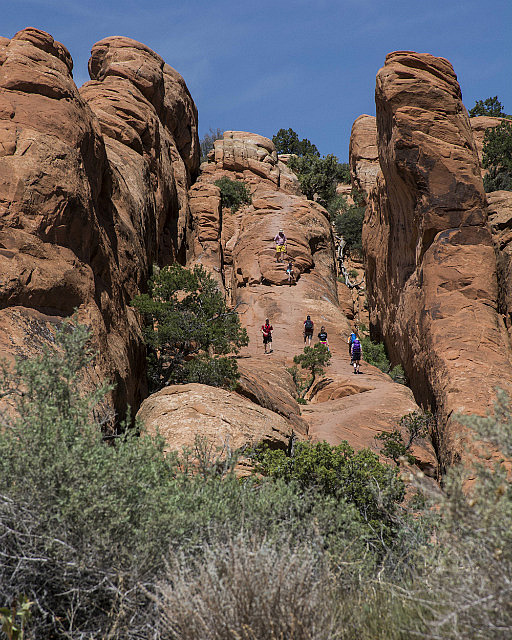
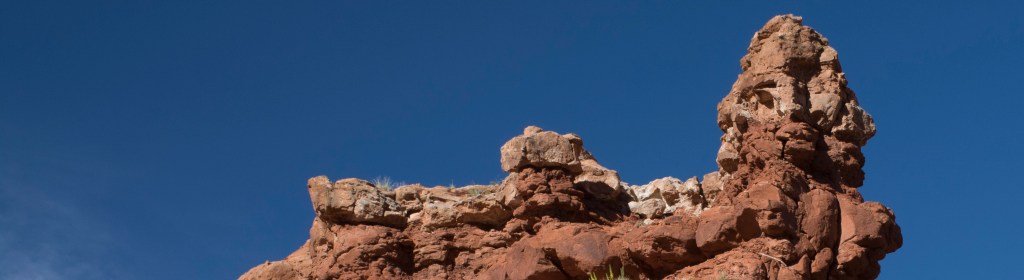
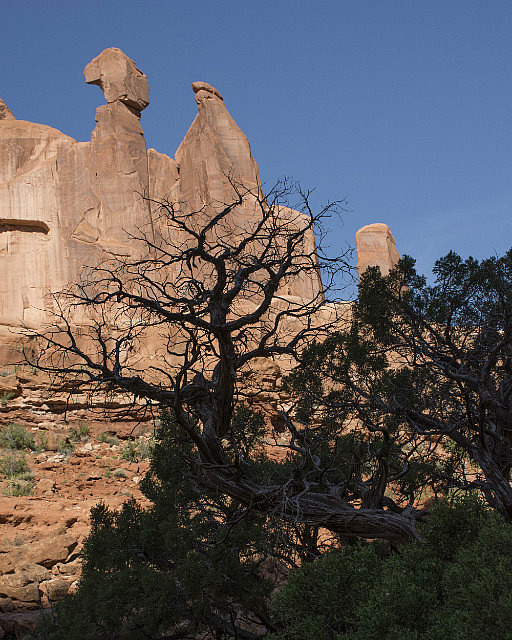
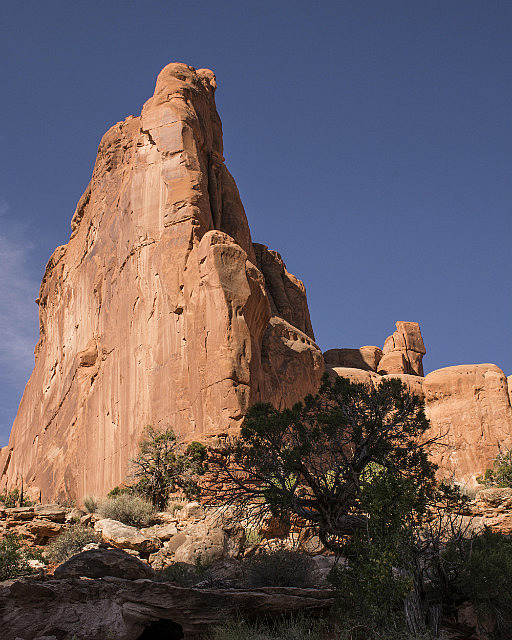
Bright and early we began our day with a 1.5 kilometre (1 mile) hike along Park Avenue.  No shops for browsing on this Park Avenue.  Instead it is a wide wash with fantastically shaped rock formations on both sides.  Some of them have names – for example, the Three Gossips – others not.  What was new for us was the presence of wildflowers in this desert landscape.
Is that rock really going to stay there?
Whose faces are t hose?
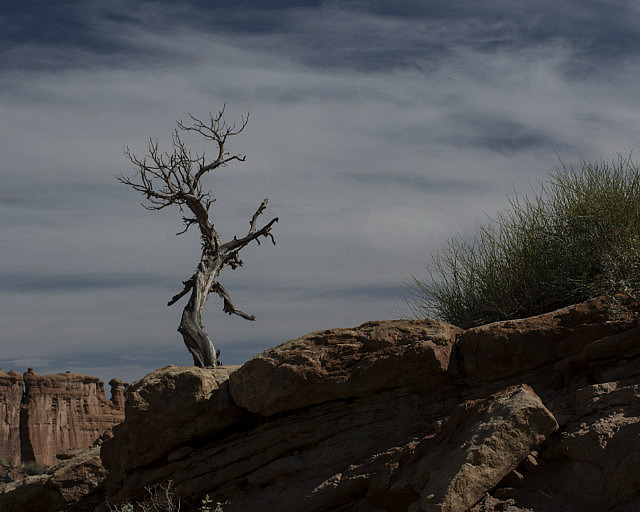
Twisted tree
Twisted tree
More Park Avenue
More Park Avenue
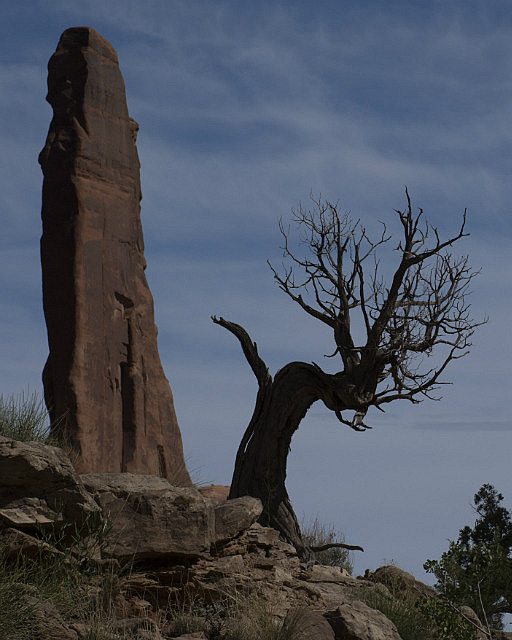
Another twisted tree
The Three Gossips
The Three Gossips

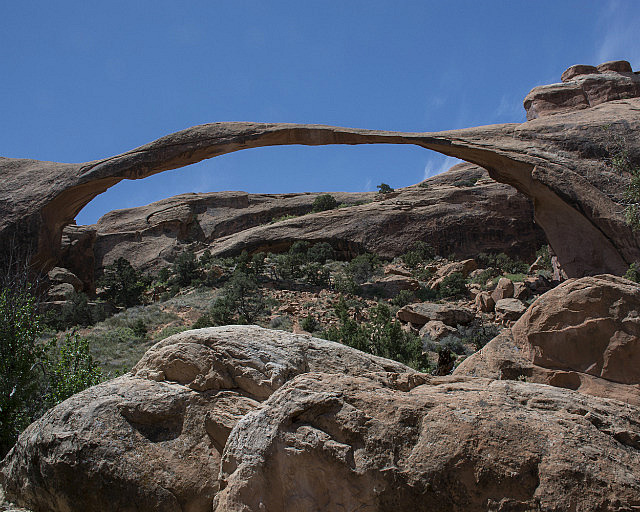
Following the Park Avenue hike, we trekked 2 kilometres (1.6 miles) to Landscape Arch, the largest natural arch on earth at a span of 393 meters (290 feet), a height of 24 meters (77.5 feet), and an opening breadth of 90 meters (295 feet).  The path ended at the arch though there was an additional small hike available.  We chose not to continue; see the path not taken photo!

Landscape Arch
Landscape Arc
The road not taken
The road not taken
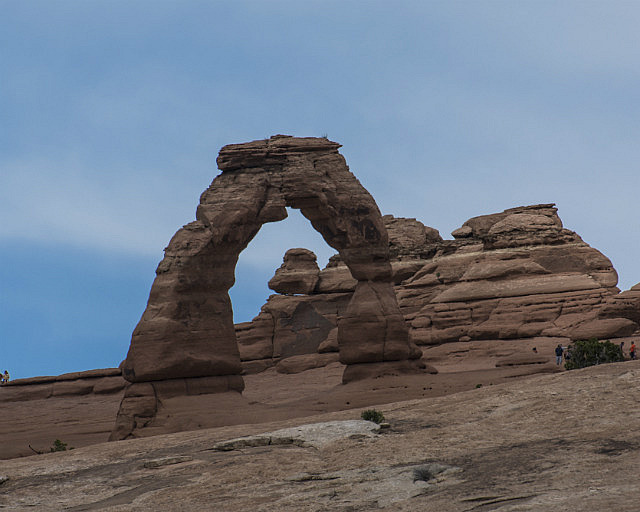
Delicate Arch
Delicate Arch

We enjoyed a box lunch at a picnic site in the park, then headed to the Delicate Arch.  This is the iconic rock formation found on Utah license plates and much marketing information about Utah’s national parks.  The sun chose not to cooperate and shine on the arch so we could take unforgettable photos.  Nevertheless this arch was a delight to behold.

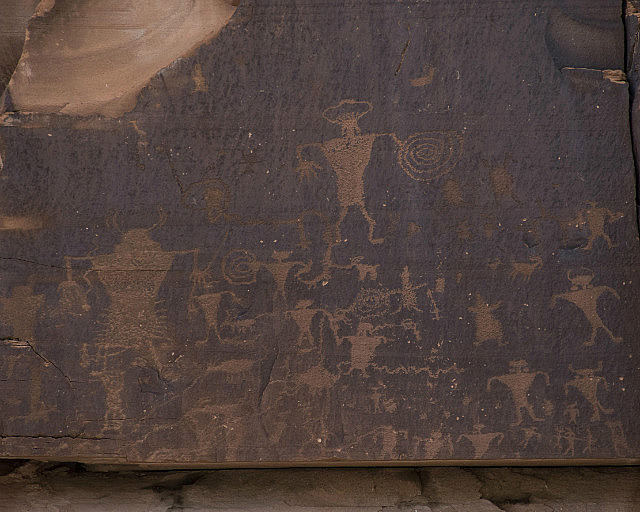
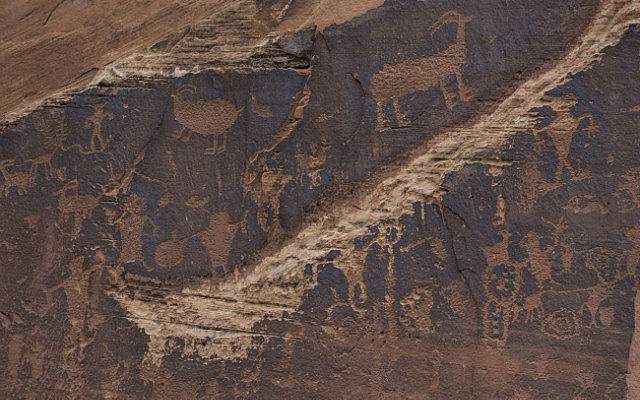
We rounded out this busy day with a visit to “Indian writings” as the sign post described.  Petroglyphs – pictograms carved into rock faces – extend from Utah through Colorado and Arizona, relics of ancient civilizations.  These petroglyphs on the walls bordering the Colorado River come from two civilizations:  the Archaic (6,000-1,000 BC) and the Fremont (450-1,300 AD) cultural eras.  They are gradually disappearing as parts of the wall face crack and fall off with the forces of erosion.

Archaic peoples rock art
Fremont peoples rock art

Arches National Park is considerably warmer than Bryce Canyon so multitudes of desert flowers were on display.  I am a sucker for photographs of flowers.  I leave you with some of mine.  See you tomorrow!

Scarlet Globemallow
Scarlet Globemallow
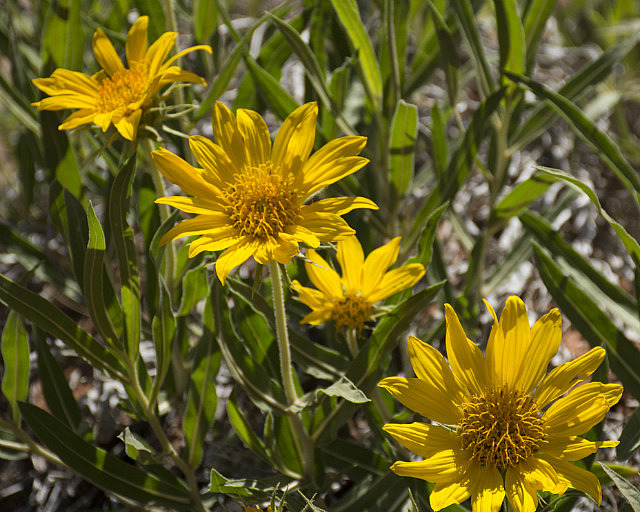
Sunflowers
Sunflowers
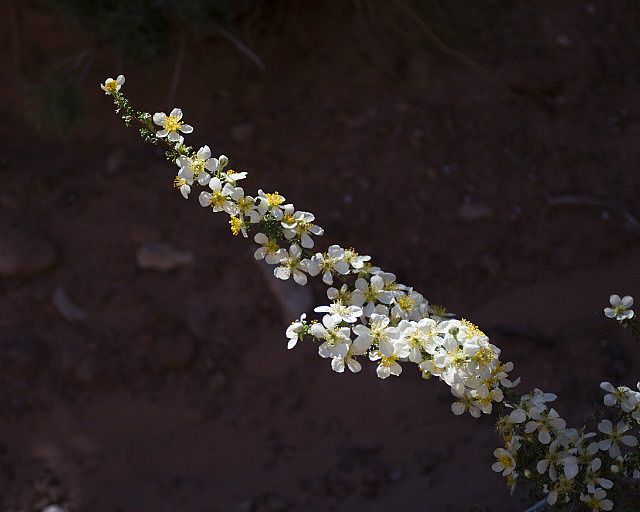
Cliff rose
Cliff rose
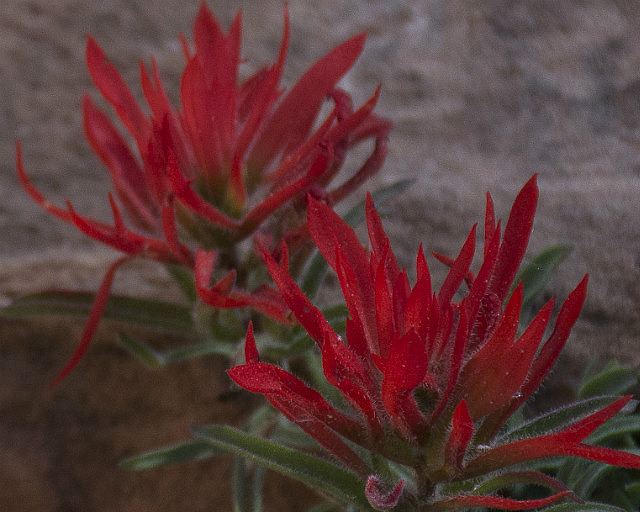
Indian paintbrush
Indian paintbrush
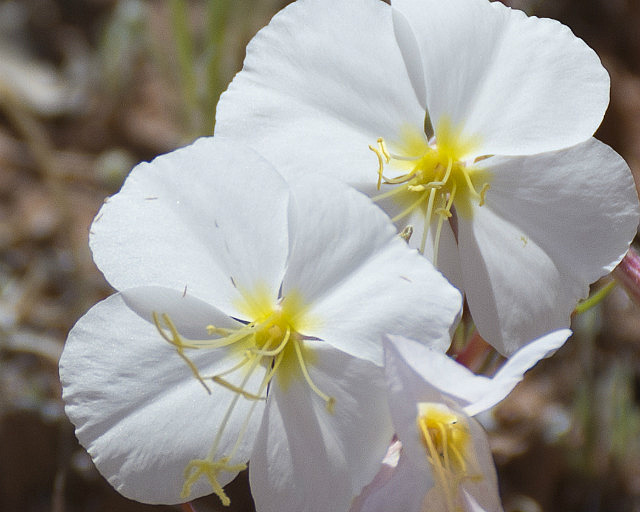
Evening primrose
Evening primrose
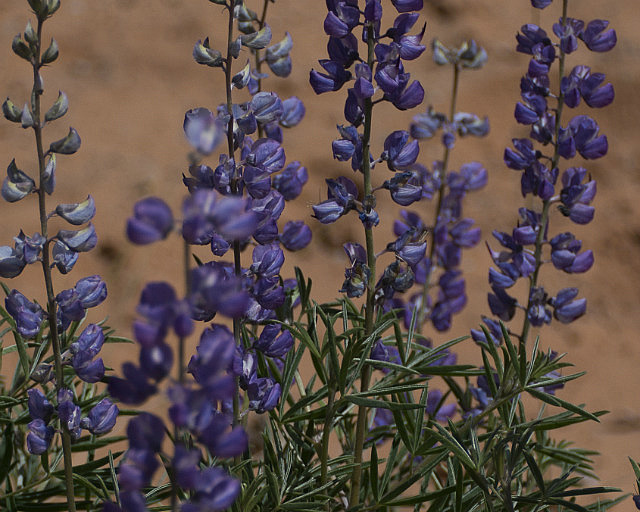
Silvery lupine
Silvery lupine
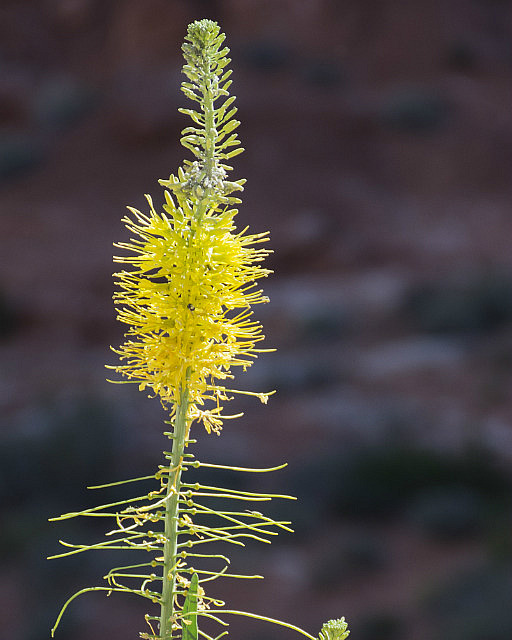
Prince's plume
Prince’s plume
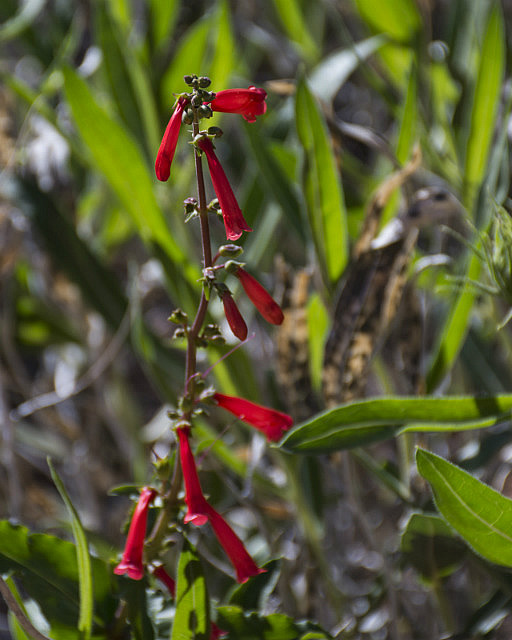
Firecracker penstemon

Leave a Reply

Road Scholar tour group

A hot and sunny Saturday in Moab, Utah. What better way to spend the day than hiking in Arches National Park with my Road Scholar group.  And so I did.  The name of the park derives from the many natural arches found here.  But there is a lot more than arches in Arches National Park.

https://www.flickr.com/photos/64513024@N07/21293006396/in/datetaken/

Bright and early we began our day with a 1.5 kilometre (1 mile) hike along Park Avenue.  No shops for browsing on this Park Avenue.  Instead it is a wide wash with fantastically shaped rock formations on both sides.  Some of them have names – for example, the Three Gossips – others not.  What was new for us was the presence of wildflowers in this desert landscape.
Is that rock really going to stay there?
Whose faces are t hose?
Twisted tree
Twisted tree
More Park Avenue
More Park Avenue
Another twisted tree
The Three Gossips
The Three Gossips

Following the Park Avenue hike, we trekked 2 kilometres (1.6 miles) to Landscape Arch, the largest natural arch on earth at a span of 393 meters (290 feet), a height of 24 meters (77.5 feet), and an opening breadth of 90 meters (295 feet).  The path ended at the arch though there was an additional small hike available.  We chose not to continue; see the path not taken photo!
Landscape Arch
Landscape Arc
The road not taken
The road not taken
Delicate Arch
Delicate Arch

We enjoyed a box lunch at a picnic site in the park, then headed to the Delicate Arch.  This is the iconic rock formation found on Utah license plates and much marketing information about Utah’s national parks.  The sun chose not to cooperate and shine on the arch so we could take unforgettable photos.  Nevertheless this arch was a delight to behold.

We rounded out this busy day with a visit to “Indian writings” as the sign post described.  Petroglyphs – pictograms carved into rock faces – extend from Utah through Colorado and Arizona, relics of ancient civilizations.  These petroglyphs on the walls bordering the Colorado River come from two civilizations:  the Archaic (6,000-1,000 BC) and the Fremont (450-1,300 AD) cultural eras.  They are gradually disappearing as parts of the wall face crack and fall off with the forces of erosion.
Archaic peoples rock art
Fremont peoples rock art

Arches National Park is considerably warmer than Bryce Canyon so multitudes of desert flowers were on display.  I am a sucker for photographs of flowers.  I leave you with some of mine.  See you tomorrow!
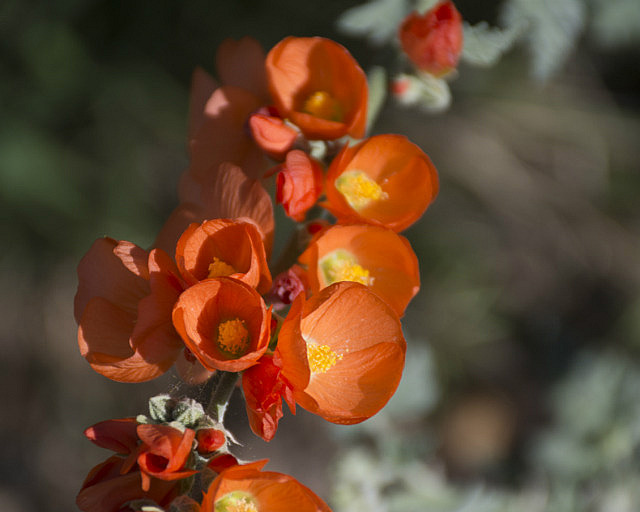
Scarlet Globemallow
Scarlet Globemallow
Sunflowers
Sunflowers
Cliff rose
Cliff rose
Indian paintbrush
Indian paintbrush
Evening primrose
Evening primrose
Silvery lupine
Silvery lupine
Prince's plume
Prince’s plume
Firecracker penstemon