On the Move

Bryce Canyon and Arches National Parks, Utah
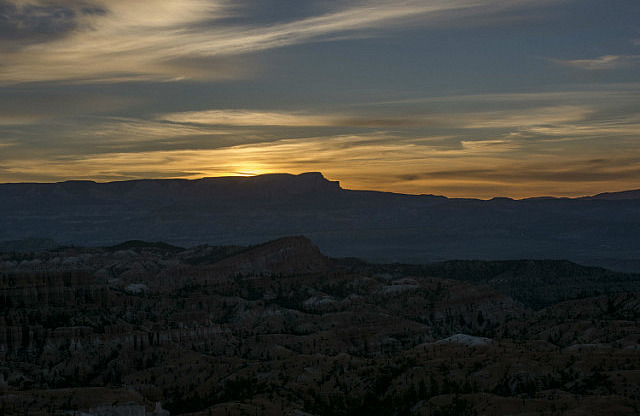
Sunrise over Navajo Mountain

Sunrise shoot, Bryce Canyon National Park, 3°C (37°F). Sunset shoot, Arches National Park, 28°C (83°F).  From hoodoos to arches, today has been one of beauty and grace.
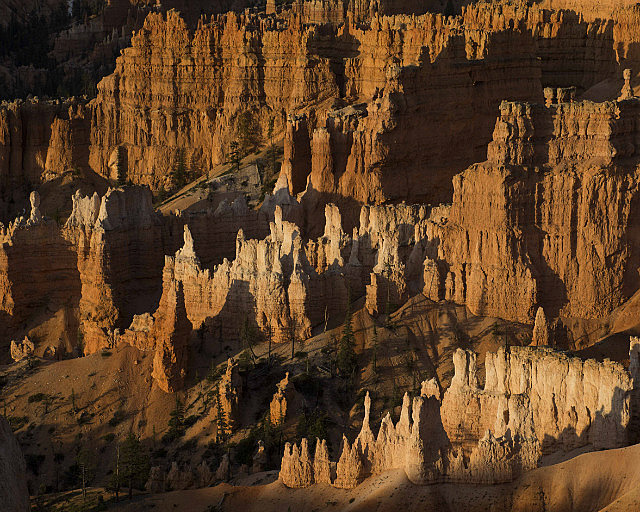
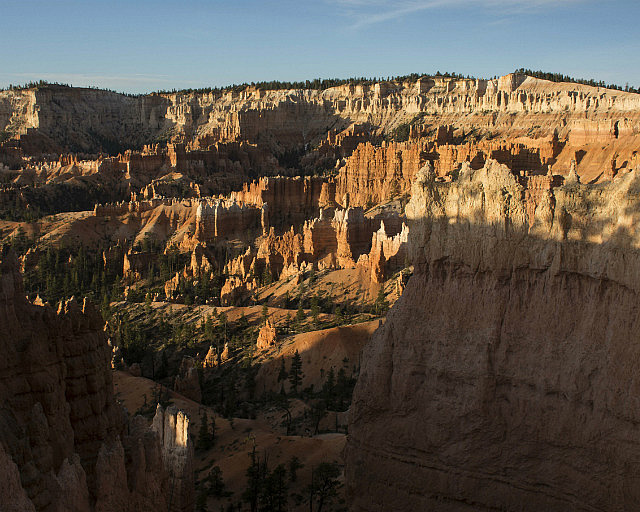
We left our hotel at 6:15 am to catch sunrise at Sunrise Point – how appropriate – in Bryce Canyon.  Last evening’s sunset photos were disappointing; I looked forward to the golden light of sunrise.  I was not disappointed and soon forgot how inadequately I had packed for this morning’s outing.  The rock literally glowed and at times reflected the sunlight onto other hoodoos.
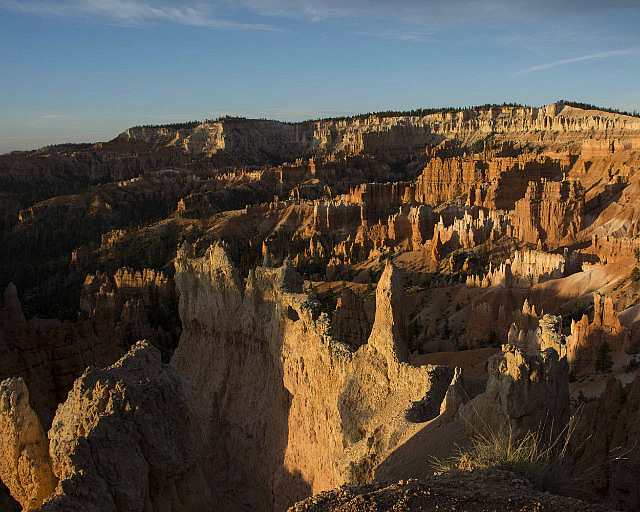
Sunrise at Sunrise Point
Group member further down the path
Sunrise at Sunrise Point
More sunrise - Sunrise Point
More sunrise – Sunrise Point
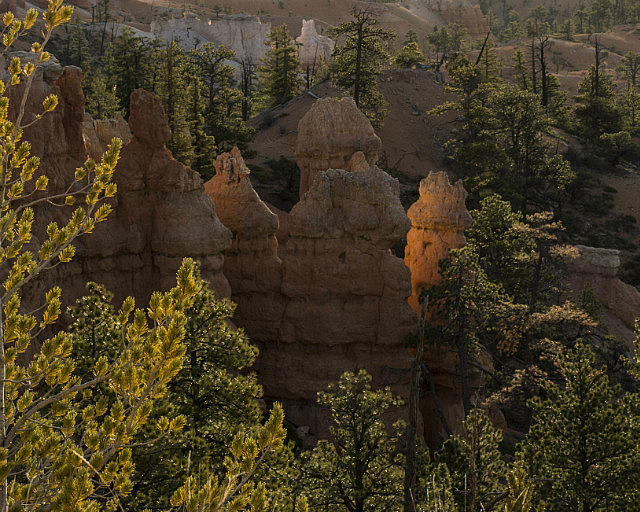
Reflected light from one hoodoo onto another
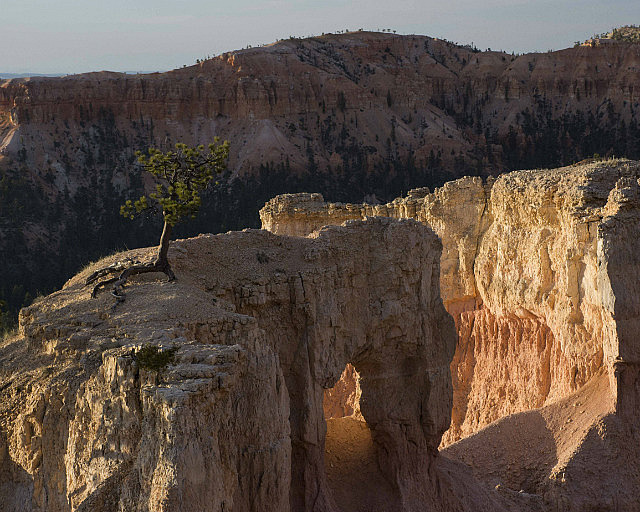
Little tree and "window" at Sunrise Point
Little tree and “window” at Sunrise Point
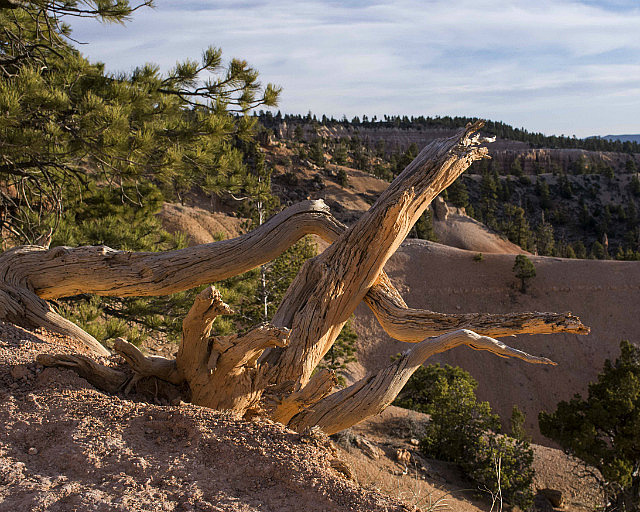
Former tree at Sunrise Point
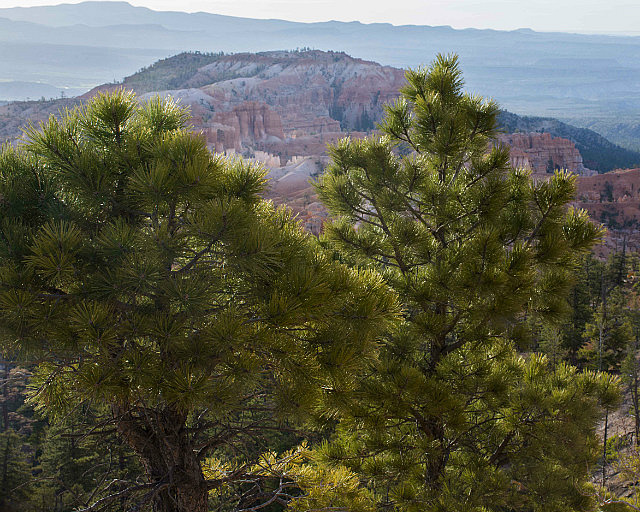
Early morning light on Ponderosa pine


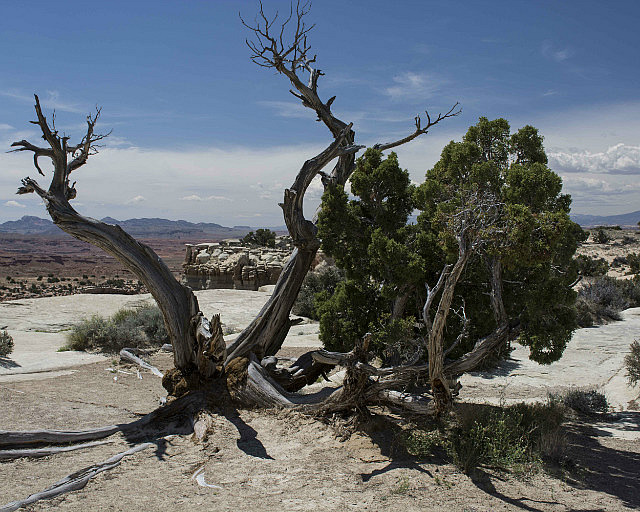
Desert view on way to Moab

The drive from Bryce Canyon to Moab took us over the watershed divide to the San Rafael Swell.  This area is very much dessert as the Tushat Mountains block rain clouds from the west.  I took this photo at a rest stop along the way.  A short time later we stopped for lunch in Green River.  Along the river bank is lush growth, but the dessert still rules this region of southern Utah.

Arches National Park is as different from Zion and Bryce Canyon as those two are of each other.  Again, the colour of the rock is similar, but the rock formations vary greatly.  As the name infers, this is a park with arches – arches caused by the gradual collapse of parts of the salt underpinning, leading to holes that through erosion become arches.  An arch must have a minimum 1 metre (3 foot) opening, either height or width, to be called an arch.  This park also has formations that are hoodoo-esque but don’t have the same striations and erosion patterns of those in Bryce Canyon National Park.

Tomorrow we return to Arches National Park.  See you then!

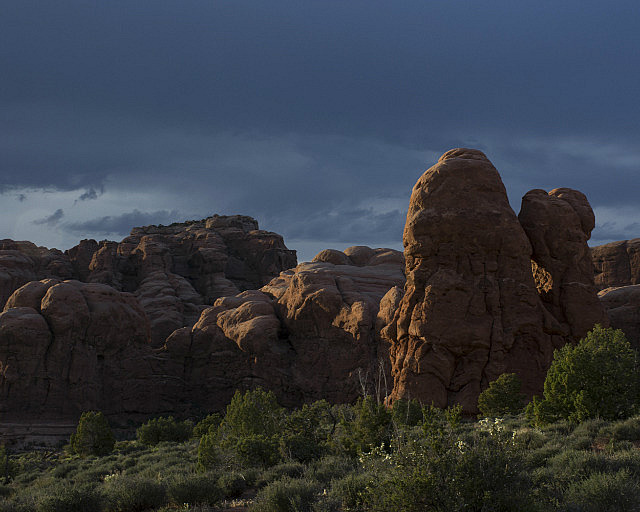
Hoodoo-esque rock formation, Arches National Park
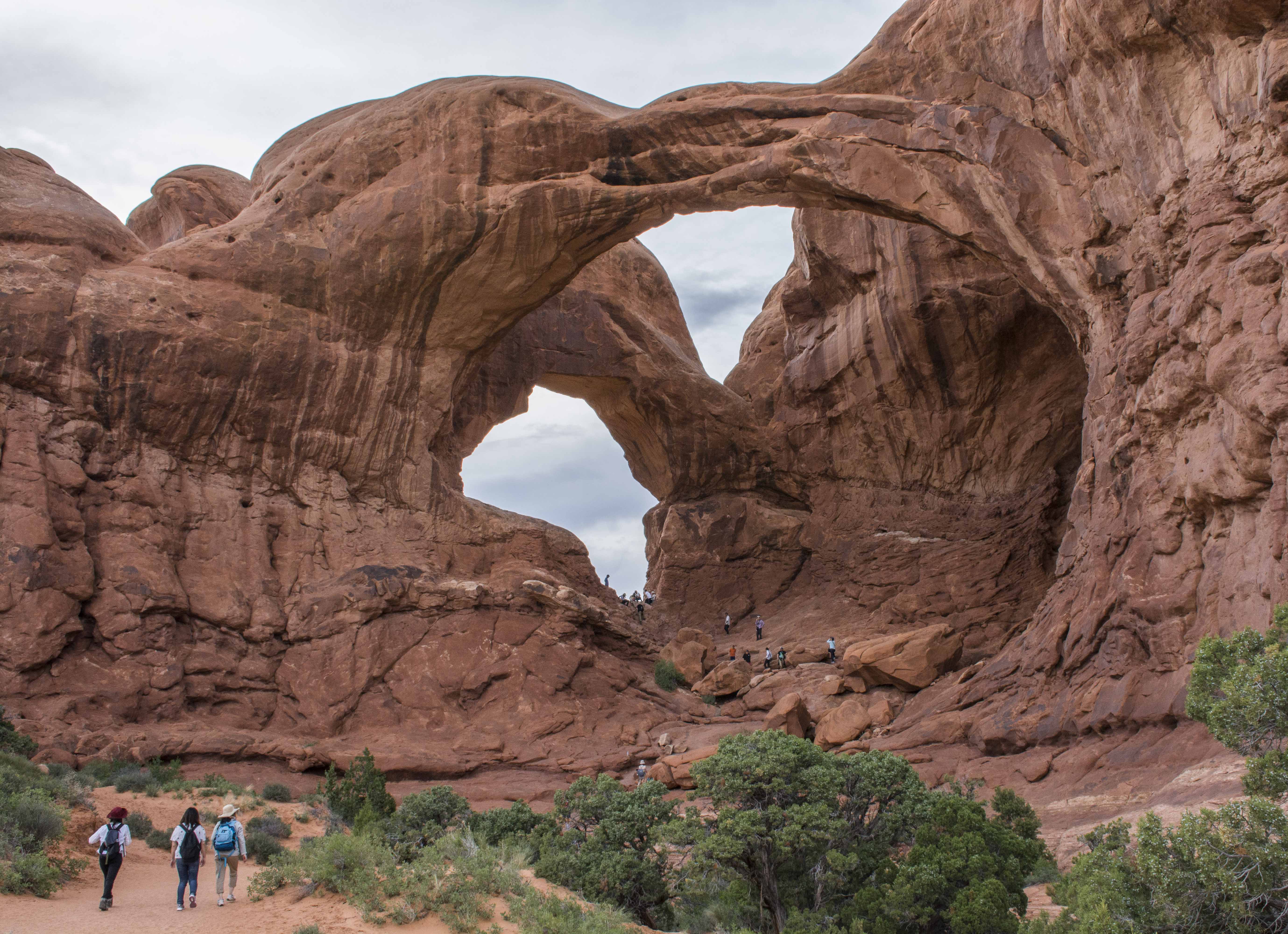
Double Arch
Double Arch


Glowing rock formation at sunset
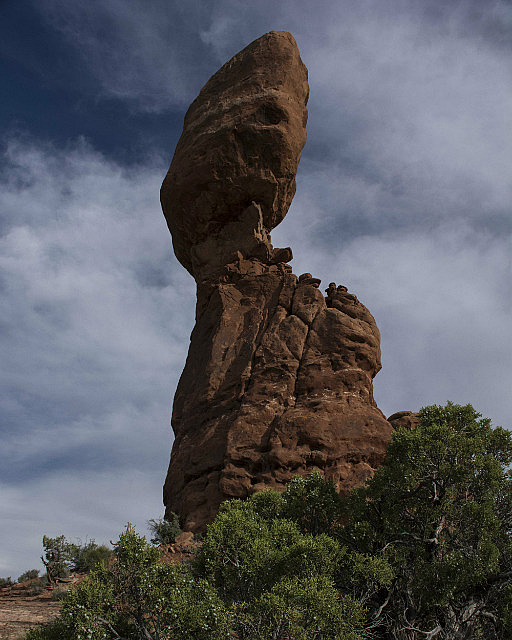
Balanced rock, Arches National Park


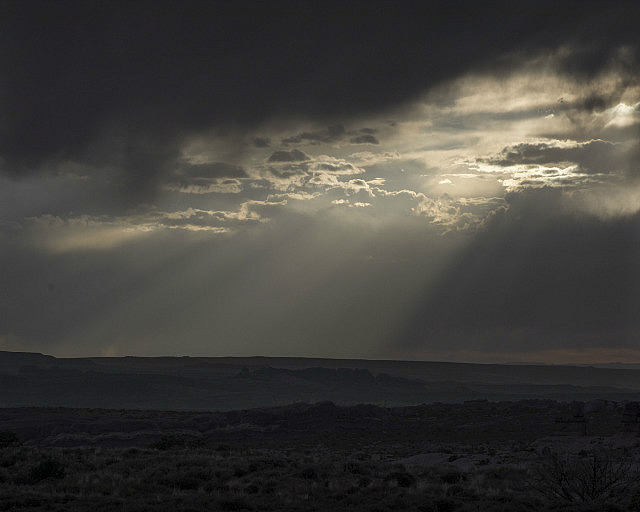
Pre-sunset sky over Arches National Park


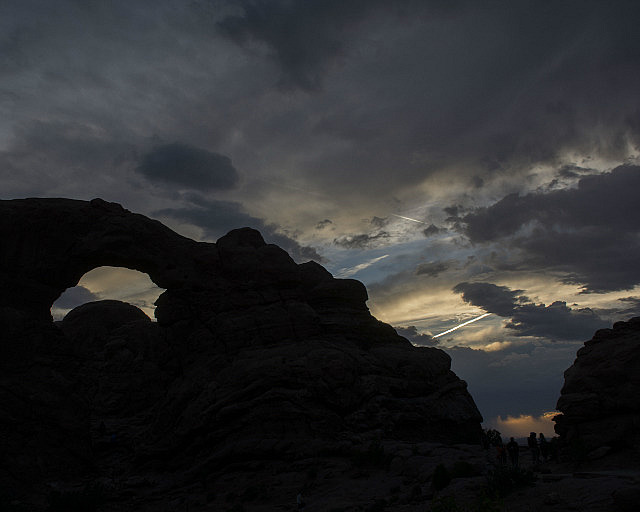
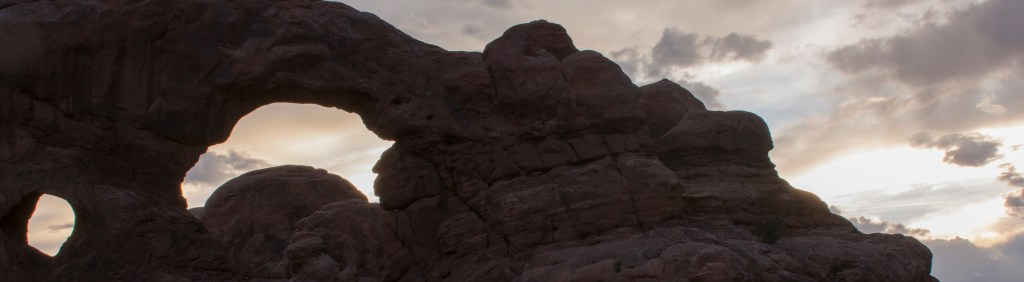
Sunset sky with silhouette of an arch

Leave a Reply

Sunrise over Navajo Mountain

Sunrise shoot, Bryce Canyon National Park, 3°C (37°F). Sunset shoot, Arches National Park, 28°C (83°F).  From hoodoos to arches, today has been one of beauty and grace.
We left our hotel at 6:15 am to catch sunrise at Sunrise Point – how appropriate – in Bryce Canyon.  Last evening’s sunset photos were disappointing; I looked forward to the golden light of sunrise.  I was not disappointed and soon forgot how inadequately I had packed for this morning’s outing.  The rock literally glowed and at times reflected the sunlight onto other hoodoos.
Sunrise at Sunrise Point
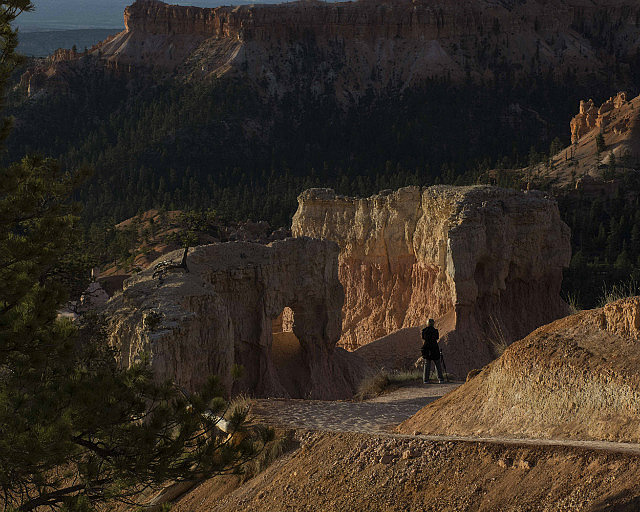
Group member further down the path
Sunrise at Sunrise Point
More sunrise - Sunrise Point
More sunrise – Sunrise Point
Reflected light from one hoodoo onto another
Little tree and "window" at Sunrise Point
Little tree and “window” at Sunrise Point
Former tree at Sunrise Point
Early morning light on Ponderosa pine


Desert view on way to Moab

The drive from Bryce Canyon to Moab took us over the watershed divide to the San Rafael Swell.  This area is very much dessert as the Tushat Mountains block rain clouds from the west.  I took this photo at a rest stop along the way.  A short time later we stopped for lunch in Green River.  Along the river bank is lush growth, but the dessert still rules this region of southern Utah.

Arches National Park is as different from Zion and Bryce Canyon as those two are of each other.  Again, the colour of the rock is similar, but the rock formations vary greatly.  As the name infers, this is a park with arches – arches caused by the gradual collapse of parts of the salt underpinning, leading to holes that through erosion become arches.  An arch must have a minimum 1 metre (3 foot) opening, either height or width, to be called an arch.  This park also has formations that are hoodoo-esque but don’t have the same striations and erosion patterns of those in Bryce Canyon National Park.

Tomorrow we return to Arches National Park.  See you then!
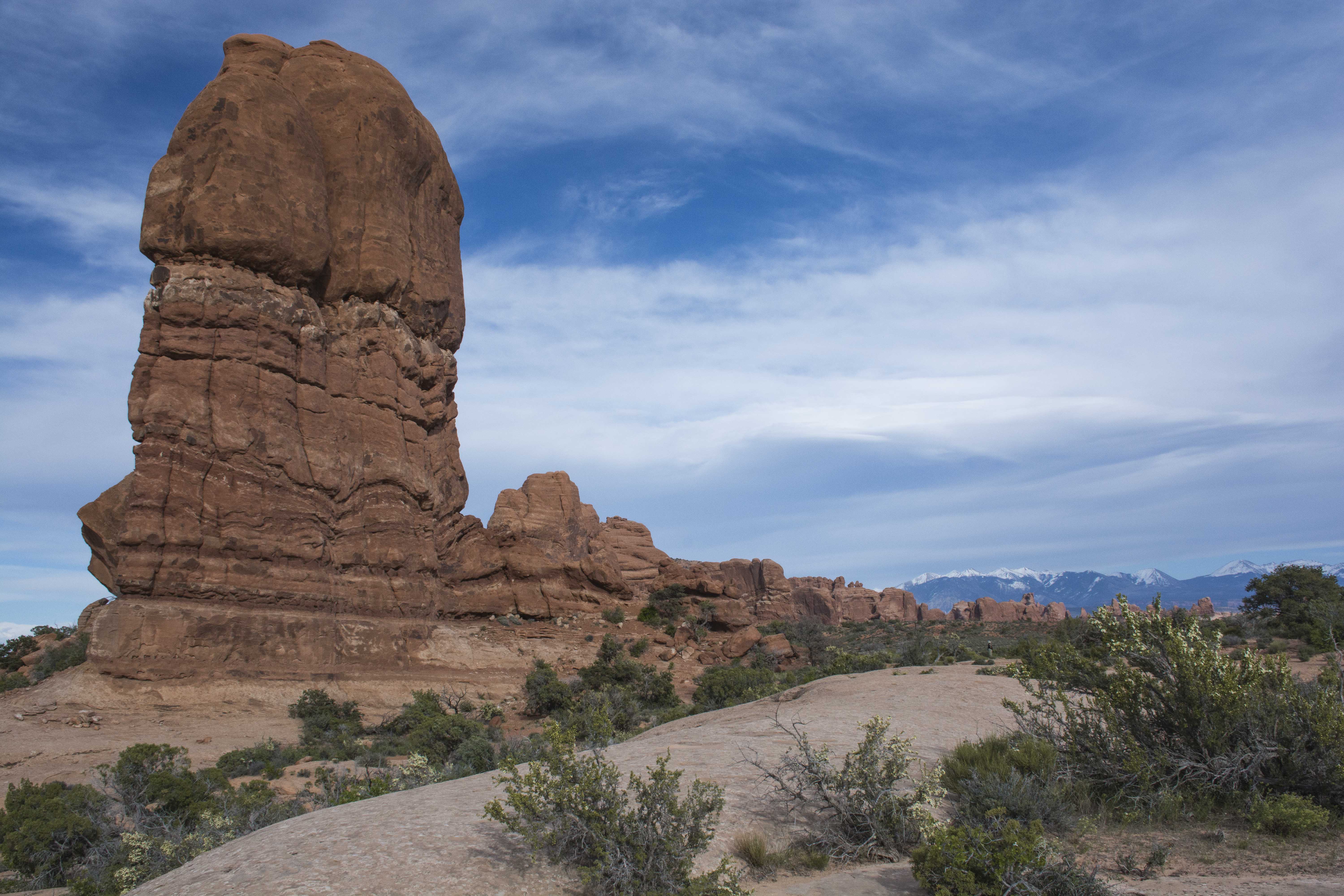
Hoodoo-esque rock formation, Arches National Park
Double Arch
Double Arch


Glowing rock formation at sunset
Balanced rock, Arches National Park


Pre-sunset sky over Arches National Park


Sunset sky with silhouette of an arch