After a welcome dinner last night, my group set out to see a few new-to-me sights in Rabat. There are 13 people in my group – 9 women and 4 men, 3 married couples and 7 solos. There will be five of us on the post-trip extension, all women.
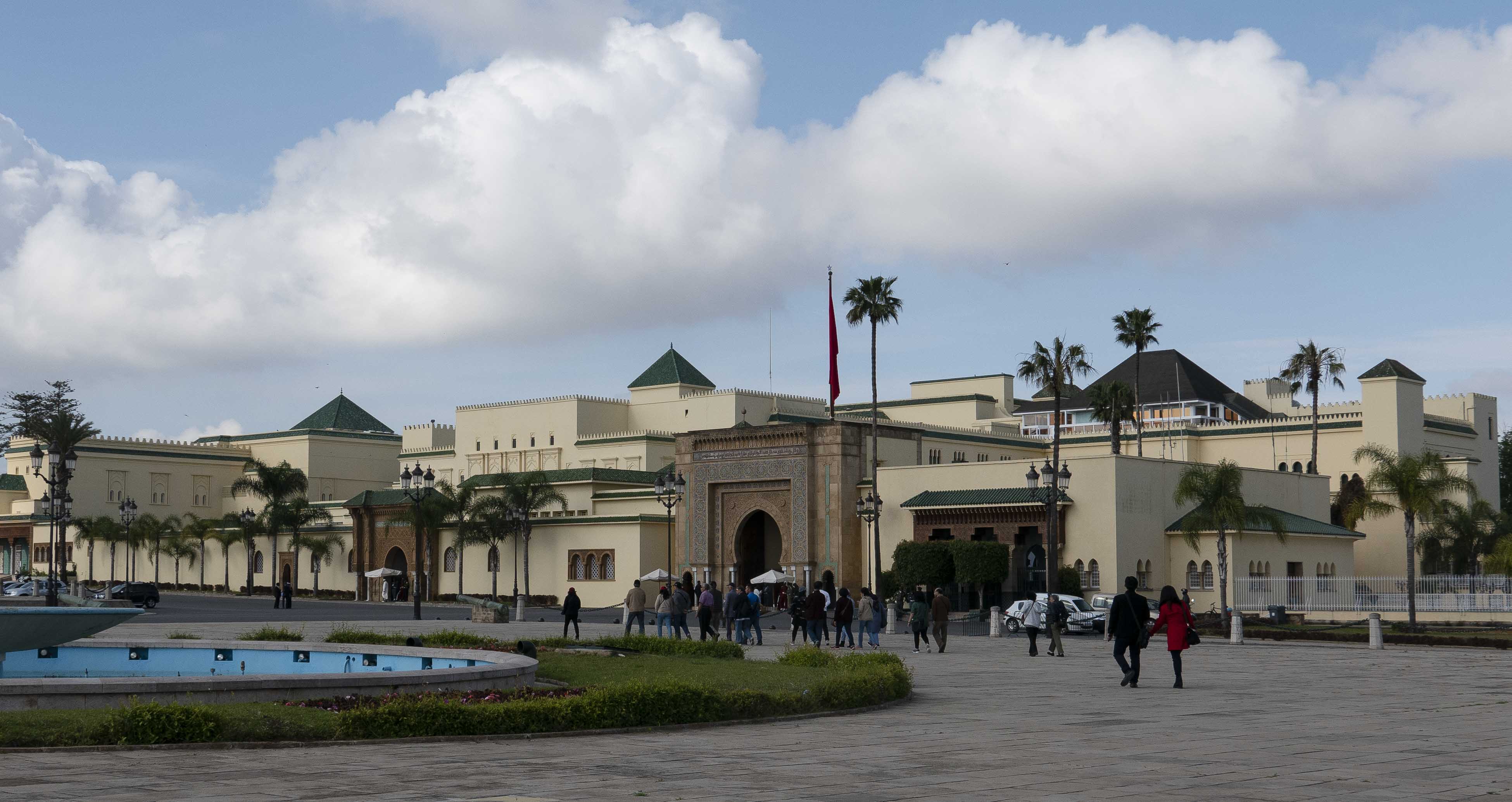
First stop was the Royal Palace built in the 18th century. Mohamed V lived there for a time until he was exiled in 1953. The current king, King Mohammad VI, grandson of Mohammad V, does not live there, but formal occasions are held there, and a number of the administrative arms of the government have offices within the compound. Not only were we not allowed in, we could view the palace only from a distance. From that distance it looked pretty darn nice!
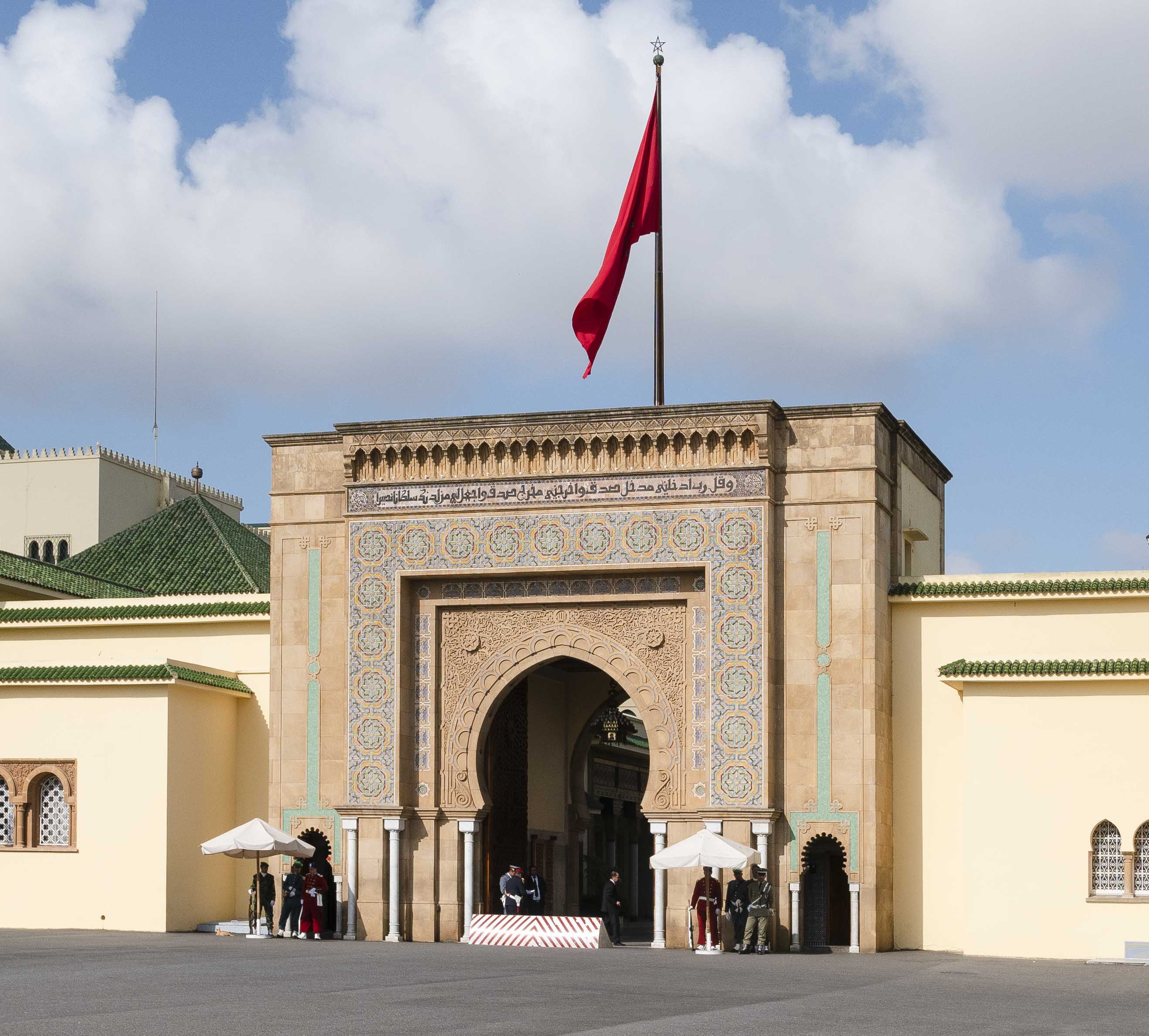
The Palace is guarded by five arms of military/police/security forces: the army, the marines, the parachutists, the gendarmes and the Royal Guard. Each group has a distinctive uniform. Mohammad V survived at least 30 coups. To prevent any one arm of the security forces from plotting a coup, royal guarding is done by all five arms who would be able to snitch on the other should plans be in the works.
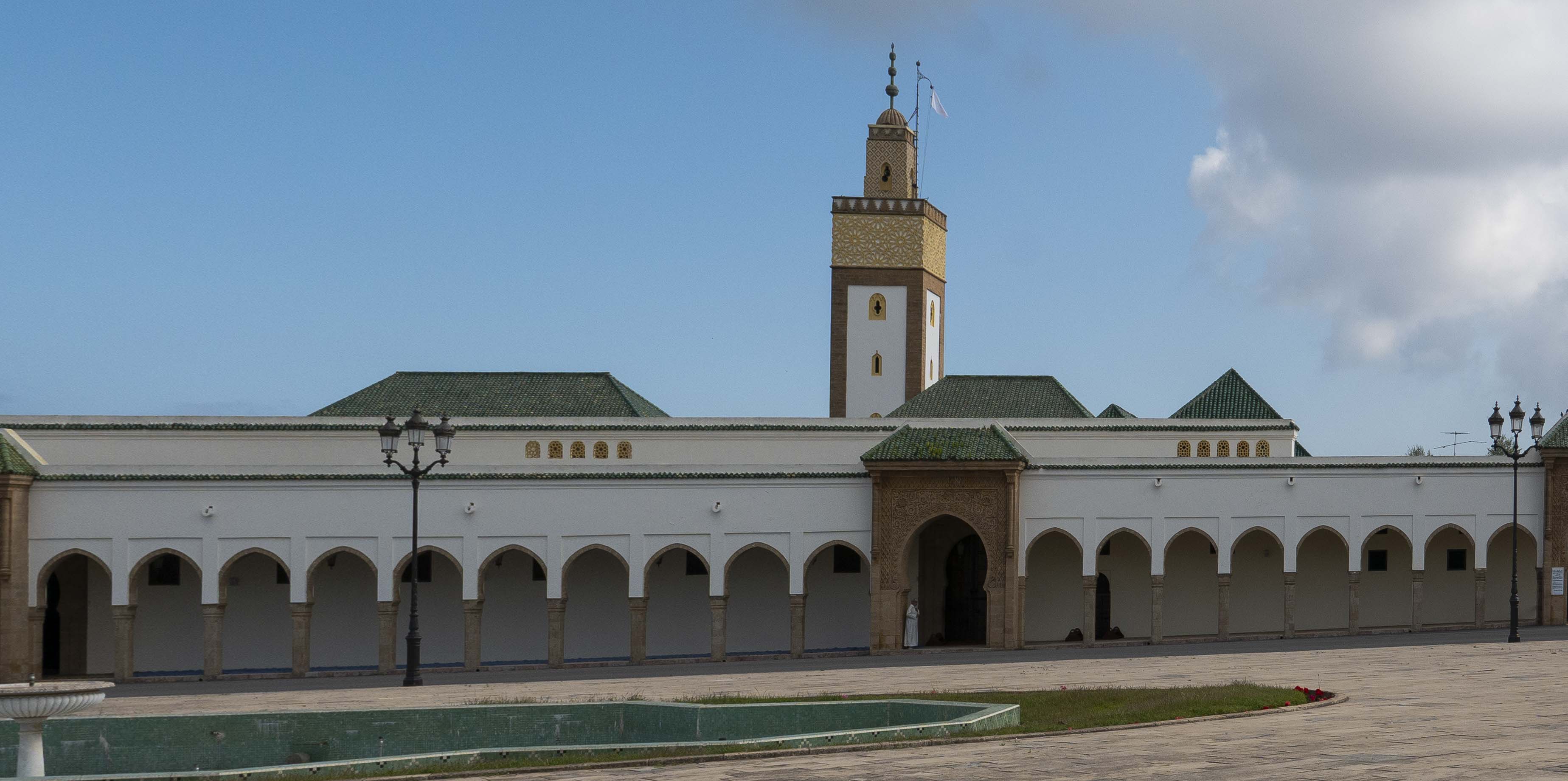
There is a mosque across from the Palace. It is used by the community pf 3,000 who work in and around the palace and for the King when he is in residence.
Since its independence from the Spanish and French Protectorates that ruled Morocco from 1912 until 1956, Morocco has been a constitutional parliamentary democracy. There are 35 parties that vie for seats in the House of Representatives and House of Councillors which pretty well guarantees that majority governments are rarely elected.
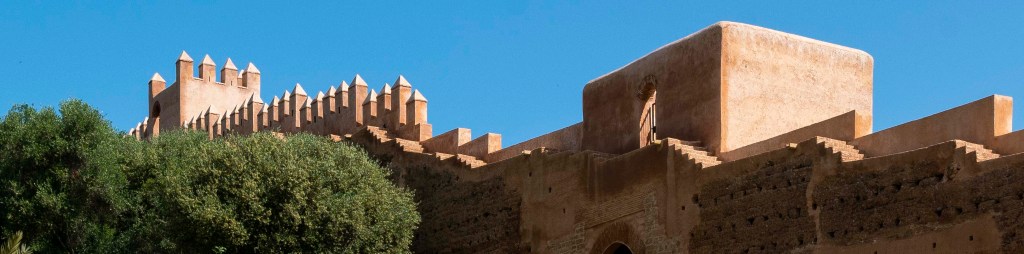
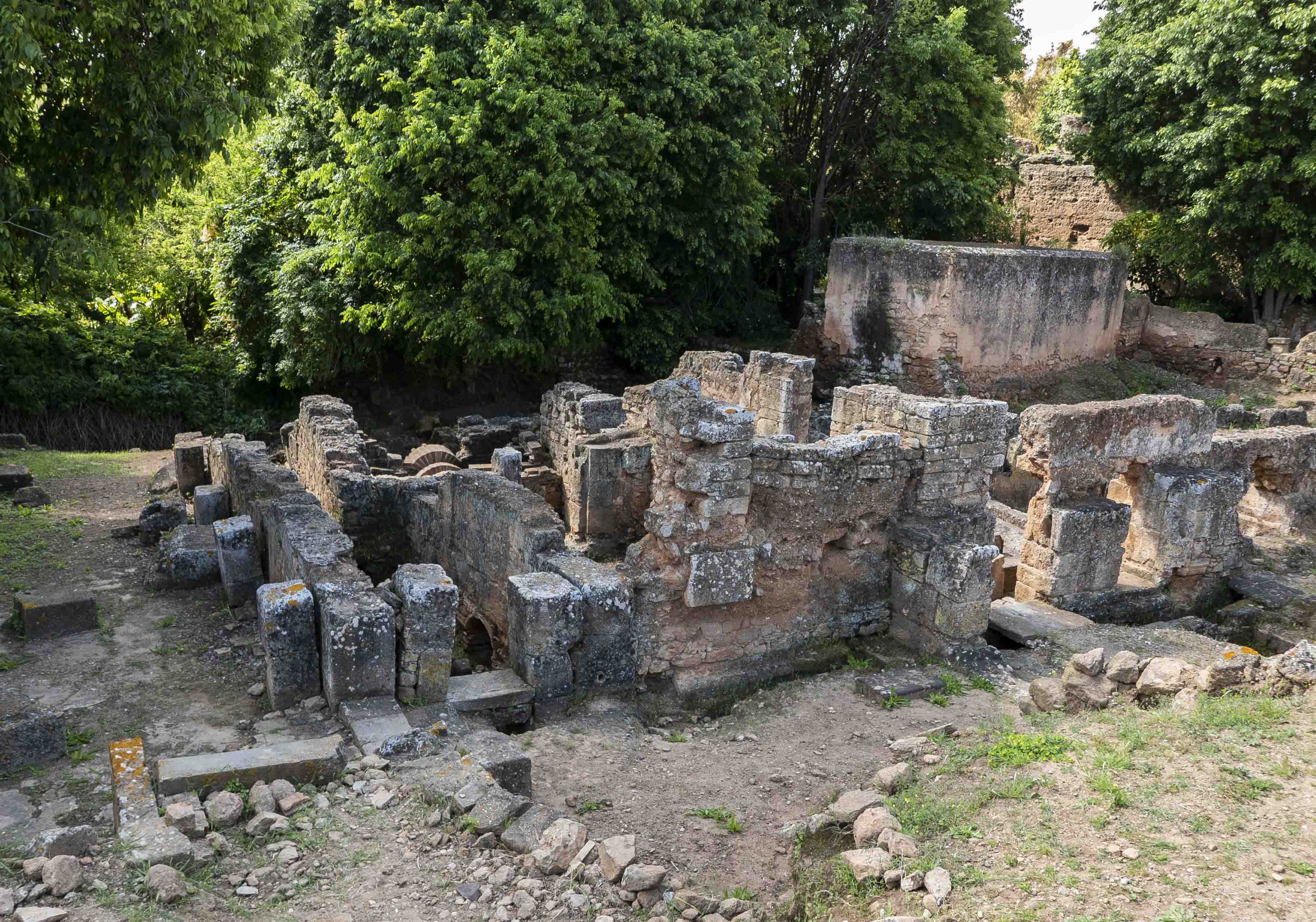
Next stop – Chellah Necropolis, a 14th century burial ground for the royals. Chellah is fortified with walls to protect the precious tiles and other art work around the tombs. The header photo on this post is of a part of the wall. Chellah was built on top of a Roman town; excavation to date has unearthed a communal bath and several shop areas.
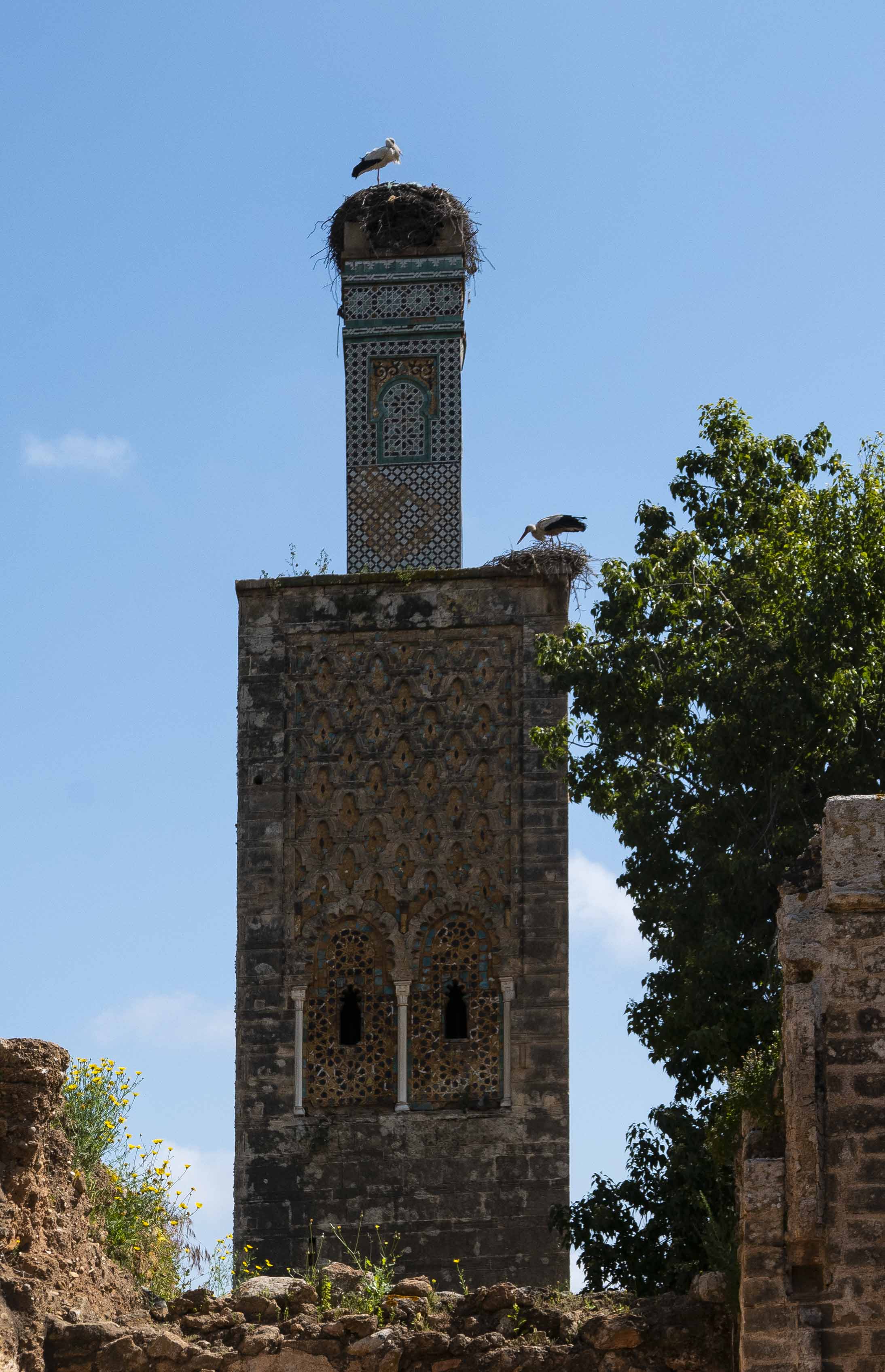
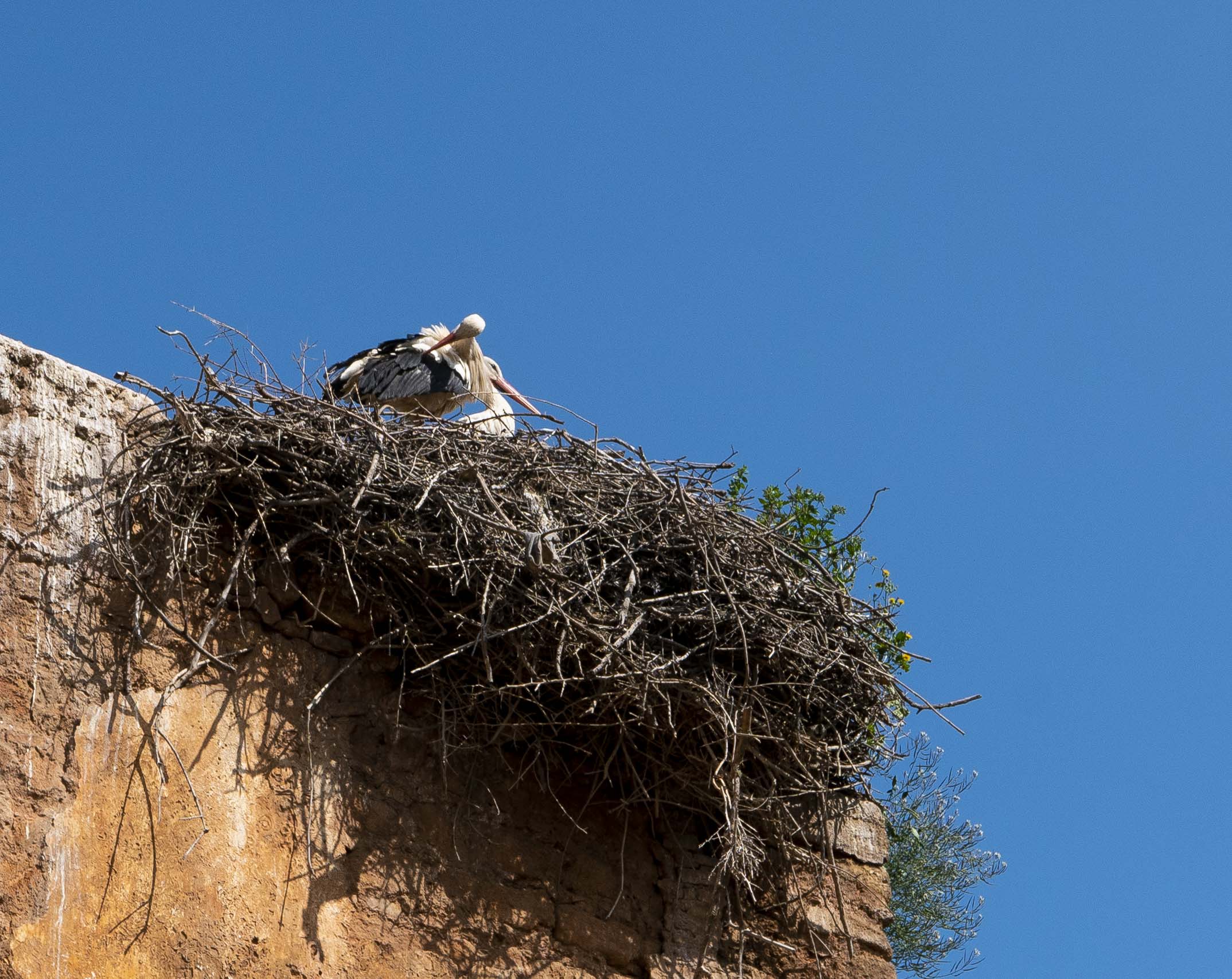
Chellah is also a nesting ground for storks. These very loud birds mate for life and return after migration to their same nests. There is also an eel pond on the grounds; young couples who are struggling to conceive come to feed the eels to increase their fertility. I personally think it’s all about the storks. Everyone knows they bring babies.
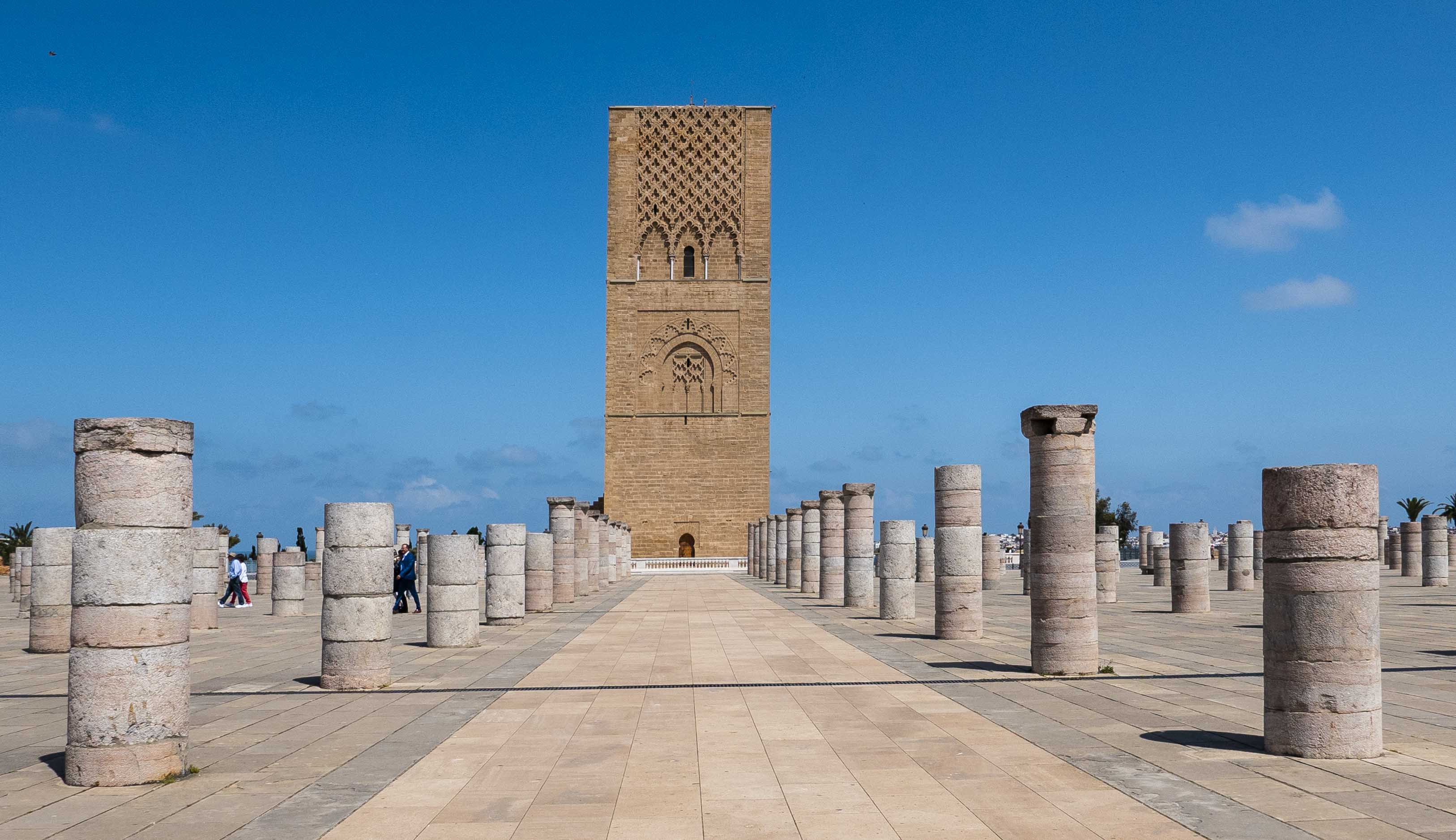
Next stop was the Hassan Tower – I posted an early morning photo of it last time. This time it was mid-morning and the grounds were open. The muezzin of a mosque, even an unfinished one, has to perform the call for prayer 5 times a day. He would have to climb 140 feet worth of stairs to the top of the tower each time which was considered too taxing, so ramps were built inside the tower wide enough for a horse to carry to muezzin to the top. Nowadays there’s a speaker on the top of the minaret and a microphone for the muezzin at ground level.
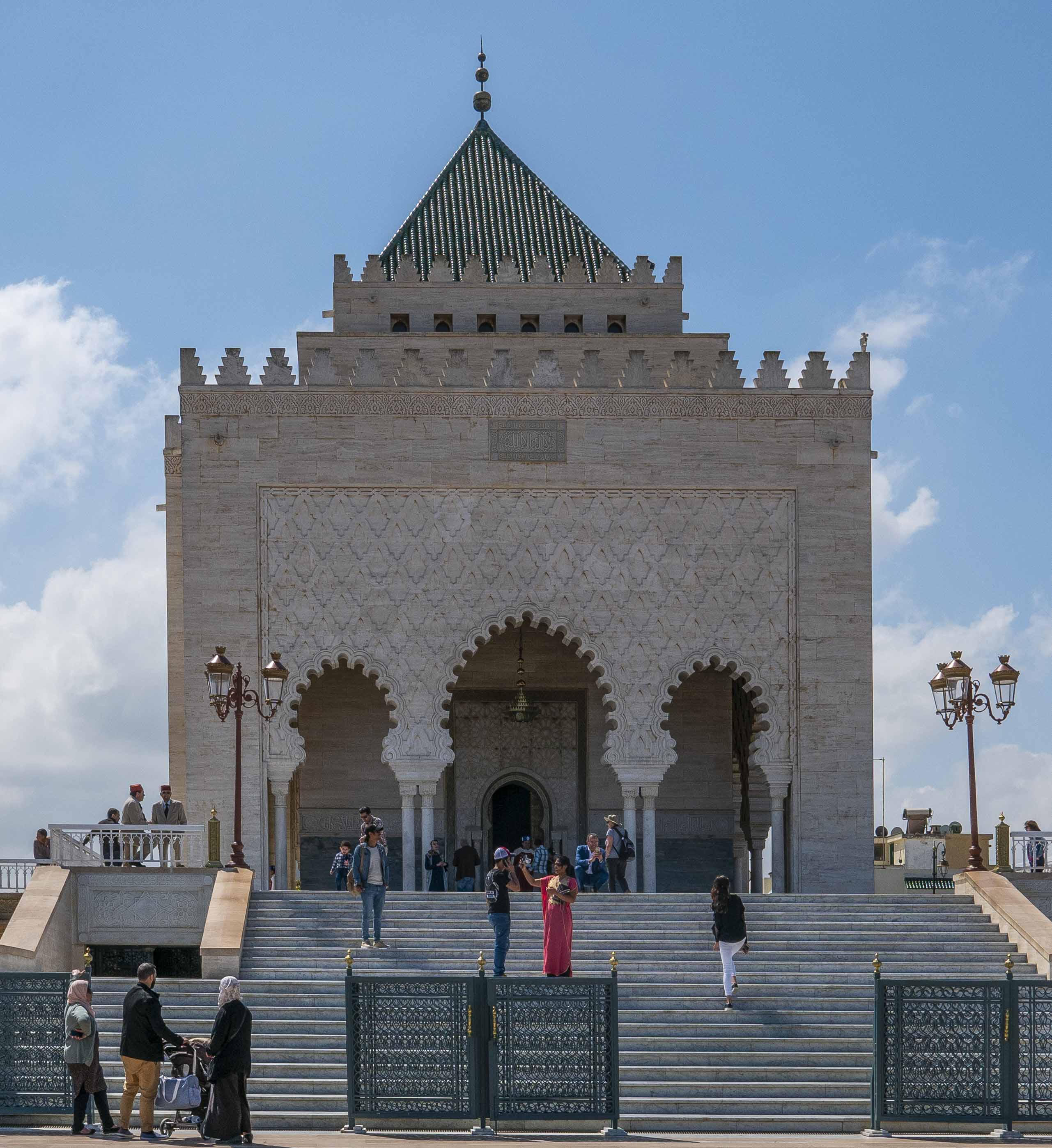
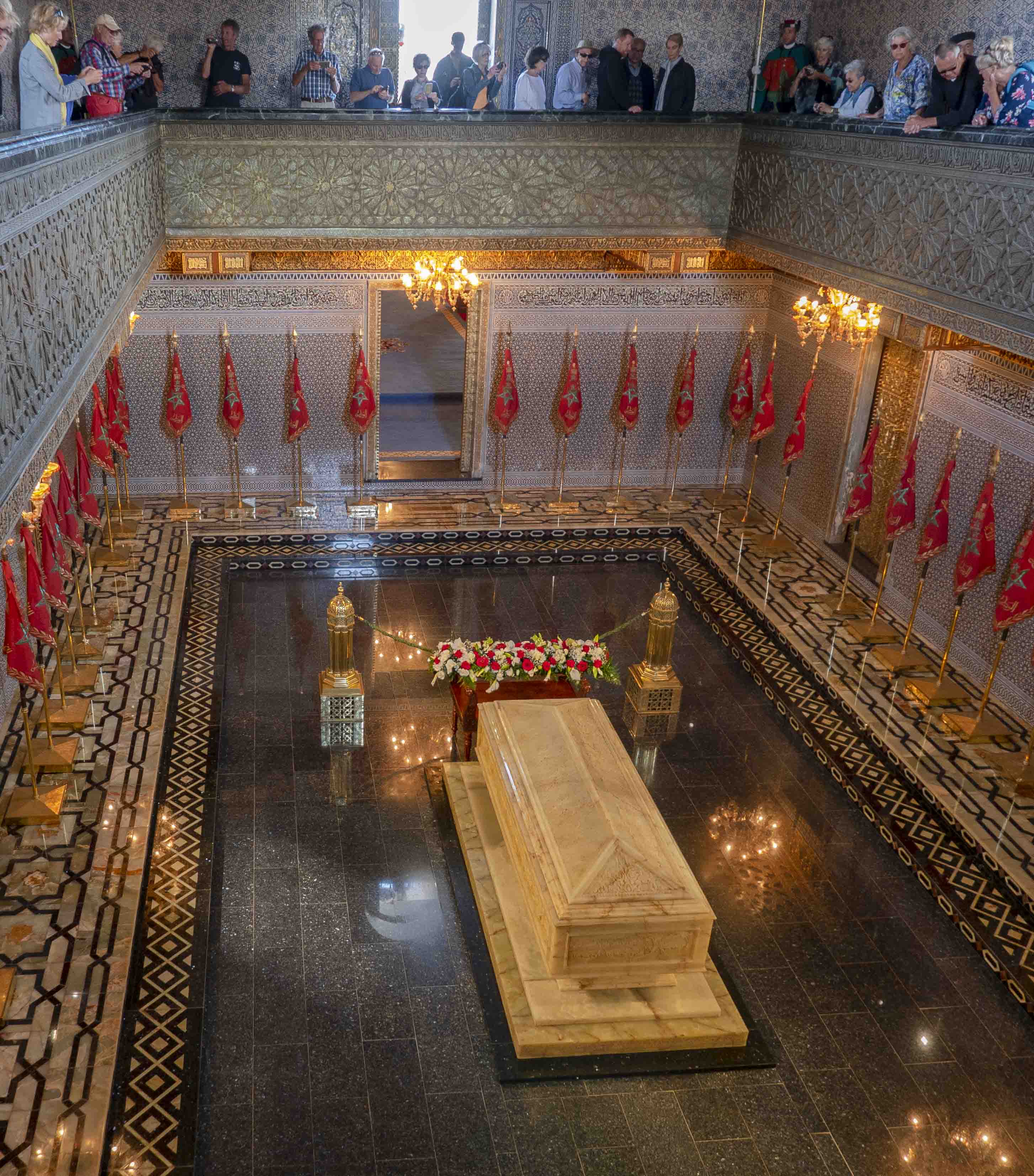
The Mausoleum of Mohammed V is the burial space of Mohammed V and his sons Hassam II and Abdallah. This striking building was designed by Vietnamese architect Vo Toan and constructed in 1971. The crypt is visible from a balcony. It is not typical Moroccan practice to have an identified resting place. Moroccans bury their dead but do not identify them with headstones or visit them post-burial. They believe that the person – the spirit – is gone, so there is nothing left to celebrate.
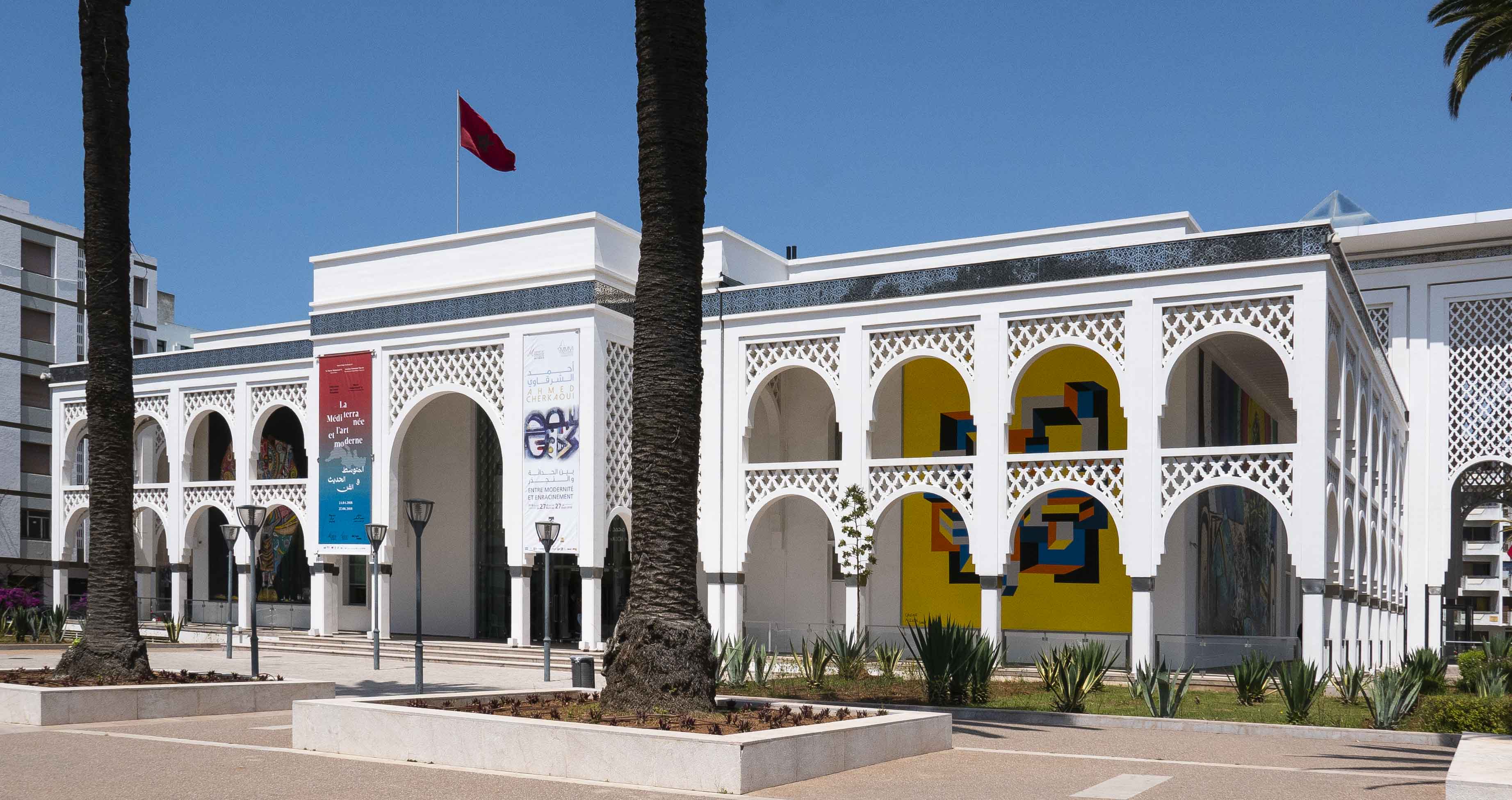
This afternoon I visited the Museum of Modern and Contemporary Art. There was a major exhibition of Moroccan painter Ahmed Cherkaoui and others. His art is not to my taste, but it was instructive to see what today’s artists are producing. The museum, only a few years old, is a work of art itself. No photos were allowed inside the gallery.
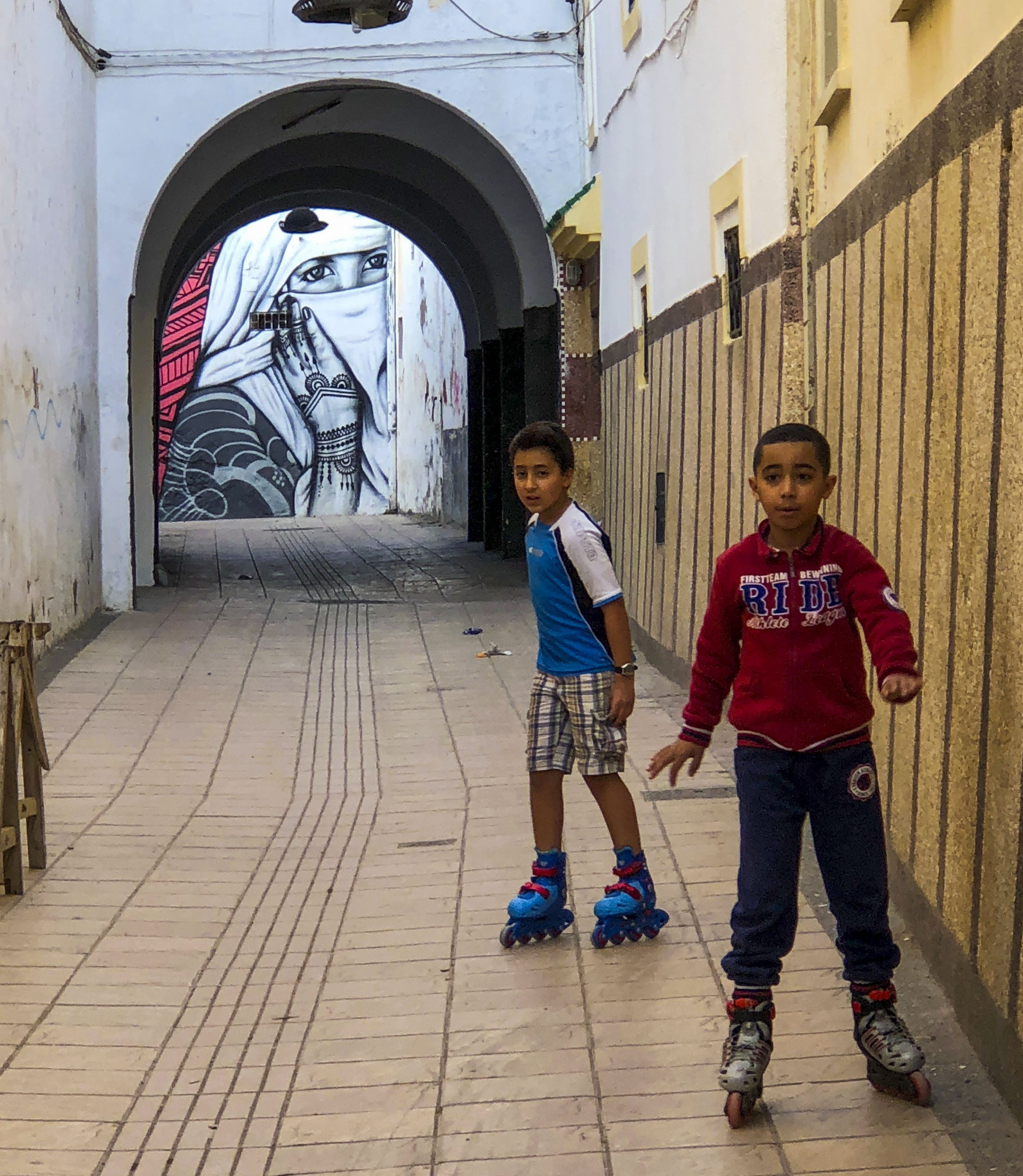
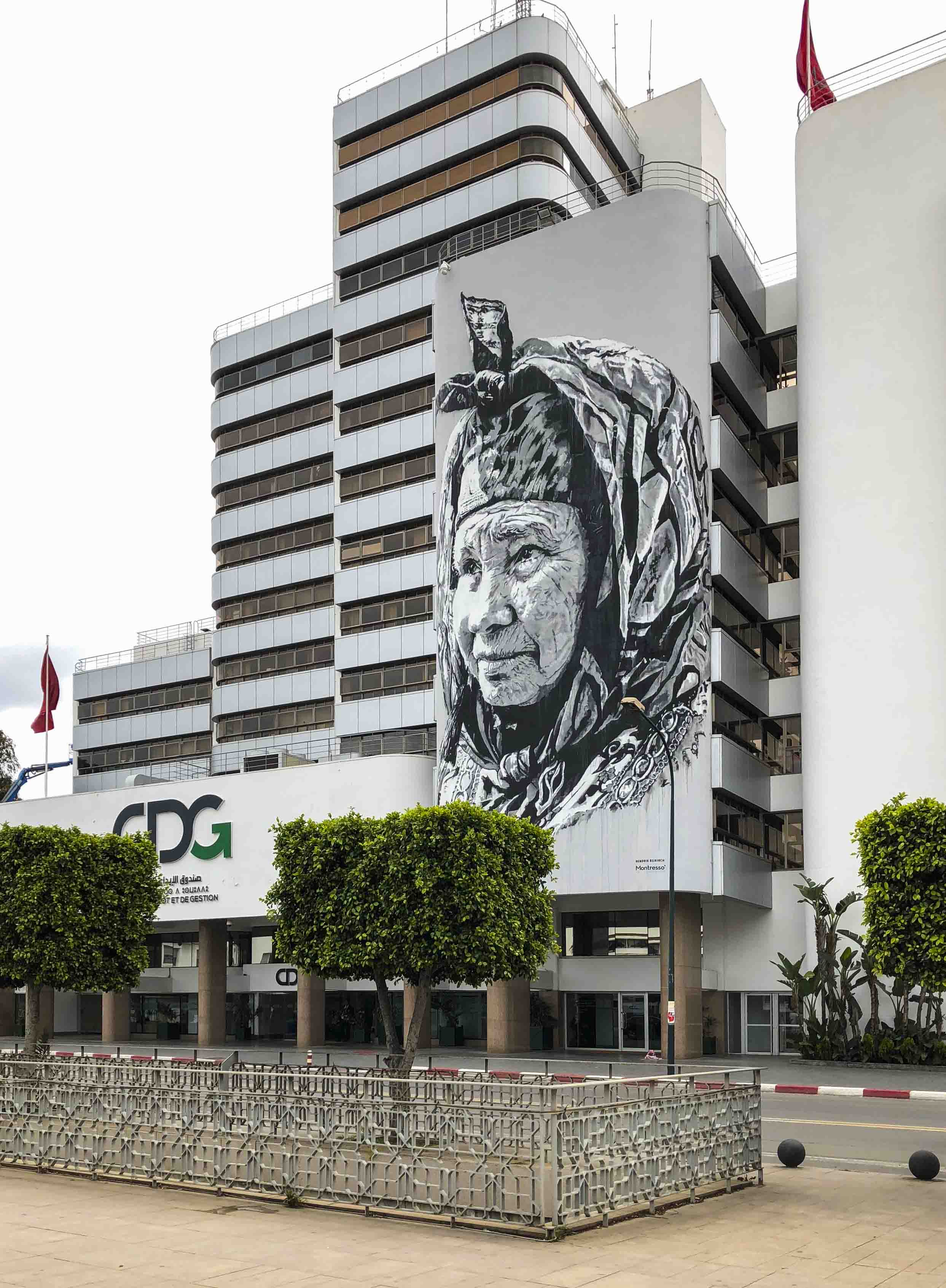
On our way to dinner in a converted riad, we passed a large wall painting of a woman. It was created a few years ago as part of the week-long annual street art festival Jidar (which means “wall”). Street artists from around the world are invited to create murals on selected walls around Rabat. The festival has been running for four years, and to date no murals have been painted over. They can be spotted here and there around Rabat.
Another Moroccan artistic project is “Tracing Morocco.” Photographer Hendrik Beikrich reproduces photographs he has taken of Moroccan people on walls around the world. (See http://montresso.com/en/portfolio_item/hendrik-beikirch-tracing-morocco/.) There are only two installations in Morocco, one just down the street from my hotel – the image of a Berber woman now adorning the wall of a state bank.
Next time from Fes!


Leave a Reply