On the Move

Fes – ancient, old and modern cities
Free ride!

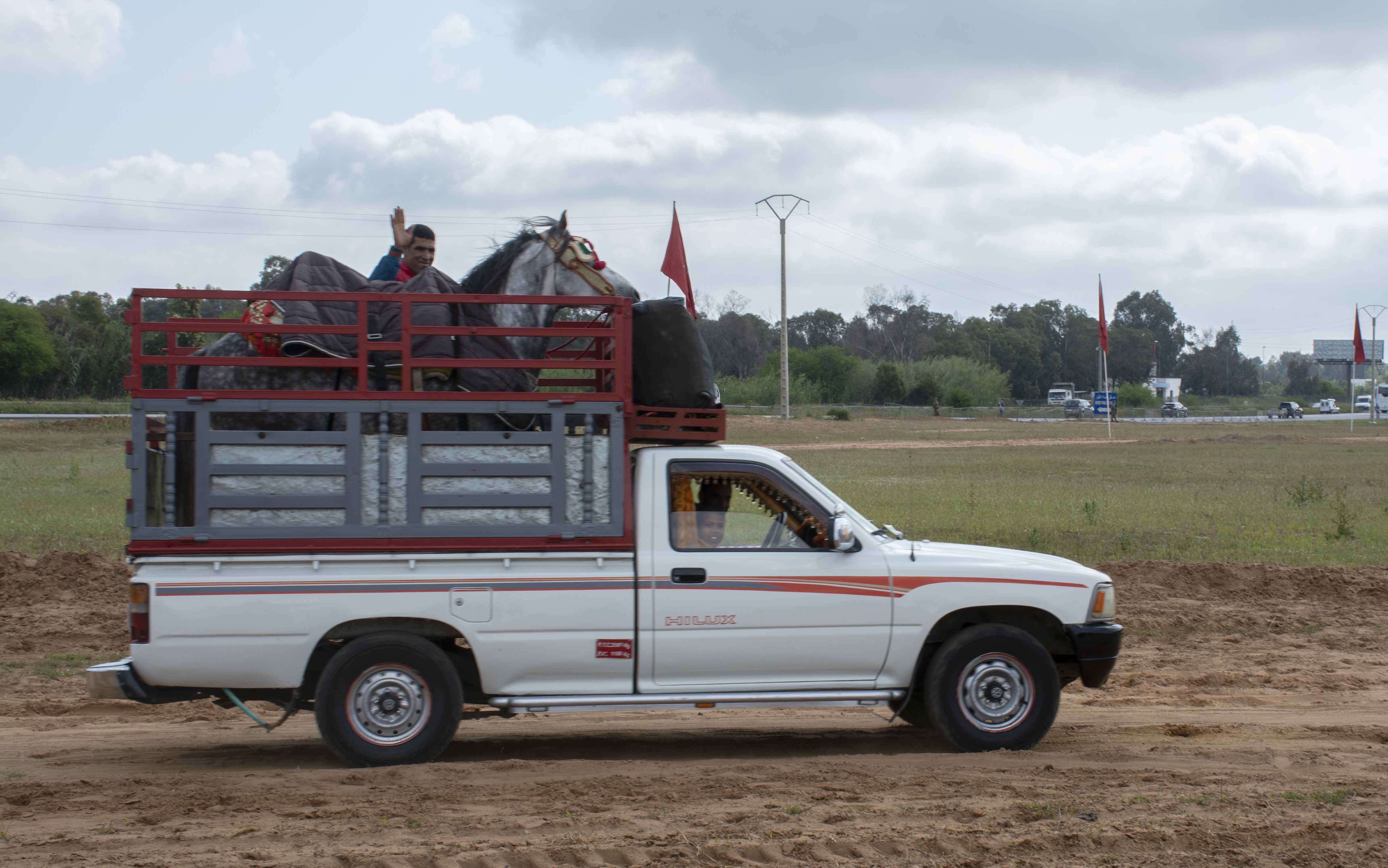
Shortly after leaving Rabat for Fes, a pickup truck with a horse in the back appeared on the highway. Issam, our guide, explained that this horse was going to a Tbourida, or what the French call a Fantasia.

A Tbourida is a gathering of possibly 100 teams each of 15 stallions and riders who compete based on their coordination racaing down a field, waving a musket, and finally letting off a shot at the finish line. The top few teams from each Tbourida compete in the Royal Palace complex against Mohammad VI’s horses in a grand finale. For some great action photos, see http://www.dailymail.co.uk/wires/afp/article-3838186/Tradition-art-blend-Morocco-tbourida-cavalry-charges.html.

A few more miles down the road, we saw a Tbourida in the early stages of preparation. Tents had been erected, many horses, some with their brightly coloured saddles, all tethered at the front leg were spread out in a field. We left the bus to take a look.

This slideshow requires JavaScript.

One team invited us into their tent for tea and then, in what I thought was an amazing display of hospitality but Issam says is typical, asked us to stay for lunch – all 14 of us!

We stopped on the way to our riad at a CarreFour where there was a liquor store. Issam warned us that the three nights following our stay in Fes would be dry, so we would have to stock up. Which we did. On Moroccan wines which are pretty good!

Fes has three cities, an ancient one founded in the 8th century, an old one dating from the 12th century, and new one which was built after the arrival in the French in 1912. The photo below is a view of the ancient city from a fortification south of the city.
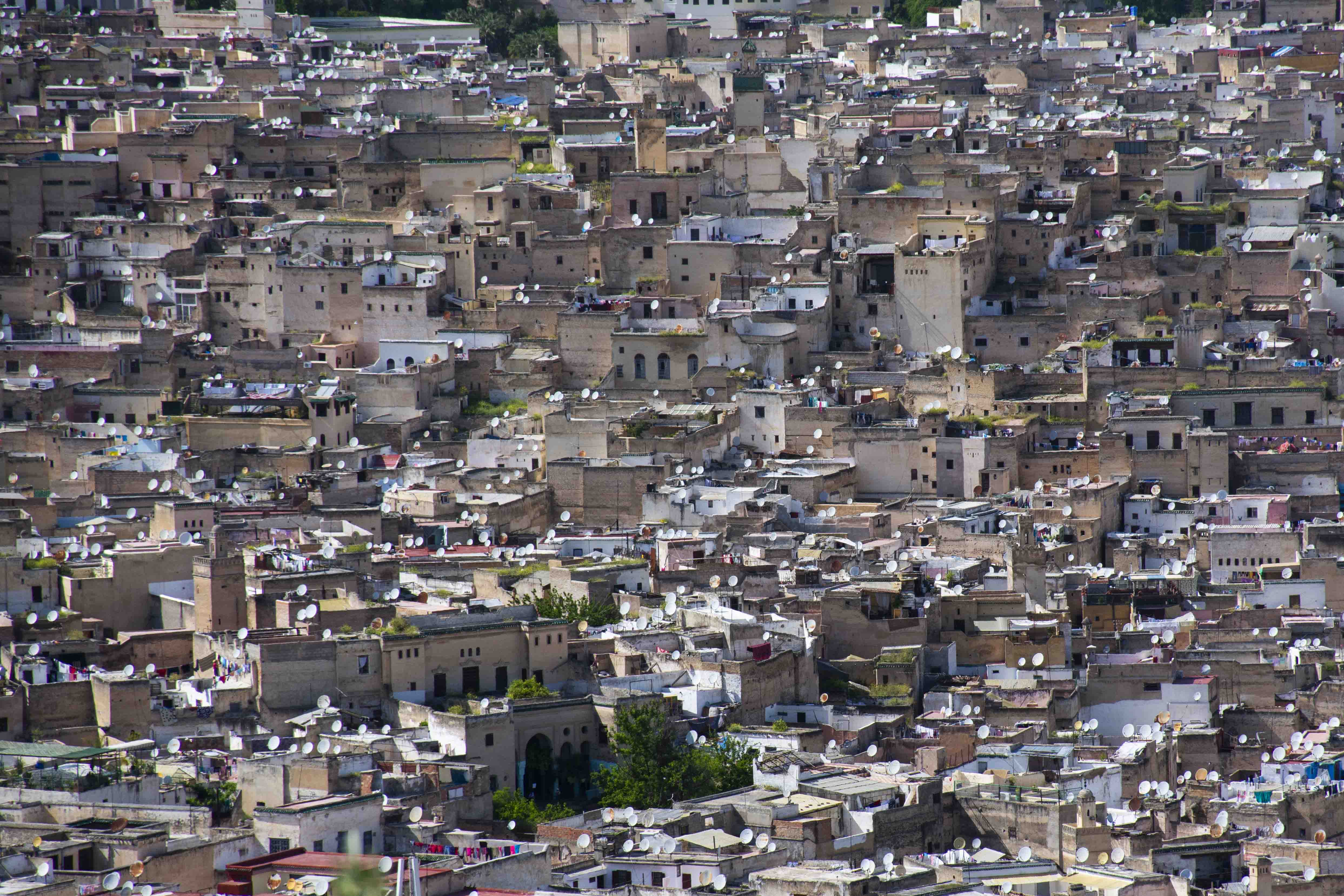
View of ancient Fes

A word about Fes vs fez. Fes, pronounced with an S at the end, is the city while fez with a Z at the end is the hat.

We are staying in a riad – a house behind a blank wall with an interior courtyard and garden. Tiles decorate the floors and walls, and carved plaster surrounds many of the interior windows. To reach my room, I take the elevator to the third floor. It opens onto the rooftop deck which I cross and take a flight of steps down. I tried to find a different route, but got lost.

This slideshow requires JavaScript.

Our second day in Fes started out with a walk through the medina in the old city. The Royal Palace in Fes has the largest palace grounds in the world, including stables for an extensive collection of horses and a large tbourida site. The main door in the gate provided a backdrop for a young woman posing for photos.
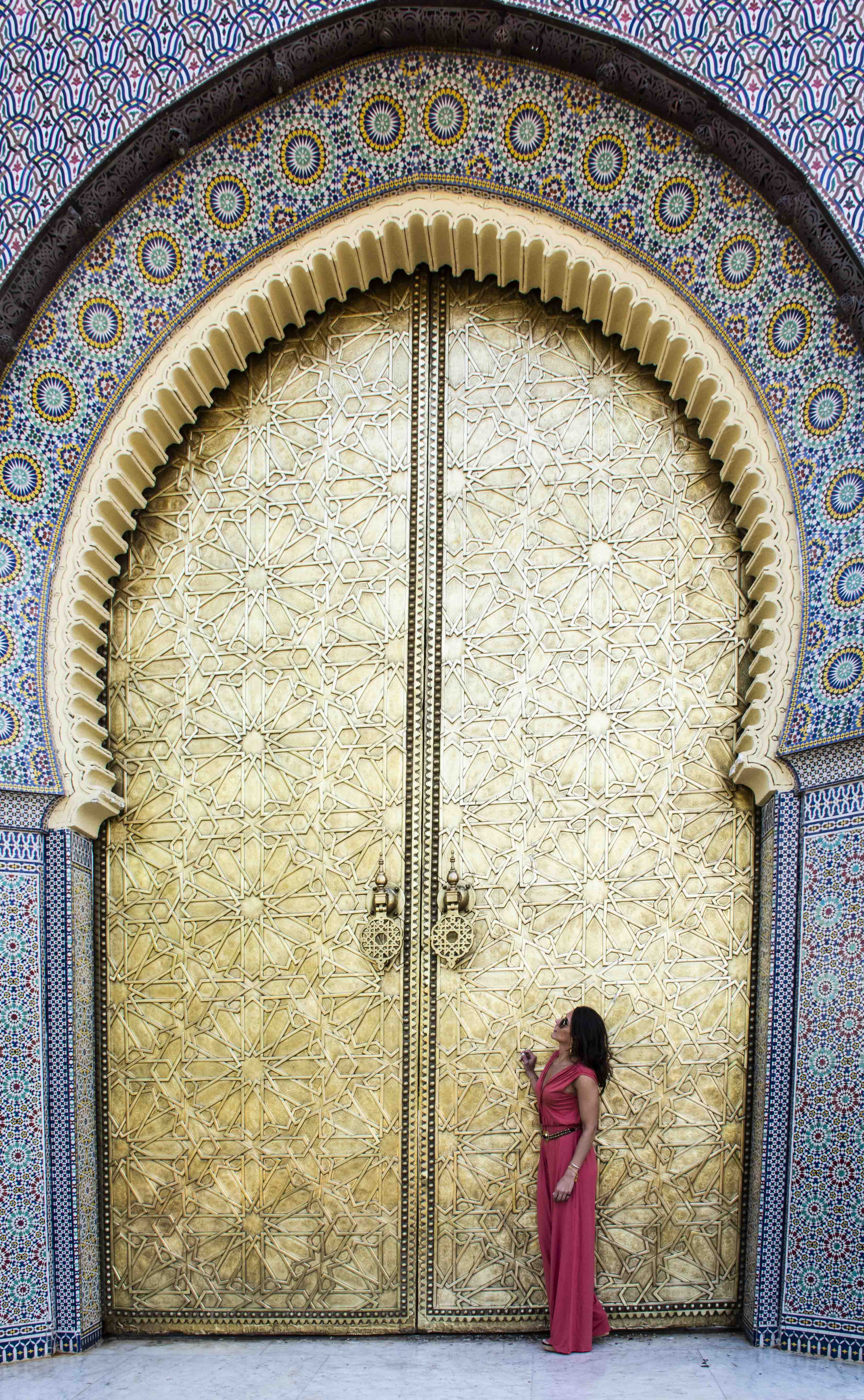
Main door to the Fes Royal Palace
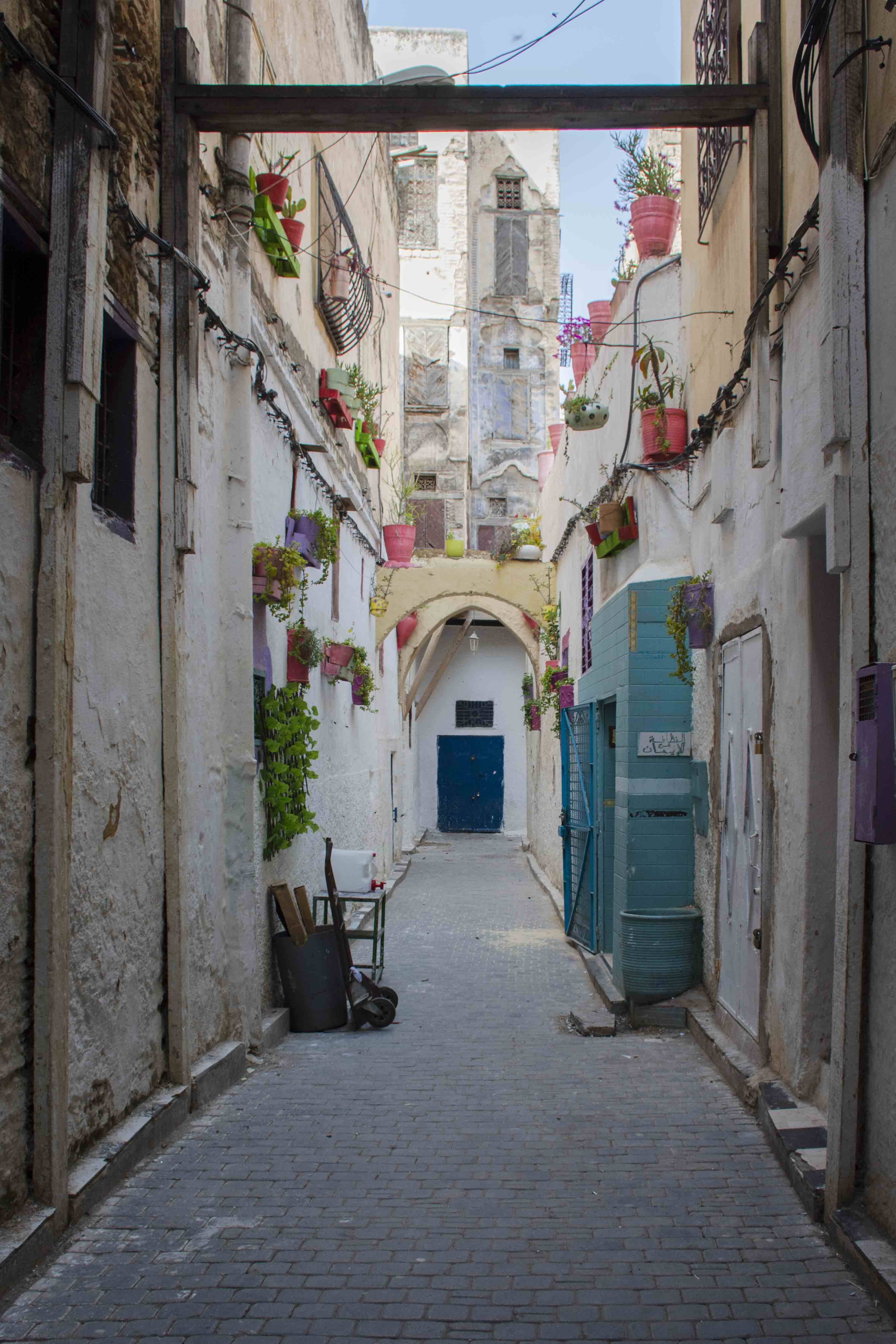
A street in the old city

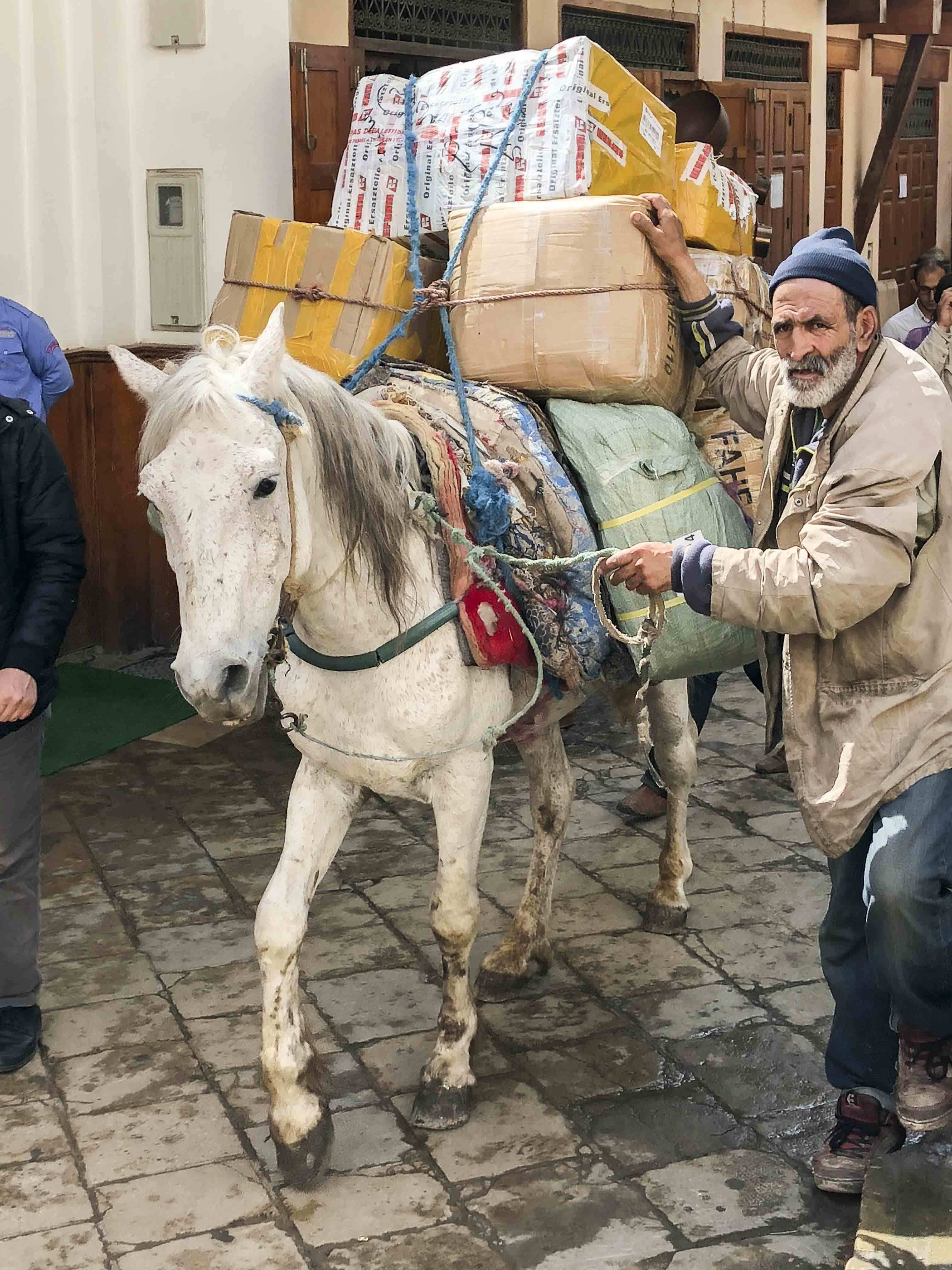
We walked through to the market which was buzzing with activity. Men with pushcarts or mules or horses delivering goods to vendors or taking them away. Families shopping. Tourists clogging up the works! It’s a wonderful place to do a little people watching.
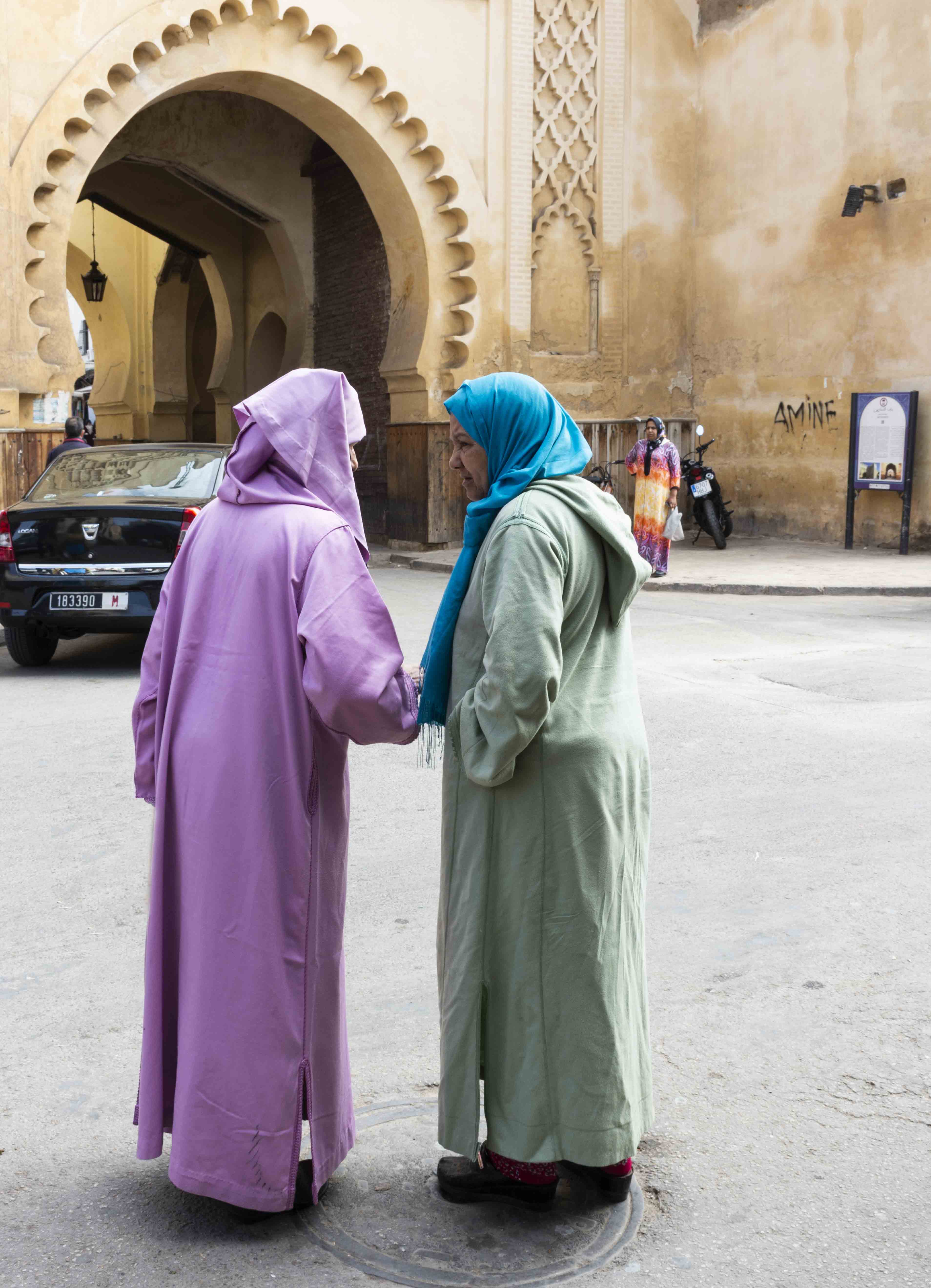
Chatting just outside the old city gate
Transporting goods inside the market

Fes’s ancient city has survived from medieval times. The souk’s alleys and lanes are some of the narrowest in Morocco so the market feels much busier than in the (somewhat) more modern old city.
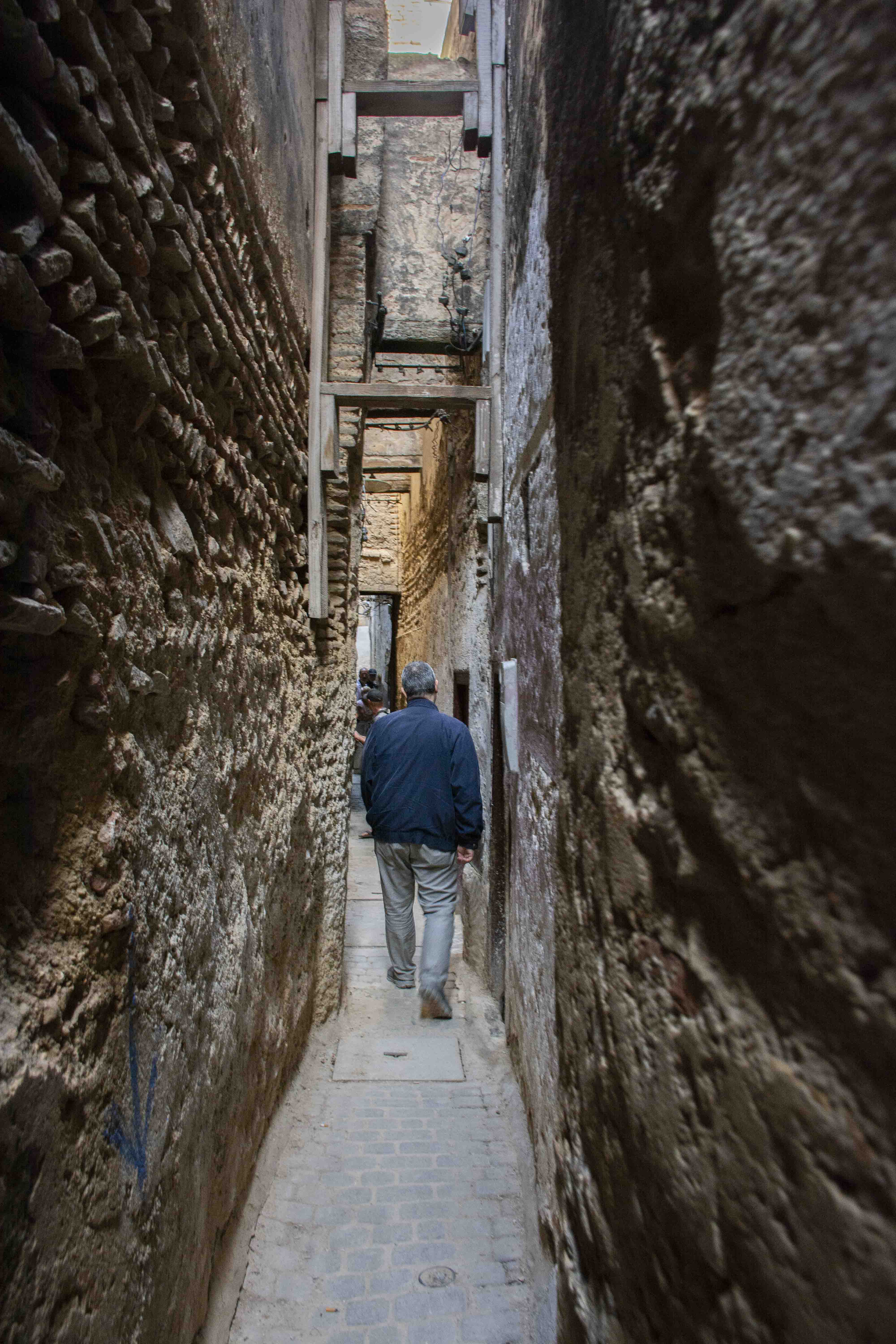
The narrowest “street” in Morocco, just wide enough for a donkey

A visit to Fes is not complete without a visit to the leather dye pits. These pits and the work process have been designated a UNESCO World Heritage Site. The dyes are all natural colours, and the process organic.
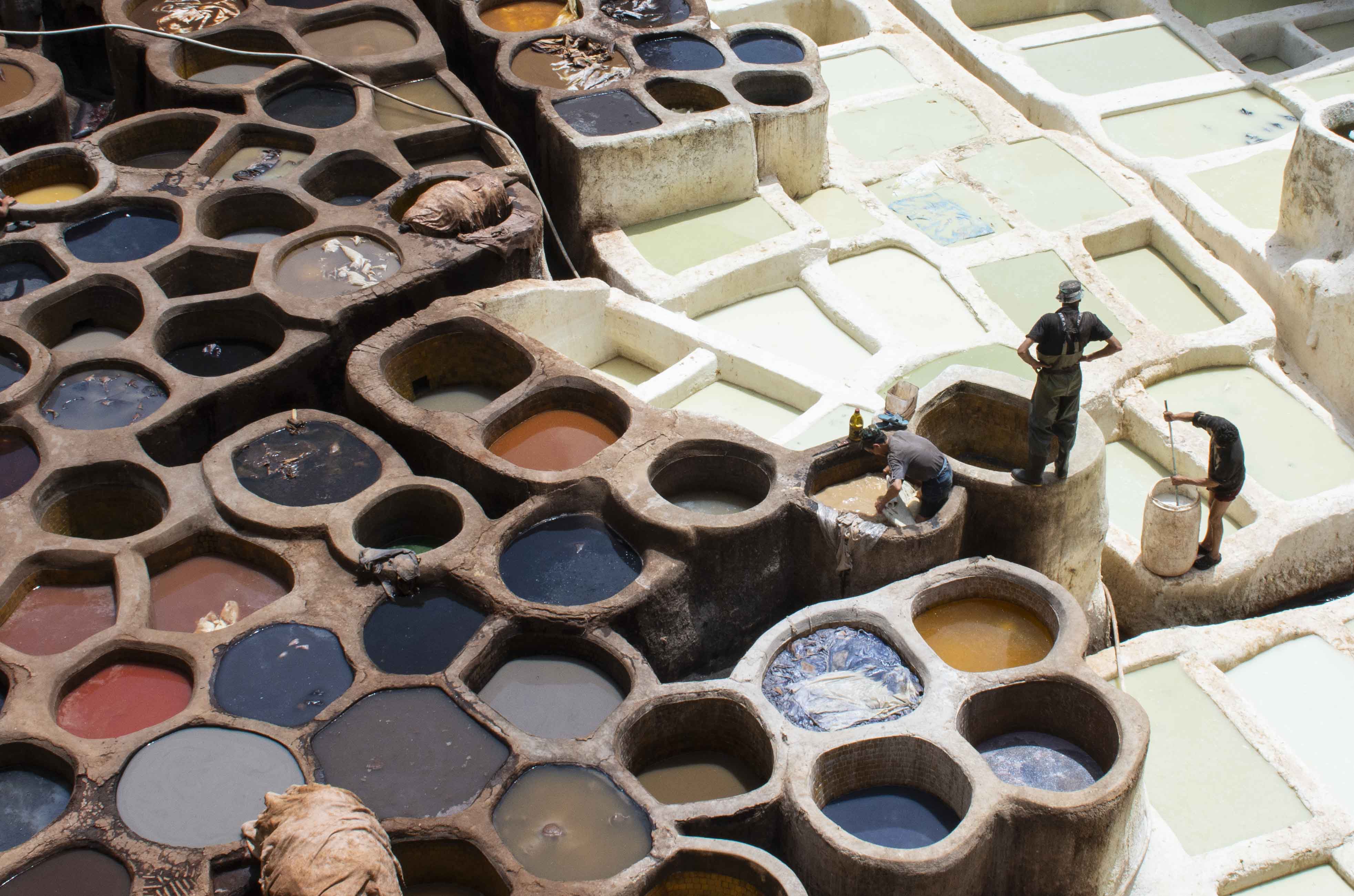
Treatment and dye pits

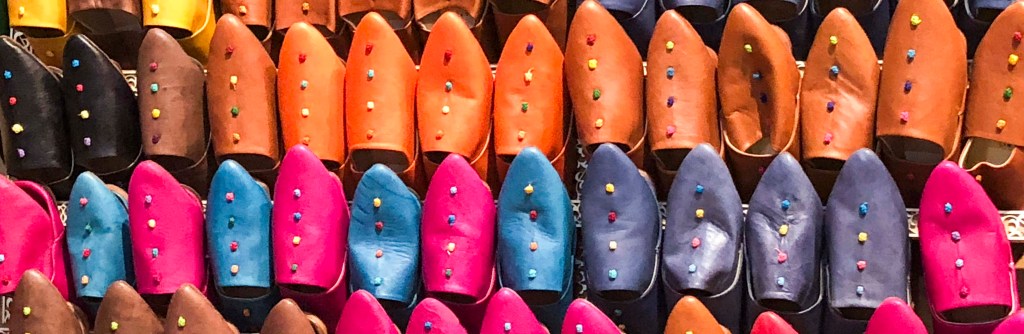
Some of us, myself included, are coming home with made-to-measure – in just a few hours! – jackets. Jackets and coats for women are made from goat hide because it is lighter and softer than the cow hide used for men. The slippers in the header photo at the top of this post are made of leather dyed in these pits.

We ended our second day in Fes with a home visit. Six of us dined at the home of Mohammad and Nadia and their son, a middle class Fes family. Mohammad told us his family history – though his day job is in real estate, he had spent thee day shearing sheep on his family farm. He regaled us with the story of how he and Nadia met – he saw her waiting to cross the street and decided she was the one for him – and we viewed their wedding photos. We described what we did and discussed various differences between attitudes in Morocco and North America. Dinner consisted of appetizers – vegetables, lentils, etc. – and a lamb tagine. Dessert was fresh orange slices sprinkled with cinnamon, a dish we all agreed was our favourite!
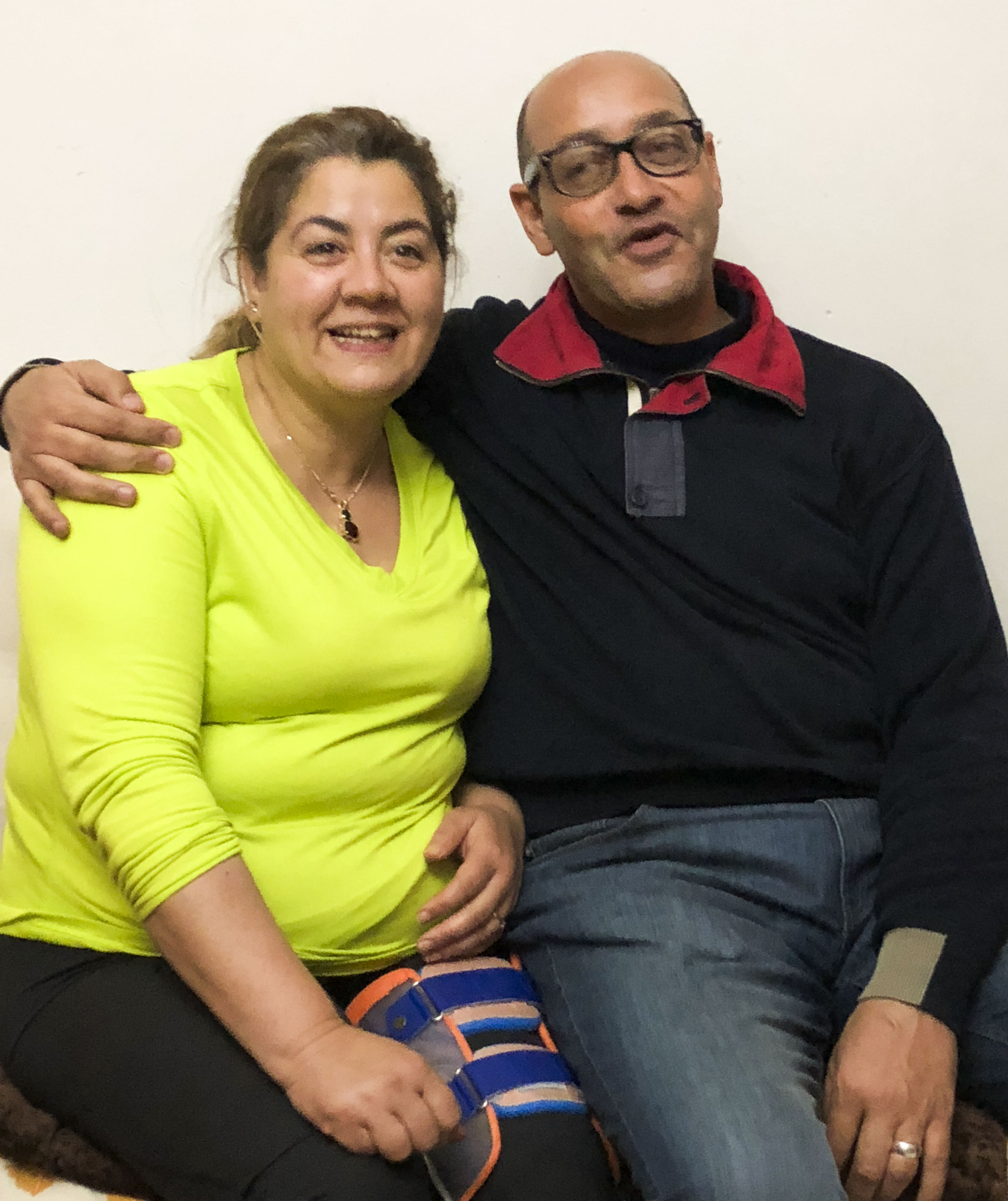
Mohammad and Nadia

16 responses to “Fes – ancient, old and modern cities”

  1. Tracey Avatar
    Tracey

    As you can imagine, I love the horses!

    Like

    1. nancywcaldwell Avatar

      Did you check out the link? There are some great photos there.

      Like

  2. Sue A. Murphy Avatar
    Sue A. Murphy

    Loved them all, Nancy (but especially the street in the old town). I learn so much from your blogs. Many thanks. Sue

    Like

    1. nancywcaldwell Avatar

      You are most welcome! Thanks for the kind words.

      Like

  3. Joan Avatar
    Joan

    I remember that hospitality! Great reading Nancy

    Liked by 1 person

  4. Shelley Avatar

    Love, love, love the photos. The woman in red in front of the palace door is my favorite. Great colors throughout.

    Like

    1. nancywcaldwell Avatar

      This has been a great tour so far. Worth considering!

      Like

      1. Shelley Avatar

        Oh, it is on the list. Helen, who you will meet in Iceland is interested too.

        Like

  5. Helen Hesse Avatar
    Helen Hesse

    Do you have a photo of your new jacket?

    Like

    1. nancywcaldwell Avatar

      No photo yet. Must have one of my tour mates take one.

      Like

  6. Terry Avatar
    Terry

    Can we get a picture of someone turning the doorknob of that huge door?
    You’re on a wonderful adventure!

    Like

    1. nancywcaldwell Avatar

      Shucks! I should have asked for someone to open the door while I was there!

      Like

  7. Gillian Avatar
    Gillian

    I love the dye pits photo. Amazing!

    Like

    1. nancywcaldwell Avatar

      The dye pits were fascinating but so stinky that the guide gave us each a sprig of mint to hold next to our noses!

      Like

  8. Paul Avatar
    Paul

    I like the narrow streets or alleys and the architecture. Love those arches with all the orchestration. Who works in those dye pits — I can’t imagine it would be pleasant. I’d rather be the concierge at the palace.

    Liked by 1 person

    1. nancywcaldwell Avatar

      Skilled trades in Morocco are passed from father to son, so the workers are probably sons of men who worked in the pits. It’s seriously stinky but the finished product does not smell at all. The palace guards work in 2-hour rotations so I agree, it might be better than the dye pits.

      Like

Leave a Reply

Free ride!

Shortly after leaving Rabat for Fes, a pickup truck with a horse in the back appeared on the highway. Issam, our guide, explained that this horse was going to a Tbourida, or what the French call a Fantasia.

A Tbourida is a gathering of possibly 100 teams each of 15 stallions and riders who compete based on their coordination racaing down a field, waving a musket, and finally letting off a shot at the finish line. The top few teams from each Tbourida compete in the Royal Palace complex against Mohammad VI’s horses in a grand finale. For some great action photos, see http://www.dailymail.co.uk/wires/afp/article-3838186/Tradition-art-blend-Morocco-tbourida-cavalry-charges.html.

A few more miles down the road, we saw a Tbourida in the early stages of preparation. Tents had been erected, many horses, some with their brightly coloured saddles, all tethered at the front leg were spread out in a field. We left the bus to take a look.

This slideshow requires JavaScript.

One team invited us into their tent for tea and then, in what I thought was an amazing display of hospitality but Issam says is typical, asked us to stay for lunch – all 14 of us!

We stopped on the way to our riad at a CarreFour where there was a liquor store. Issam warned us that the three nights following our stay in Fes would be dry, so we would have to stock up. Which we did. On Moroccan wines which are pretty good!

Fes has three cities, an ancient one founded in the 8th century, an old one dating from the 12th century, and new one which was built after the arrival in the French in 1912. The photo below is a view of the ancient city from a fortification south of the city.

View of ancient Fes

A word about Fes vs fez. Fes, pronounced with an S at the end, is the city while fez with a Z at the end is the hat.

We are staying in a riad – a house behind a blank wall with an interior courtyard and garden. Tiles decorate the floors and walls, and carved plaster surrounds many of the interior windows. To reach my room, I take the elevator to the third floor. It opens onto the rooftop deck which I cross and take a flight of steps down. I tried to find a different route, but got lost.

This slideshow requires JavaScript.

Our second day in Fes started out with a walk through the medina in the old city. The Royal Palace in Fes has the largest palace grounds in the world, including stables for an extensive collection of horses and a large tbourida site. The main door in the gate provided a backdrop for a young woman posing for photos.

Main door to the Fes Royal Palace
A street in the old city

We walked through to the market which was buzzing with activity. Men with pushcarts or mules or horses delivering goods to vendors or taking them away. Families shopping. Tourists clogging up the works! It’s a wonderful place to do a little people watching.

Chatting just outside the old city gate
Transporting goods inside the market

Fes’s ancient city has survived from medieval times. The souk’s alleys and lanes are some of the narrowest in Morocco so the market feels much busier than in the (somewhat) more modern old city.

The narrowest “street” in Morocco, just wide enough for a donkey

A visit to Fes is not complete without a visit to the leather dye pits. These pits and the work process have been designated a UNESCO World Heritage Site. The dyes are all natural colours, and the process organic.

Treatment and dye pits

Some of us, myself included, are coming home with made-to-measure – in just a few hours! – jackets. Jackets and coats for women are made from goat hide because it is lighter and softer than the cow hide used for men. The slippers in the header photo at the top of this post are made of leather dyed in these pits.

We ended our second day in Fes with a home visit. Six of us dined at the home of Mohammad and Nadia and their son, a middle class Fes family. Mohammad told us his family history – though his day job is in real estate, he had spent thee day shearing sheep on his family farm. He regaled us with the story of how he and Nadia met – he saw her waiting to cross the street and decided she was the one for him – and we viewed their wedding photos. We described what we did and discussed various differences between attitudes in Morocco and North America. Dinner consisted of appetizers – vegetables, lentils, etc. – and a lamb tagine. Dessert was fresh orange slices sprinkled with cinnamon, a dish we all agreed was our favourite!

Mohammad and Nadia