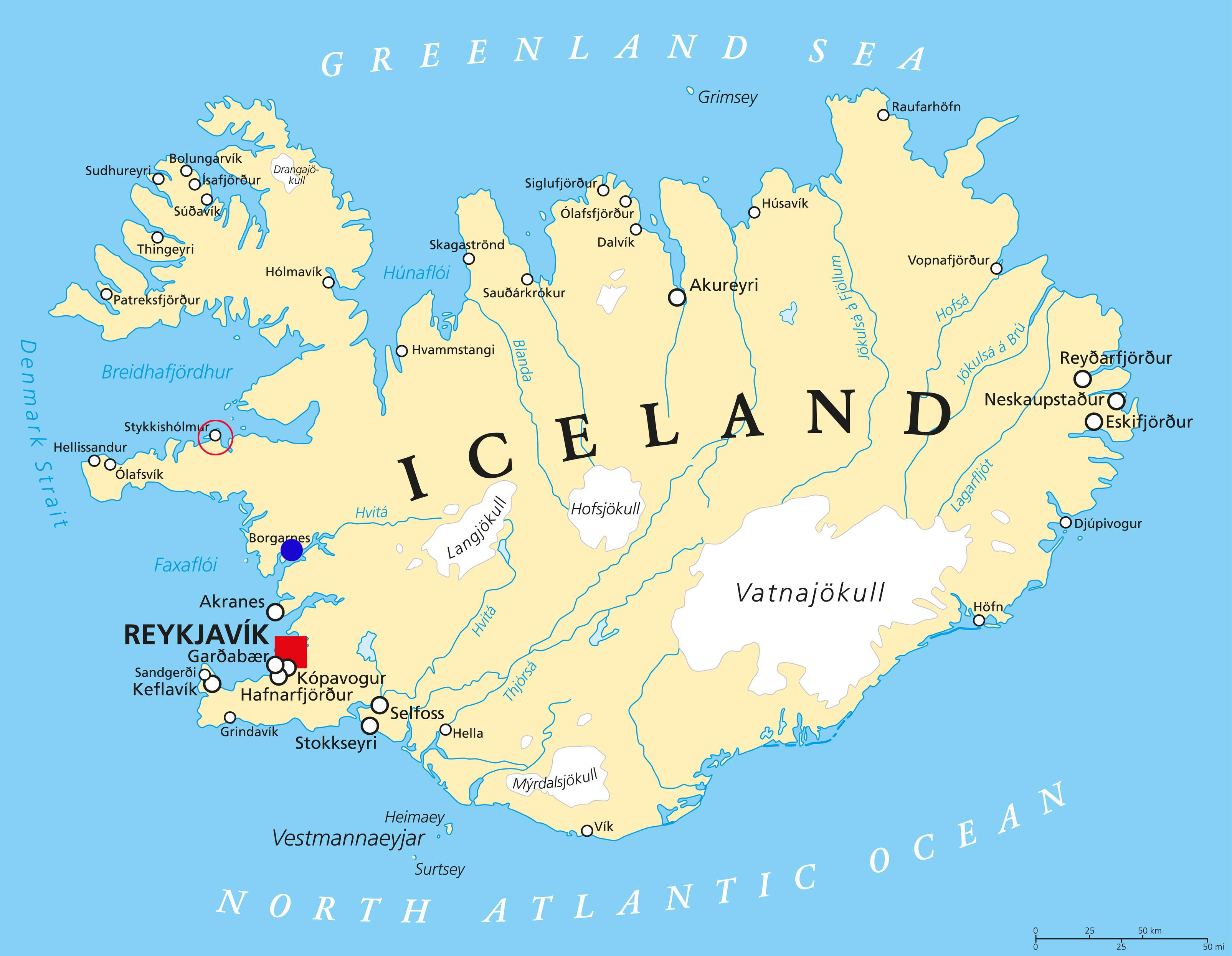
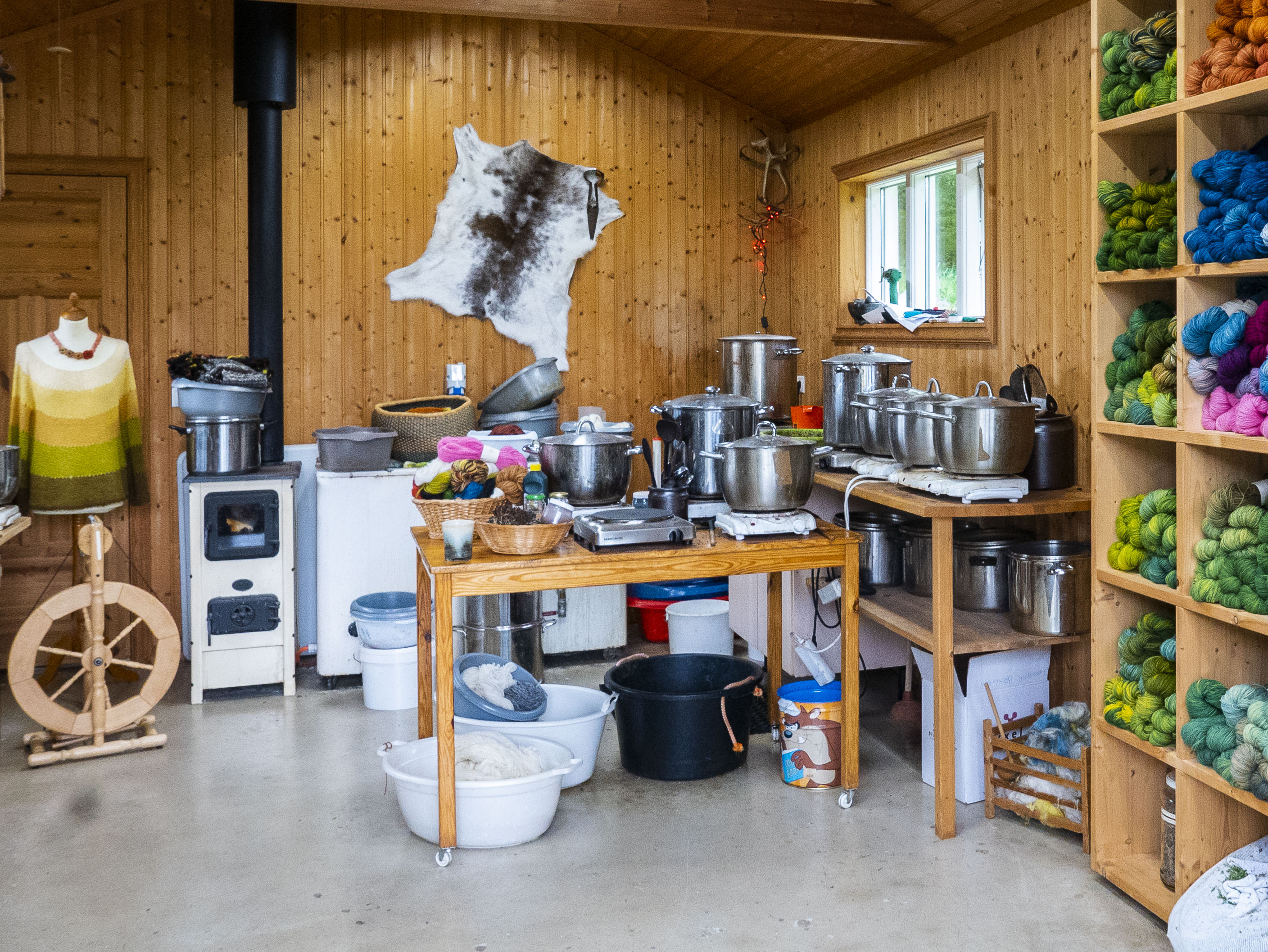
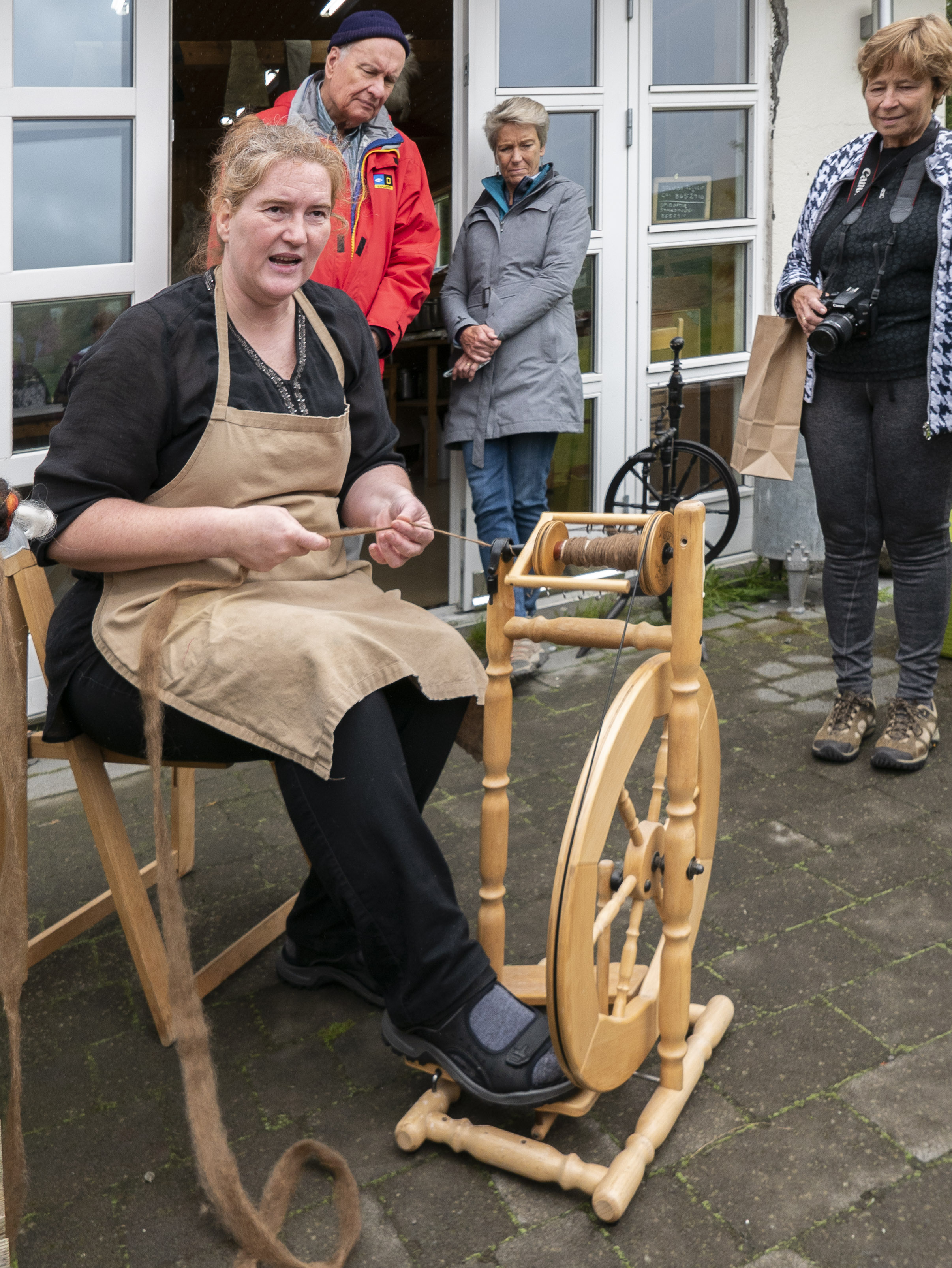
 We left Reykjavik this morning for Stykkishólmur. (See the red circle on the map to the left.) We crossed rolling meadows with grazing sheep and horses and resting swans (!) from time to time catching a glimpse of the coast. On the way we dropped in on Gudron who teaches biology and wool production at the agricultural university and maintains a craft studio at home.
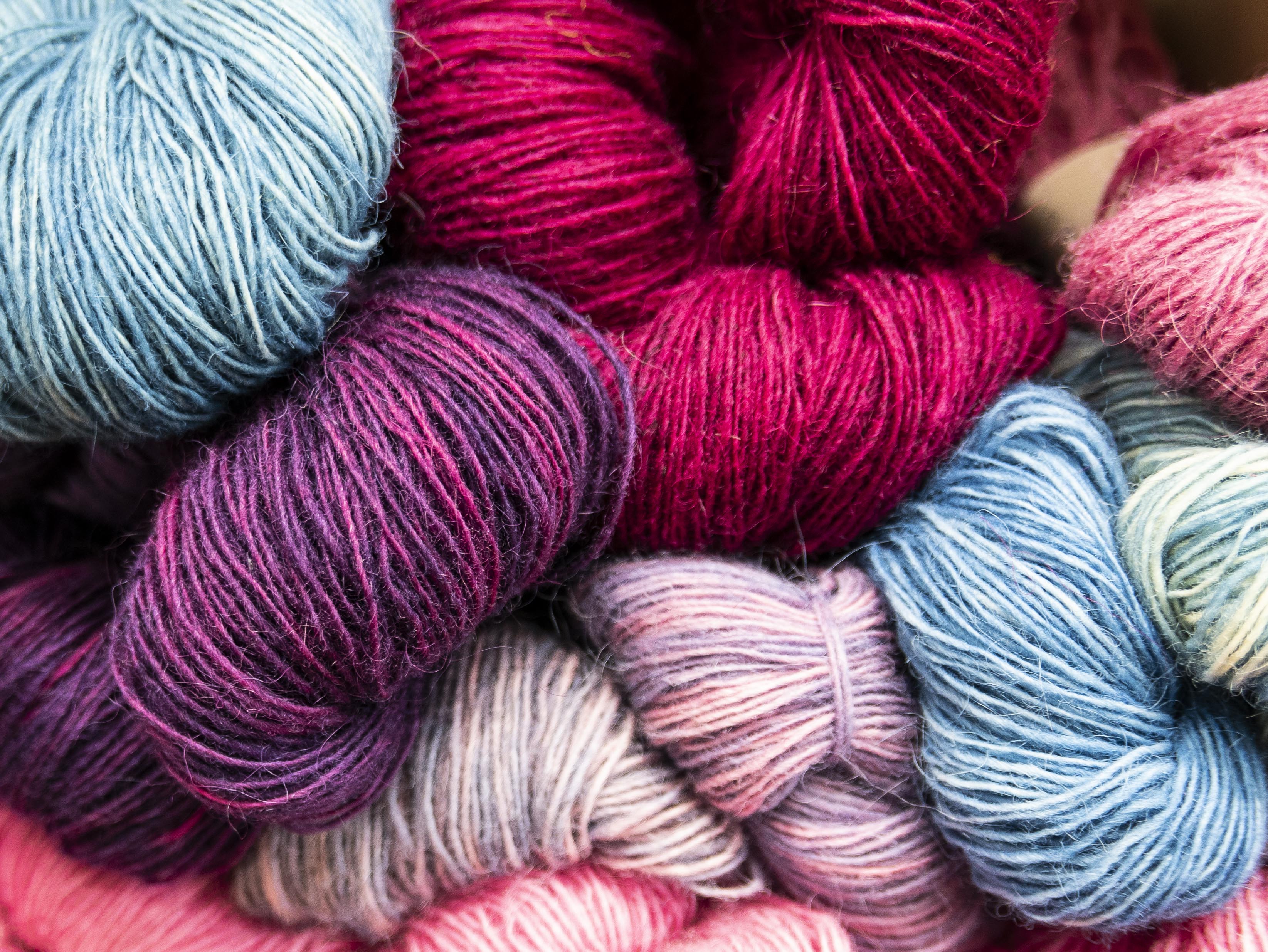
Wool dyed using traditional organic processes takes on wonderfully vibrant colours. Successfull dyeing requires both acidic and alkaline ingredients. In the old days, urine, and sometimes cow urine (apparently very stinky), was prized for its alkaline properties but Gudron sensibly uses household ammonia. There are no plants in Ísland that create good red and blue colours so Gundrun imports the necessary natural ingredients. She dyes wool purchased from farmers in big pots on hot plates in her studio for two or three days.
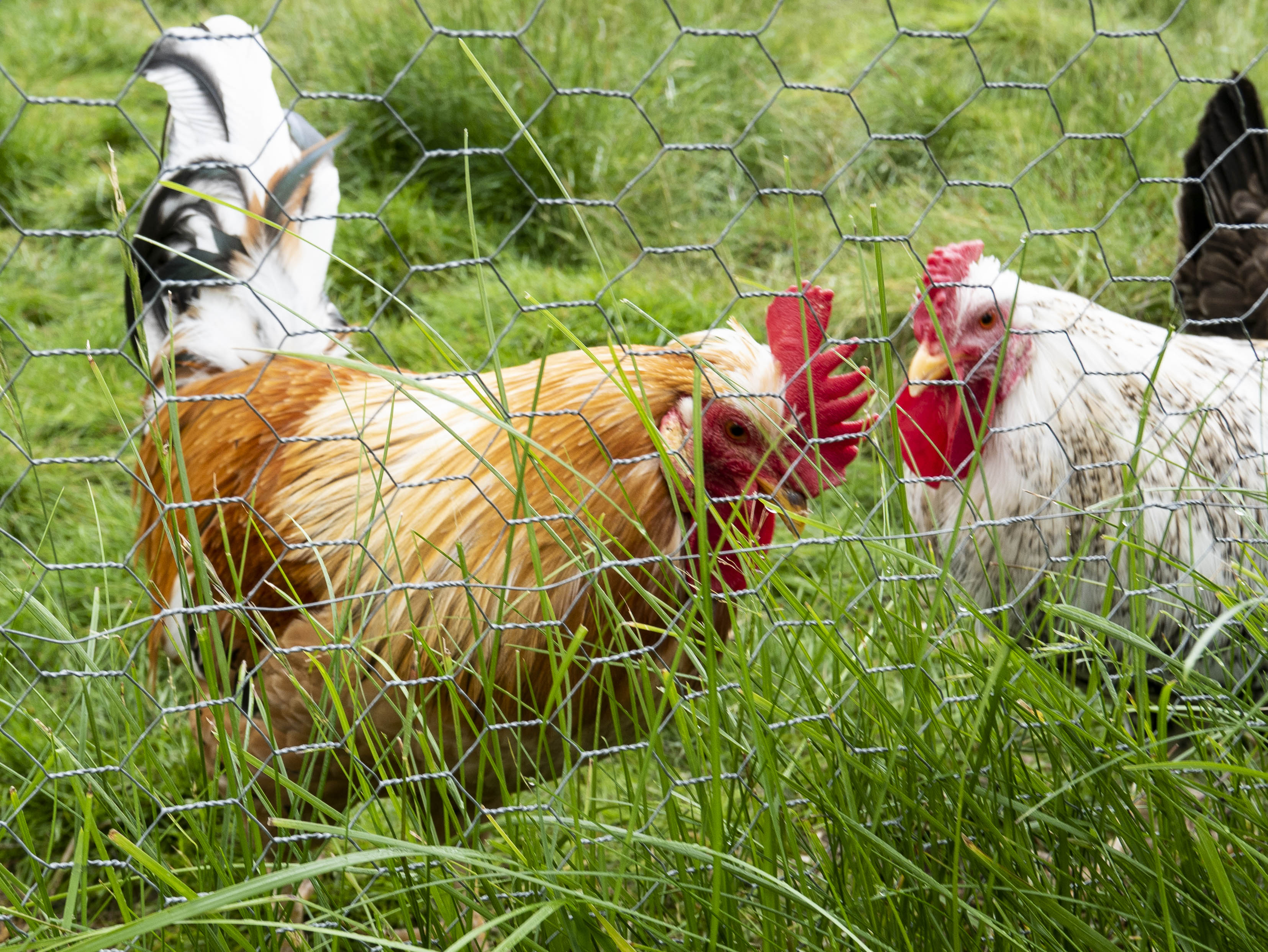
Gudrun also keeps chickens whose ancestors are the strain brought over in the 9th century from Europe. She says they are aggressive and love to escape, so they are kept in a large coop.
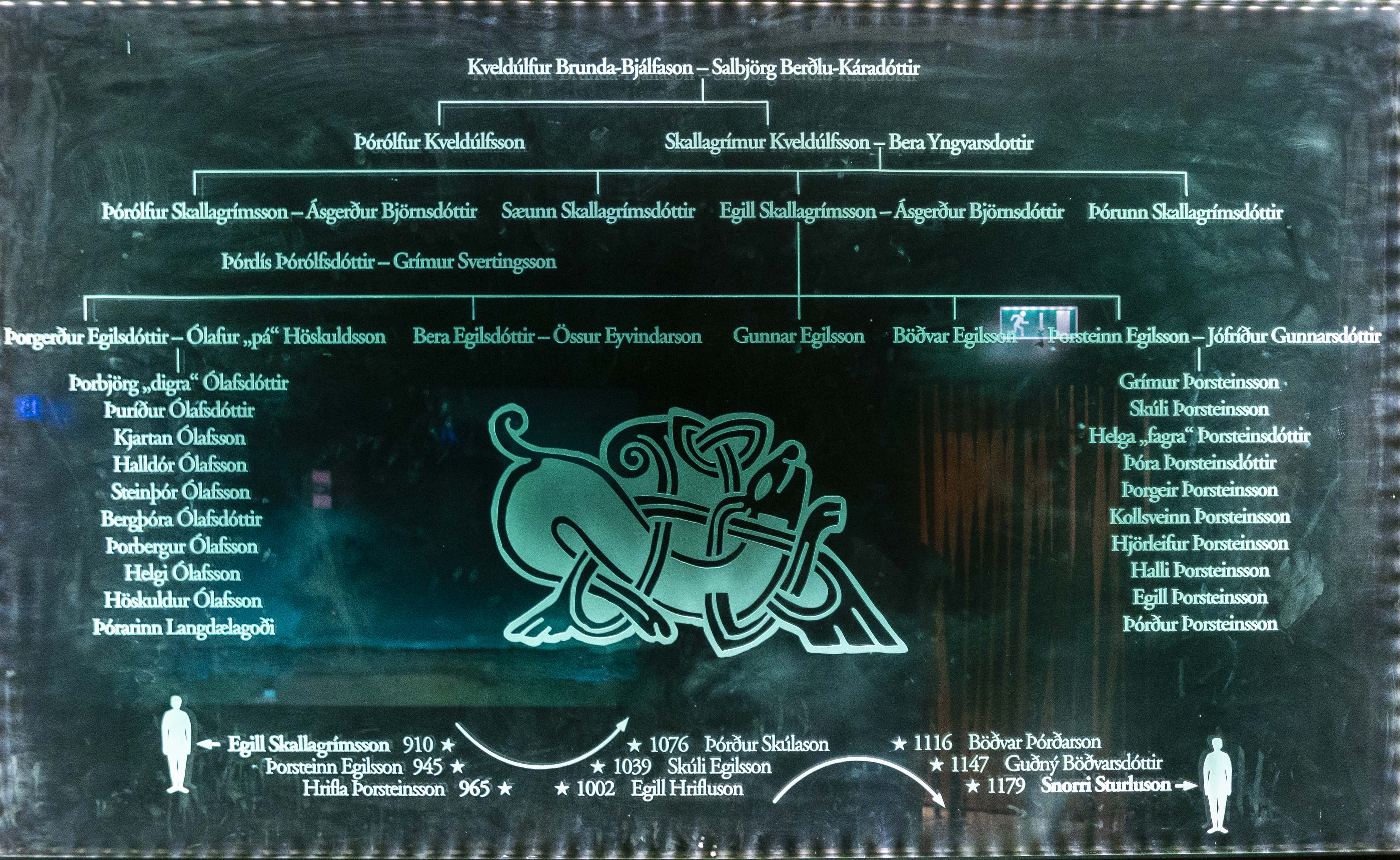
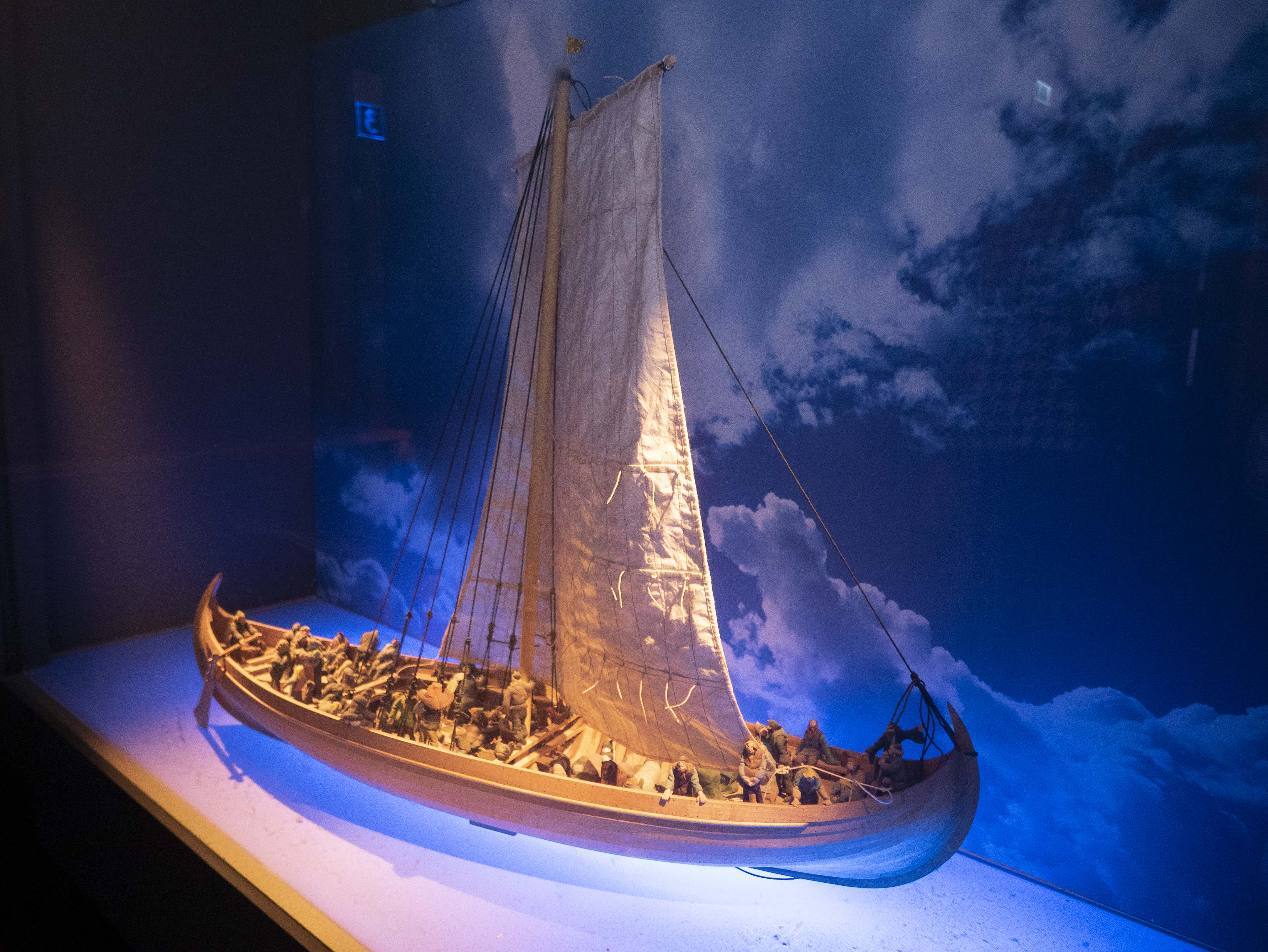
We travelled further back in Íslandic time with a visit to the Settlement Centre in Bogarnes (blue dot on map above). An interactive exhibition included the family tree of the first settlers on Ísland. It’s remarkable that this country knows the names of the first people to live and farm here. Apparently most people can trace their family trees.
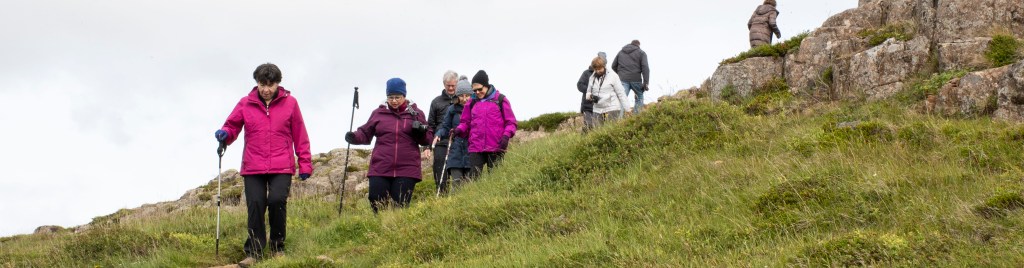
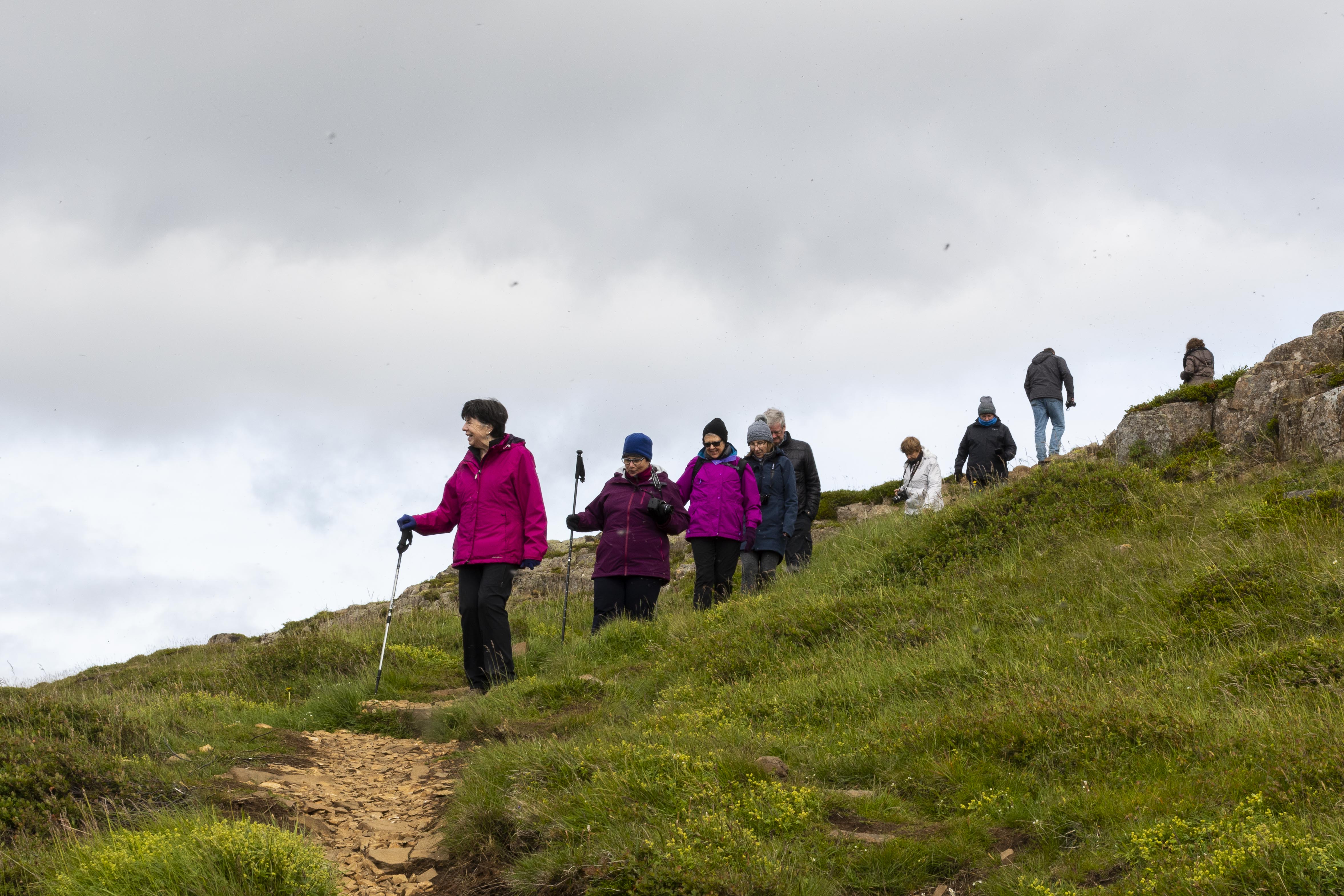
We lunched at the Settlement Centre then furthered our digestion with a hike up Mount Helgafell. Coming from Vancouver I seriously questioned the use of the word “mount” when describing the 250 foot (76 metre) hill, but by the time I reached the top my misgivings had dissipated. Mount Helgafell is also called the “holy mountain” because in pagan times it was believed that people who died entered the mountain. And Gudrun Osvifursdottir, the heroine of the Laxdaela Saga, lived and died here.
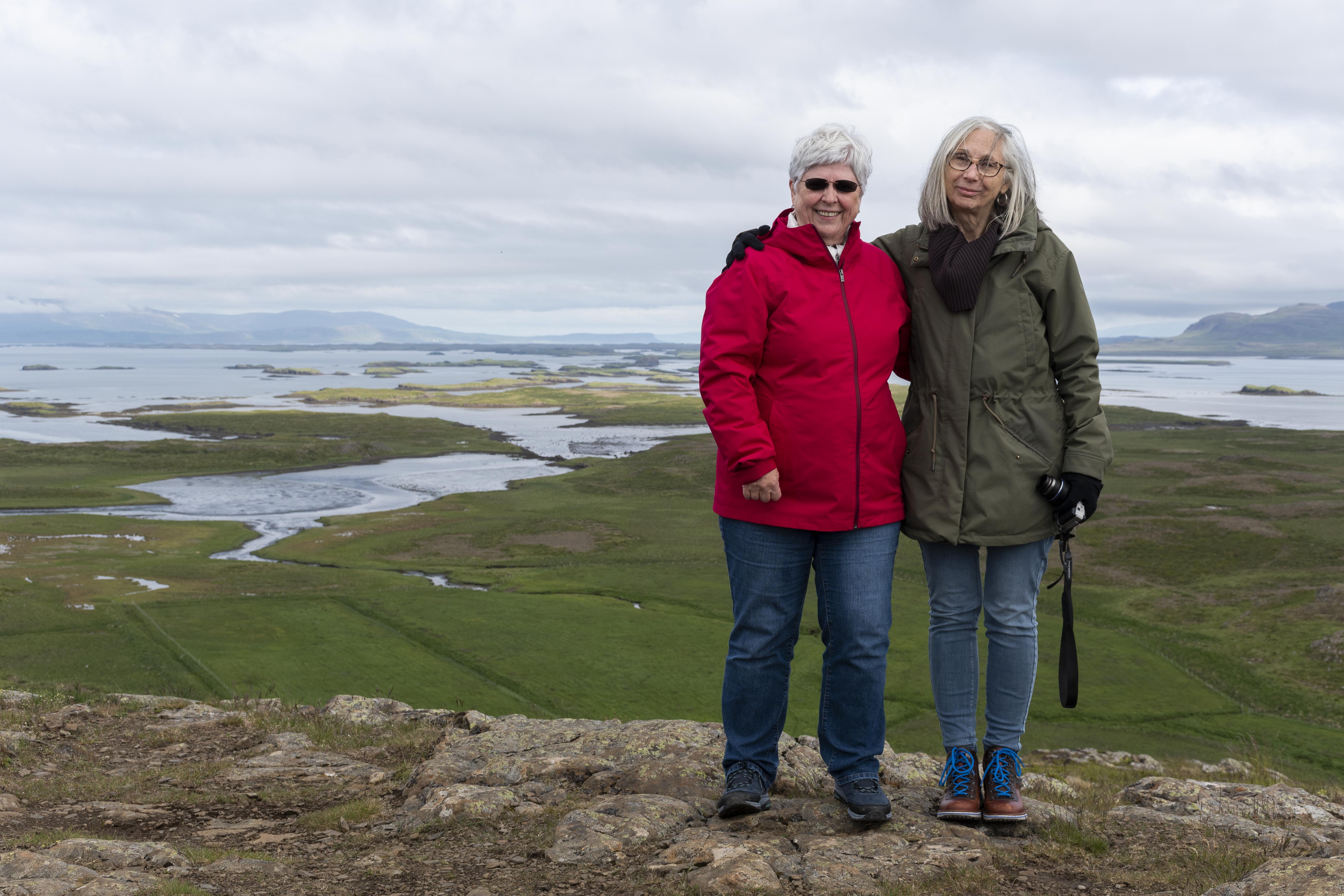
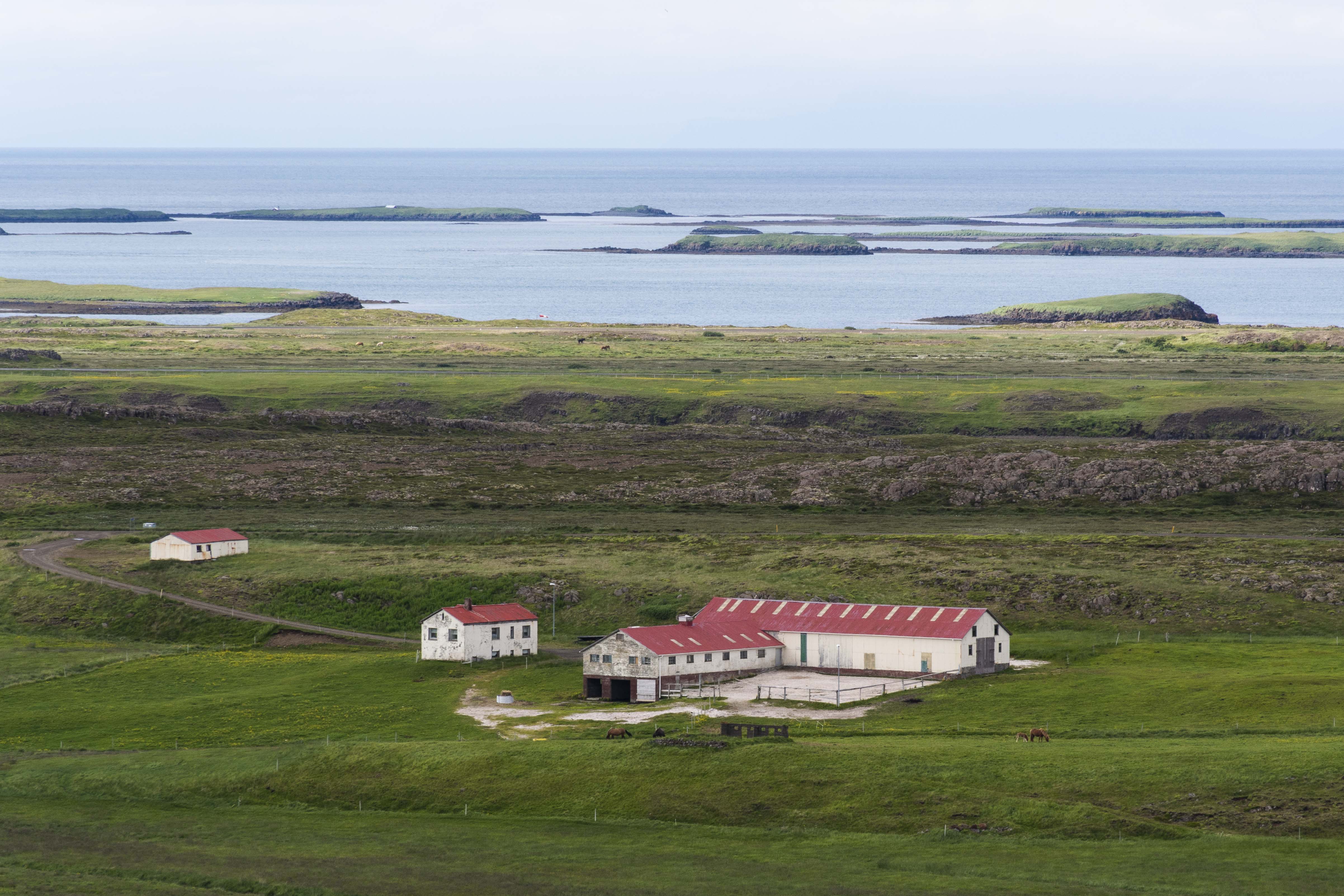
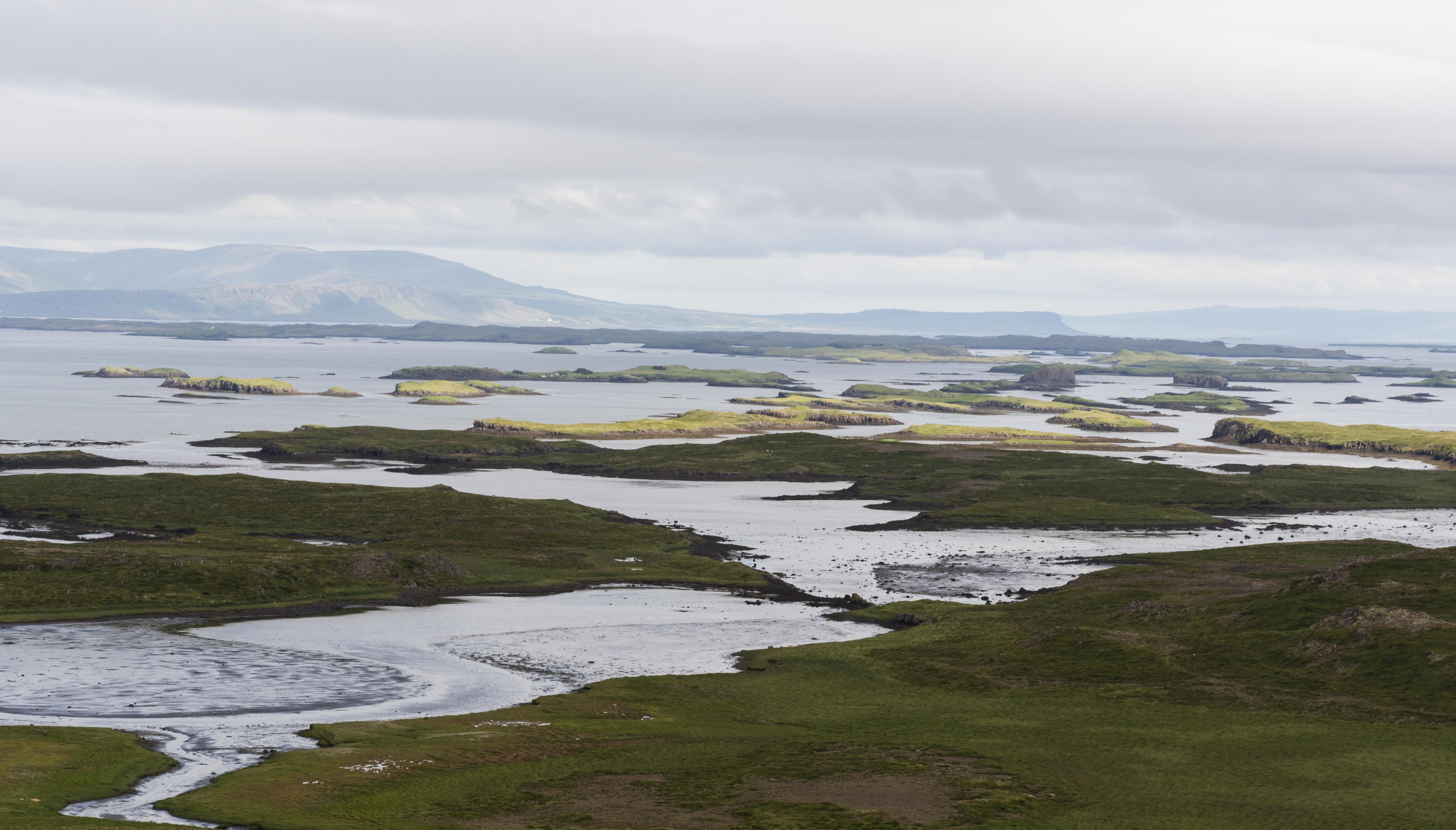
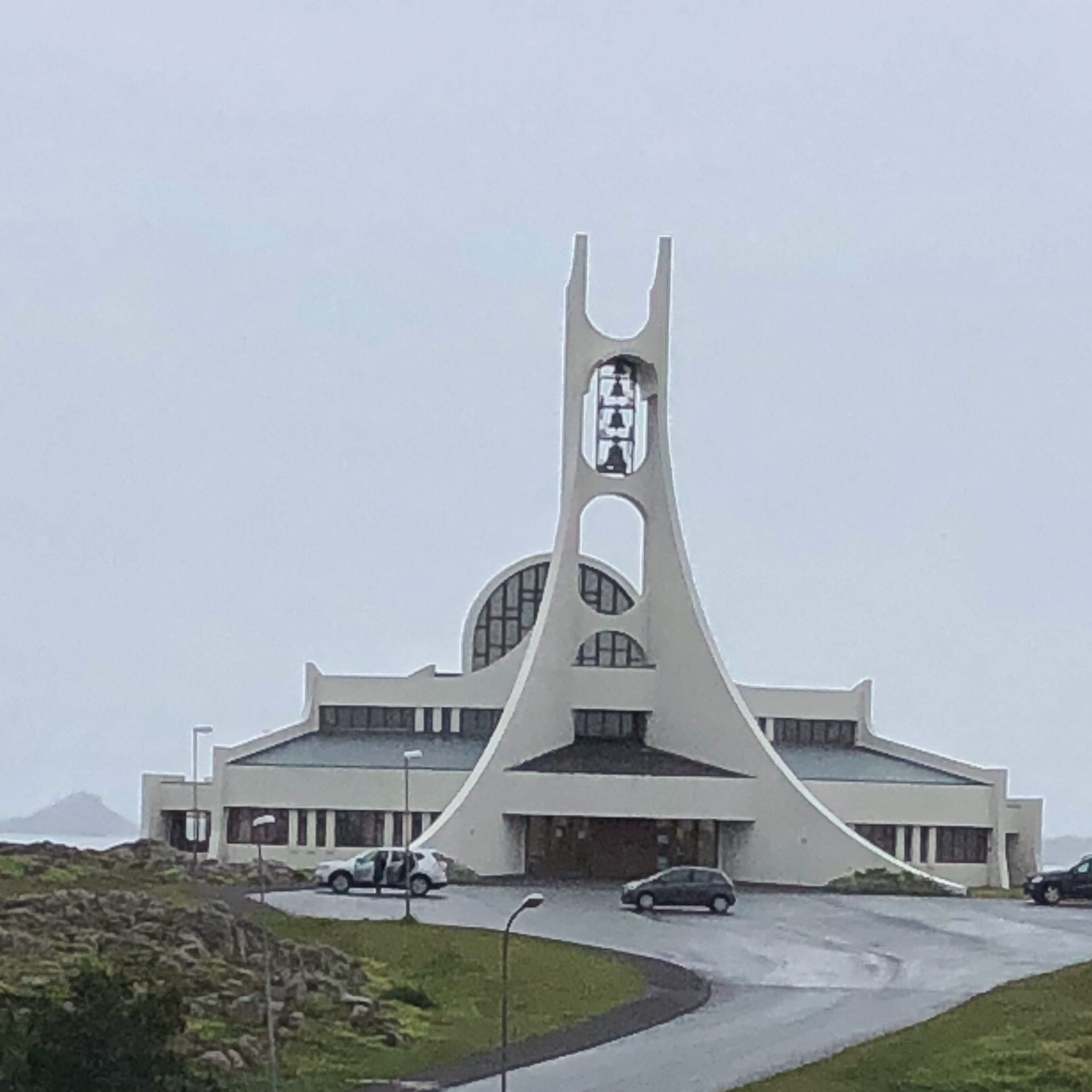
The view from the top was impressive – plains extending to the coast, farms further inland, “real” mountains in the distance. Gray skies had followed us from Reykjavik and made the view mistily romantic. Stykkishólmur was visible in the distance, its uber-modern church standing out with our hotel to its left.
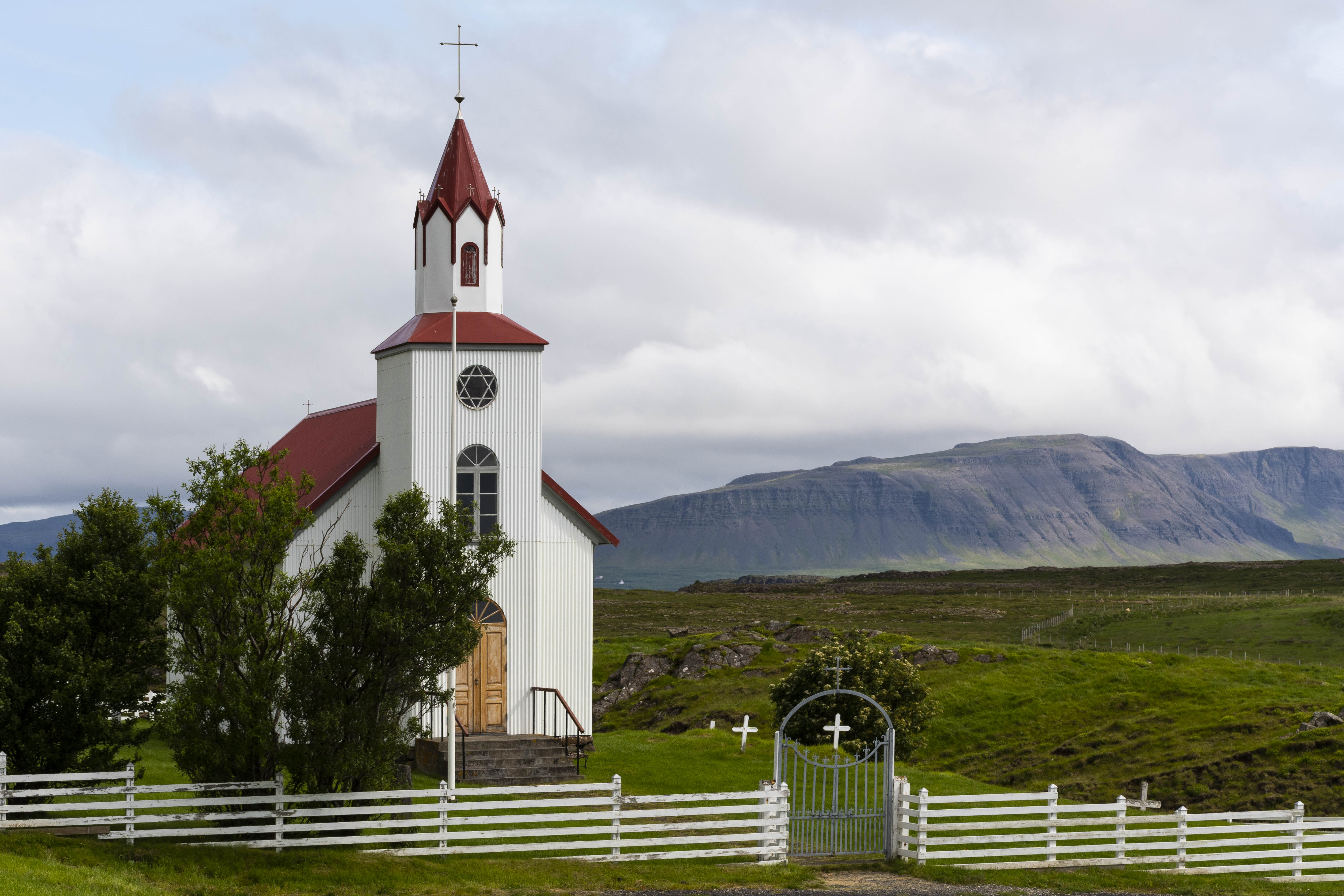
The sun broke through on our hike down to a small church and homestead.
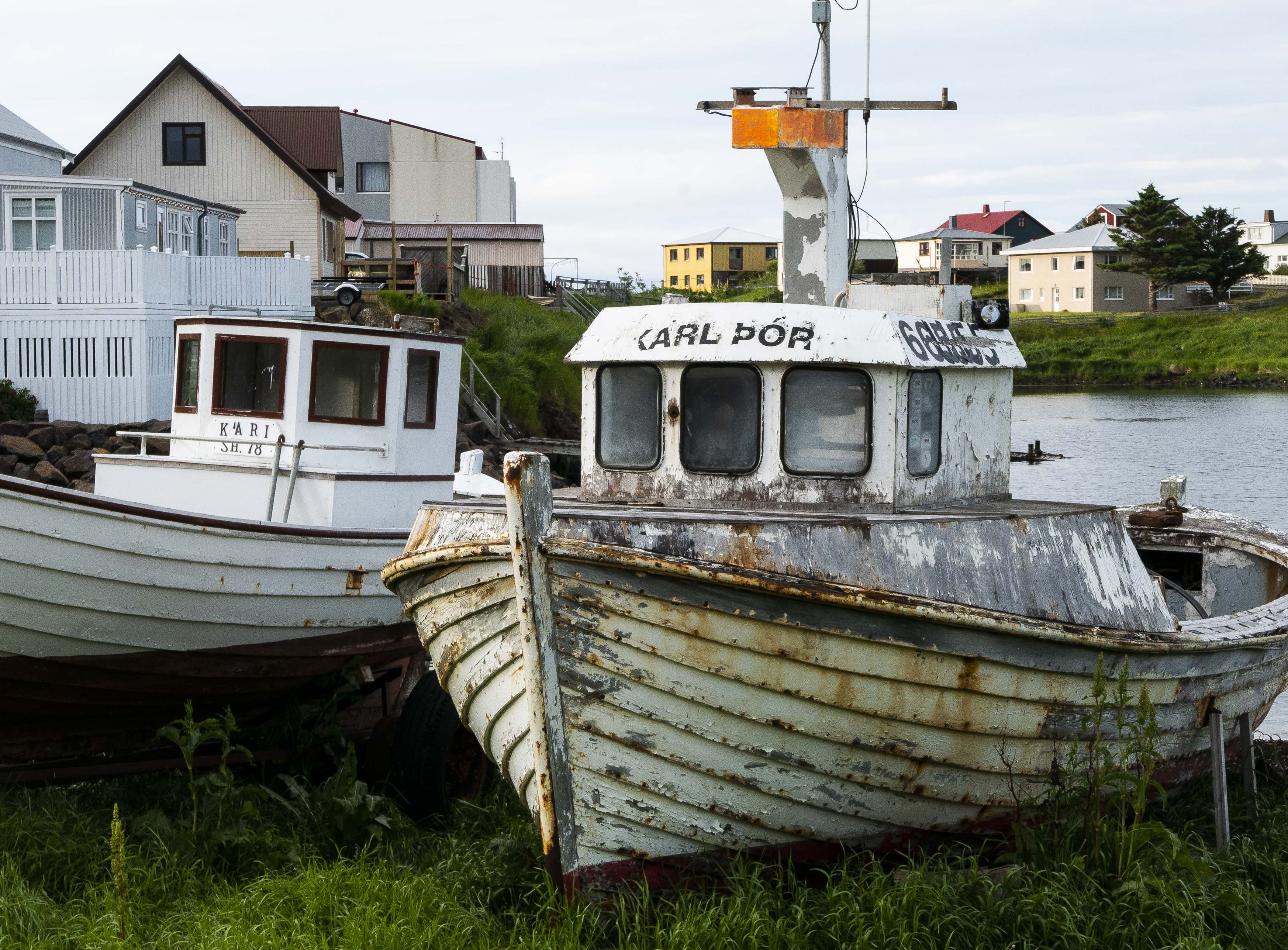
Stykkishólmur boasts of exceptionally environmentally conscious directors and inhabitants and along with four other municipalities on the Snaefellsnes peninsula it is the first community in Europe to get the EarthCheck environmental certification. The town was also the first municipality in Ísland to start fully sorting its waste as well as the first town in Ísland to receive the prestigious Blue flag eco-label for its harbour, and has been an European Destination of Excellence (EDEN), since 2011. (Wikipedia)
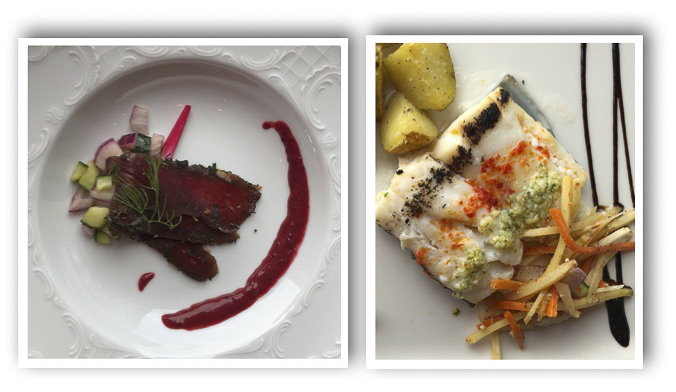
Dinner at our hotel was up to the delicious standard we have come to expect. A starter of lamb salad was followed by cod and an ice cream dessert. I have to say the food we have eaten in Ísland has been superb!


Leave a Reply