On the Move

Travelling the Avenue of Volcanoes
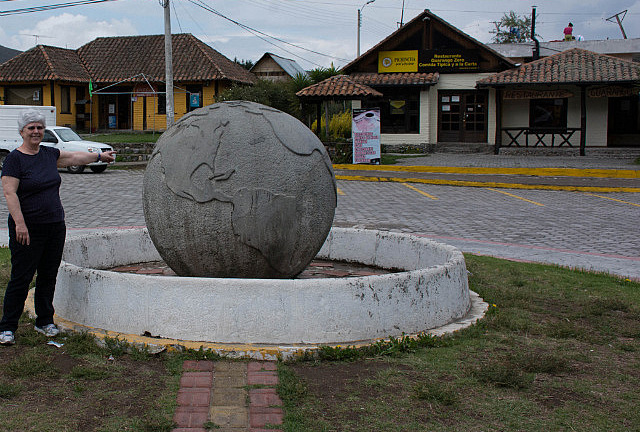
Nancy at the equator

The trip to Riobamba took us down the Avenue of the Volcanoes; on both sides of the highway were the Andes Mountains, with active volcanoes all around.  This is the first day we have had appreciable cloud cover; unfortunately it obscured the snow-capped volcanoes.  But we were able to see the equator as we passed by.  I am standing in the southern hemisphere pointing at my northern hemisphere home.
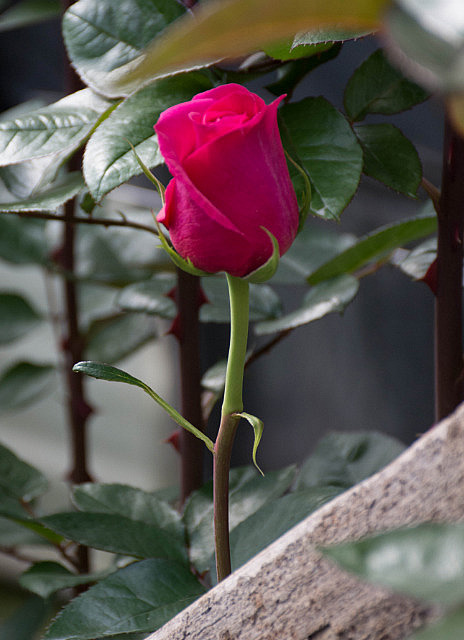
A perfect bright fushia rose

The minimum wage – or in this case salary – in Ecuador is $340 per month.  Ecuador defines a “dignifying salary” – that required to cover basic needs – for a family of four living on the outskirts of Quito that salary to be $380.  A “basic salary” for living well is $580 per month.  The “line of poverty” is living on less than $3 per day or $360 per month; the “line of misery” is less than $2 per day.  Since the average salary is $800 per month, people here are by and large doing well.
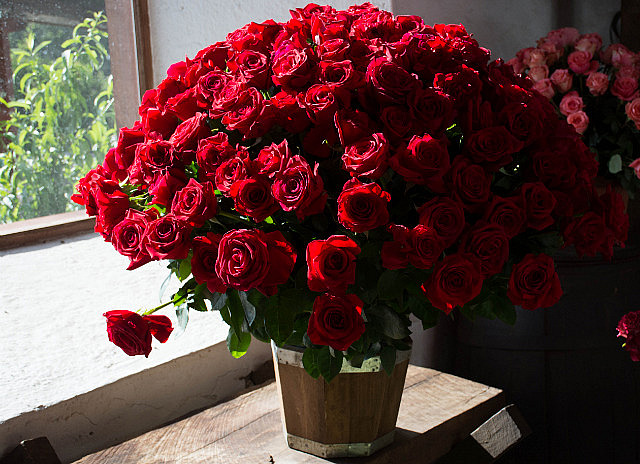
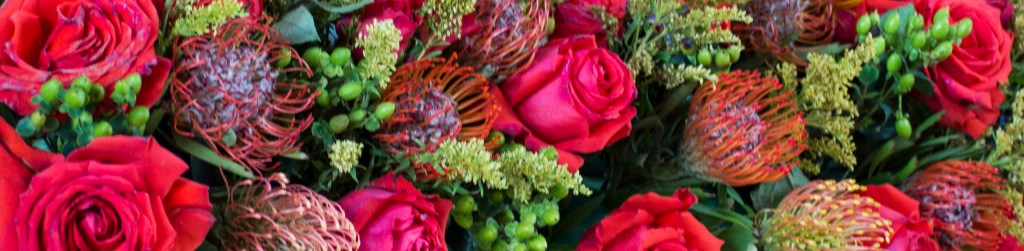
Beautiful red roses
Beautiful red roses

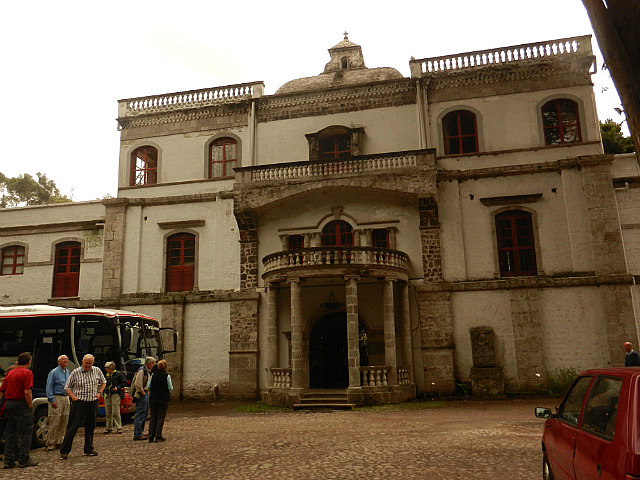
An early start saw us breakfasting at Hacienda La Compañía de Jesús, the home of the owner of Rosadex, a flower-producing company.  “Hacienda” originally meant a piece of land 60 kilometres by 30 kilometres.  Most old hacienda families have had to sell off the land, keeping only the house, and many have opened restaurants and B&B’s to help cover the expenses.  Now “hacienda” refers to a home rather than an estate.
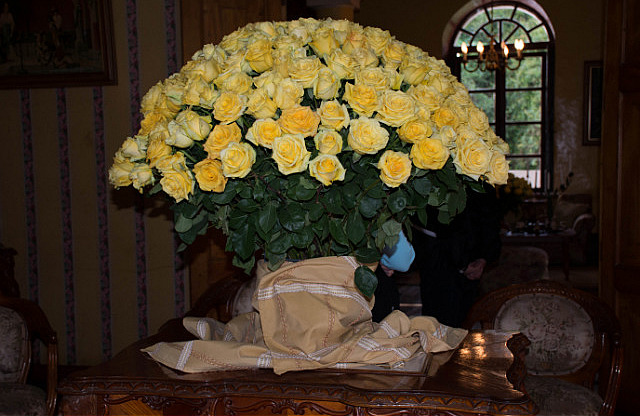
Bouquet in the front hall of the family home
3.1391010675.latin-lady-roses
Latin Lady roses

The Hacienda La Compañía de Jesús was originally a Jesuit holding.  When King Carlos III of Spain evicted Jesuits from Spain and her colonies three hundred years ago, ancestors of the current family purchased the land.  In 1919, the then owner built, and filled with European furniture, the grand house where we breakfasted today. Around 2000, the family entered the greenhouse cut-rose business with 25 acres of roses near the house, and another 25 acres of land at an altitude 600 metres higher for varieties that required cooler temperatures.  Ecuadorian roses are considered the finest in the world in part because they receive 12 hours of daylight twelve months of the year.

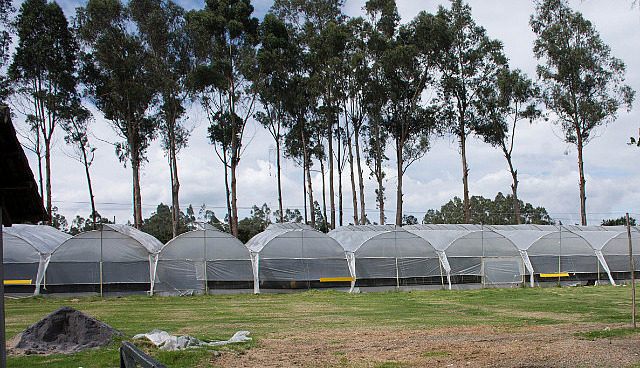
Rose greenhouses
Rose greenhouses
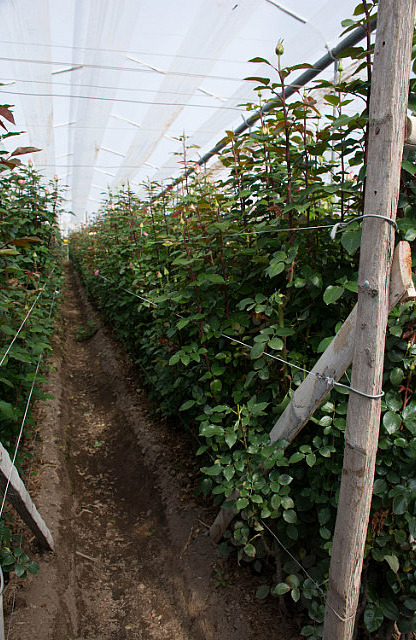
Inside a greenhouse
Inside a greenhouse

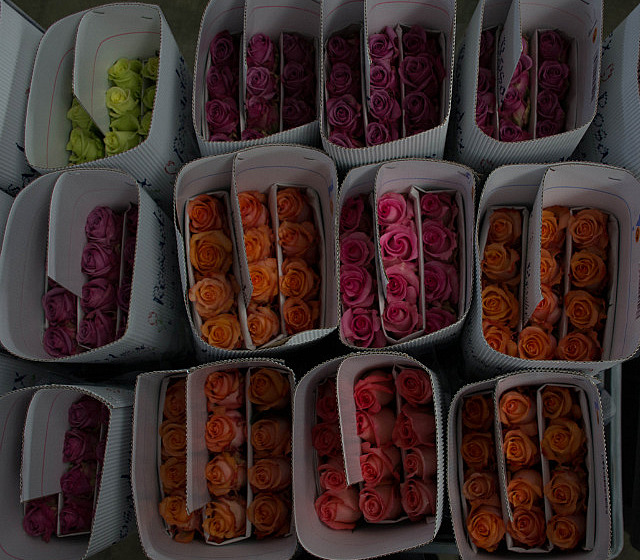
The roses are grown, packed and shipped from this estate to destinations all over the world.  Roses going to the US market must have stems at least 40 cm long with tightly closed blossoms and a minimum of foliage.  Those going to Europe must have stems at least 60 cm long with blossoms slightly open and lots of foliage.  Roses destined for Russia must have the longest possible stems with blossoms almost completely open and lots of foliage.  The rose industry is one of fashion!

Packing roses
Packing roses
Roses awaiting shipment

And here is the most important information of all:  to keep roses fresh in your home, you must cut the stem at a 45° angle, and then every two days rinse and recut the stem and change the water.  Apparently it’s possible to keep roses for up to two weeks with this regimen.

Bouquets in the showroom
Hacienda La Ciénega
Hacienda La Ciénega

We stopped for lunch at the Hacienda La Ciénega, one of Ecuador’s oldest estates having been founded in the early 17th century.  The Plaza Lasso family belongs to Ecuador’s aristocracy; one member was president from 1901-05 and another from 1948-52.  Interestingly, the hacienda is widely believed to be haunted.  Two hundred years ago, an owner did away with some opponents and buried them in the 9-foot wide pumice walls of a wing that was being constructed at the time.  Gonzalo, who says he doesn’t believe in ghosts, claims to have had an other-worldly experience himself!

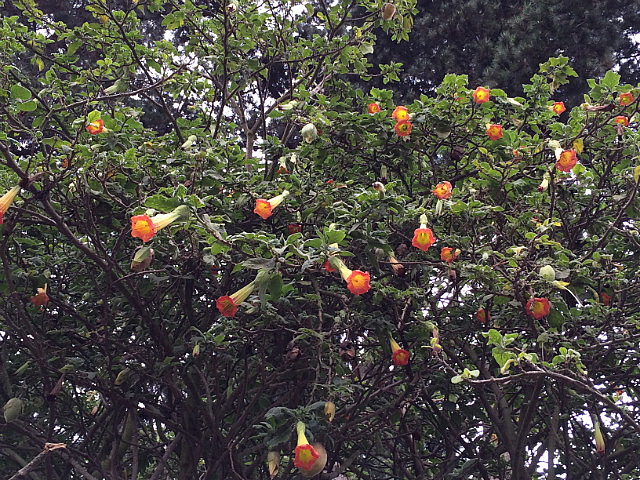
This tree is both good and bad. From the flower comes atropine used for opthalmic and respiratory healing. From the see comes scopolomine, the date rape drug. This tree was on the grounds of Hacienda La Ciénega.

All right – food!  Ecuador is pretty much a meat and potatoes country.  Wheat is a common crop, so bread is not feature of meals, and what bread is served at breakfast isn’t particularly appealing to our tastes.  Breakfast can be eggs, bacon/sausage, fruit, granola, yoghurt and so on.  Usually lunch and dinner are three-course meals – a salad or soup to start, a meat or fish entrée with potatoes and vegetables, and a sweet to finish.

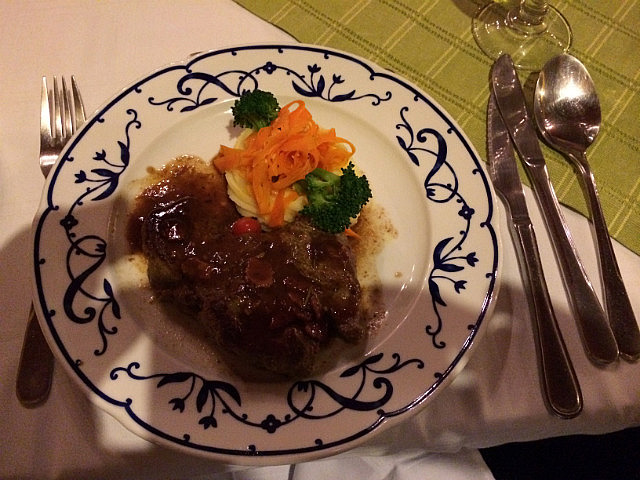
Steak dinner at Hacienda Cusin

The food at Sacha Lodge was outstanding.  There was a buffet at each meal with several choices for every course.  I mentioned in an earlier post that the menu at Hacienda Cusin changes each day depending upon what is fresh in the market.

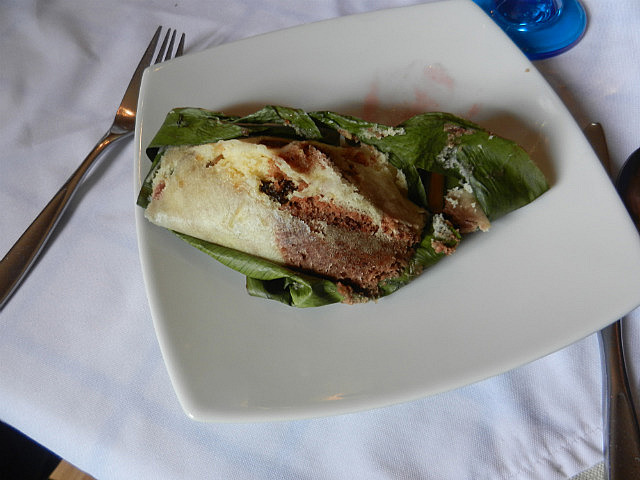
Quimbolito
Quimbolito

Today at Hacienda La Ciénega my lunch began with pumpkin soup, was followed by pork with barbeque sauce, and ended with quimbolito, an Ecuadorian delicacy made with flour, eggs, sugar and raisins, and steamed in a large lily leaf.   The best part f the lunch was when the band Cotapaxi serenaded us with rousing Ecuadorian music!

Tonight’s meal at the Hacienda Abraspungo was not exceptional though the Hacienda itself is lovely.  We are only passing through on our way to the Devil’s Nose Railway, the Inca ruins, and finally Cuenca.

My wake-up call has been set:  4:30 am!  Hora de dormir. Nos vemos mañana.

Leave a Reply

Nancy at the equator

The trip to Riobamba took us down the Avenue of the Volcanoes; on both sides of the highway were the Andes Mountains, with active volcanoes all around.  This is the first day we have had appreciable cloud cover; unfortunately it obscured the snow-capped volcanoes.  But we were able to see the equator as we passed by.  I am standing in the southern hemisphere pointing at my northern hemisphere home.

A perfect bright fushia rose

The minimum wage – or in this case salary – in Ecuador is $340 per month.  Ecuador defines a “dignifying salary” – that required to cover basic needs – for a family of four living on the outskirts of Quito that salary to be $380.  A “basic salary” for living well is $580 per month.  The “line of poverty” is living on less than $3 per day or $360 per month; the “line of misery” is less than $2 per day.  Since the average salary is $800 per month, people here are by and large doing well.

Beautiful red roses
Beautiful red roses

An early start saw us breakfasting at Hacienda La Compañía de Jesús, the home of the owner of Rosadex, a flower-producing company.  “Hacienda” originally meant a piece of land 60 kilometres by 30 kilometres.  Most old hacienda families have had to sell off the land, keeping only the house, and many have opened restaurants and B&B’s to help cover the expenses.  Now “hacienda” refers to a home rather than an estate.
Bouquet in the front hall of the family home
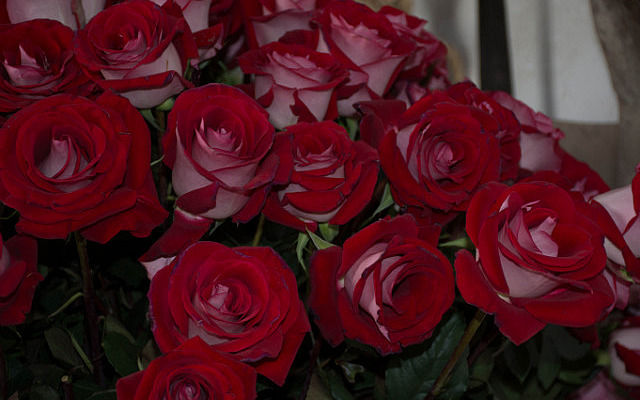
3.1391010675.latin-lady-roses
Latin Lady roses

The Hacienda La Compañía de Jesús was originally a Jesuit holding.  When King Carlos III of Spain evicted Jesuits from Spain and her colonies three hundred years ago, ancestors of the current family purchased the land.  In 1919, the then owner built, and filled with European furniture, the grand house where we breakfasted today. Around 2000, the family entered the greenhouse cut-rose business with 25 acres of roses near the house, and another 25 acres of land at an altitude 600 metres higher for varieties that required cooler temperatures.  Ecuadorian roses are considered the finest in the world in part because they receive 12 hours of daylight twelve months of the year.
Rose greenhouses
Rose greenhouses
Inside a greenhouse
Inside a greenhouse

The roses are grown, packed and shipped from this estate to destinations all over the world.  Roses going to the US market must have stems at least 40 cm long with tightly closed blossoms and a minimum of foliage.  Those going to Europe must have stems at least 60 cm long with blossoms slightly open and lots of foliage.  Roses destined for Russia must have the longest possible stems with blossoms almost completely open and lots of foliage.  The rose industry is one of fashion!
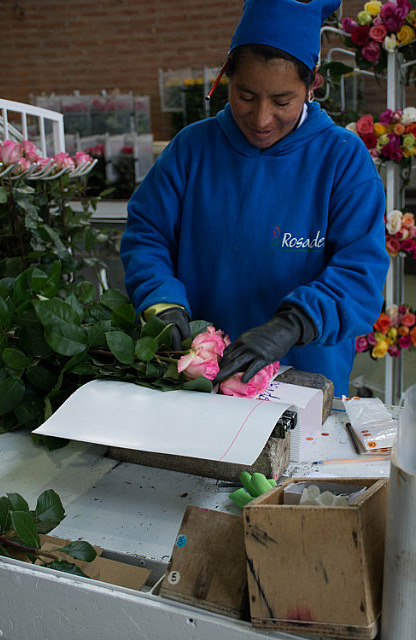
Packing roses
Packing roses
Roses awaiting shipment

And here is the most important information of all:  to keep roses fresh in your home, you must cut the stem at a 45° angle, and then every two days rinse and recut the stem and change the water.  Apparently it’s possible to keep roses for up to two weeks with this regimen.
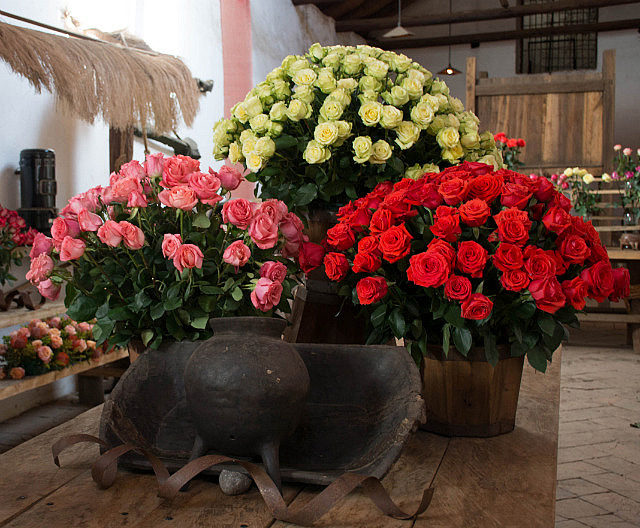
Bouquets in the showroom
Hacienda La Ciénega
Hacienda La Ciénega

We stopped for lunch at the Hacienda La Ciénega, one of Ecuador’s oldest estates having been founded in the early 17th century.  The Plaza Lasso family belongs to Ecuador’s aristocracy; one member was president from 1901-05 and another from 1948-52.  Interestingly, the hacienda is widely believed to be haunted.  Two hundred years ago, an owner did away with some opponents and buried them in the 9-foot wide pumice walls of a wing that was being constructed at the time.  Gonzalo, who says he doesn’t believe in ghosts, claims to have had an other-worldly experience himself!
This tree is both good and bad. From the flower comes atropine used for opthalmic and respiratory healing. From the see comes scopolomine, the date rape drug. This tree was on the grounds of Hacienda La Ciénega.

All right – food!  Ecuador is pretty much a meat and potatoes country.  Wheat is a common crop, so bread is not feature of meals, and what bread is served at breakfast isn’t particularly appealing to our tastes.  Breakfast can be eggs, bacon/sausage, fruit, granola, yoghurt and so on.  Usually lunch and dinner are three-course meals – a salad or soup to start, a meat or fish entrée with potatoes and vegetables, and a sweet to finish.
Steak dinner at Hacienda Cusin

The food at Sacha Lodge was outstanding.  There was a buffet at each meal with several choices for every course.  I mentioned in an earlier post that the menu at Hacienda Cusin changes each day depending upon what is fresh in the market.
Quimbolito
Quimbolito

Today at Hacienda La Ciénega my lunch began with pumpkin soup, was followed by pork with barbeque sauce, and ended with quimbolito, an Ecuadorian delicacy made with flour, eggs, sugar and raisins, and steamed in a large lily leaf.   The best part f the lunch was when the band Cotapaxi serenaded us with rousing Ecuadorian music!

Tonight’s meal at the Hacienda Abraspungo was not exceptional though the Hacienda itself is lovely.  We are only passing through on our way to the Devil’s Nose Railway, the Inca ruins, and finally Cuenca.

My wake-up call has been set:  4:30 am!  Hora de dormir. Nos vemos mañana.