On the Move

Railroading our way south
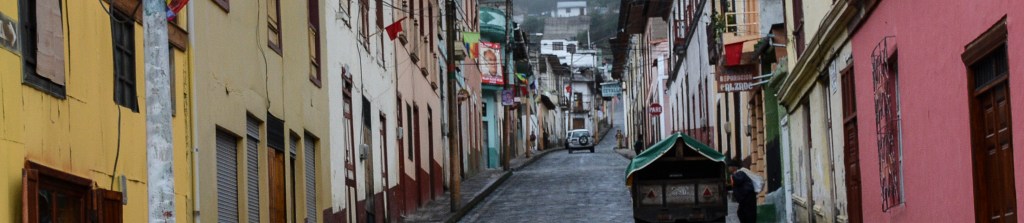
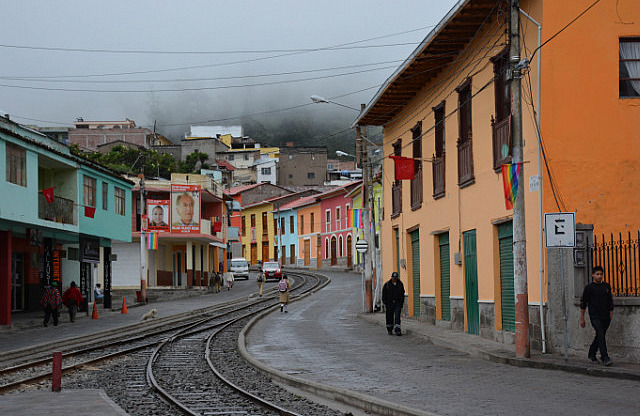
Alausi street scene
Alausi street scene

What fun we had this morning, that is after we recovered from the 4:30 a.m. wakeup call!  We drove south for two hours to Alausi, the terminus for the Devil’s Nose train line.

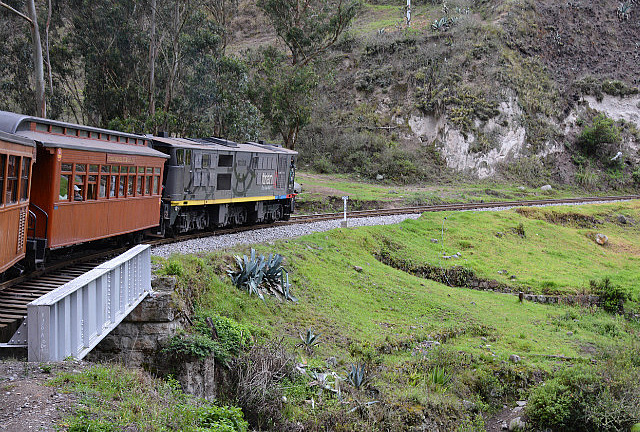
The train itself consists of old wooden cars with windows that slide open, pulled by a single engine.  It reminded me of the train Butch Cassidy and the Sundance Kid rode in the movie of the same name.
Devil's Nose train from four cars back
Devil’s Nose train from four cars back

The line was built in 1902 as part of the larger Ecuador system.  In a horizontal distance of 12 kilometres, the track drops 800 metres accomplished through a series of switchbacks.  The train passes the point of switching, a helper jumps out and operates the switching mechanism, and the train backs onto the new tracks for another downward stretch. Surprisingly to me, the downward trip was slower than the climb back up.
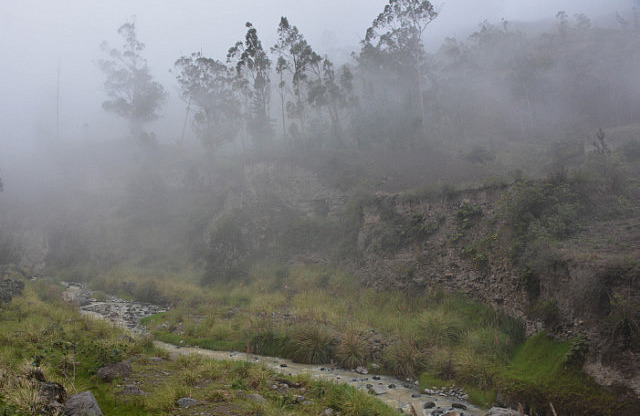
View along the Devil's Nose railway
View along the Devil’s Nose railway

This train line is called the Devil’s Nose because of a rock formation at the bottom that, as Gonzalo says if you use your “Disney mind,” looks like two eyes and a nose.  The “devil” part of the name derives from the fact that 1,200 workers were killed during construction, some due to illnesses like malaria but many others in dynamiting accidents. Most of the 12 kilometres was blasted through rock walls.

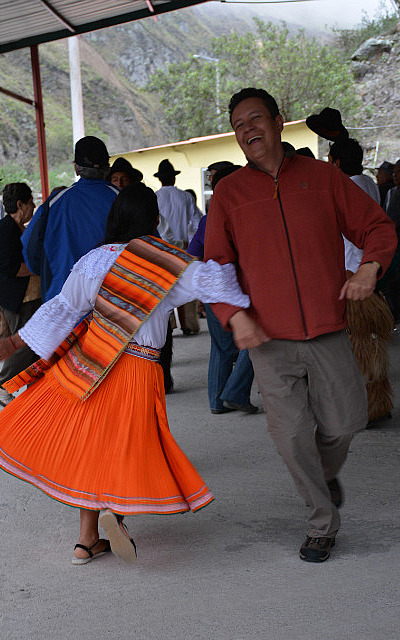
A misty day which obscured our view, but leant the scene a pleasant mystical quality.  At Sibambe, the end of the line for us, we were met by dancers,

https://www.flickr.com/photos/64513024@N07/21216800511/in/datetaken/


and horse and llama owners offering the chance to be photographed sitting upon their animals for $1.  It was tough, but I resisted.
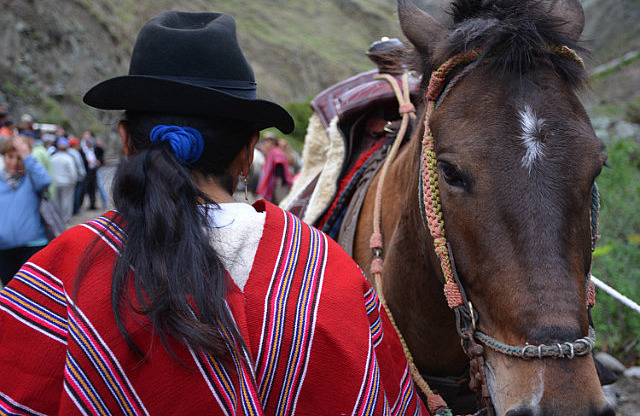
Horseback photos $1
Horseback photos $1
Gonzalo joining the dancers
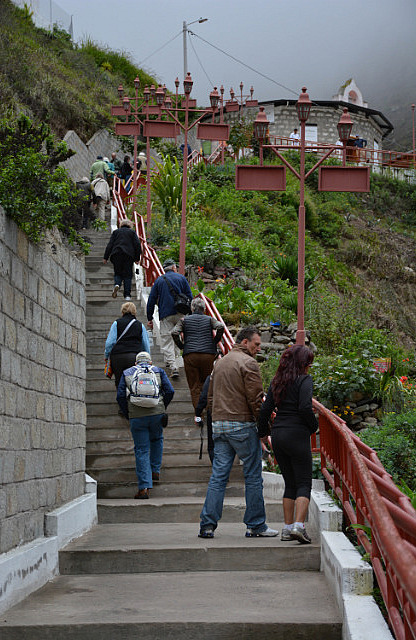
Aboriginal museum at top of stairs

A small museum offered information about local culture and a history of the rail line.  We had a snack – included in the ticket price – at Sibambe, then returned to Alausi, a cute and colorful town.

The train station in Alausi contains several gift shops, one of which sells vegetable ivory carvings.  The nut of the tagua tree when ripe and exposed for several days to sun becomes hard enough to use for small carvings.  The meat of the nut looks like and apparently ages like ivory, hence the name.  I purchased a small carving of a toucan to boss my animal collection about.


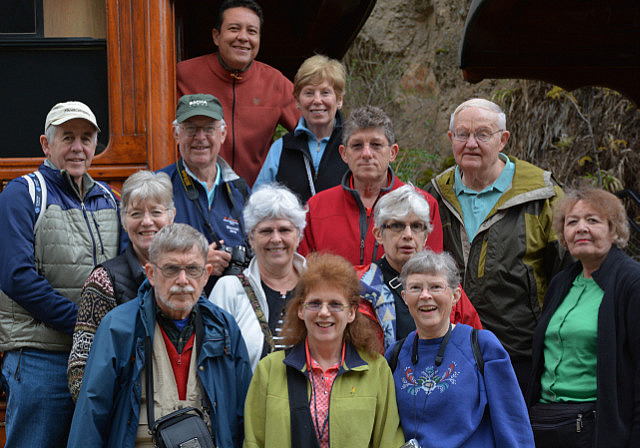
My tour mates - Gonzalo at the top
My tour mates – Gonzalo at the top

Following lunch at Posada Ingapirca, an old farm turned hotel where the quinoa soup was good and the dessert outstanding, we toured the actual Ingapirca, an Inca ruin dating back to the early 16th century.

Fig and cheese with brown sugar sauce
Dolce de leche
Dolce de leche


This site was inhabited by indigenous people before the Inca conquered them; thereafter they lived more or less peacefully under Inca direction.  Of primary interest is the remains of an astronomical observatory, one wall of which seems to be in tact.  Through the strategic placement of a doorway, the sun casts shadows that move with the months of the year.  There is a large rock with 28 holes that acted as a calendar; one hole would have been plugged each day until all were plugged and the lunar month was complete.  The remains of a series of granaries, of public baths and an aqueduct to feed them are also evident.

Ingapirca
Ingapirca
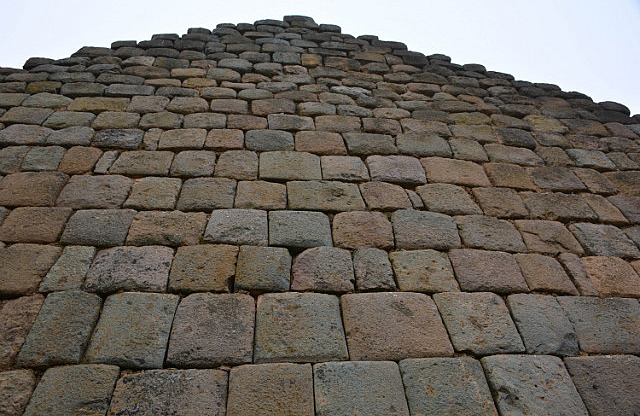
Looking to the top of the observatory

The mist stayed with us for this visit; it seemed somehow appropriate that we couldn’t see the ruins clearly.  So much is still not known about life at Ingapirca.

The drive south to Cuenca took us through dairy country, rolling hills of pasture and food crops that was stunningly beautiful.  The sun peeked through the clouds highlighting emerald green fields and farmhouses and grazing cattle, so different from the dense Amazon rainforest and the soaring volcanic landscape.  We are indeed experiencing the many faces of this exciting country.

Leave a Reply

Alausi street scene
Alausi street scene

What fun we had this morning, that is after we recovered from the 4:30 a.m. wakeup call!  We drove south for two hours to Alausi, the terminus for the Devil’s Nose train line.

The train itself consists of old wooden cars with windows that slide open, pulled by a single engine.  It reminded me of the train Butch Cassidy and the Sundance Kid rode in the movie of the same name.

Devil's Nose train from four cars back
Devil’s Nose train from four cars back

The line was built in 1902 as part of the larger Ecuador system.  In a horizontal distance of 12 kilometres, the track drops 800 metres accomplished through a series of switchbacks.  The train passes the point of switching, a helper jumps out and operates the switching mechanism, and the train backs onto the new tracks for another downward stretch. Surprisingly to me, the downward trip was slower than the climb back up.

View along the Devil's Nose railway
View along the Devil’s Nose railway

This train line is called the Devil’s Nose because of a rock formation at the bottom that, as Gonzalo says if you use your “Disney mind,” looks like two eyes and a nose.  The “devil” part of the name derives from the fact that 1,200 workers were killed during construction, some due to illnesses like malaria but many others in dynamiting accidents. Most of the 12 kilometres was blasted through rock walls.

A misty day which obscured our view, but leant the scene a pleasant mystical quality.  At Sibambe, the end of the line for us, we were met by dancers,

https://www.flickr.com/photos/64513024@N07/21216800511/in/datetaken/


and horse and llama owners offering the chance to be photographed sitting upon their animals for $1.  It was tough, but I resisted.
Horseback photos $1
Horseback photos $1
Gonzalo joining the dancers
Aboriginal museum at top of stairs

A small museum offered information about local culture and a history of the rail line.  We had a snack – included in the ticket price – at Sibambe, then returned to Alausi, a cute and colorful town.

The train station in Alausi contains several gift shops, one of which sells vegetable ivory carvings.  The nut of the tagua tree when ripe and exposed for several days to sun becomes hard enough to use for small carvings.  The meat of the nut looks like and apparently ages like ivory, hence the name.  I purchased a small carving of a toucan to boss my animal collection about.
 

My tour mates - Gonzalo at the top
My tour mates – Gonzalo at the top

Following lunch at Posada Ingapirca, an old farm turned hotel where the quinoa soup was good and the dessert outstanding, we toured the actual Ingapirca, an Inca ruin dating back to the early 16th century.
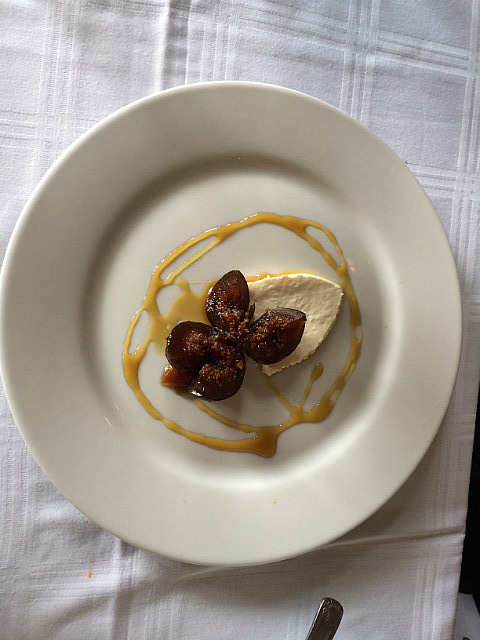
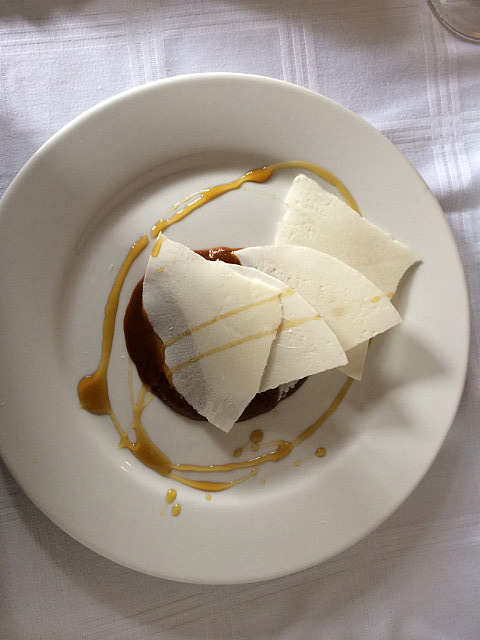
Fig and cheese with brown sugar sauce
Dolce de leche
Dolce de leche


This site was inhabited by indigenous people before the Inca conquered them; thereafter they lived more or less peacefully under Inca direction.  Of primary interest is the remains of an astronomical observatory, one wall of which seems to be in tact.  Through the strategic placement of a doorway, the sun casts shadows that move with the months of the year.  There is a large rock with 28 holes that acted as a calendar; one hole would have been plugged each day until all were plugged and the lunar month was complete.  The remains of a series of granaries, of public baths and an aqueduct to feed them are also evident.
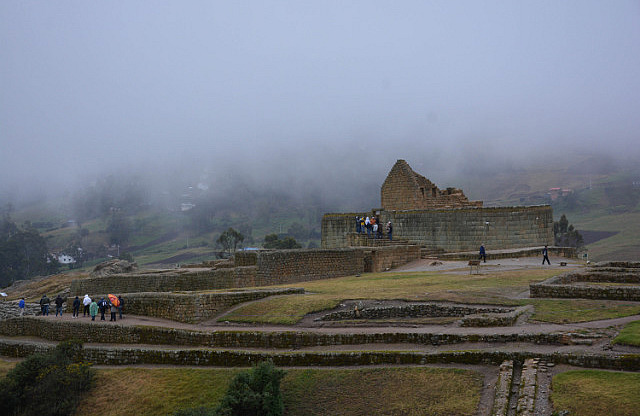
Ingapirca
Ingapirca
Looking to the top of the observatory

The mist stayed with us for this visit; it seemed somehow appropriate that we couldn’t see the ruins clearly.  So much is still not known about life at Ingapirca.

The drive south to Cuenca took us through dairy country, rolling hills of pasture and food crops that was stunningly beautiful.  The sun peeked through the clouds highlighting emerald green fields and farmhouses and grazing cattle, so different from the dense Amazon rainforest and the soaring volcanic landscape.  We are indeed experiencing the many faces of this exciting country.