On the Move

Meeting tortoises
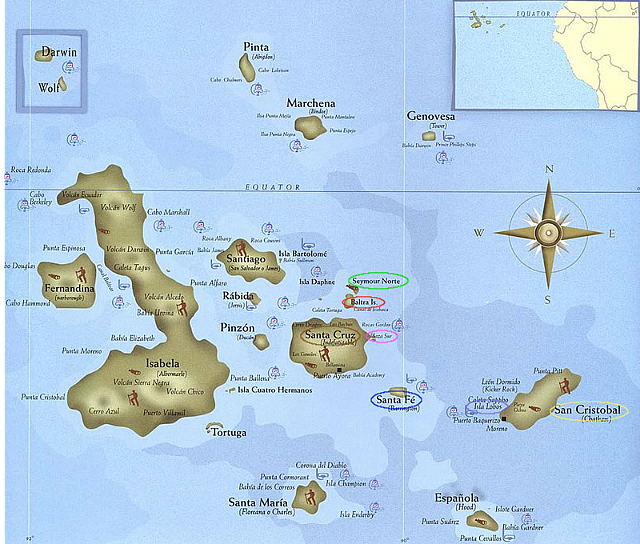
3.1391628328.gal-pagos-islands-map_
Galápagos Islands map

What a strange and wonderful world we have entered! We flew from Guayaquil to Baltra Island in the Galápagos archipelago a few days ago, and after being x-rayed and searched and our belongings sprayed with disinfectant the authorities pronounced us fit for entry and stamped our passports with a pretty cool little logo.
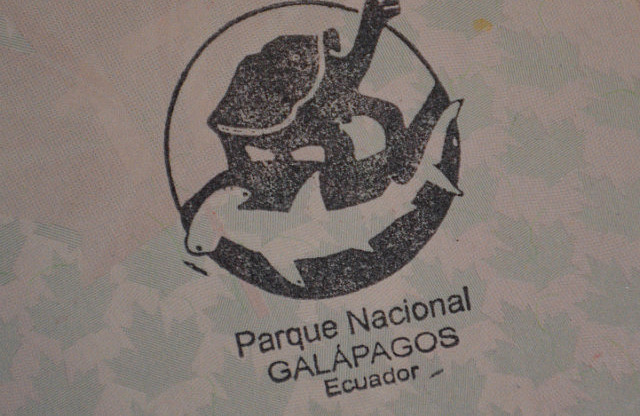
Passport stamp
Passport stamp

Ninety-seven percent of the archipelago is a national park protected by strict rules about what can be brought in – no food or animals – and taken out – absolutely nothing, though the authorities ship out all solid waste to the mainland.  The remaining three percent is set aside for farming, living and tourism.

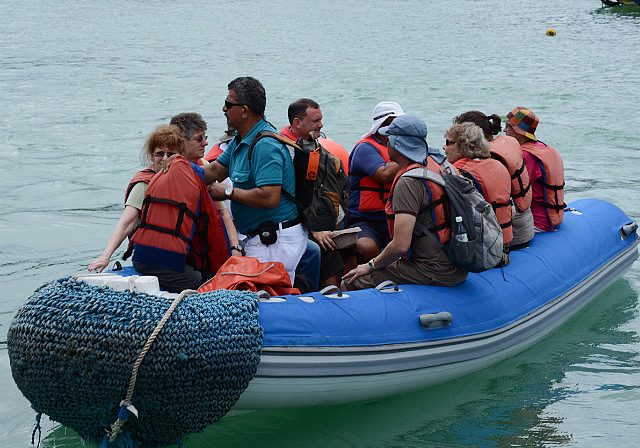
A short boat ride followed by a 40-minute bus ride delivered us to the southeast edge of Santa Cruz Island where we loaded onto Zodiac-type dingies for a short trip to the MV Coral II.  As I sat on the edge of the dingy, I imagined myself an adventurer, a Greenpeace-type warrior heading off to prevent some horrible ecological disaster!
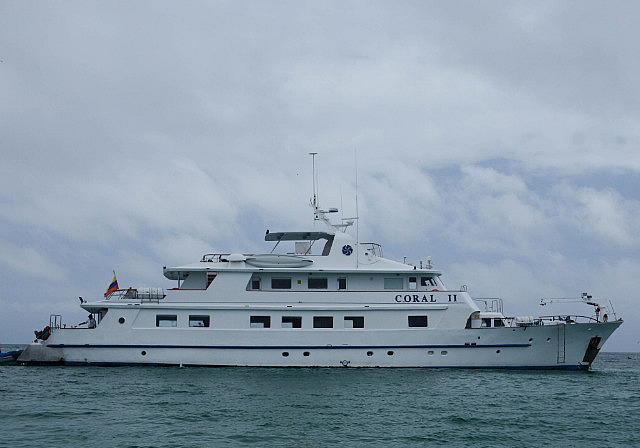
MV Coral II
MV Coral II
Heading out on our Zodiac-type dingies
Heading out on our dingies

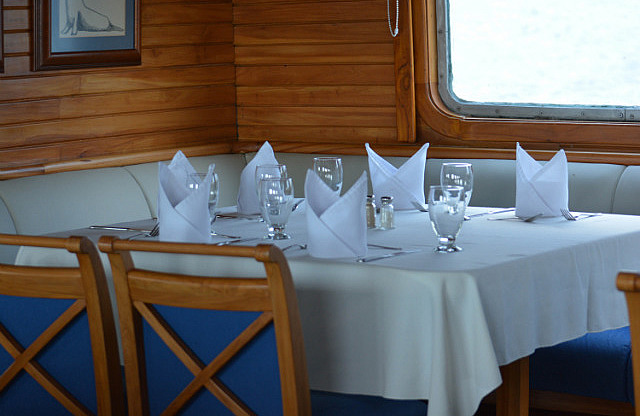
Instead I found myself pampered in a two-bed cabin complete with private toilet and shower. The Coral II is lovely; all wood paneling inside with meal service delivered on white tablecloths with real cloth napkins.
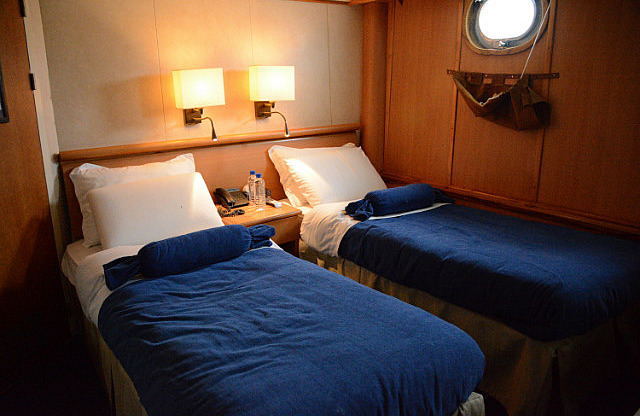
My bedroom on the MV Coral II
Dining room on the MV Coral II

We watched a couple of 4 to 5 year olds fighting, a comical sight indeed.  They stretched their necks and at one point locked jaws before pushing each other away and toppling over.  It was a tad eerie for even though their mouths were wide open they made no sound.
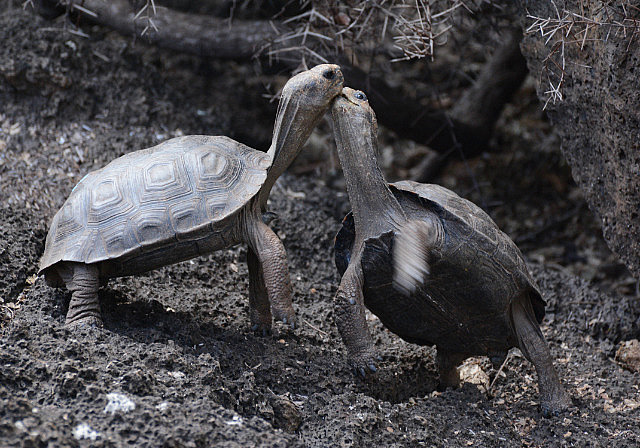
Juvenile tortoises fighting
That'll teach 'em to fight!
That’ll teach ’em to fight!

Lonesome George lives at the Darwin Research Centre.  He is at least 100 years old, and is lonesome because he is the last of his particular species.  While he would be able to breed, biologists are not willing to cross breed with a different female.

100+ year old tortoise
Lonesome George

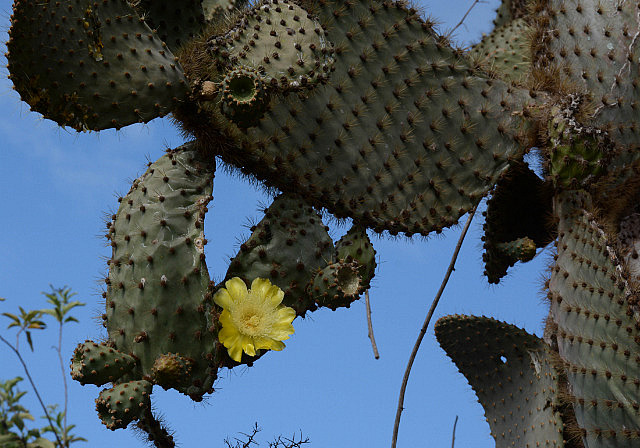
The Darwin Research Station also houses land iguanas that are yellow because their diets consist mainly of yellow flowers.  Fortunately there are many cactus trees in the Islands that provide these iguanas with their preferred food.

Yellow iguana
Yellow iguana
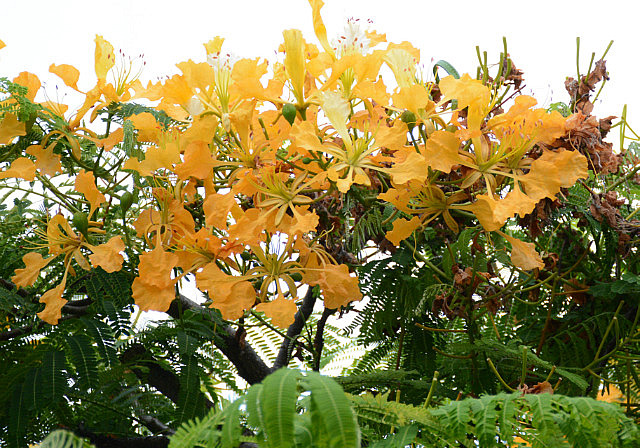
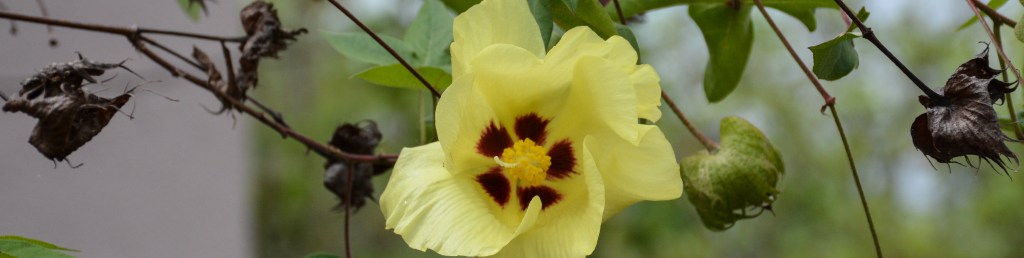
Common cactus flower - yellow iguana food!
Common cactus flower – yellow iguana food!
3.1391628328.more-yellow-iguana-food
More yellow iguana food!

There is no shortage of several varieties of iguanas in the wild; these reptiles are kept for research purposes.

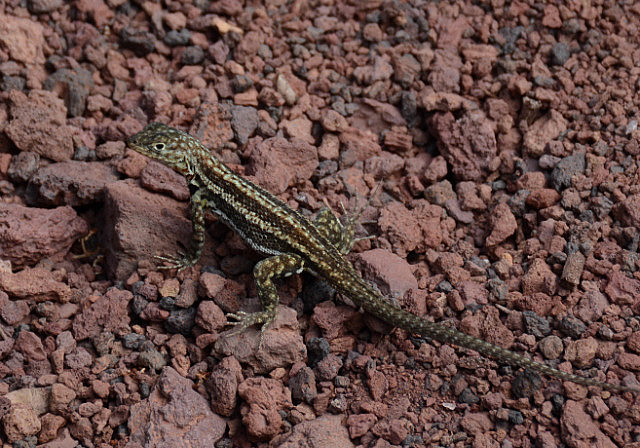
Birds and flowers and exotic reptiles are everywhere.  On the return trip to the Coral II we passed a group of land iguanas, one with a baby in tow, and numerous lava lizards.

Momma iguana with baby
Tiny lava lizard
Tiny lava lizard

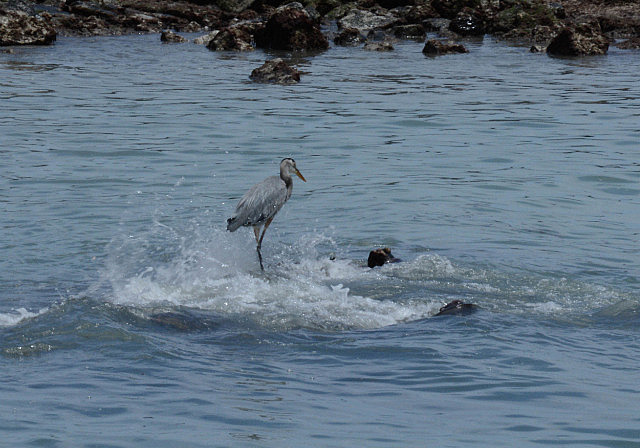
A magnificent frigate bird watched our progress while a great blue heron ignored us altogether.

Magnificent frigate bird
Great blue heron ignoring us

A brown pelican stayed close in case we had something yummy to toss his way.

Brown pelican waiting fruitlessly for handouts

We have taken on two young people from Cambridge, England – Simon and Tracey – for this part of our tour.  They have already spent seven weeks in South America and after a few more days in Ecuador have two weeks planned in Costa Rica.  They have interesting stories of their adventure that are spicing up our dinner conversations!

Leave a Reply

3.1391628328.gal-pagos-islands-map_
Galápagos Islands map

What a strange and wonderful world we have entered! We flew from Guayaquil to Baltra Island in the Galápagos archipelago a few days ago, and after being x-rayed and searched and our belongings sprayed with disinfectant the authorities pronounced us fit for entry and stamped our passports with a pretty cool little logo.

Passport stamp
Passport stamp

Ninety-seven percent of the archipelago is a national park protected by strict rules about what can be brought in – no food or animals – and taken out – absolutely nothing, though the authorities ship out all solid waste to the mainland.  The remaining three percent is set aside for farming, living and tourism.

A short boat ride followed by a 40-minute bus ride delivered us to the southeast edge of Santa Cruz Island where we loaded onto Zodiac-type dingies for a short trip to the MV Coral II.  As I sat on the edge of the dingy, I imagined myself an adventurer, a Greenpeace-type warrior heading off to prevent some horrible ecological disaster!

MV Coral II
MV Coral II
Heading out on our Zodiac-type dingies
Heading out on our dingies

Instead I found myself pampered in a two-bed cabin complete with private toilet and shower. The Coral II is lovely; all wood paneling inside with meal service delivered on white tablecloths with real cloth napkins.

My bedroom on the MV Coral II
Dining room on the MV Coral II

We watched a couple of 4 to 5 year olds fighting, a comical sight indeed.  They stretched their necks and at one point locked jaws before pushing each other away and toppling over.  It was a tad eerie for even though their mouths were wide open they made no sound.
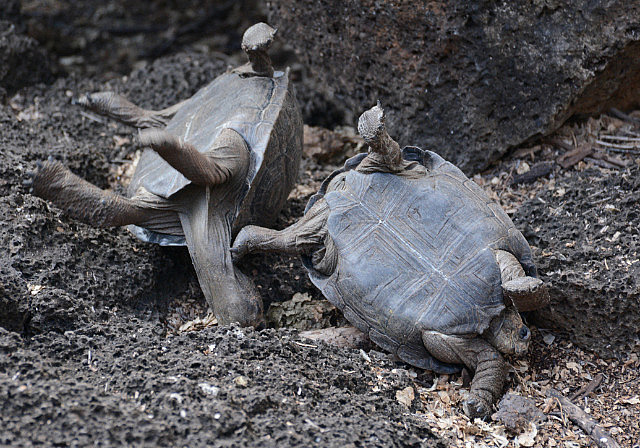
Juvenile tortoises fighting
That'll teach 'em to fight!
That’ll teach ’em to fight!

Lonesome George lives at the Darwin Research Centre.  He is at least 100 years old, and is lonesome because he is the last of his particular species.  While he would be able to breed, biologists are not willing to cross breed with a different female.
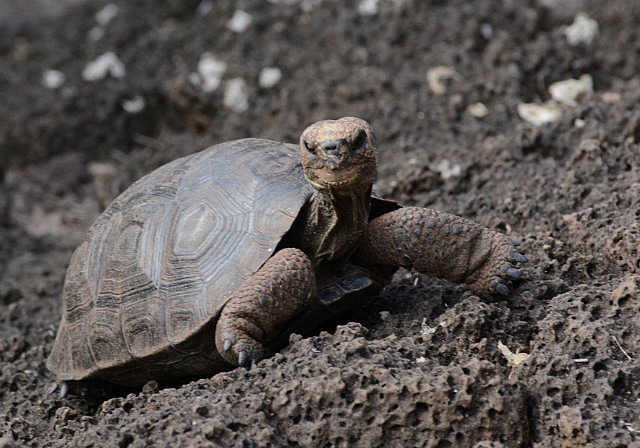
100+ year old tortoise
Lonesome George

The Darwin Research Station also houses land iguanas that are yellow because their diets consist mainly of yellow flowers.  Fortunately there are many cactus trees in the Islands that provide these iguanas with their preferred food.
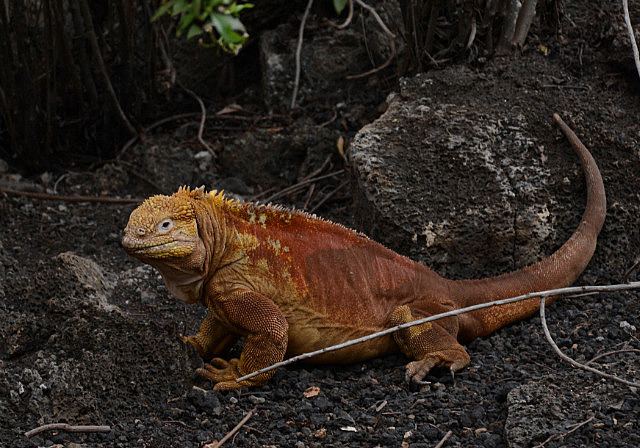
Yellow iguana
Yellow iguana
Common cactus flower - yellow iguana food!
Common cactus flower – yellow iguana food!
3.1391628328.more-yellow-iguana-food
More yellow iguana food!

There is no shortage of several varieties of iguanas in the wild; these reptiles are kept for research purposes.

Birds and flowers and exotic reptiles are everywhere.  On the return trip to the Coral II we passed a group of land iguanas, one with a baby in tow, and numerous lava lizards.
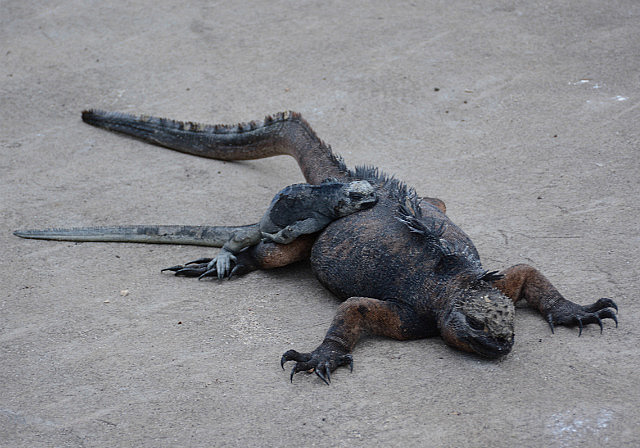
Momma iguana with baby
Tiny lava lizard
Tiny lava lizard

A magnificent frigate bird watched our progress while a great blue heron ignored us altogether.
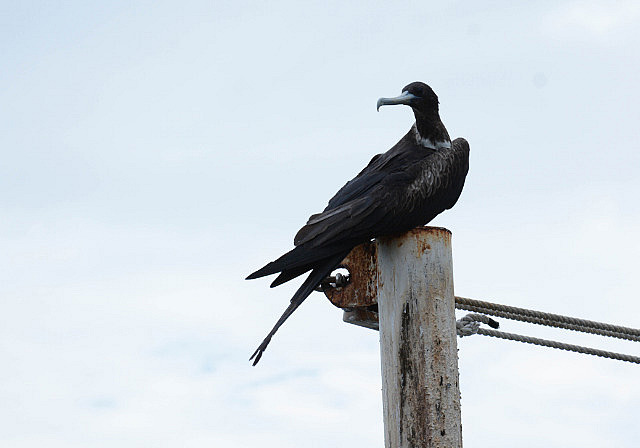
Magnificent frigate bird
Great blue heron ignoring us

A brown pelican stayed close in case we had something yummy to toss his way.
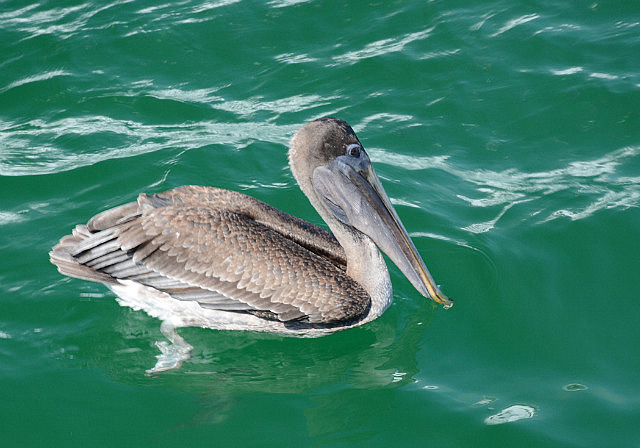
Brown pelican waiting fruitlessly for handouts

We have taken on two young people from Cambridge, England – Simon and Tracey – for this part of our tour.  They have already spent seven weeks in South America and after a few more days in Ecuador have two weeks planned in Costa Rica.  They have interesting stories of their adventure that are spicing up our dinner conversations!